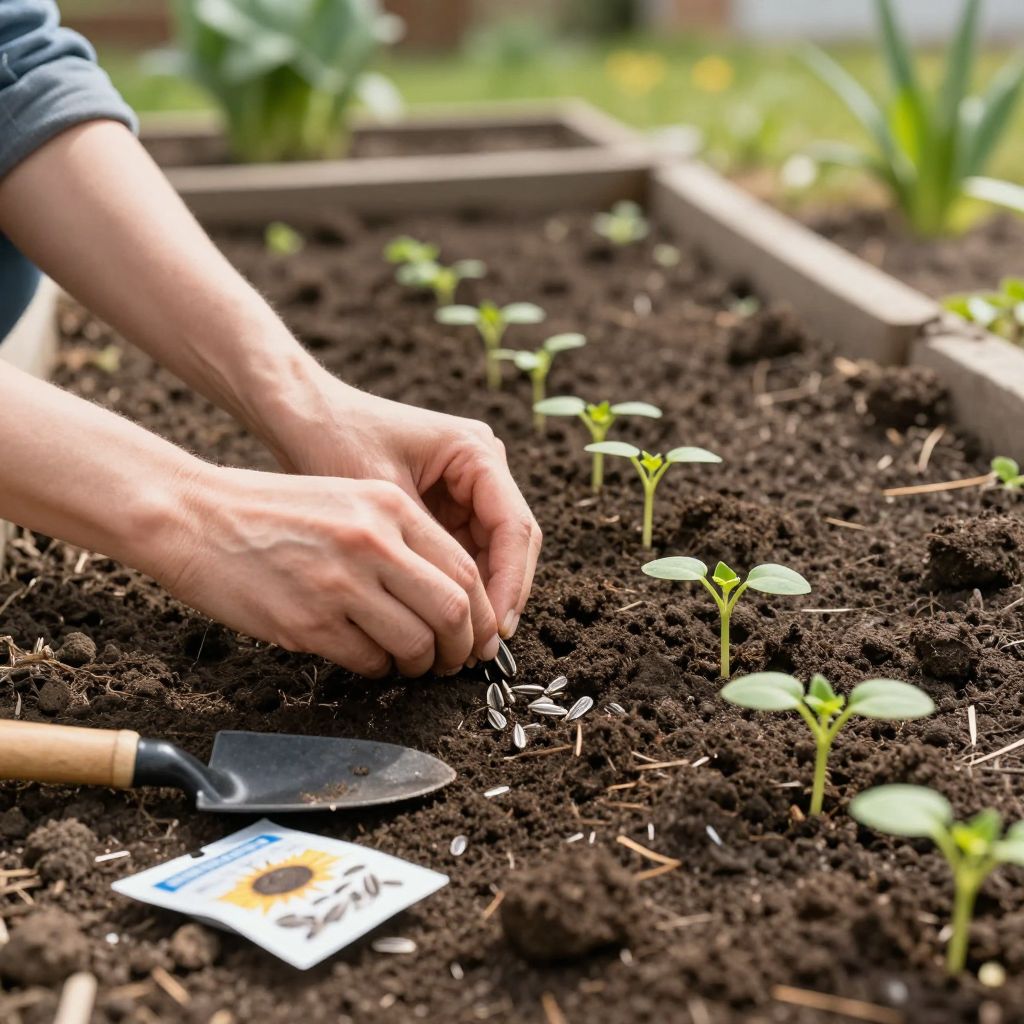
Wondering when do you plant sunflower seeds? The short answer is to sow them outdoors after the last frost, once the soil has warmed and the danger of hard freezes has passed. Sunflowers germinate best in warm soil, and they grow fastest when planted in full sun with room to stretch.
You can also start a few seeds indoors in biodegradable pots if your season is short, but most gardeners get the best results by direct sowing. Timing matters because sunflowers dislike root disturbance and cold, wet soil can slow germination or rot the seed.
When do you plant sunflower seeds?
Plant sunflower seeds outdoors in spring after your last expected frost date, when soil temperatures are at least about 50°F to 60°F and the ground is workable. In colder climates, wait a little longer for warmer soil; in mild climates, you can often sow from late spring into early summer for a longer bloom season.
How to time sunflower planting by season
Sunflowers are warm-season annuals, so they perform best when planted after cold weather has settled down. The right timing depends on your local frost dates, soil warmth, and how long you want the plants to bloom.
Spring planting
Spring is the main planting window in most areas. Sow seeds after the last frost date, but if the soil is still chilly or soggy, wait a week or two.
- Cool climates: Plant late spring, when nights are milder and soil warms quickly.
- Temperate climates: Sow from mid-spring to early summer.
- Warm climates: You may be able to plant earlier in spring and succession sow for longer blooms.
Summer succession sowing
If you want flowers over a longer period, sow a new batch every 1 to 2 weeks for several weeks. This works especially well with shorter sunflower varieties and gives you a staggered bloom window.
Fall planting
Fall planting is usually not ideal for most gardeners because sunflowers need a full warm season to mature and flower. In frost-free or very mild climates, late-season sowing can work, but plants may bloom smaller or finish quickly.
Best growing conditions for sunflower seeds
Sunflowers are easy to grow when you give them the right basics. They need full sun, loose soil, and good drainage to get off to a strong start.
- Sunlight: At least 6 to 8 hours of direct sun daily.
- Soil: Well-drained soil with moderate fertility.
- pH: Slightly acidic to neutral soil is usually fine.
- Drainage: Essential, especially for direct sowing in spring.
If your soil is heavy clay, work in compost to improve structure and drainage. Avoid overly rich, high-nitrogen soil, which can encourage tall, leafy growth and weaker stems.
How to plant sunflower seeds outdoors
Direct sowing is the simplest and most reliable method for most gardeners. Sunflowers grow best when planted where they will stay, because their roots do not like transplanting.
- Choose a sunny spot with room for the mature height and spread of the variety.
- Loosen the soil to a depth of about 6 to 8 inches.
- Mix in compost if the soil is poor, compacted, or drains slowly.
- Plant seeds about 1 inch deep, following the packet if it gives a different depth.
- Space seeds according to the variety; larger sunflowers need more room than dwarf types.
- Water gently after planting to settle the soil.
- Keep the seedbed evenly moist until germination.
Most sunflower seeds sprout in about 7 to 14 days when conditions are warm and moist. If the soil is cold, germination can be slower and less reliable.
Should you start sunflower seeds indoors?
You can start sunflower seeds indoors, but it is usually only worth doing if your growing season is short or you want an early start. Use biodegradable pots if possible, because sunflowers are sensitive to root disturbance when transplanted.
Indoor sowing tips
- Sow seeds in pots about 2 to 3 weeks before your last frost date.
- Use a light seed-starting mix, not heavy garden soil.
- Keep seedlings in bright light so they do not become leggy.
- Harden them off before planting outside.
- Transplant carefully and only when outdoor conditions are warm.
If you can direct sow outdoors, that is usually the better choice for stronger, less stressed plants.
How deep and how far apart should sunflower seeds be planted?
Seed depth and spacing matter because sunflowers need room for roots, stems, and airflow. Crowded plants are more likely to compete for water and lean as they grow.
- Depth: About 1 inch deep is a good general rule.
- Spacing: Small varieties may need 6 to 12 inches; larger types often need 18 to 24 inches or more.
- Rows: Leave enough space between rows for air movement and easy watering.
If you are unsure, check the seed packet for the mature height and spacing recommendations. Taller sunflowers usually need wider spacing and may benefit from staking in windy areas.
Watering and early care after planting
Keep the soil evenly moist until seedlings emerge, but do not soak it. Too much water can cool the soil and encourage rot, especially in heavy ground.
What to do after seedlings appear
- Water deeply when the top inch of soil starts to dry.
- Thin crowded seedlings if more than one comes up in a planting hole.
- Mulch lightly once plants are established to conserve moisture.
- Watch for slugs, birds, and cutworms around young seedlings.
Once established, sunflowers are fairly drought-tolerant, but they bloom better with regular watering during dry spells, especially while buds are forming.
Common mistakes to avoid when planting sunflower seeds
Most sunflower problems start with planting too early, too deep, or in the wrong spot. A few simple adjustments can make a big difference.
- Planting in cold soil: Seeds may rot or sprout slowly.
- Overwatering: Wet, cold soil reduces germination.
- Poor light: Sunflowers stretch and weaken in shade.
- Transplanting too roughly: Roots may be damaged easily.
- Overcrowding: Plants compete and may topple more easily.
If your seedlings fail, check the soil temperature first. Many gardeners assume the seed is bad when the real issue is simply that the ground was still too cold.
Pests and problems to watch for
Young sunflower seedlings can be nibbled by birds, slugs, and insects. Later in the season, taller plants may also attract aphids or develop fungal issues if airflow is poor.
Practical fixes
- Use row cover or netting if birds are pulling up seedlings.
- Set slug traps or hand-pick slugs in damp weather.
- Space plants properly to improve air circulation.
- Water at the base of the plant rather than overhead when possible.
Healthy, well-spaced sunflowers in full sun usually have fewer problems than plants grown in cramped or shady conditions.
How long do sunflowers take to bloom?
Bloom time depends on the variety and planting date. Many sunflowers flower in about 70 to 100 days from sowing, though some types bloom sooner and some take longer. Shorter varieties often finish faster than giant types.
If you want flowers for cutting or to extend the season, sow in stages rather than all at once. That way, not every plant reaches bloom at the same time.
Harvesting seeds or flowers
If you are growing sunflowers for cut flowers, harvest when the blooms are open to the stage you prefer. For seed harvest, let the flower heads mature on the plant until the backs turn yellow-brown and the seeds are plump.
- Protect ripening heads from birds with mesh or paper bags if needed.
- Cut seed heads when the backs are dry and the seeds are firm.
- Finish drying in a sheltered, airy place before storing or using seeds.
Not every sunflower needs to be harvested the same way. Some are best enjoyed fresh in the garden, while others are ideal for seed saving or wildlife feeding.
Simple checklist for planting sunflower seeds
- Wait until after the last frost.
- Make sure the soil is warm and well drained.
- Choose a full-sun location.
- Plant seeds about 1 inch deep.
- Water gently and keep the soil lightly moist.
- Thin seedlings if needed.
- Protect young plants from pests and wind.
If you want to keep learning about warm-season flowers and seed-starting basics, you may also enjoy reading about how to start seeds indoors and growing annual flowers from seed.