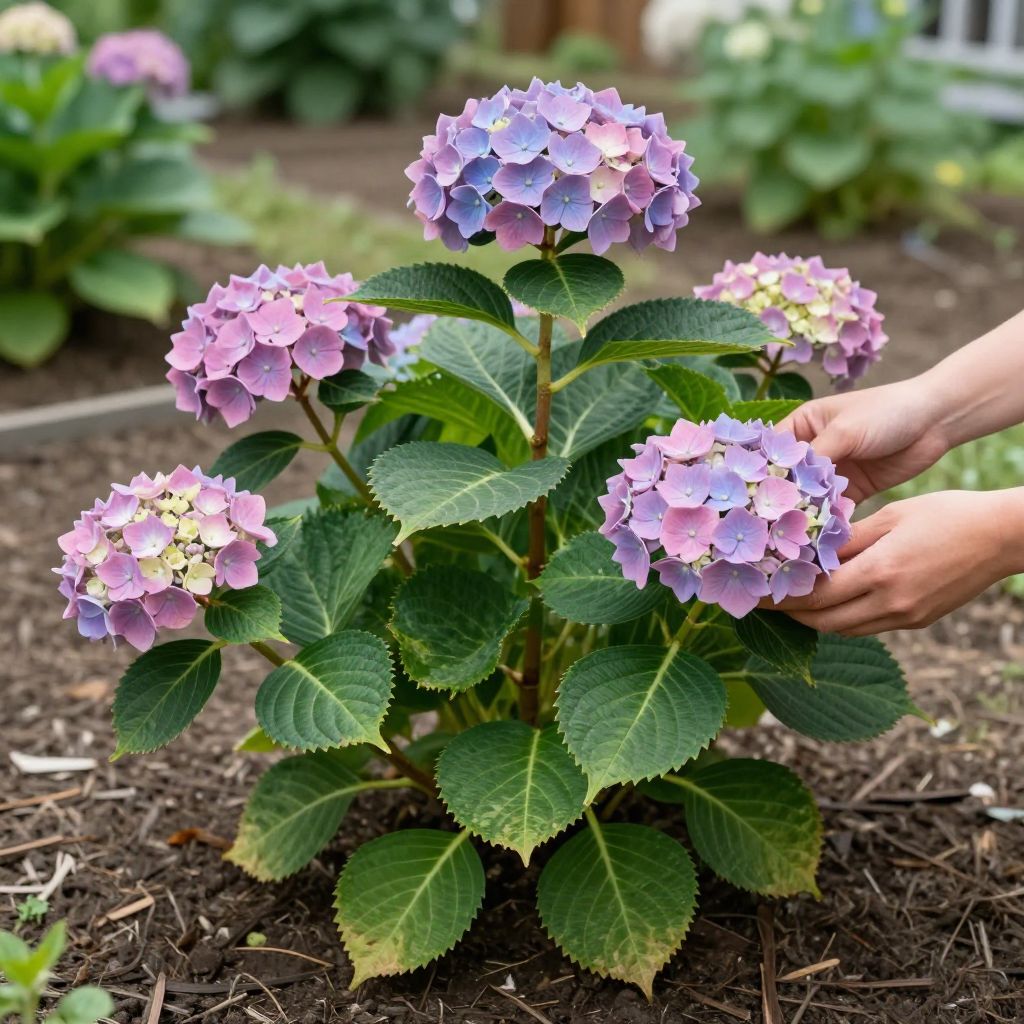
What kind of hydrangea do I have? The fastest way to tell is to look at the flower shape, leaf size, stem texture, and whether the plant blooms on old wood or new wood. Those clues usually narrow it down to one of the main garden hydrangeas, and they also tell you how to prune and care for it correctly.
Once you know the type, you can avoid the most common mistake gardeners make: pruning at the wrong time and cutting off next season’s flowers. A few careful observations are enough to identify your plant with confidence.
What kind of hydrangea do I have?
Most garden hydrangeas are one of four types: bigleaf hydrangea (Hydrangea macrophylla), smooth hydrangea (H. arborescens), panicle hydrangea (H. paniculata), or oakleaf hydrangea (H. quercifolia). Check the bloom shape, leaf form, stem strength, and whether it flowers on old wood or new wood to identify it.
How to identify your hydrangea step by step
Start with the flower, then move to the leaves and stems. If the plant is not blooming, the leaf shape and growth habit still give strong clues.
- Look at the flower cluster. Is it a round mophead, a flat lacecap, a cone-shaped panicle, or a loose dome?
- Check the leaves. Are they large and glossy, broad and matte, or deeply lobed like oak leaves?
- Notice the stems. Are they floppy and thin, or sturdy and upright?
- Observe bloom timing. Did it bloom on last year’s stems, or did new shoots produce flowers later in the season?
- Compare the overall size and shape. Some hydrangeas stay compact; others become large shrubs with arching branches.
1. Bigleaf hydrangea
Bigleaf hydrangea is the most common garden hydrangea and usually has large, rounded leaves and flowers in either mophead or lacecap form. Mopheads are dense, ball-like clusters, while lacecaps have a flatter center with showy outer florets.
This type often blooms in shades of pink, blue, purple, or white, depending on the cultivar and soil conditions. If your plant has broad leaves and rounded flower heads, bigleaf hydrangea is a strong possibility.
2. Smooth hydrangea
Smooth hydrangea usually has softer, less glossy leaves and large dome-shaped flower heads. The classic white form is often sold as ‘Annabelle,’ though there are many cultivars with different sizes and flower strengths.
These plants typically have a looser, more open shrub habit than bigleaf hydrangeas. If the stems flop after rain or the flowers are huge and white, you may be looking at a smooth hydrangea.
3. Panicle hydrangea
Panicle hydrangea is easy to spot because the flowers are cone-shaped rather than round. The blooms often open white or cream and may age to pink, rose, or tan as the season progresses.
The leaves are usually smaller and more pointed than those of bigleaf hydrangea, and the shrubs tend to be more upright. Panicle hydrangeas are among the easiest to identify because of their distinctive cone-shaped flower clusters.
4. Oakleaf hydrangea
Oakleaf hydrangea has lobed leaves that resemble oak leaves, often with strong fall color. The flowers are usually cone-shaped or elongated clusters, and the shrub has a more natural, arching look.
This type is especially recognizable when the foliage turns red, burgundy, or bronze in autumn. If the leaves look like oak leaves and the plant has a woodland-shrub feel, oakleaf hydrangea is likely.
Quick comparison chart
- Bigleaf hydrangea: Large glossy leaves, round mophead or lacecap flowers, often blue or pink.
- Smooth hydrangea: Broad matte leaves, large dome-shaped white flowers, often floppy stems.
- Panicle hydrangea: Cone-shaped flower clusters, upright growth, smaller leaves.
- Oakleaf hydrangea: Lobed oak-like leaves, cone-shaped flowers, strong fall color.
Old wood or new wood: why it matters
Knowing whether your hydrangea blooms on old wood or new wood is just as important as identifying the species. This tells you when to prune and explains why some plants bloom reliably while others do not.
Old wood bloomers
Bigleaf hydrangeas and oakleaf hydrangeas usually bloom on old wood, meaning flower buds form on stems that grew the previous season. If you prune too hard in late winter or early spring, you may remove those buds and lose flowers.
For these plants, prune only lightly after flowering, removing dead stems and spent blooms if needed. If winter damage is severe, wait until new growth starts before cutting anything back.
New wood bloomers
Smooth hydrangeas and panicle hydrangeas usually bloom on new wood, meaning they flower on stems produced in the current season. These can be pruned more confidently in late winter or early spring, before new growth begins.
That flexibility is one reason they are often recommended for colder climates or for gardeners who want easier maintenance.
How to tell hydrangea types by flowers and leaves
Use the plant’s features together rather than relying on one trait alone. Flower color can vary with soil pH in some bigleaf hydrangeas, so color alone is not enough for identification.
Flower clues
- Round, packed flower heads: Often bigleaf or smooth hydrangea.
- Flat flower heads with a visible center: Often lacecap bigleaf hydrangea.
- Large cone-shaped clusters: Usually panicle hydrangea or oakleaf hydrangea.
- White flowers that age pink or tan: Common in panicle hydrangea.
Leaf clues
- Large, glossy, rounded leaves: Bigleaf hydrangea.
- Broad, softer, matte leaves: Smooth hydrangea.
- Smaller, pointed leaves: Often panicle hydrangea.
- Deeply lobed leaves like oak leaves: Oakleaf hydrangea.
Stem and growth habit clues
- Thin stems that bend under heavy blooms: Often smooth hydrangea.
- Upright woody stems with strong framework: Often panicle hydrangea.
- Arching, woodland-style shrub: Often oakleaf hydrangea.
- Compact shrub with dense foliage: Often bigleaf hydrangea.
What if your hydrangea is not flowering?
If a hydrangea does not bloom, identification becomes harder, but you can still narrow it down by the leaves, stems, and growth habit. A nonblooming plant may also be stressed, too young, or pruned at the wrong time.
Common reasons hydrangeas fail to bloom
- Improper pruning: Especially on old wood bloomers.
- Too much shade: Many hydrangeas need morning sun or bright filtered light.
- Late frost damage: Can kill developing buds on old wood types.
- Too much nitrogen: Encourages leafy growth instead of flowers.
- Plant is still establishing: Young shrubs may need time before blooming well.
If you suspect pruning is the issue, wait for a full season and observe where buds form. New shoots that flower later in the year suggest a new wood bloomer; buds on older stems suggest an old wood bloomer.
Growing conditions that help hydrangeas thrive
Once you know what kind of hydrangea you have, you can match its care to its needs. Most hydrangeas prefer rich soil, even moisture, and protection from harsh afternoon sun, but the details vary by type.
Light
Many hydrangeas do best with morning sun and afternoon shade, especially in warm climates. Panicle hydrangeas usually tolerate more sun than bigleaf or oakleaf types, while deep shade often reduces flowering in all types.
Soil
Hydrangeas like soil that holds moisture but still drains well. Improve poor soil with compost, leaf mold, or well-rotted organic matter, but avoid making the planting hole into a waterlogged basin.
Drainage matters more than rich soil alone. If roots stay wet for long periods, hydrangeas can struggle with root rot and weak growth.
Watering
Water deeply when the top few inches of soil begin to dry, especially during hot weather or while the plant is establishing. Container-grown hydrangeas dry out faster than those in the ground and may need more frequent checking.
Water at the base of the plant rather than overhead when possible. This helps reduce leaf spotting and mildew problems.
Pruning tips by hydrangea type
Pruning is where identification pays off. If you prune the wrong type at the wrong time, you may remove flower buds before they open.
Bigleaf hydrangea
- Prune lightly after flowering, if needed.
- Remove dead stems in spring once new growth begins.
- Avoid heavy late-winter pruning unless you know the cultivar blooms on new wood.
Smooth hydrangea
- Cut back in late winter or early spring if you want to control size.
- Remove weak or damaged stems.
- Strong spring pruning often encourages larger blooms on new growth.
Panicle hydrangea
- Prune in late winter or early spring if needed.
- Shape the shrub and remove crossing or weak stems.
- Do not be afraid to reduce height moderately if the plant is too large.
Oakleaf hydrangea
- Prune only after flowering if shaping is necessary.
- Remove dead or damaged stems first.
- Keep pruning light to preserve the shrub’s natural form.
Common pests and diseases
Hydrangeas are generally manageable, but stressed plants are more likely to show problems. Good spacing, airflow, and proper watering prevent many issues.
Typical pests
- Aphids: Cluster on new growth and flower buds.
- Spider mites: More common in hot, dry conditions.
- Scale insects: Can appear on stems and undersides of branches.
- Japanese beetles: May chew leaves and flowers in some regions.
Typical diseases
- Powdery mildew: Often appears in humid weather or crowded plantings.
- Leaf spot: Usually worse when foliage stays wet too long.
- Root rot: Linked to poor drainage or overwatering.
For most home gardens, the best first response is cultural: remove badly affected leaves, improve airflow, water at soil level, and avoid overfertilizing. Severe infestations or recurring disease may require more targeted treatment based on your local conditions.
How to propagate hydrangeas
If you want more plants, hydrangeas are often propagated from softwood or semi-ripe cuttings, depending on the type and season. This is especially useful if you have a favorite shrub and want an exact match.
- Take a healthy, nonflowering stem cutting with several leaf nodes.
- Remove the lower leaves and keep the cutting moist.
- Place it in a free-draining propagation mix.
- Keep humidity high and light bright but indirect.
- Pot up only after roots are well formed.
Cuttings root best when the parent plant is healthy and actively growing. Avoid taking cuttings from drought-stressed or diseased plants.
Landscaping uses and maintenance
Hydrangeas are useful as foundation shrubs, woodland borders, informal hedges, and specimen plants. Choose the right type for the space you have, because mature size varies a lot.
- Bigleaf hydrangeas: Best where winter protection and consistent moisture are available.
- Smooth hydrangeas: Good for reliable bloom and a softer shrub look.
- Panicle hydrangeas: Excellent for sunny sites and larger landscapes.
- Oakleaf hydrangeas: Great for naturalistic plantings and seasonal interest.
Mulch helps hydrangeas by moderating soil temperature and conserving moisture. Keep mulch a few inches away from the stems to reduce rot and pest problems.
When to call it a mystery plant
Sometimes a hydrangea is a hybrid, a mislabeled nursery plant, or a severely pruned shrub that no longer shows its original form clearly. If the plant has been cut back hard, damaged by frost, or grown in poor conditions, identification may take a full season.
In that case, let the plant grow, observe the leaves and blooms through the season, and document what you see. A few photos taken in spring, summer, and fall can make identification much easier.
Conclusion
If you are asking, “What kind of hydrangea do I have?” start with the flowers, then check the leaves, stems, and bloom habit. Once you know whether it blooms on old wood or new wood, you can prune with confidence and give it the right light, water, and soil conditions.
For more practical plant care help, you may also want to read about how to prune hydrangeas correctly and general hydrangea care tips.