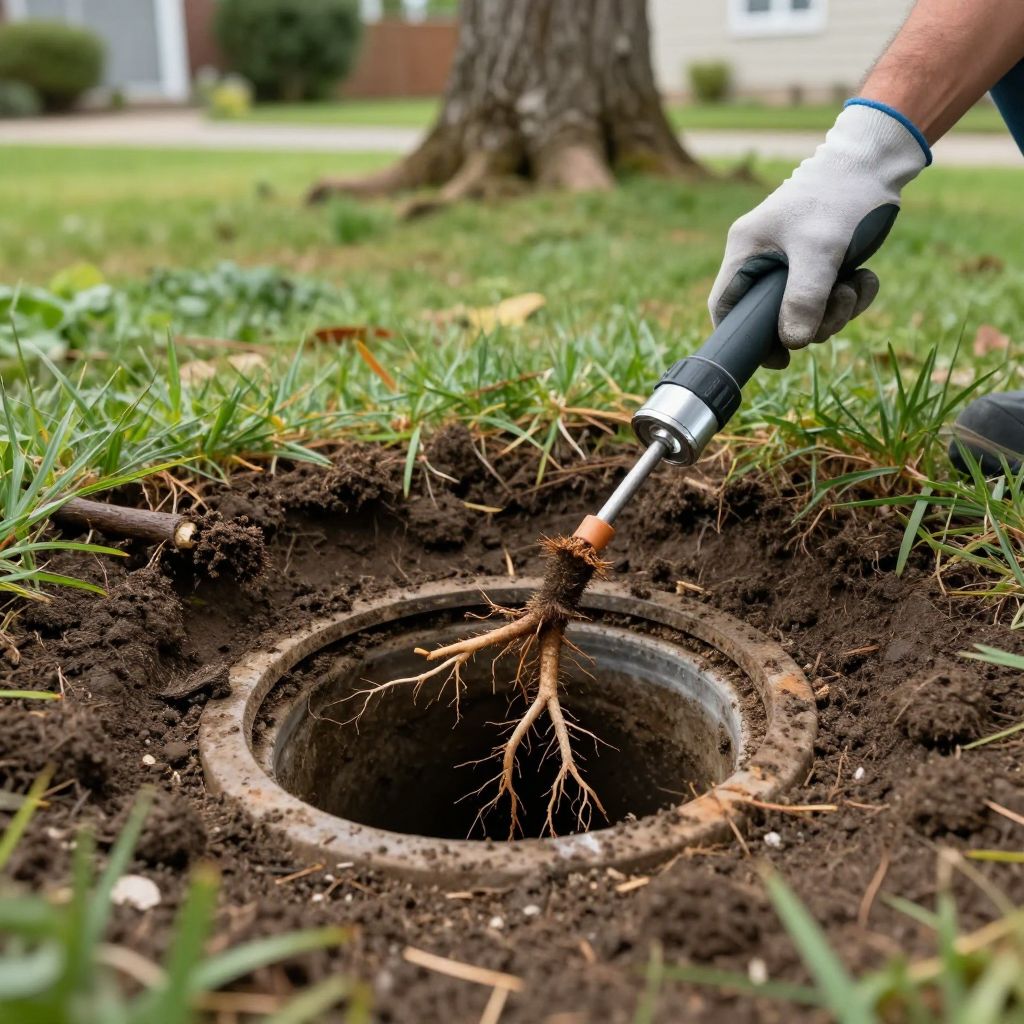
What dissolves tree roots in sewer lines? If you’re hoping for a safe garden fix that will clear roots without damaging your pipes or landscape, the short answer is: nothing truly “dissolves” established roots in a reliable, gardening-friendly way. The most effective approach is to remove the roots mechanically, then prevent regrowth with proper line repair and smarter planting choices.
For gardeners, the bigger issue is usually not the tree itself but where it was planted, how the soil drains, and whether the sewer line has cracks that invite roots. Once roots find moisture, they keep coming back unless you address the source of the problem.
What dissolves tree roots in sewer lines?
There is no garden-safe product that reliably dissolves tree roots already growing inside sewer lines. Chemical root killers may slow new growth in the pipe, but they do not remove large root masses or fix cracked pipes. The lasting solution is root cutting, pipe inspection, and repair or replacement where needed.
Why tree roots invade sewer lines
Tree roots are drawn to moisture, oxygen, and nutrients. A sewer line with a crack, loose joint, or aging seal gives roots exactly what they want.
In a garden setting, this often happens when trees or large shrubs are planted too close to underground utilities. Roots do not “seek out” pipes on purpose, but they naturally grow toward damp soil and leak points.
Common garden conditions that make root intrusion worse
- Old clay, concrete, or deteriorating pipe joints
- Leaky sewer lines that keep soil consistently moist
- Large trees planted too near underground lines
- Compacted soil that limits normal root spread
- Repeated drought, which can push roots toward wetter areas
What actually works to remove roots
For a clogged sewer line, the most dependable fix is usually mechanical root removal, such as augering, hydro-jetting, or cutting roots with a sewer snake. These methods clear the blockage, but they are temporary unless the pipe is repaired.
Mechanical methods gardeners should understand
- Sewer auger or root cutter: Cuts through root masses inside the pipe.
- Hydro-jetting: Uses high-pressure water to flush out debris and smaller roots.
- Pipe lining or replacement: Fixes the entry point so roots cannot return as easily.
If you manage a garden with mature trees nearby, it is worth remembering that repeated clogs usually mean the pipe has a structural problem, not just a “root problem.”
Do chemical root killers work?
Chemical root killers can reduce root regrowth in sewer lines, but they are not a cure-all. They are best thought of as a maintenance tool after the line has been cleared, not as a way to dissolve a major root blockage.
Products sometimes used in sewer maintenance include copper sulfate or foaming root treatments designed for pipes. These may help suppress fine roots in the line, but they do not repair cracks and may be unsuitable for some plumbing systems. Always follow the product label and local regulations.
Important cautions before using any chemical treatment
- Do not assume a chemical will clear a full blockage.
- Avoid using anything that could harm nearby soil, turf, ornamentals, or water systems.
- Check whether your pipe material and local codes allow the product.
- If you have a septic system, treatment choices may differ from municipal sewer lines.
From a gardening perspective, the safest mindset is to use chemicals only as a limited maintenance step, not as the main solution.
What not to do when roots are in sewer lines
It is easy to find home remedies online, but many are risky for plants, soil, or plumbing. Avoid quick fixes that promise instant root destruction without considering the rest of your garden system.
- Do not pour harsh chemicals into the soil near trees or shrubs.
- Do not cut down a healthy tree unless a professional confirms it is necessary.
- Do not keep treating the same line without inspecting the pipe condition.
- Do not plant another large tree in the same problem area without checking utility locations first.
Some “fixes” can damage beneficial soil life, stress nearby ornamentals, or create runoff problems after rain.
How to stop roots from coming back
Once the line is cleared, prevention matters more than any treatment. The best long-term strategy is to remove the conditions that attract roots and choose plants that fit the site.
Step-by-step prevention plan
- Inspect the line. A camera inspection can show whether roots entered through cracks, joints, or collapsed sections.
- Repair the pipe. Seal leaks, replace damaged sections, or line the pipe if appropriate.
- Reassess planting distance. Keep large trees away from sewer routes whenever possible.
- Choose better plants. Use smaller trees, shrubs, or root-behavior-friendly species near utility corridors.
- Monitor regularly. If the area has a history of intrusion, schedule periodic checks before a major backup occurs.
Smart planting choices near sewer lines
If you are planning a new garden bed or redesigning a yard, plant selection matters. Trees with aggressive, moisture-seeking roots are more likely to create future problems if they are placed over or near sewer lines.
General planting guidance
- Keep large trees well away from known underground utilities.
- Use smaller ornamental trees or shrubs where space is limited.
- Consider mature root spread, not just canopy width.
- Avoid planting directly over old pipe routes, especially in older landscapes.
If you are unsure where the sewer line runs, contact your local utility locator service before digging. That step can save you from years of root-related trouble.
Signs roots may be in your sewer line
Gardeners often notice the first clues outdoors before a plumbing emergency happens. Watch for changes in drainage, soil moisture, and plant growth patterns near the line.
Common warning signs
- Slow-draining sinks, tubs, or toilets
- Gurgling sounds in drains
- Repeated backups after rain or heavy water use
- Unusually lush patches of grass over one area of the yard
- Soft, wet, or sunken soil near the sewer route
That especially green patch can be a clue that wastewater is leaking below and feeding roots, or that roots have already broken into the line.
How garden conditions affect root pressure
Root intrusion is not only a plumbing issue; it is also influenced by the landscape around the pipe. Soil texture, irrigation habits, and drought stress all play a role.
Garden factors to watch
- Frequent shallow watering encourages surface roots near the pipe zone.
- Compacted soil can push roots to follow the easiest path.
- Drought stress can drive roots toward any available moisture source.
- Mulch piled against trunks can encourage unwanted root behavior near the surface.
A healthier irrigation pattern, with deeper but less frequent watering where appropriate, often helps roots grow where you want them rather than toward leaks.
When to call a professional
If you suspect roots are in a sewer line, a plumber or sewer specialist is usually the right first call. For the garden side of the problem, an arborist can help assess whether a tree can be preserved safely or whether removal is necessary.
Call for help if:
- Backups keep returning after snaking
- You suspect a collapsed or badly cracked pipe
- Large trees are growing close to the line
- The problem is affecting multiple drains
- You want to protect a valuable tree while fixing the pipe
In many cases, the best outcome is a combination of plumbing repair and thoughtful tree management rather than choosing one or the other.
Practical troubleshooting for gardeners
If roots keep returning, the issue is usually one of three things: the pipe is still leaking, the blockage was not fully removed, or the surrounding planting is too close for the site.
Use this quick checklist
- Was the line camera-inspected after clearing?
- Were cracks, offsets, or loose joints repaired?
- Are there large trees directly above or beside the line?
- Is the soil staying too wet in one area of the yard?
- Has the same section clogged more than once?
If the answer to several of these is yes, ongoing maintenance alone may not be enough.
Conclusion: the best long-term fix
If you are asking what dissolves tree roots in sewer lines, the honest answer is that no garden-safe product reliably solves the problem on its own. Clear the roots mechanically, inspect the pipe, repair the damage, and adjust nearby planting so the problem does not keep returning. If you are planning new landscaping, map underground utilities first and choose trees with room to grow.
For more practical garden planning, you may also want to read about tree root barriers for home landscapes and choosing small trees for tight spaces.