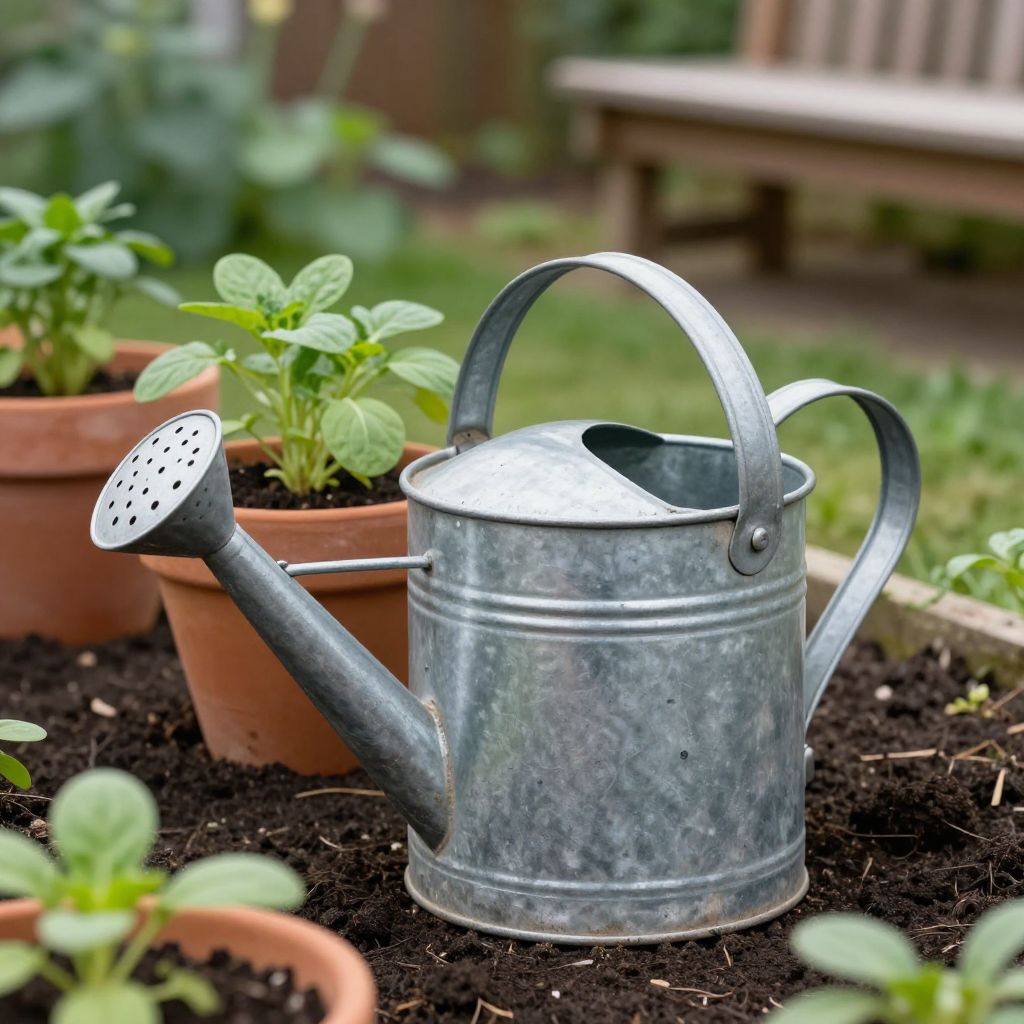
Looking for a vintage galvanized watering can that works as well as it looks? These classic metal cans can be excellent garden tools, but only if you use and maintain them correctly.
In this guide, you’ll learn how to choose, clean, repair, and use a vintage galvanized watering can for healthy plants. You’ll also see when it’s better for decoration than daily watering, plus the small maintenance habits that keep it useful for years.
What is a vintage galvanized watering can used for in the garden?
A vintage galvanized watering can is a lightweight metal can coated with zinc to resist rust. In the garden, it’s best for gentle hand watering of seedlings, houseplants, containers, hanging baskets, and small beds. It also works well for targeted watering when you want control, not a heavy stream.
How do you choose a good vintage galvanized watering can?
Not every old watering can is garden-ready. Before you buy or reuse one, check the structure, the spout, and the inside for leaks or corrosion.
What to inspect before use
- Body condition: Look for deep rust, pinholes, dents, or split seams.
- Handle strength: Lift it when full if possible, or test for wobbling and weak rivets.
- Spout shape: A long spout gives better reach and more precise watering.
- Rose or sprinkler head: If included, make sure the holes are open and not badly bent.
- Interior lining: Some old cans have worn coatings or residue that may affect water quality.
Tip: A few scratches are normal on a vintage galvanized watering can, but active rust, leaks, or flaking metal mean it needs repair or decorative use only.
How do you clean and prepare a vintage galvanized watering can?
Start with a gentle cleaning so you do not damage the zinc coating. Use warm water, mild soap, and a soft brush or cloth. Avoid harsh abrasives that can strip the protective layer and speed up rust.
Simple cleaning steps
- Empty any old water, dirt, or debris.
- Rinse the can inside and out with clean water.
- Wash with mild dish soap and a soft sponge or brush.
- Rinse thoroughly so no soap remains inside.
- Dry completely with a towel, then air-dry in a shaded, ventilated spot.
If the can has mineral deposits, soak the affected area briefly with a dilute vinegar solution, then rinse well. Do not leave vinegar sitting too long on galvanized metal, because acids can wear the coating.
Can you safely use galvanized metal for watering plants?
Yes, in most home-garden situations a galvanized watering can is fine for watering plants, especially if the can is in good condition. The main concern is long-term corrosion or old coatings, not normal use. If the interior is badly rusted or peeling, replace it or reserve it for display.
When to be cautious
- Use extra caution with cans that have unknown coatings or heavy interior rust.
- Do not store fertilizer mixes in the can for long periods.
- Rinse after using liquid feeds so residue does not sit inside.
- For edible crops, keep the can clean and free of flaking corrosion.
If you are unsure about an old can’s condition, use it for ornamental watering only and switch to a newer tool for vegetables and herbs.
How do you water plants properly with a vintage galvanized watering can?
The best watering method depends on the plant. A watering can lets you place water exactly where roots need it, which helps reduce waste and prevents wetting foliage more than necessary.
Best watering technique
- Water at the base of the plant, not over the leaves, when possible.
- Use the rose attachment for seedlings and delicate plants.
- Remove the rose for larger containers, shrubs, or thirsty beds that need a deeper soak.
- Apply water slowly so it can soak in instead of running off.
Good watering is about soil moisture, not a fixed schedule. Check the top few inches of soil with your finger. Water when the root zone is drying out, but before plants wilt.
Indoor vs. outdoor use
Indoors, a vintage galvanized watering can is especially useful for houseplants because it gives you control in tight spaces. Outdoors, it works well for pots, raised beds, and newly planted specimens that need careful watering at the root zone.
For larger lawns or extensive garden beds, a hose or irrigation system is usually more efficient. Use the watering can where precision matters most.
Which plants benefit most from a watering can?
A vintage galvanized watering can is ideal for plants that need gentle, targeted moisture. It is especially useful for young plants and containers, where overwatering and runoff are common problems.
Good matches for hand watering
- Seedlings and transplants
- Houseplants
- Herbs in pots
- Hanging baskets
- Succulents that need careful, infrequent watering
- Vegetable containers and small raised beds
For moisture-loving plants, hand watering helps you respond to weather changes. For drought-tolerant plants, the can helps you avoid giving too much water too often.
How do you maintain a vintage galvanized watering can?
Regular maintenance keeps the can functional and slows rust. The biggest mistake is leaving water inside after use, especially in a damp shed or greenhouse.
Routine care checklist
- Empty the can after each use.
- Rinse out fertilizer or soil residue promptly.
- Dry the can before storing it.
- Store it upside down or in a dry, sheltered place.
- Check seams and the base for early rust spots.
If you spot small rust marks, clean them gently and dry the area well. For more advanced rust, the can may still be usable if the metal is sound, but deep pitting or leaks usually mean it’s time to retire it from regular watering.
What are common problems with vintage galvanized watering cans?
Old watering cans often fail in predictable ways. Most issues are easy to spot early if you inspect the can before filling it.
Common issues and fixes
- Leaks at seams: Small leaks may be repairable, but widespread seam failure is a sign to replace the can.
- Blocked rose holes: Soak and gently clear them with water and a soft brush or pin.
- Rust inside: Clean lightly, dry thoroughly, and avoid storing water in the can.
- Unbalanced pouring: If the spout is bent, the can may pour unevenly or splash.
- Heavy weight when full: Fill only as much as you can comfortably carry.
Do not force a damaged can to hold more water than it can safely carry. A smaller, stable fill level is better than a full can that spills or strains your wrist.
How should you use a vintage galvanized watering can in different seasons?
Seasonal conditions affect how often and how much you water. Hot, windy weather dries soil faster, while cool or humid weather slows evaporation. Use the can as a tool for adjusting to those changes.
Seasonal watering considerations
- Spring: Newly planted seedlings and transplants often need frequent, gentle watering.
- Summer: Containers may need water more often, especially in heat or wind.
- Autumn: Water less often as growth slows, but do not let newly planted shrubs or perennials dry out.
- Winter: Indoor plants usually need less water; outdoor use depends on climate and rainfall.
Always adjust for your local weather, pot size, soil type, and plant maturity. Sandy soil drains faster than clay, and small containers dry out much more quickly than in-ground beds.
Can a vintage galvanized watering can be part of garden design?
Yes. These cans add a rustic, practical look to potting benches, patios, shed shelves, and cottage-style borders. Used carefully, they can be both a tool and a decorative accent.
Practical landscaping ideas
- Keep one by the potting bench for daily use.
- Display a cleaned vintage can near a porch or greenhouse.
- Use it as a seasonal accent with potted herbs or flowers nearby.
- Store it indoors or under cover to protect the finish.
If you want the can to stay attractive, avoid leaving it in full sun and rain all season. Even galvanized metal lasts longer when protected from constant moisture.
What mistakes should you avoid?
A few simple mistakes can shorten the life of a vintage galvanized watering can or make it less useful in the garden.
- Leaving water inside after use
- Scrubbing with steel wool or harsh abrasives
- Using it to store fertilizer or chemicals long-term
- Ignoring small rust spots until they become holes
- Overfilling it and making it hard to carry
- Using a damaged rose that blasts seedlings with too much force
The best habit is simple: rinse, dry, inspect, and store. That routine protects both the tool and your plants.
Conclusion: make the can useful, not just decorative
A vintage galvanized watering can can be a reliable garden tool when it is clean, sound, and used with care. Inspect it for rust and leaks, water at the plant base, and store it dry after every use. If you want to keep learning about practical garden tools and container care, consider reading more about watering container plants correctly and choosing the right garden watering tools.