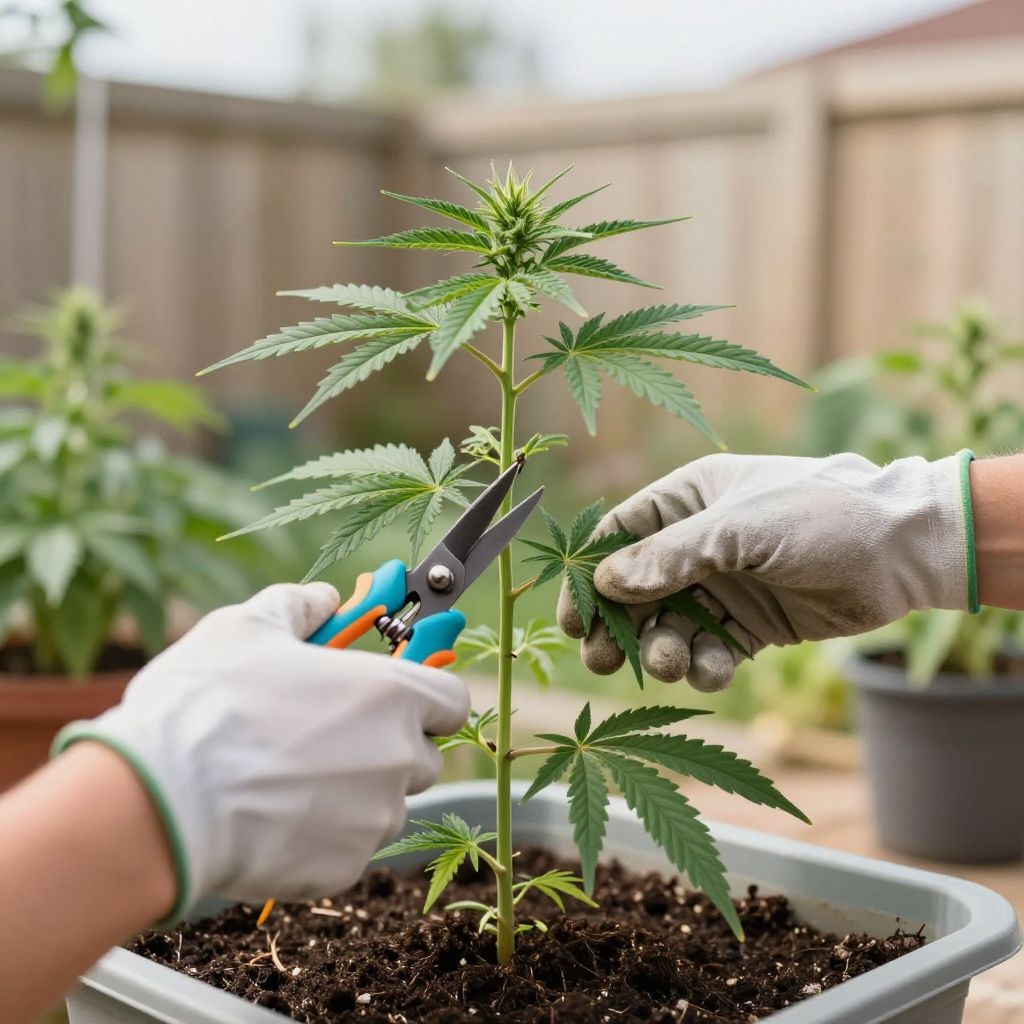
Wondering when to top weed plants for the best shape and growth? Timing matters because topping too early can stunt a young plant, while topping too late can waste the plant’s energy and reduce the time it has to recover.
The right moment depends on plant health, growth stage, and whether you’re growing indoors or outdoors. If you top at the proper time and follow up with good care, you can encourage a bushier structure and better light distribution without setting the plant back.
When to top weed plants?
Top weed plants when they are healthy, actively growing, and have at least 4 to 6 nodes, usually after the seedling stage and before flowering begins. The best time is often during vigorous vegetative growth, when the plant can recover quickly and redirect energy into side branches.
What topping does to the plant
Topping is a pruning technique that removes the main growing tip. This breaks apical dominance, which is the plant’s tendency to focus energy on one central stem.
After topping, the plant typically responds by pushing growth into lower nodes and side shoots. That can create a wider canopy and more even light exposure, which is especially useful in confined spaces or when you want a shorter, bushier plant.
Why timing matters
- Too early: a small plant may not have enough root mass or leaf area to recover well.
- Too late: the plant may spend valuable energy healing instead of building structure.
- At the right stage: recovery is faster and new growth usually fills in more evenly.
How to tell if a weed plant is ready to be topped
Look for a plant that is growing strongly, has a sturdy stem, and shows several healthy sets of true leaves. A plant that is pale, droopy, pest-stressed, or recently transplanted should usually be left alone until it stabilizes.
Good signs the plant is ready
- At least 4 to 6 nodes are present
- Leaves are upright and healthy green
- Stem is thick enough to handle pruning
- Roots have had time to establish after transplanting
- Growth is steady, not stalled
Signs you should wait
- The plant is still in the seedling stage
- It was recently transplanted and is adjusting
- There are pest or disease issues
- The plant is already showing stress from heat, drought, or poor drainage
- Flowering has started or is very close
Seasonal timing: indoor vs. outdoor growing
The best season for topping depends on how and where the plant is grown. The goal is always the same: top during active vegetative growth, not during stress or flowering.
Indoor plants
Indoor plants can usually be topped once they have recovered from transplanting and are growing vigorously under stable light. Because you control the environment, you can time topping more precisely and avoid weather-related stress.
For indoor growing, many gardeners top after the plant has developed several nodes and before switching light cycles that trigger flowering. If the plant is slow-growing, wait rather than forcing the cut.
Outdoor plants
Outdoor plants should be topped during a period of strong growth with mild, stable weather. Avoid topping right before a heat wave, cold snap, or extended rainy spell, since those conditions can slow recovery and increase disease risk.
In outdoor gardens, timing also depends on the length of your season. You want enough warm, active growing time left for the plant to recover and branch out before flowering naturally begins.
Step-by-step: how to top weed plants safely
Use clean, sharp scissors or pruning snips. A clean cut reduces tearing and helps the plant heal more quickly.
- Inspect the plant and choose a healthy stem tip to remove.
- Find the node just below the top growth.
- Cut the main stem cleanly above that node, leaving the lower growth points intact.
- Remove only the top growth tip, not large amounts of foliage.
- Return the plant to stable light, temperature, and watering conditions.
Keep the cut modest. The goal is to redirect growth, not shock the plant with heavy pruning.
Tools and hygiene
- Sharp scissors, pruning snips, or a clean blade
- Rubbing alcohol or another suitable disinfectant for tools
- Gloves if you prefer cleaner handling
Always sterilize your cutting tool before and after use if you are working with multiple plants or suspect pests or disease. This helps prevent spreading problems from one plant to another.
What to do after topping
After topping, the plant needs steady but not excessive care. Recovery is usually smoother when the environment stays consistent.
Post-topping care checklist
- Keep light levels appropriate, but avoid sudden intensity changes
- Water only when the root zone begins to dry slightly
- Maintain good drainage so roots do not sit in soggy soil
- Avoid heavy feeding immediately after pruning if the plant seems stressed
- Watch for fresh growth at the nodes below the cut
If the plant is in a container, make sure excess water can drain freely. Saturated soil slows recovery and can invite root problems.
How long recovery takes
Recovery time varies with plant vigor, light, temperature, and root health. A strong plant may resume active growth fairly quickly, while a weak or stressed plant may stall longer. The key is to watch the plant, not the calendar.
Common mistakes to avoid
Most topping problems come from cutting at the wrong time or topping a plant that is already under stress.
- Topping seedlings too early: wait until the plant has enough nodes and a sturdy stem.
- Topping a stressed plant: fix watering, light, or pest issues first.
- Using dull tools: ragged cuts heal more slowly.
- Removing too much at once: heavy pruning can slow growth excessively.
- Topping too close to flowering: the plant may not have time to recover fully.
How topping compares with other training methods
Topping is only one way to shape a cannabis plant. Depending on your goals and growing space, you may also use low-stress training, selective pruning, or gentle bending to improve light exposure.
When another method may be better
- If the plant is small or delicate, low-stress training may be less disruptive
- If you want minimal recovery time, avoid heavy cuts
- If the plant is already flowering, pruning should usually be limited to small cleanup only
In general, the more stressed the plant, the gentler your approach should be. Healthy growth responds best to any training method.
Troubleshooting after topping
Sometimes a topped plant pauses for a while before pushing new growth. That is not always a problem, but it can signal that the plant needs better conditions.
If the plant looks stalled
- Check whether the soil is too wet or too dry
- Make sure light is strong enough for active growth
- Inspect for pests on new leaves and stems
- Confirm the root zone is not rootbound in a small pot
- Review recent temperature swings or transplant stress
If leaves droop after topping
Some temporary drooping can happen after pruning, especially if the plant was already slightly stressed. If drooping continues, look first at watering and root health rather than assuming the cut itself is the only issue.
Best conditions for strong recovery
Healthy recovery after topping depends on steady growing conditions. You do not need perfection, but you do need consistency.
- Light: enough intensity for active vegetative growth
- Soil: loose, well-draining, and rich in organic matter if grown in containers or beds
- Water: even moisture without waterlogging
- Airflow: good circulation to reduce humidity-related disease risk
- Temperature: avoid extremes that slow growth or stress the plant
If you grow in amended soil, compost can help improve structure and moisture retention. In containers, drainage is especially important because compacted or soggy media can slow recovery after pruning.
Simple rule of thumb for timing
If you want a quick answer, top weed plants when they are healthy, established, and still in vegetative growth. If the plant is stressed, too small, or already flowering, wait.
That single rule prevents most topping mistakes and gives the plant the best chance to branch out evenly after the cut.
If you want to plan your next pruning step, it also helps to read about low-stress training and transplant care so you can support healthy branching from the start.