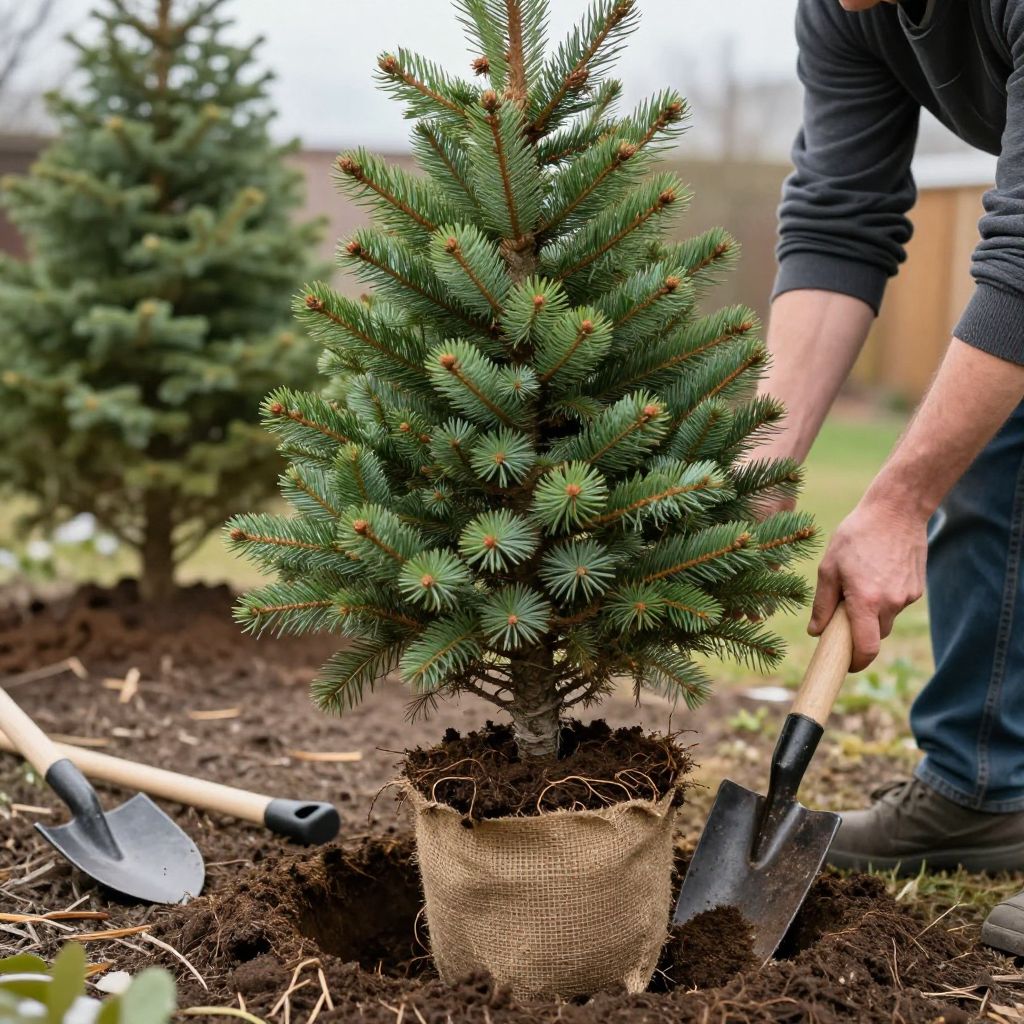
Can you replant a Christmas tree? Sometimes, yes—but success depends on whether the tree was grown in a container, kept in the ground with a root ball, or cut and used indoors. A living tree can often be replanted if its roots stayed healthy and it has not been kept inside too long.
The key is acting quickly and matching the tree to the right outdoor conditions. With careful handling, good drainage, and proper aftercare, you may be able to give a potted or balled-and-burlapped Christmas tree a second life in the landscape.
Can You Replant A Christmas Tree?
Yes, you can replant a Christmas tree if it is still alive and its root system is intact. The best candidates are container-grown trees or balled-and-burlapped evergreens that were only indoors for a short time. Cut trees cannot be replanted, and trees kept warm indoors for too long often struggle outdoors.
Which Christmas Trees Can Be Replanted?
Not every tree sold as a Christmas tree is suitable for replanting. Before you dig, lift, or transplant anything, identify what you actually have and whether the roots are still viable.
Good candidates
- Container-grown trees with roots that were grown in the pot, not just shoved into it recently.
- Balled-and-burlapped trees dug from a nursery field with most of the root ball intact.
- Living trees kept outdoors in cool conditions before and after display.
Poor candidates
- Fresh-cut trees with no roots.
- Trees with dry, brittle needles and obvious root damage.
- Living trees that stayed indoors in warmth for several weeks.
- Trees that were allowed to dry out completely in the pot or root ball.
Important: a tree that looks green above ground may still fail if the roots dried out or warmed up too much indoors.
How Long Can A Christmas Tree Stay Indoors?
Most living Christmas trees should stay indoors only briefly, usually about 7 to 10 days if possible. The longer a tree sits in a heated room, the more likely it is to break dormancy too early and suffer when returned outside.
Keep the tree in the coolest room you can manage, away from radiators, fireplaces, heat vents, and direct sun through windows. Water the root ball lightly whenever the soil begins to feel dry at the surface.
How To Replant A Christmas Tree Step By Step
If your tree is still healthy and the weather is suitable, transplant it as soon as you can after the holiday display. The exact timing depends on your climate, but cool, mild conditions are much better than frozen ground or hot, dry weather.
- Choose the planting site first. Pick a spot with enough room for the tree’s mature size, full sun to partial sun depending on species, and well-drained soil.
- Check the roots. For a container tree, slide it out gently and look for a firm root mass. For a balled-and-burlapped tree, keep the root ball wrapped and intact until planting.
- Prepare the hole. Dig a hole only as deep as the root ball and about 2 to 3 times as wide.
- Loosen compacted soil. Roughen the sides of the hole so roots can grow outward more easily.
- Set the tree at the correct height. The top of the root ball should sit level with or slightly above the surrounding soil.
- Backfill with native soil. Use the soil you removed, breaking up clods and removing large stones. Avoid overloading the hole with rich compost alone.
- Water thoroughly. Soak the root zone slowly to settle soil around the roots.
- Mulch lightly. Add 2 to 3 inches of mulch over the root zone, but keep it a few inches away from the trunk.
Best Conditions For Replanting Success
Christmas trees are typically evergreen conifers, and most prefer sun, good air circulation, and soil that drains well. They do not like sitting in waterlogged ground, and they usually establish best when transplanted into conditions similar to their nursery growing environment.
Soil and drainage
Drainage matters more than rich soil. If water pools in the planting area after rain, choose another site or plant on a slight mound to prevent root rot.
If your soil is heavy clay, work with the site carefully. You can improve the surrounding area with organic matter, but do not create a “bathtub” of amended soil that traps water in the planting hole.
Sunlight
Most Christmas tree species need plenty of light to establish well. Full sun is often best, though some types tolerate light afternoon shade in hotter climates.
Weather and season
Cool, cloudy, and moist conditions reduce transplant stress. Avoid planting during frozen ground, drought, or periods of extreme heat if you can help it. In many regions, late winter or early spring is a better transplant window than midwinter.
How To Care For A Replanted Christmas Tree
The first year after planting is the most important. Your goal is to help the tree rebuild roots, not push fast top growth.
- Water deeply when the top few inches of soil begin to dry.
- Keep mulch in place to hold moisture and moderate soil temperature.
- Avoid fertilizing heavily right away unless a soil test shows a clear need.
- Do not prune the top heavily after transplanting unless you are removing broken branches.
- Protect the tree from deer, rabbits, and strong wind if those are problems in your area.
Newly planted evergreens usually need consistent moisture, but not soggy soil. A slow soak once the root zone starts drying is better than frequent shallow watering.
How to tell if it is recovering
- Needles stay flexible and green.
- Buds remain plump rather than shriveled.
- New growth appears in the following season.
If the needles turn brown and drop quickly, or the twigs become brittle, the tree may have suffered transplant shock or root failure.
Common Mistakes To Avoid
Many replanting failures come from preventable handling errors. A little extra care at planting time makes a big difference.
- Leaving the tree indoors too long. Warm rooms encourage growth the tree cannot support later.
- Letting the root ball dry out. Even brief drying can damage fine roots.
- Planting too deep. Burying the trunk flare can lead to decline.
- Using too much compost in the hole. This can create poor drainage and weak root spread.
- Forgetting to remove wrapping or twine. Burlap, wire, or synthetic ties left in place can girdle the trunk or roots.
- Choosing the wrong site. A tree that outgrows its space becomes a long-term problem.
What If The Tree Is Still In A Pot?
If your Christmas tree is in a container, you may be able to plant it directly outdoors after the holiday. Check whether the roots are circling tightly around the pot, which can happen in nursery-grown trees that stayed container-bound too long.
Before planting, gently tease apart any tightly circling outer roots if they are small and flexible. If the root mass is severely pot-bound, make a few shallow vertical cuts around the outside to encourage outward growth.
What If The Tree Was Cut?
A cut Christmas tree cannot be replanted because it no longer has roots. If you want a tree you can move outdoors later, look for a living tree sold in a pot or with a root ball still attached.
For a cut tree, the best gardening use after the holidays is usually composting, chipping, or recycling through a local yard-waste program, if available in your area.
Can You Replant A Christmas Tree In The Garden Or A Pot?
Planting in the garden is usually the better long-term option. A pot can work temporarily, but container life is stressful for conifers because roots heat up, dry out, and become cramped more quickly than in open ground.
If you must keep the tree in a pot after the holidays, choose a large container with drainage holes, use a free-draining potting mix, and keep it outdoors in a sheltered spot. Even then, plan to plant it in the ground as soon as conditions allow.
Practical Troubleshooting
Needles are dropping after moving it outside
This often means the tree was stressed indoors, watered unevenly, or exposed to a sudden temperature change. Keep the soil evenly moist and protect it from harsh wind and afternoon sun while it settles in.
The tree looks wilted but still green
Check the root ball. If it is dry, water slowly and deeply. If it is wet and sour-smelling, drainage may be poor and the roots may be struggling.
There is no new growth in spring
Wait a little before assuming failure. Some evergreens are slow to show recovery. If buds remain dry and brittle and the twigs snap easily, the tree may not have survived transplant shock.
Choosing The Right Species Matters
Some Christmas tree species transplant more reliably than others, but performance varies by climate and care. A tree that does well in one region may struggle in another if the soil, heat, or winter conditions are unsuitable.
If you are buying a living Christmas tree with the intention of replanting it, ask the nursery about the species, mature size, and whether it was grown in a container or field-dug. That information helps you choose a tree that fits your yard and local weather.
Conclusion
So, can you replant a Christmas tree? Yes, if it is still alive, its roots are intact, and you move it outdoors with care. The best results come from quick planting, cool conditions, good drainage, and steady aftercare during the first year.
If you are planning ahead, look for a living tree before the holidays and prepare the planting site early. For more practical tree care ideas, you may also find evergreen planting tips and how to care for a potted conifer useful.