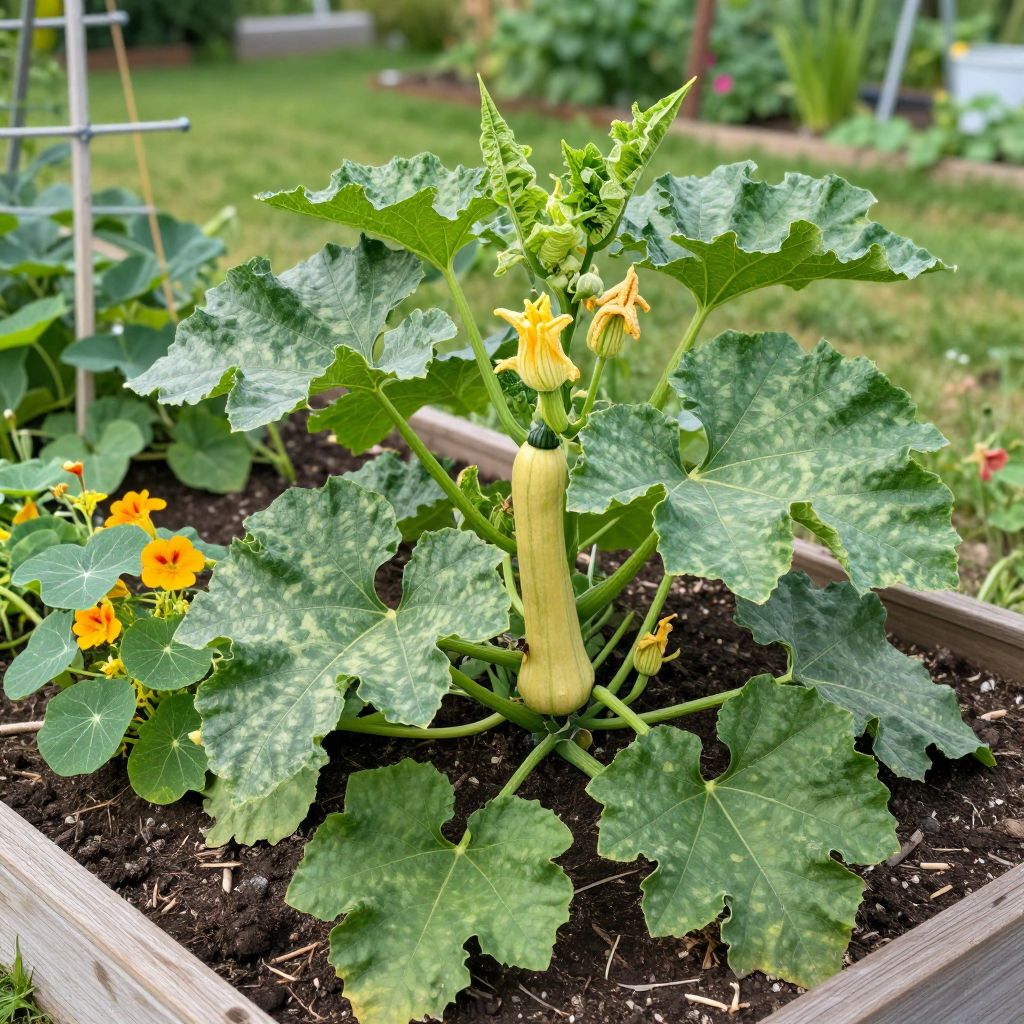
Wondering what to plant with squash so it grows well and uses space efficiently? Squash can be a generous crop, but it also needs room, pollination, and good airflow. The best companion plants help shade soil, attract pollinators, deter pests, and make the garden more productive without crowding the vines.
The right companions depend on whether you’re growing bush or vining squash, how much space you have, and your local climate. With a little planning, you can pair squash with flowers, herbs, and vegetables that support healthier growth and easier harvests.
What to plant with squash?
Good companions for squash include beans, corn, nasturtiums, marigolds, dill, borage, radishes, and leafy greens. These plants can improve pollination, help with pest control, or make use of space around the wide squash canopy. Avoid pairing squash with crops that compete heavily for room, light, or nutrients.
Best companion plants for squash
Beans
Beans are a classic partner for squash because they can grow in the same bed without demanding the same space pattern. Pole beans may use corn as support in a “three sisters” style planting, while bush beans fit more easily along bed edges.
Beans can also help soften the visual bulk of squash vines and fill gaps early in the season before squash spreads.
Corn
Corn can work well with squash in larger gardens where you have enough room for both crops. Squash vines help shade the soil around corn roots, which can reduce moisture loss in hot weather.
For best results, plant corn first so it gets established before squash starts running. Squash should not smother young corn seedlings.
Nasturtiums
Nasturtiums are a useful companion because they act as a trap crop for some pests and add bright flowers that can attract beneficial insects. They also spill nicely around bed edges and containers.
They are especially helpful near squash if you’re dealing with aphids or want a pollinator-friendly border.
Marigolds
Marigolds are often planted near squash for their pest-deterring reputation and their ability to bring color into the vegetable bed. While they are not a cure-all, they can support a more diverse garden and attract beneficial insects.
Choose compact types so they do not compete with squash for light or airflow.
Dill
Dill can be a strong companion for squash because its flowers attract hoverflies, lacewings, and parasitic wasps, all of which help keep pest populations in check. It also fits well in a mixed planting where you want useful flowers and herbs.
Let some dill flower if you want the pollinator benefit, but place it where it won’t be shaded out by the squash canopy.
Borage
Borage is another pollinator magnet and can be a good choice near squash blossoms. Its blue flowers are highly attractive to bees, which matters because squash depends on pollination for fruit set.
Give borage enough space, since it can become large and floppy in rich soil.
Radishes
Radishes mature quickly and can be planted around young squash before the vines spread. They help you use the bed efficiently while the squash is still small.
They are also handy as a “marker crop” because they show where you’ve left open soil and can be harvested before squash takes over.
Leafy greens
Lettuce, spinach, and other cool-season greens can grow near squash early in the season. As squash leaves expand, they provide partial shade that can slow bolting in warm weather.
This works best in spring or in cooler climates, because dense squash foliage can eventually shade greens too much.
Plants to avoid growing with squash
Squash needs room, steady moisture, and good airflow. Avoid crowding it with plants that compete too aggressively or that create disease pressure by reducing circulation.
- Potatoes — they compete for nutrients and can increase disease complexity in the same space.
- Other sprawling cucurbits — pumpkins, melons, and cucumbers can crowd squash and make pest and disease management harder.
- Tall, dense crops — anything that blocks sunlight or airflow can encourage mildew and make harvesting difficult.
- Heavy feeders planted too close — squash already asks a lot of the soil, so avoid overloading the bed.
If you want to grow more than one cucurbit, give each crop its own space or separate them across different beds to reduce pest spread and simplify care.
How to plan a squash companion planting layout
Start with the squash’s growth habit
Bush squash needs less horizontal room than vining types, but both need breathing space. Check the mature spread on the seed packet or plant label, then plan companions around that footprint instead of packing plants into the whole bed.
For vining squash, it often helps to place companions at the edges of the bed rather than directly in the vine path.
Use the edges and gaps well
Companion plants work best when they occupy spaces squash won’t need later. Early-season crops like radishes and lettuce can be tucked into open areas, while flowers and herbs can line the perimeter.
- Plant taller companions where they won’t shade squash seedlings.
- Keep low flowers near the border for pollinators.
- Leave access paths so you can water, inspect leaves, and harvest easily.
Think about pollination
Squash has separate male and female flowers, and fruit set depends on pollinators moving pollen between them. That makes bee-friendly companions especially valuable.
Planting flowers nearby can improve pollinator visits, but avoid spraying insecticides during bloom unless absolutely necessary and labeled for the pest you are treating.
Soil, sunlight, and spacing for healthy squash
Companion planting works best when the squash itself is growing in good conditions. Squash prefers full sun, fertile soil, and consistent moisture with excellent drainage.
- Sunlight: Aim for at least 6 to 8 hours of direct sun.
- Soil: Rich, well-drained soil with plenty of organic matter works best.
- Compost: Mix compost into the bed before planting to improve structure and moisture retention.
- Drainage: Avoid soggy soil, which can stress roots and encourage rot.
If your soil is heavy clay, consider raised beds or mounded rows. Squash roots dislike being waterlogged, especially in cool weather.
Watering and mulch around companion plantings
Squash needs steady moisture, especially while flowering and fruiting. Water deeply at the base rather than wetting the leaves, because damp foliage can encourage powdery mildew and other leaf diseases.
A 2- to 3-inch layer of organic mulch can help conserve moisture, suppress weeds, and keep soil cooler. Keep mulch a little away from the crown of the plant so stems do not stay constantly wet.
Companion plants benefit from the same mulch, but make sure low-growing herbs or flowers are not buried or smothered.
Common problems when planting squash with companions
Too much crowding
This is the most common mistake. Squash can quickly overtake nearby plants, especially in warm weather. Crowding reduces airflow, which increases the risk of mildew and makes it harder to spot pests.
Fix: Thin or relocate smaller companions early, before vines spread too far.
Poor pollination
If squash flowers but fruits fail to develop, the issue may be poor pollination rather than the companion planting itself. Lack of bees, rainy weather, or too few male flowers can all play a role.
Fix: Add more flowering companions, avoid broad insecticide use, and consider hand-pollinating if needed.
Pest pressure
Squash bugs, cucumber beetles, and aphids can show up quickly. Companion plants may help, but they do not replace regular inspection.
Fix: Check leaf undersides, remove egg masses by hand when possible, and keep the bed tidy. Healthy, diverse plantings make it easier to spot problems early.
Shade competition
Some companions that look attractive in spring may be shaded out once squash matures. This is especially common with lettuce, spinach, and small herbs.
Fix: Treat these as early-season fillers and harvest them before the squash canopy closes in.
Best companion planting combinations by garden style
Small space or raised bed
Choose compact companions that stay out of the vine path. Bush beans, marigolds, nasturtiums, and radishes are usually easier to manage than larger plants.
In a small bed, one or two squash plants may be enough. Overplanting quickly leads to shading and disease issues.
Large garden plot
If you have more room, you can use a broader mix of companions. Corn, beans, borage, dill, and squash can be arranged in a more traditional mixed planting, provided each crop has enough space.
Large plots also make it easier to rotate crops from year to year, which helps reduce pest and disease buildup.
Container growing
For containers, choose bush squash rather than vining types. Pair them with compact herbs or flowers in nearby pots rather than cramming too many plants into one container.
Container squash needs very consistent watering and a large pot with excellent drainage. Companion plants should never compete with the squash for root space in the same small container.
Seasonal tips for better results
In cool spring weather, fast crops like radishes and lettuce can fill space before squash takes off. In hot summer weather, flowers that attract pollinators become more valuable, and mulch becomes especially helpful for moisture retention.
As the season progresses, remove spent early crops so they do not become hidden under the squash canopy or invite pests.
If frost is a concern in your area, wait until soil and air temperatures are reliably warm before planting squash outdoors. Squash is sensitive to cold, and companions will not compensate for chilled soil or stunted growth.
Simple planting checklist
- Choose a sunny site with fertile, well-drained soil.
- Mix in compost before planting.
- Plant squash with enough room for the mature spread.
- Add compact companions along edges or in open gaps.
- Mulch to conserve moisture and suppress weeds.
- Water at the base and monitor for pests weekly.
- Remove or harvest short-season companions before they get crowded.
Conclusion
When deciding what to plant with squash, focus on companions that support pollination, fit the space, and do not compete too heavily. Beans, corn, nasturtiums, marigolds, dill, borage, radishes, and leafy greens are all practical choices in the right setting. Start with a simple layout, keep the bed open enough for airflow, and adjust as the squash grows.
For more garden planning ideas, you may also want to read about companion planting basics and how to grow summer squash successfully.