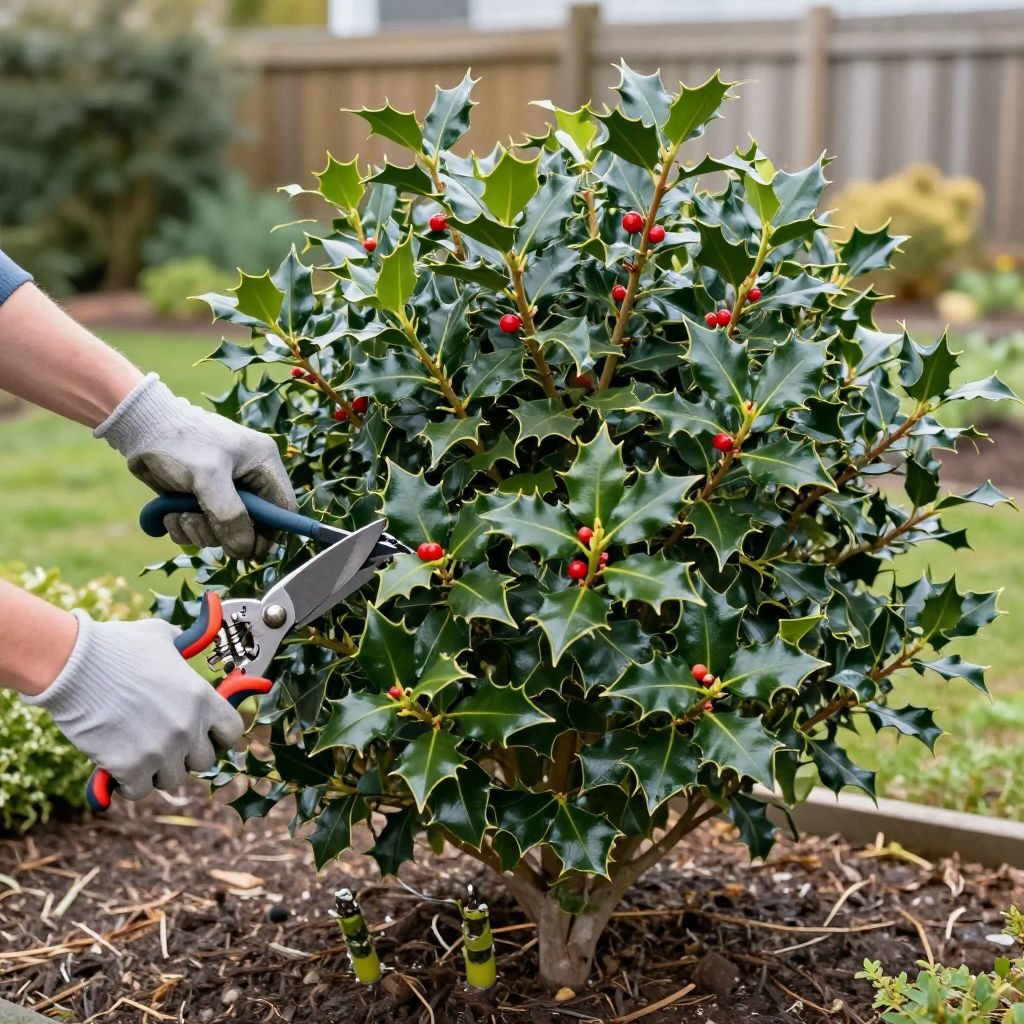
Wondering when to trim holly bushes without damaging their shape or berries? The best time depends on the type of holly, your climate, and how hard you want to prune. In general, light shaping is safest after new growth finishes, while major pruning is best done in late winter or early spring before active growth starts.
With the right timing, holly bushes respond well to pruning and stay dense, healthy, and attractive. The main goal is to avoid cutting at the wrong season, which can reduce berries, invite stress, or remove next season’s flower buds.
When to trim holly bushes?
The best time to trim holly bushes is usually late winter to early spring for major pruning, or after the current season’s growth hardens off for light shaping. Avoid heavy pruning in late summer or fall, because you may remove flower buds and increase the risk of tender new growth before cold weather.
Why timing matters for holly pruning
Hollies form buds on wood that may bloom and fruit the following season, depending on the species and cultivar. If you prune at the wrong time, you can cut off those buds and reduce berries.
Timing also affects plant stress. A hard trim just before a heat wave, drought, or frost can weaken the shrub and slow recovery.
Best timing by pruning goal
- Light shaping: After the flush of new growth finishes, usually late spring to early summer.
- Size reduction or renovation pruning: Late winter or very early spring, before strong new growth begins.
- Berry preservation: Prune only lightly and avoid cutting flowering stems if you want a heavy berry display.
- Cold-climate cleanup: Wait until the worst winter weather has passed, then remove damaged tips in spring.
How much you can safely trim
For established holly shrubs, start conservatively. Remove no more than about one-third of the shrub in a single season unless you are renovating an overgrown plant and can accept a slower recovery.
Light trimming is usually better than severe shearing. Hollies often look healthiest when you thin and shape them rather than cutting them into a tight box every time.
What to remove first
- Dead, broken, or diseased branches
- Crossing stems that rub against each other
- Long shoots that spoil the shrub’s natural outline
- Low branches that block walkways or windows
- Any growth affected by winter burn or storm damage
How to prune holly bushes step by step
- Inspect the shrub first. Look for dead wood, crowded stems, and areas that need thinning rather than heavy cutting.
- Use clean, sharp tools. Hand pruners work for small stems, loppers for thicker branches, and a pruning saw for old wood.
- Remove dead or damaged growth. Cut back to healthy wood or to the branch collar where appropriate.
- Thin crowded areas. Take out selected stems at their base to improve light and air movement.
- Shorten long shoots selectively. Cut just above a leaf node or side branch to keep a natural shape.
- Step back often. Check the outline from several angles so you do not overcut one side.
- Clean up debris. Remove clippings, especially if you saw signs of disease or pest damage.
For formal hedges
If your holly is clipped as a hedge, trim lightly and regularly rather than waiting for a big cutback. Keep the base slightly wider than the top so lower branches receive enough light.
A hedge that is narrower at the bottom often becomes thin and woody near the base.
When not to trim holly bushes
There are a few times when pruning is more likely to cause problems than help.
- During extreme heat or drought: Fresh cuts can stress the plant further.
- Right before a hard freeze: New growth may be damaged by cold.
- In late fall: You may remove buds and encourage tender regrowth.
- When the shrub is already struggling: Fix watering, drainage, or pests first if the plant is weak.
If a holly is badly overgrown, it is usually better to renovate it gradually over two or three seasons instead of cutting it back hard all at once.
Different holly types may need different timing
Not all hollies behave exactly the same. Some set flowers and berries on older wood, while others are less dependent on precise pruning windows. If you know the species or cultivar, you can fine-tune your timing.
Broadleaf evergreen hollies
Most landscape hollies, such as English holly (Ilex aquifolium) and American holly (Ilex opaca), are best pruned lightly after growth slows or in late winter before spring growth begins.
Deciduous or winterberry-type hollies
Deciduous hollies, including winterberry types (Ilex verticillata), are often pruned in late winter while dormant. This makes it easier to see the branch structure and remove older stems cleanly.
Young holly shrubs
For newly planted hollies, focus on light shaping only. Let the shrub establish roots first, and remove only broken, crossing, or obviously misplaced branches.
Pruning tips that keep holly healthy
Good pruning is as much about plant health as appearance. The following habits help holly bushes recover quickly and keep their dense form.
- Sanitize tools if you are cutting diseased wood or moving between plants with visible problems.
- Make clean cuts rather than tearing stems.
- Do not leave stubs that die back and look untidy.
- Thin from the inside when the plant is dense, so light reaches deeper branches.
- Mulch after pruning if the soil is dry, but keep mulch a few inches away from the trunk.
If the shrub has been neglected for years, expect a slower response. Hollies usually recover best when pruning is paired with steady moisture and decent soil drainage.
Common mistakes to avoid
Many holly pruning problems come from cutting too much, too late, or with the wrong technique.
- Shearing everything into a tight shell: This can create a dense outer layer and a bare interior.
- Removing too much at once: Severe cuts can shock the shrub and reduce berry production.
- Pruning at the wrong season: You may remove flower buds or stimulate growth that will be frost-damaged.
- Ignoring the plant’s natural shape: Hollies usually look best when they keep a layered, slightly informal form.
- Using dull tools: Ragged cuts heal more slowly and look worse.
What to do after trimming
After pruning, give the shrub a little support so it can recover well. Water deeply if the soil is dry, especially during warm weather. Avoid heavy fertilizing right after a major cut unless your soil test or plant condition clearly suggests a nutrient need.
Watch for new growth over the next several weeks. A healthy holly should produce fresh shoots around the cut areas and retain good leaf color.
Signs you pruned at the right time
- New growth appears within the normal growing season
- The shrub keeps a full, balanced shape
- Leaves stay firm and green rather than scorched or wilted
- Flowering and berry set remain acceptable for the species and season
How to handle an overgrown holly bush
If your holly has become too large, resist the urge to hack it back all at once. A gradual approach is usually safer and produces a better-looking shrub.
- Remove dead and damaged wood first.
- Thin out a few of the oldest stems at the base.
- Shorten the longest branches to a side branch or healthy leaf node.
- Repeat the process the following season if more size reduction is needed.
This slower method helps the plant keep enough foliage to feed itself while it regrows.
Final pruning advice for home gardeners
If you remember one thing about when to trim holly bushes, make it this: prune lightly after growth finishes for shaping, and save bigger cuts for late winter or early spring. Match the timing to your climate, avoid extreme weather, and never remove more than the shrub can comfortably replace.
For more help with evergreen care, you may also want to read about pruning shrubs in late winter and how to care for evergreen hedges.