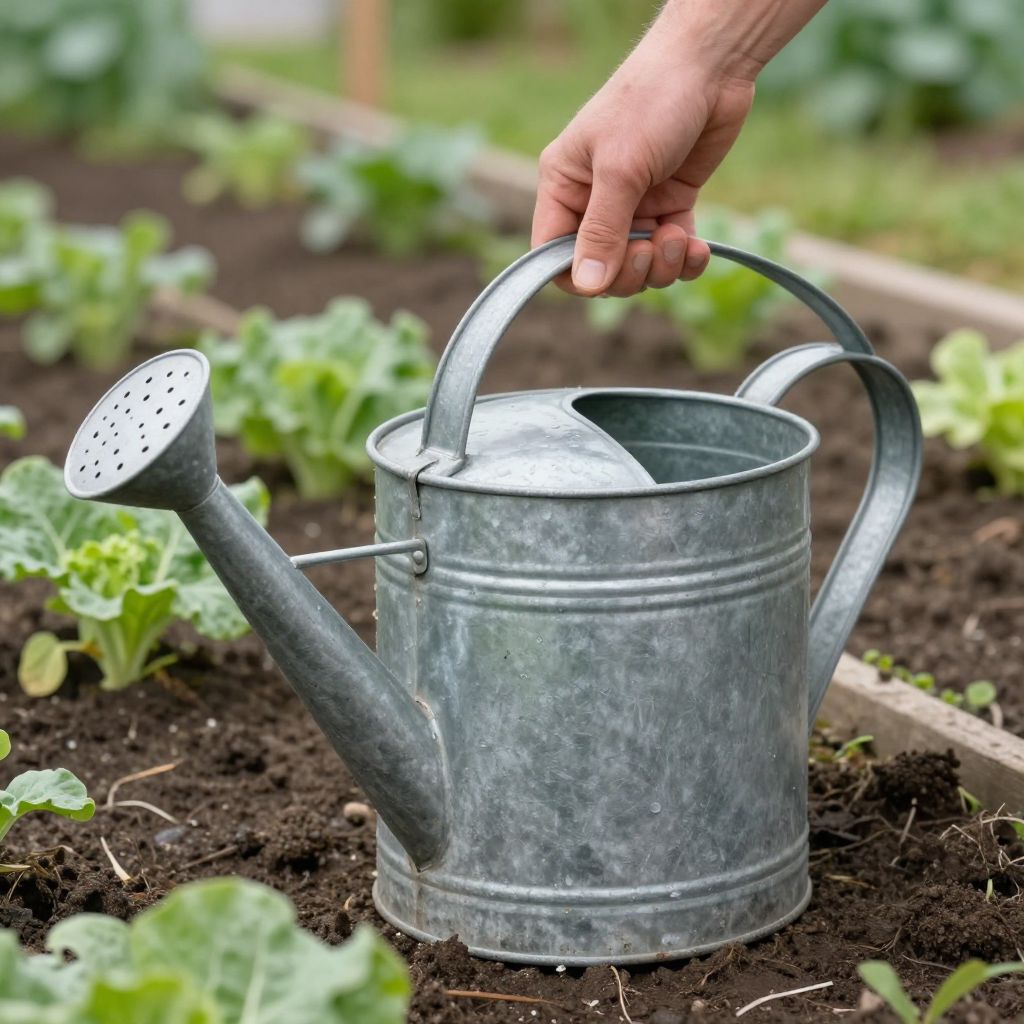
Trying to figure out whether a large watering can is the right tool for your garden? The answer depends on how much you water, what you grow, and how far you need to carry water. A good large watering can can save trips to the tap, but only if it is comfortable to lift, easy to pour, and suited to your plants.
Used well, it helps you water deeply and accurately without blasting soil away or soaking foliage unnecessarily. Used poorly, it becomes heavy, awkward, and wasteful. Here’s how to choose and use one effectively in real garden conditions.
What is a large watering can and when should you use one?
A large watering can is a hand-held container, usually around 8 to 12 liters, designed to carry a useful volume of water for pots, seedlings, borders, hanging baskets, and greenhouse plants. It is best when you need controlled watering close to the plant, not when you need to cover a very large area quickly.
How do you choose the right large watering can?
The best large watering can is the one you can lift safely when full and pour accurately without strain. Capacity matters, but so do balance, handle shape, spout design, and whether the rose can be removed for different watering jobs.
Capacity: bigger is not always better
A can that holds more water reduces refills, but water is heavy: 10 liters weighs about 10 kilograms before you even account for the can itself. If you have limited strength, a slightly smaller can may be more practical than a very large one.
- 6–8 liters: Often easier for frequent use, especially in small gardens or on balconies.
- 8–12 liters: Useful for larger collections of pots, greenhouse benches, or a few garden beds.
- Above 12 liters: Can be tiring unless you are watering from a very short distance or have excellent lifting capacity.
Material and durability
Plastic cans are light and affordable, while metal cans can be more durable and stable, though heavier. In cold weather, plastic may become brittle if left outside, and metal can rust if the finish is poor or damaged.
Spout and rose design
A long spout helps you reach under foliage and direct water to the soil. A removable rose is especially useful because you can switch between a gentle shower for seedlings and a more direct stream for established plants.
- Choose a rose with evenly spaced holes for a soft, rain-like spray.
- Make sure the rose fits securely and does not leak at the joint.
- Check that the can pours smoothly when nearly empty as well as full.
Handle comfort and balance
Try to imagine the can when it is full, not empty. A well-designed large watering can should feel balanced enough that the water does not surge forward and pull your wrist down as you tip it.
How do you use a large watering can properly?
Fill it only as much as you can carry comfortably, then water slowly at the base of the plant rather than over the leaves. Aim for even moisture through the root zone, and pause if the soil starts to puddle or run off before it has time to absorb the water.
- Fill the can from a tap, butt, or barrel that is clean enough for garden use.
- Attach the rose if you are watering seedlings, newly planted containers, or delicate foliage.
- Carry the can close to your body to reduce strain.
- Pour in a steady, low stream at the soil surface.
- Move around the plant so water reaches the whole root area, not just one side.
For pots and containers
Container plants dry out faster than plants in the ground because their root space is limited. Water until you see a little drainage from the holes at the base, then stop. Empty saucers after a short time so roots are not left sitting in water.
For raised beds and borders
Use the can to water newly planted crops, young shrubs, and anything growing in dry or free-draining soil. A large watering can is especially helpful where a hose is awkward or where you want to avoid disturbing mulch and seedlings.
What plants benefit most from a large watering can?
Any plant that needs targeted watering can benefit, but the tool is especially useful for seedlings, transplants, potted plants, and plants in protected spaces such as greenhouses, polytunnels, patios, and conservatories. These situations call for control rather than sheer volume.
Seedlings and young plants
Young plants need gentle watering so the soil stays in place and tender roots are not exposed. Use the rose attachment and water lightly but thoroughly, keeping the growing medium evenly moist rather than saturated.
Houseplants and indoor collections
Indoors, a large watering can can be handy if you have many pots, but it should still be easy to maneuver around furniture and shelves. A narrower spout helps you avoid spills on floors and windowsills.
Greenhouse crops
In a greenhouse, plants often need regular, careful watering because heat and airflow can dry pots quickly. A large watering can lets you move efficiently from bench to bench while still adjusting the flow for each plant.
How much water should you give?
There is no fixed amount that suits every garden. The right amount depends on plant size, pot size, soil type, weather, and root depth. The goal is to moisten the full root zone without leaving the soil waterlogged.
Signs the plant needs water
- The top layer of soil feels dry and crumbly, especially in pots.
- Leaves begin to droop, curl, or lose firmness during warm weather.
- Container compost pulls away from the side of the pot.
- Raised beds dry faster after wind or sun exposure.
Signs you may be overwatering
- Soil stays soggy for long periods.
- Leaves yellow while the plant still looks limp.
- Water pools on the surface instead of soaking in.
- Moss, algae, or fungus gnats become more noticeable in pots.
Water slowly enough for the soil to absorb it. If water runs off immediately, the soil may be compacted or too dry on the surface. In that case, give a small amount first, wait a few minutes, then water again so moisture can penetrate properly.
Seasonal and weather considerations
Your watering can routine should change with the weather. Cool, cloudy periods usually reduce water loss, while hot, windy, and sunny conditions can dry soil much faster than expected. Rainfall, pot size, and plant stage all matter too.
Spring
As growth starts, newly planted seedlings and transplants often need steady moisture to establish roots. Watch for drying in containers, especially on breezy days or under cover.
Summer
In hot weather, large watering cans are useful because they let you water early in the day or later in the evening with control. Avoid watering so late that foliage stays wet overnight in conditions where disease is a concern.
Autumn and winter
Many plants need less water in cooler seasons, but evergreens, greenhouse plants, and pots under shelter may still dry out. Water sparingly and check soil moisture before reaching for the can.
Common mistakes to avoid
Most watering problems come from using the can too quickly, too heavily, or in the wrong place. A few simple habits make a big difference to plant health and to your own comfort.
- Overfilling the can: If it is too heavy, you will pour badly or strain your wrist and shoulder.
- Watering only the surface: Shallow watering encourages shallow roots.
- Soaking leaves unnecessarily: Wet foliage can increase disease risk for some plants.
- Ignoring drainage: Pots without clear drainage holes can quickly become waterlogged.
- Using a strong jet on seedlings: This can flatten plants and disturb roots.
How do you keep a large watering can in good condition?
Rinse it out regularly so sediment, algae, or fertilizer residue does not build up inside. Check the rose holes for blockages, and store the can where it will not crack, rust, or collect stagnant water.
Basic maintenance checklist
- Empty leftover water after use if the can will sit for a while.
- Clean the spout and rose if the flow becomes uneven.
- Inspect handles and seams for cracks or leaks.
- Store it out of hard frost if it is made of plastic.
- Keep metal cans dry to reduce corrosion.
When is a large watering can better than a hose?
A large watering can is better when you want precision, when plants are close together, or when you are watering in a greenhouse, on a patio, or in a small garden. A hose is faster for larger areas, but it can overwater some spots and under-water others if you are not careful.
For many gardeners, the best approach is to use both tools: a hose for broad areas and a large watering can for targeted jobs. That balance gives you speed without losing control.
Practical buying tips before you choose one
Before you buy, think about where you will carry it, how far you will walk with it, and whether you need a fine spray or a direct pour. If possible, lift a filled can in the shop or compare weights at home using a container of water.
- Choose a size you can carry safely when full.
- Look for a rose that can be removed and cleaned easily.
- Pick a spout length that suits your pots and beds.
- Check that the handle shape feels secure with wet hands.
- Make sure the can fits your storage space.
Conclusion: make watering easier, not harder
A large watering can is most useful when it matches your strength, your plants, and your garden layout. Choose one that you can carry comfortably, then water slowly at the roots and adjust for weather, soil, and plant size. If you do that, you will get better results with less waste and less effort.
For more practical garden care, you may also find it helpful to read about how to water container plants correctly and choosing the right garden tools for small spaces.