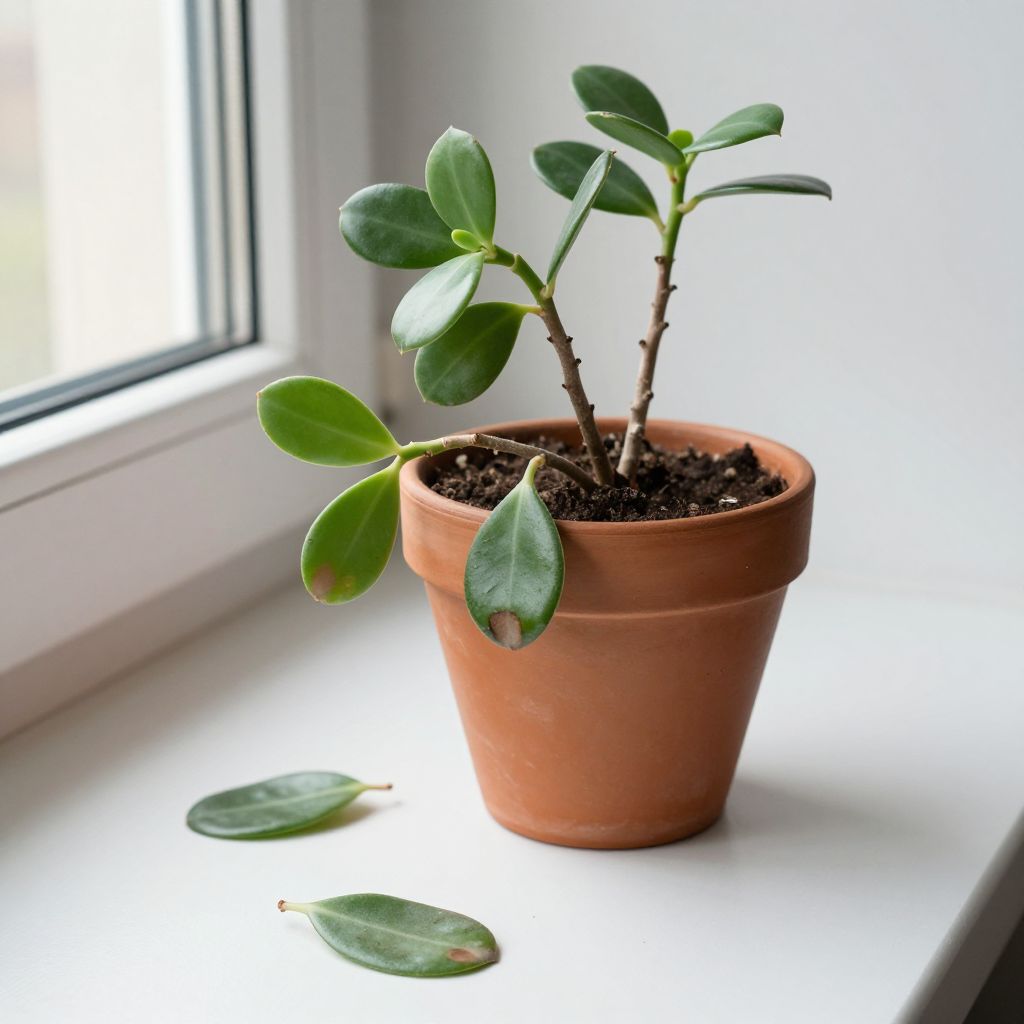
Why is my jade plant dropping leaves? In most cases, it’s reacting to a care issue rather than a serious disease. Jade plants (Crassula ovata) commonly shed leaves when they get too much water, too little light, sudden temperature changes, or root problems.
The good news is that jade plants are usually resilient. If you correct the growing conditions early, the plant can often recover and put out fresh growth.
Why is my jade plant dropping leaves?
Jade plants drop leaves when they’re stressed by water imbalance, low light, cold drafts, root damage, pests, or a sudden change in their environment. The most common cause is overwatering, especially in a pot with poor drainage. Check the soil, light, and roots first, then adjust care gradually.
Common causes of jade plant leaf drop
1. Overwatering
Too much water is the most common reason jade plants lose leaves. Their thick leaves store moisture, so they prefer soil that dries out between waterings. If the pot stays wet, roots can suffocate and begin to rot.
Signs of overwatering include:
- Soft, yellowing, or translucent leaves
- Leaves dropping while still plump
- Mushy stems near the base
- Soil that stays damp for many days
What to do: Let the pot dry out completely before watering again. If the soil is dense or sour-smelling, repot into a fast-draining succulent mix and a container with drainage holes.
2. Underwatering
Although jade plants tolerate dry conditions, prolonged drought can also cause leaf drop. When the plant is too dry, leaves may shrivel, wrinkle, and fall.
Signs of underwatering include:
- Wrinkled, thin, or slightly limp leaves
- Dry, pulling-away soil
- Stunted growth
- Leaf drop after a long dry spell
What to do: Water deeply until excess drains from the bottom, then wait until the soil dries again before watering next time. Do not give small sips frequently, because that encourages weak roots near the surface.
3. Not enough light
Jade plants need bright light to stay compact and healthy. Indoors, low light often leads to weak stems, stretching, and leaf drop as the plant struggles to support itself.
Look for these clues:
- Long, leggy stems
- Pale leaves
- Leaves dropping from the lower part of the plant
- Slow growth
What to do: Move the plant to the brightest spot you have, such as a south- or west-facing window with several hours of bright indirect light or gentle direct sun. Increase exposure gradually to avoid sunburn.
4. Sudden temperature changes
Jade plants dislike cold drafts, hot blasts from heaters, and abrupt moves from one light level to another. A sharp environmental change can trigger leaf drop even if the plant was healthy before.
Common triggers include:
- Cold windows in winter
- Air conditioning vents
- Heaters or fireplaces
- Moving a plant from shade to strong sun too quickly
What to do: Keep jade plants in a stable spot with temperatures that stay comfortably warm. Avoid placing them where leaves touch cold glass at night or where drafts hit them directly.
5. Root rot or poor drainage
If the roots stay wet too long, they can rot. Once roots are damaged, the plant can no longer take up water properly, and leaf drop often follows.
Watch for:
- Soft, blackened roots
- A sour or rotten smell from the soil
- Stems that feel mushy at the base
- Leaves dropping despite moist soil
What to do: Remove the plant from its pot, trim away rotten roots with clean scissors, and repot into dry, gritty succulent soil. Use a pot that is only slightly larger than the root ball.
6. Pests
Jade plants can be bothered by mealybugs, scale, and occasionally spider mites. These pests weaken the plant and may cause leaf loss, especially if the infestation is heavy or long-lasting.
Check for:
- White cottony clusters in leaf joints
- Sticky residue on leaves or nearby surfaces
- Small brown bumps on stems
- Fine webbing in dry indoor conditions
What to do: Isolate the plant and inspect stems, leaf undersides, and joints. Remove visible pests with a cotton swab dipped in rubbing alcohol, or wash the plant gently if the infestation is light. Repeat as needed.
7. Natural leaf aging
It is normal for an older jade plant to shed a few lower leaves over time. If the plant is otherwise healthy, occasional leaf drop at the base is usually nothing to worry about.
This is more likely when:
- Only a few bottom leaves fall
- New growth looks firm and healthy
- The plant has been growing for years
- No other symptoms are present
What to do: Simply remove fallen leaves and continue normal care. If leaf drop becomes frequent or widespread, look for another cause.
How to diagnose the problem step by step
When you’re trying to figure out why your jade plant is dropping leaves, start with the easiest clues first. A quick inspection usually reveals the issue before it becomes severe.
- Check the soil. Feel several inches down if possible. Is it soggy, slightly moist, or bone dry?
- Look at the leaves. Soft and yellow usually points to overwatering; wrinkled and thin often points to underwatering.
- Inspect the light. Is the plant near a bright window, or has it been sitting in dim indoor light?
- Examine the pot. Make sure it has drainage holes and is not sitting in a saucer of water.
- Check for pests. Look closely at stem joints and the undersides of leaves.
- Consider recent changes. Did you repot it, move it, or expose it to cold or intense sun?
How to fix a jade plant that is dropping leaves
If the soil is too wet
- Stop watering immediately.
- Empty any saucer under the pot.
- Move the plant to a brighter, warmer spot with good air circulation.
- If the soil stays wet for too long, repot into a faster-draining mix.
If the soil is too dry
- Water thoroughly until excess drains out.
- Do not water again until the top portion of the mix has dried and the pot feels lighter.
- Resume a more even routine, but still allow drying between waterings.
If light is the issue
- Move the plant to brighter light gradually over several days.
- Rotate the pot every couple of weeks so growth stays even.
- If the plant is very leggy, prune lightly after it adjusts.
If pests are present
- Isolate the plant from others.
- Remove pests by hand or with a cotton swab and rubbing alcohol.
- Clean the pot rim, saucer, and nearby surfaces.
- Inspect weekly until the problem is gone.
Best soil, pot, and watering setup for jade plants
Jade plants do best in a very free-draining mix. Regular potting soil often holds too much moisture unless it is amended with coarse ingredients.
A good setup includes:
- A pot with drainage holes
- A gritty succulent or cactus mix
- Extra perlite, pumice, or coarse sand if the mix is too dense
- A pot size that is not oversized for the roots
Water only when the soil has dried well. Indoors, that may mean watering less often in winter and more often during active growth, but the plant and pot size matter more than a fixed calendar schedule.
Pruning and recovery after leaf drop
If your jade plant has lost many leaves, pruning can help it regain a balanced shape. Remove weak, damaged, or overly leggy stems with clean pruners.
Keep these points in mind:
- Prune only when the plant is stable and not actively declining.
- Make clean cuts just above a node or branching point.
- Do not remove too much at once from a stressed plant.
- Let cut surfaces dry naturally.
Healthy jade cuttings can often be propagated. Allow the cut end to callus for a few days, then place it in a dry succulent mix and water sparingly until roots form.
When leaf drop is serious
A few dropped leaves are not always a problem, but widespread loss needs attention. Act quickly if you see soft stems, a foul smell, black roots, or rapid decline.
Seek to correct the growing conditions first. If the plant is collapsing despite dry soil and good light, root rot or severe pest damage may already be advanced.
How to prevent jade plant leaf drop
- Use a pot with drainage holes.
- Plant in a fast-draining succulent mix.
- Give bright light and avoid sudden moves.
- Water only after the soil dries well.
- Keep away from cold drafts and heat vents.
- Inspect regularly for mealybugs and scale.
- Repot only when needed, and handle roots gently.
Most jade plant leaf drop comes down to one of three things: too much water, too little light, or stress from sudden changes. Check the soil, inspect the roots, and improve the light before making any drastic moves. If you want to keep your plant thriving, start with the basics and adjust care gradually.