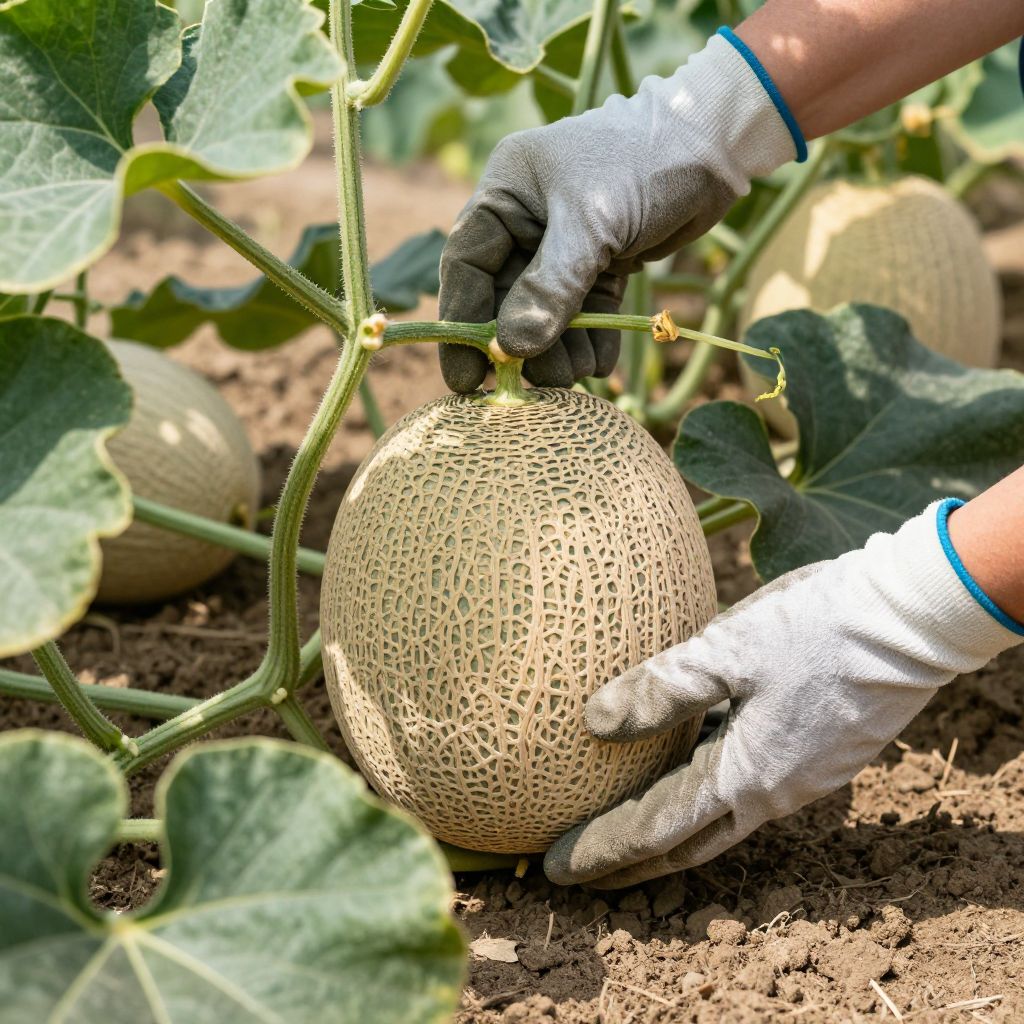
Wondering when to harvest cantaloupe so you get sweet, fragrant melons instead of bland, underripe fruit? Timing matters more than calendar dates, because cantaloupe ripens based on variety, weather, and how much sun the plant receives.
The good news is that ripe cantaloupe gives several clear signs. If you learn to read the stem, rind, aroma, and “slip” stage, you can harvest at peak flavor and avoid picking too early.
When to harvest cantaloupe?
Harvest cantaloupe when the fruit is fully colored, strongly fragrant, and easily slips from the vine with a gentle tug. The rind should shift from green to tan or golden, the netting should look pronounced, and the blossom end should yield slightly to pressure. Taste and aroma are usually better guides than days alone.
How to tell when cantaloupe is ripe
Cantaloupe ripens on the vine, and the signs are usually easy to spot once you know what to look for. Check several fruits on the same plant, because they often mature over a period of days rather than all at once.
1. Look for the background color change
Most cantaloupes develop a color shift from gray-green to tan, beige, or golden under the netted skin. The exact color depends on the variety, but a ripe melon usually looks less green and more warm-toned overall.
2. Check the stem attachment
Ripe cantaloupe often develops a natural separation point where the stem meets the fruit. This is called the slip stage. A ripe melon may come away with a light twist or gentle lift, leaving a clean scar at the stem end.
If the fruit resists strongly, it is probably not ready. Forcing it off can tear the stem and reduce quality.
3. Smell the blossom end
One of the best ripeness clues is aroma. A ripe cantaloupe often gives off a sweet, musky scent at the blossom end, opposite the stem. If there is little or no fragrance, wait and check again in a day or two.
4. Press gently at the blossom end
The blossom end should feel slightly soft, not mushy. Too hard usually means underripe. Too soft or wet can mean overripe or starting to spoil.
5. Judge the netting and overall appearance
The netted pattern on the rind should be well defined, and the skin beneath it should look full and mature. A glossy, very firm, green-looking melon is usually not ready yet.
How many days from planting to harvest?
Most cantaloupe varieties need about 70 to 100 days from planting to harvest, but that range can shift with temperature, sunlight, soil warmth, and variety. Cooler weather slows ripening, while strong sun and steady heat help fruit mature faster.
Instead of relying only on the seed packet number, watch the fruit itself. In many gardens, the first melons are ready several weeks after flowering, but the exact timing depends on pollination and growing conditions.
Factors that affect ripening time
- Variety: Some types mature earlier than others.
- Heat: Warm days and warm soil speed growth.
- Sunlight: Full sun helps fruit develop sweetness.
- Watering: Inconsistent moisture can slow or stress vines.
- Pollination: Poor pollination can delay or reduce fruit development.
How to harvest cantaloupe without damaging it
Harvesting is simple, but gentle handling matters. Cantaloupe bruises more easily than it looks, and a damaged melon may not store well.
- Check the fruit for color, aroma, and slip readiness.
- Support the melon with one hand.
- Use the other hand to lift or twist lightly at the stem.
- If it releases cleanly, place it in a shallow container or basket.
- Leave any fruit that still clings firmly to the vine.
If you must cut a melon from the vine, use clean pruners or a knife and leave a short stem stub if possible. Avoid yanking fruit free, which can bruise the melon or damage nearby vines.
Best time of day to harvest
Morning is often the easiest time to harvest because fruits are cool and less stressed by heat. That said, the ripeness signs matter more than the clock. Pick when the melon is ready, even if that means later in the day.
What if the cantaloupe won’t slip?
Not every ripe-looking cantaloupe slips cleanly, and not every variety behaves the same way. Some melons are best harvested when they are fully colored and fragrant, even if they do not detach on their own.
If the fruit smells sweet, has a mature rind color, and the blossom end is slightly soft, it may be ready. In that case, cut it from the vine rather than waiting too long for a perfect slip.
Signs you should wait a little longer
- The rind is still mostly green.
- The fruit has little or no scent.
- The blossom end is very firm.
- The stem is tightly attached and hard to move.
Common mistakes when deciding when to harvest cantaloupe
Many gardeners pick too early because they are worried about pests, weather, or animals. Others wait too long because they expect one obvious sign. A few simple mistakes can make the difference between a sweet melon and a disappointing one.
Harvesting by size alone
Big fruit is not always ripe fruit. A melon can reach full size before it develops enough sugar and aroma. Always check color, scent, and stem condition.
Waiting for the vine to die back completely
Unlike some crops, cantaloupe does not need the whole plant to dry out before harvest. In fact, waiting too long can lead to overripening, cracking, or pest damage.
Ignoring weather
Heat waves can push fruit toward overripe quickly, while cool spells can slow ripening. During hot weather, check vines daily once fruit starts showing mature color.
Pulling fruit off too hard
Forcing a melon free can bruise it and shorten storage life. If it does not release easily, give it another day or two and check again.
What to do after harvest
After harvest, handle cantaloupe carefully and keep it out of direct sun. A ripe melon can soften further at room temperature, but it should not sit in extreme heat.
- Wipe off loose soil gently if needed.
- Inspect for soft spots, cracks, or insect damage.
- Store whole melons in a cool, dry place for short-term keeping.
- Refrigerate cut melon promptly in a covered container.
If you want the best flavor, many gardeners chill the melon briefly after harvest, then bring it back toward room temperature before eating. Flavor and aroma are often more noticeable when the fruit is not ice-cold.
Growing conditions that help cantaloupe ripen well
Good harvest timing starts long before the fruit is picked. Healthy vines produce better melons, and better melons are easier to judge at harvest.
Sun and heat
Cantaloupe needs full sun and warm conditions to develop sweetness. A site with at least 6 to 8 hours of direct sun is a strong starting point in most gardens.
Soil and drainage
Loose, fertile, well-drained soil helps roots grow deeply and supports steady fruit development. Heavy, soggy soil can stress vines and reduce fruit quality. Raised beds or mounded rows can help if your soil stays wet.
Watering
Even moisture is important while vines are growing and setting fruit. Inconsistent watering can lead to poor fruit fill or uneven ripening. Once fruit is close to maturity, avoid soaking the soil heavily after a dry spell, since sudden swings can affect quality.
Pollination
Melons depend on pollination to form properly. If fruit is misshapen, small, or slow to mature, poor pollination may be part of the problem. Encourage pollinators by avoiding unnecessary pesticide use and growing nearby flowering plants that attract bees.
Pests and diseases that can affect harvest timing
Sometimes you need to harvest a melon a little early because disease, insects, or wildlife are threatening the crop. Watch the vines closely as fruit nears maturity.
Common problems to watch for
- Powdery mildew: White, dusty coating on leaves can weaken the plant and reduce fruit quality.
- Squash bugs and cucumber beetles: These pests can stress vines and spread disease.
- Birds, rodents, and raccoons: They may damage ripe fruit just before harvest.
- Fruit rot: Soft or discolored areas mean the melon should be harvested immediately or discarded if spoiled.
If wildlife is a problem, check fruit frequently once it begins to color up. Sometimes harvesting a melon at the first sign of ripeness is better than losing it overnight.
Quick harvest checklist
Use this simple checklist when you are deciding whether a cantaloupe is ready:
- The rind has shifted from green to tan or golden.
- The netting is prominent and the fruit looks mature.
- The melon smells sweet at the blossom end.
- The blossom end gives slightly when pressed.
- The fruit slips easily from the vine or can be cut cleanly.
Conclusion
The best answer to when to harvest cantaloupe is: pick it when the fruit itself tells you it is ready. Watch for color change, fragrance, slight softness at the blossom end, and easy stem release, then harvest gently and enjoy it soon for the best flavor.
If you are growing other summer crops too, you may also find it helpful to read more about how to grow cantaloupe and when to harvest watermelon.