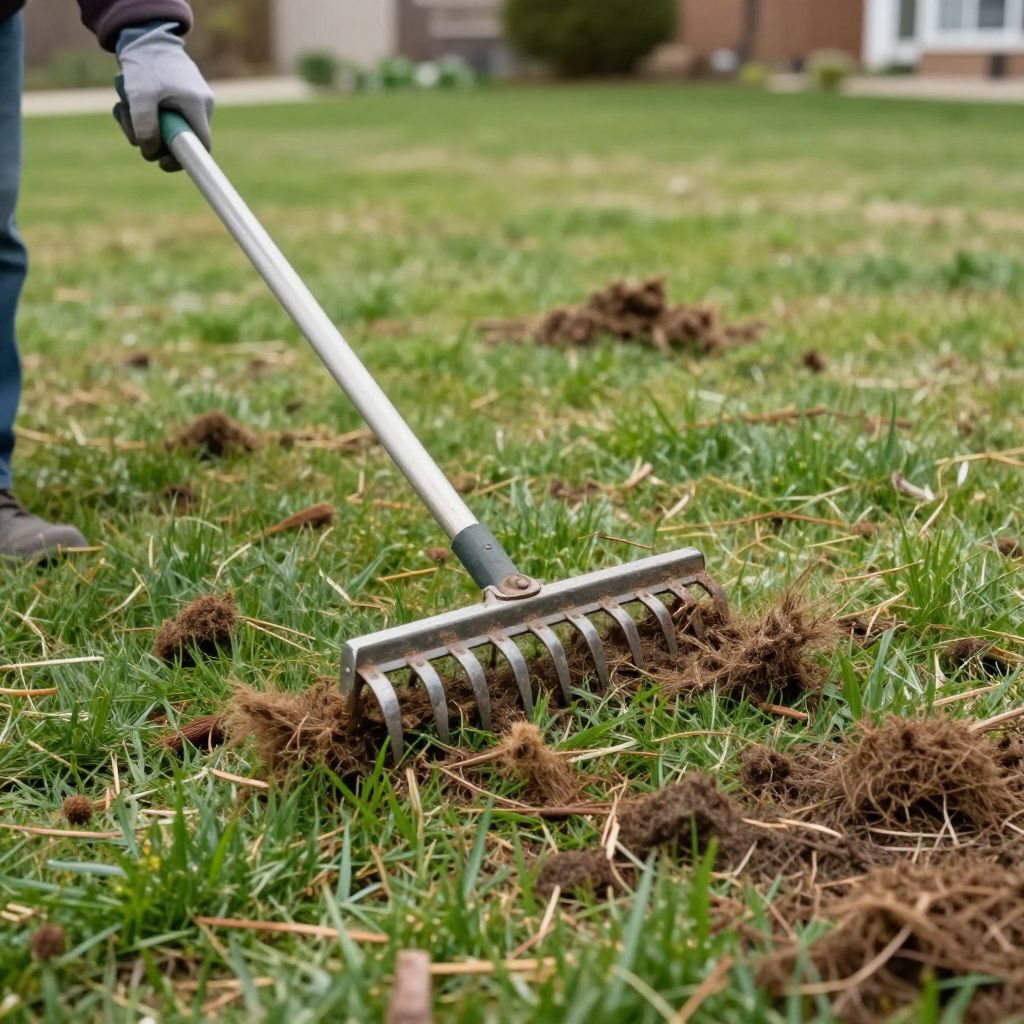
If your lawn feels spongy, looks tired, or water seems to sit on the surface instead of soaking in, you may be wondering, “What is dethatching lawn?” Dethatching is the process of removing the layer of dead grass stems, roots, and debris that builds up between the green blades and the soil.
Done at the right time and on the right type of lawn, it can improve airflow, water movement, and new growth. Done too aggressively, it can stress grass that is already struggling, so it helps to know what you’re looking at before you start.
What is dethatching lawn?
Dethatching lawn means removing excess thatch, a dense mat of dead and living plant material that sits above the soil surface. A thin layer is normal, but when it becomes too thick, it can block water, nutrients, and air from reaching the roots and can make turf weaker and more disease-prone.
What is thatch, and when is it a problem?
Thatch is not ordinary lawn clippings left on top of the grass. It is a woven layer of stems, stolons, rhizomes, and dead roots that accumulates faster than it breaks down. A small amount can help cushion the lawn, but too much creates a barrier.
How to tell if your lawn has too much thatch
- It feels springy or bouncy underfoot.
- Water runs off instead of soaking in quickly.
- The lawn dries out unevenly even after watering.
- Grass looks thin, dull, or patchy despite regular care.
- You can see a brown, fibrous layer between the green blades and soil.
A thatch layer under about 1/2 inch is usually manageable. Once it becomes thicker than that, many lawns begin to show problems, especially if the soil is compacted or drainage is poor.
How to check your lawn for thatch
The easiest way to inspect thatch is to cut a small wedge out of the turf with a garden trowel or utility knife. Pull the plug apart and look at the base of the grass. You should be able to see the soil clearly beneath the crown of the grass plants.
- Choose a representative area, not just the worst-looking patch.
- Cut a small vertical slice about 2 to 3 inches deep.
- Measure the brown layer between the green growth and the soil.
- Repeat in a few places across the lawn.
If you find thatch in only one section, the issue may be localized. If it appears across the whole lawn, you may need a broader maintenance plan rather than a one-time cleanup.
When should you dethatch?
The best time depends on your grass type and local climate. Dethatching is best done when the lawn is actively growing and can recover quickly. Avoid doing it during heat stress, drought, frost, or periods of slow growth.
Cool-season grasses
For cool-season lawns such as tall fescue, Kentucky bluegrass, and perennial ryegrass, dethatching is often done in early fall or sometimes early spring, when temperatures are mild and growth is strong.
Warm-season grasses
For warm-season lawns such as bermudagrass, zoysia, and St. Augustinegrass, late spring to early summer is usually better, once the grass is fully active and spreading.
Never dethatch a lawn that is already stressed. If the grass is thin from drought, disease, shade, or compaction, address those problems first or you may make the lawn worse.
How to dethatch a lawn step by step
You can dethatch a small lawn by hand, but larger areas are easier with a dethatching rake or a powered dethatcher. The goal is to lift and remove the mat of dead material without tearing up healthy turf too deeply.
- Mow the lawn slightly lower than usual, but not scalped. Remove clippings so the dethatcher can reach the thatch layer.
- Water lightly a day or two before if the soil is very dry. The ground should be moist, not muddy.
- Use a dethatching rake for small areas, or a vertical mower/power rake for larger lawns.
- Work in one direction first, then a second pass at a right angle if needed.
- Rake up loosened debris and remove it from the lawn.
- Water the lawn afterward and monitor recovery over the next few weeks.
Tools that are useful
- Dethatching rake or spring-tine rake for small lawns
- Power rake or vertical mower for larger areas
- Leaf rake or lawn cart for cleanup
- Garden hose or sprinkler for post-care watering
- Optional: core aerator if compaction is also a problem
Should you dethatch, aerate, or both?
Dethatching and aerating solve different problems. Dethatching removes the surface mat of organic debris, while aeration removes plugs of soil to reduce compaction and improve root growth. Many lawns need only one of these tasks, but some need both.
Choose dethatching when:
- The turf feels spongy and the thatch layer is thick.
- Water and fertilizer seem to stay on top of the lawn.
- The grass is healthy enough to recover quickly.
Choose aeration when:
- The soil is hard, dense, or compacted.
- Water pools in low spots or runs off compacted areas.
- The lawn is growing poorly even without much thatch.
In some cases, aeration followed by light overseeding is more helpful than dethatching alone, especially if the lawn is thin and the soil is tight.
What to do after dethatching
After dethatching, the lawn often looks rough for a short time. That is normal. The grass needs a recovery period, and good aftercare helps it fill back in faster.
Post-dethatching care checklist
- Water deeply enough to keep the root zone from drying out.
- Keep foot traffic low for a couple of weeks if possible.
- Rake up all loosened debris so it does not settle back into the turf.
- Overseed thin areas if your grass type and season allow it.
- Apply compost lightly only if your lawn needs soil improvement and the surface is open enough to accept it.
If you overseed, choose seed that matches your existing lawn and local conditions. A thin topdressing of compost can help improve soil structure, but it should not bury the grass crowns.
Common mistakes to avoid
Most dethatching problems happen when the lawn is treated too aggressively or at the wrong time. A careful approach protects the grass and gives better long-term results.
- Don’t dethatch too often. Most lawns do not need it every year.
- Don’t use a power dethatcher on stressed grass. It can tear up healthy turf along with the thatch.
- Don’t confuse clippings with thatch. Normal mowing debris breaks down quickly when mowing is done properly.
- Don’t dethatch during drought or extreme heat. Recovery will be slower and damage greater.
- Don’t ignore soil compaction. If the soil is hard, dethatching alone may not solve the problem.
Why thatch builds up in the first place
Thatch develops when grass produces organic material faster than microbes and soil organisms can break it down. Some lawns are more prone to it than others, especially those that receive frequent light watering, heavy nitrogen feeding, or repeated shallow mowing.
Factors that encourage thatch
- Frequent shallow irrigation
- Excessive fertilizer, especially nitrogen
- Infrequent mowing or mowing too low
- Poor soil drainage
- Grass types that spread aggressively by stolons or rhizomes
Healthy lawn care helps prevent thatch from returning. Mow at the correct height for your grass, water deeply but not constantly, and avoid overfeeding just to force top growth.
How to keep thatch from coming back
Prevention is easier than repeated dethatching. A balanced maintenance routine keeps the turf active without encouraging a thick mat of debris.
- Mow regularly and never remove more than about one-third of the grass blade at a time.
- Water deeply when the lawn needs it, rather than giving frequent light sprinklings.
- Use fertilizer only as needed based on grass type, soil condition, and season.
- Aerate compacted soil when necessary.
- Leave grass clippings on the lawn only when they are light and finely cut; they should not form piles.
If your lawn repeatedly develops heavy thatch, consider whether the site itself is part of the problem. Shade, poor drainage, compacted soil, or an unsuitable grass type can all make maintenance harder.
When to call in help
If the thatch layer is very thick, the lawn is large, or the turf is already weak, a professional lawn service or landscape contractor may be able to use the right equipment more safely. This is especially helpful if you need dethatching combined with aeration, overseeding, or soil correction.
For most home gardeners, though, the key is simple: check the lawn first, dethatch only when needed, and match the timing to your grass type and climate. If you want to keep improving your turf care, read more about lawn aeration and overseeding next, since those practices often work well alongside dethatching.