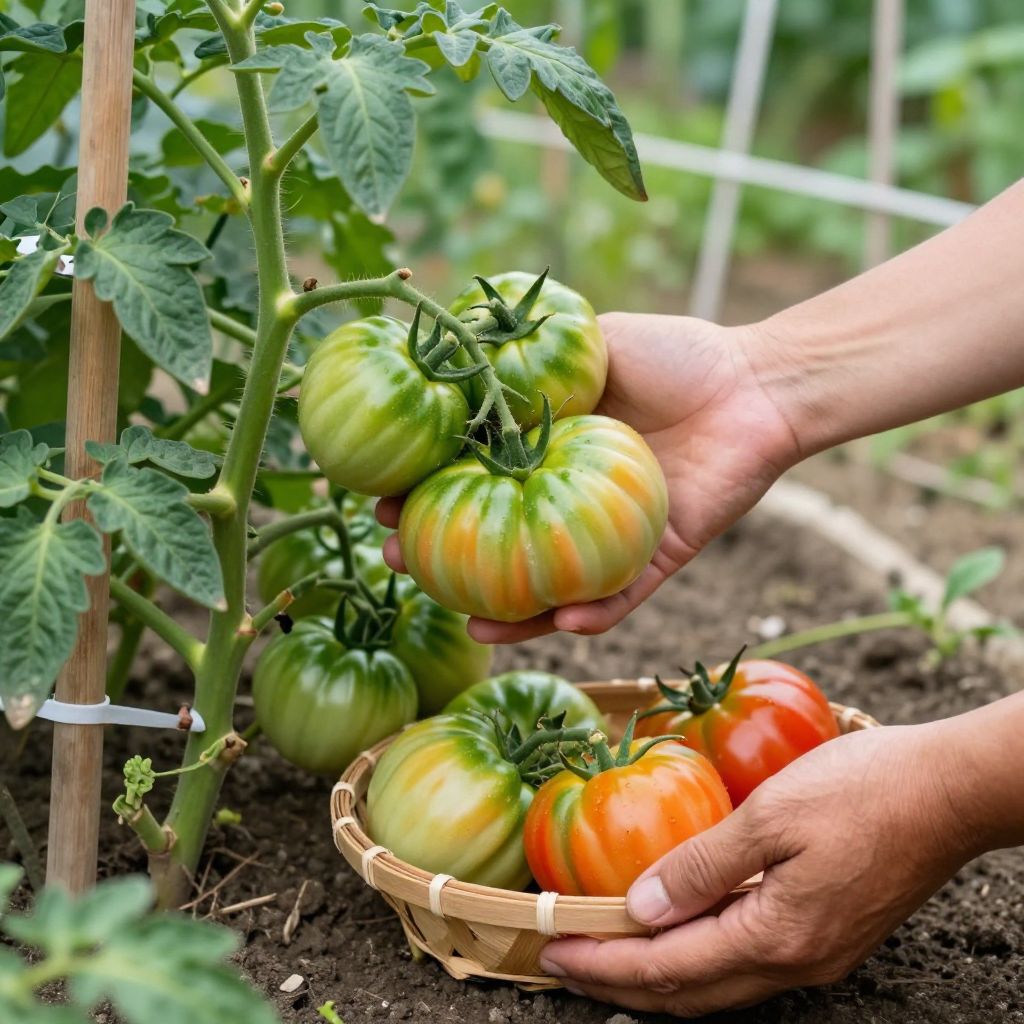
Do tomatoes ripen off the vine? Yes, they can, but only if they were already mature enough when picked. Tomatoes will continue to soften, color up, and develop flavor after harvest, but they won’t improve much if they were picked too green and immature.
If you want the best taste, the goal is to let tomatoes ripen on the plant as long as weather and plant health allow. Still, there are good reasons to harvest early, and with the right handling you can finish ripening many tomatoes indoors.
Do tomatoes ripen off the vine?
Tomatoes can ripen off the vine if they have reached the mature green stage or beyond. They need warmth, not sunlight, to finish ripening. Fully immature green tomatoes usually stay hard, stay green, or develop poor flavor, while mature fruit can turn red, pink, yellow, or orange indoors.
How tomato ripening works
Tomatoes are climacteric fruits, which means they continue ripening after harvest. As they ripen, starches convert to sugars, acids change, and the fruit softens and colors up.
That said, ripening off the vine is not the same as growing to full flavor on the plant. A tomato harvested too early may look close, but it often lacks sweetness, aroma, and the balanced taste you expect from vine-ripened fruit.
What “mature green” means
Mature green tomatoes are fully sized and have reached the stage where the seeds are developed and the fruit is physiologically ready to ripen. They may still be solid green, but they often show a slight color break, a glossy skin, and a firmer but not rock-hard feel.
If you cut one open, the jelly around the seeds is formed and the seed coat is usually hard. That is a much better candidate for indoor ripening than a tiny, pale green fruit.
When you should pick tomatoes early
Sometimes harvesting before full color is the smart choice. Early picking can protect fruit from damage and help the plant redirect energy to the tomatoes still developing.
- Frost or cold nights are coming. Tomatoes exposed to chill can stop ripening well and may be damaged.
- Heavy rain is expected. Ripe fruit can split, and overwatered plants may be more prone to cracking.
- Pests or disease are increasing. Birds, hornworms, cracking, blight, and rot can ruin fruit left too long.
- The plant is overloaded. Removing some mature fruit can reduce stress and improve ripening of the rest.
If the weather is warm and the plant is healthy, letting tomatoes ripen on the vine usually gives the best flavor. If conditions are turning bad, it is often better to harvest mature green fruit and finish them indoors.
How to ripen tomatoes off the vine
To ripen tomatoes indoors, keep them at room temperature in a dry place with good air circulation. Avoid direct sun, which can overheat the fruit and dry it out without improving flavor.
Step-by-step indoor ripening
- Pick tomatoes that are mature green or already showing a blush of color.
- Remove leaves, stems, and any fruit with obvious rot or deep damage.
- Place them in a single layer in a shallow box, tray, or cardboard carton.
- Keep them in a spot around normal room temperature, away from direct sunlight.
- Check daily and remove any fruit that softens too fast or shows mold.
For a slightly faster finish, you can place a ripe banana or apple nearby. These fruits release ethylene gas, which can encourage ripening. Use this carefully and monitor the fruit closely so you do not trigger uneven softening or spoilage.
Best conditions for off-vine ripening
- Temperature: room temperature is usually best; very cool rooms slow ripening.
- Light: not necessary for ripening; a dark room is fine if it is dry and airy.
- Humidity: moderate to low humidity helps reduce mold.
- Airflow: important to prevent condensation and rot.
Do not refrigerate tomatoes you want to ripen. Cold temperatures can slow or stop the ripening process and can reduce flavor and texture.
Which tomatoes ripen best after picking?
Some tomatoes finish better indoors than others. Smaller, rounder fruit often ripens more evenly than large, thick-fleshed types, though any mature tomato can be worth trying if it was picked at the right stage.
- Good candidates: mature green fruit, breaker-stage fruit, and tomatoes with a light blush.
- Poor candidates: tiny green fruit, damaged fruit, split fruit with exposed flesh, or fruit with signs of rot.
- Best flavor potential: fruit that was already near ripeness when picked.
Cherry tomatoes and smaller salad types often ripen quickly once picked. Large beefsteak tomatoes may take longer and can be more prone to uneven softening if they were harvested too early.
How to know when a tomato is ready to pick
Knowing the right harvest stage helps you get the best results whether you finish ripening indoors or leave fruit on the plant. Look for subtle changes, not just obvious color.
Signs a tomato is mature enough
- The fruit has reached full size for its type.
- The shoulders are no longer sharply angular or underdeveloped.
- The skin has a slight sheen.
- There is a faint color change from deep green to lighter green, pink, yellow, or orange at the blossom end or shoulders.
- The fruit gives slightly if gently handled, but is still firm.
If you are unsure, pick one tomato and test it indoors. That is often better than leaving all fruit on the vine and risking weather damage.
Why some tomatoes do not ripen well off the vine
Not every green tomato will ripen successfully indoors. If the fruit was picked too early, stored too cold, or exposed to disease, the process may stall or fail.
Common problems and fixes
- Fruit stays hard and green: it was likely picked too early; try leaving future fruit on the plant longer.
- Fruit softens but does not color evenly: temperatures may be too cool or too warm; move it to a steadier room-temperature location.
- Mold appears: remove affected fruit and improve airflow; do not stack tomatoes deeply.
- Flavor is bland: the tomato was probably harvested before it had enough time to build sugars on the plant.
- Wrinkling or shriveling: the air may be too dry or the fruit may be past its best stage.
One common mistake is putting tomatoes in a sunny windowsill and expecting better flavor. Sunlight does not drive ripening the way many gardeners assume; warmth and maturity matter more.
Should you leave tomatoes on the vine longer?
Usually, yes, if the plant is healthy and the weather is still favorable. Tomatoes left on the vine often develop fuller flavor and better texture than fruit finished indoors.
However, if your region is heading into cool nights, heavy rain, or disease pressure, it is sensible to harvest mature fruit early. In many gardens, the best strategy is a mix: leave the healthiest fruit on the plant and bring in the most vulnerable ones.
Outdoor growing conditions that affect ripening
- Sunlight: tomatoes need full sun for strong growth and fruit production.
- Watering: even moisture helps prevent stress, cracking, and blossom-end rot.
- Soil: fertile, well-drained soil supports steady fruit development.
- Pruning and support: staking, caging, or trellising improves airflow and reduces disease risk.
Healthy plants ripen fruit more reliably. If your tomatoes are slow to color, the issue may be plant stress rather than the fruit itself.
Care tips to help tomatoes ripen better
If you want more tomatoes to ripen on the vine, focus on plant care before harvest time. Ripening is strongly affected by the plant’s overall health, not just the fruit itself.
Practical care steps
- Water deeply when the soil begins to dry, rather than giving frequent shallow watering.
- Mulch to help keep soil moisture more even.
- Support plants with cages, stakes, or trellises so fruit stays off the ground.
- Remove diseased leaves promptly to improve airflow.
- Avoid overfertilizing with nitrogen late in the season, which can push leafy growth instead of fruit ripening.
Good drainage matters too. Waterlogged soil can stress roots and slow fruit development, while compacted soil can limit plant vigor. If your soil is heavy clay, raised beds or added organic matter can help over time.
Harvesting and handling tips
Handle tomatoes gently when picking and storing them. Bruising can shorten storage life and make indoor ripening less successful.
Use clean pruners or twist fruit off carefully, leaving a short stem if possible. Keep tomatoes out of plastic bags unless they are vented, because trapped moisture can encourage rot.
If you have a large harvest, sort fruit into groups: ripe for immediate use, mature green for ripening, and damaged fruit to use first or discard. That simple step helps prevent one bad tomato from spoiling the rest.
Frequently asked ripening questions
Will tomatoes ripen in a paper bag?
Yes, a paper bag can help trap ethylene around the fruit and speed ripening a little. Add only a few tomatoes at a time and check them often so they do not over-soften or mold.
Can green tomatoes ripen in the fridge?
No, refrigeration slows or stops ripening and can hurt flavor and texture. If the fruit is already fully ripe, the fridge can help extend storage for a short time, but it is not a ripening method.
Do tomatoes need sunlight to turn red?
No. Tomatoes need warmth and the right stage of maturity, not direct sunlight, to ripen. A bright window is not necessary and can sometimes dry the fruit too quickly.
Conclusion
So, do tomatoes ripen off the vine? Yes, mature tomatoes do, and that makes it possible to save fruit from frost, storms, and disease. The key is to harvest at the right stage, keep them at room temperature, and avoid cold storage until they are fully ripe.
If you are deciding what to pick today, choose the fullest, most mature fruit first and leave the healthiest tomatoes on the plant a little longer. For more help with harvest timing and plant care, you may also want to read about how to tell when tomatoes are ripe and common tomato growing problems.