Wondering when to apply lime to lawn so you actually improve soil instead of wasting time and product? The short answer is: apply lime when a soil test shows your lawn soil is too acidic, and choose a calm, dry day in fall or spring so the material can work into the soil gradually.
Timing matters, but soil pH matters more. Lime is not a routine lawn treatment for every yard, and applying it at the wrong time or in the wrong amount can do little good or even create new problems.
When to apply lime to lawn?
Apply lime after a soil test confirms low pH, ideally in fall or early spring when the lawn is actively growing and rain can help move the material into the root zone. Avoid applying lime during drought, frozen ground, or right before heavy rainfall that could wash it away.
Why lawn soil pH matters
Grass grows best when the soil pH is in a range where roots can absorb nutrients efficiently. If soil is too acidic, turf may struggle to take up nitrogen, phosphorus, potassium, and some micronutrients even when fertilizer is present.
That can show up as thin growth, pale color, moss or weed pressure, and poor recovery after mowing or foot traffic. Lime does not feed the grass directly; it helps correct acidic soil so existing nutrients become more available.
Signs your lawn may need lime
- Moss is spreading in shady or damp areas
- Grass looks weak despite regular care
- Soil test pH is below the recommended range for your turf type
- Fertilizer seems less effective than expected
- Clay or sandy soil has been heavily irrigated or fertilized for years
These signs are clues, not proof. A soil test is the only reliable way to know whether lime is needed and how much to use.
Best seasons for applying lime
Fall is often the best time
Fall is a very good time to lime lawns because soil moisture is usually more consistent, temperatures are moderate, and the material has months to react before the next growing season. In many climates, fall application gives lime time to move into the root zone before spring growth starts.
Early spring can also work
If you missed fall, early spring is the next best window for many lawns. Apply lime before the lawn is under heat stress, and before you begin a heavy fertilizer program if a soil test shows acidity.
Summer is usually less ideal
Hot, dry weather slows soil reaction and can stress turf already coping with heat. If you must lime in summer, water the lawn lightly afterward if local watering rules allow, and avoid applying during drought or extreme heat.
Winter application depends on your climate
In mild regions, lime can be applied in winter if the ground is workable and not frozen. In cold climates, wait until the soil thaws and the lawn can absorb moisture and nutrients again.
How to tell if your lawn actually needs lime
Start with a soil test. Most extension services and many garden centers offer testing that reports pH and often recommends a lime rate based on your soil type.
- Collect several small soil samples from different parts of the lawn.
- Mix them together in a clean container.
- Send the sample for testing or use a reliable home soil test kit.
- Check the pH result and the lime recommendation before buying product.
Different grasses prefer slightly different pH ranges, but many lawns do well in the moderately acidic to near-neutral range. If your pH is already suitable, adding lime is unnecessary and may create nutrient imbalances.
What type of lime to use
Most home lawns use either ground agricultural limestone or dolomitic lime. Agricultural limestone mainly supplies calcium and raises pH. Dolomitic lime supplies calcium plus magnesium, which can be helpful if soil tests show low magnesium.
Choose the product based on your soil test, not on guesswork. Finely ground lime usually reacts faster than coarse material because it has more surface area.
Common lime products for lawns
- Calcitic lime: best when calcium is needed and magnesium is already adequate
- Dolomitic lime: useful when both pH and magnesium are low
- Pelletized lime: easier to spread evenly, but still follows the same soil-test guidance
Avoid using quicklime or hydrated lime on a home lawn unless a soil professional specifically recommends it. Those products are much more caustic and are not the same as standard lawn lime.
How to apply lime to a lawn correctly
Even application is more important than speed. The goal is to spread lime uniformly so the soil changes evenly across the lawn.
- Mow the lawn a little lower than usual if needed, but do not scalp it.
- Rake away thick thatch or debris so lime can reach the soil surface.
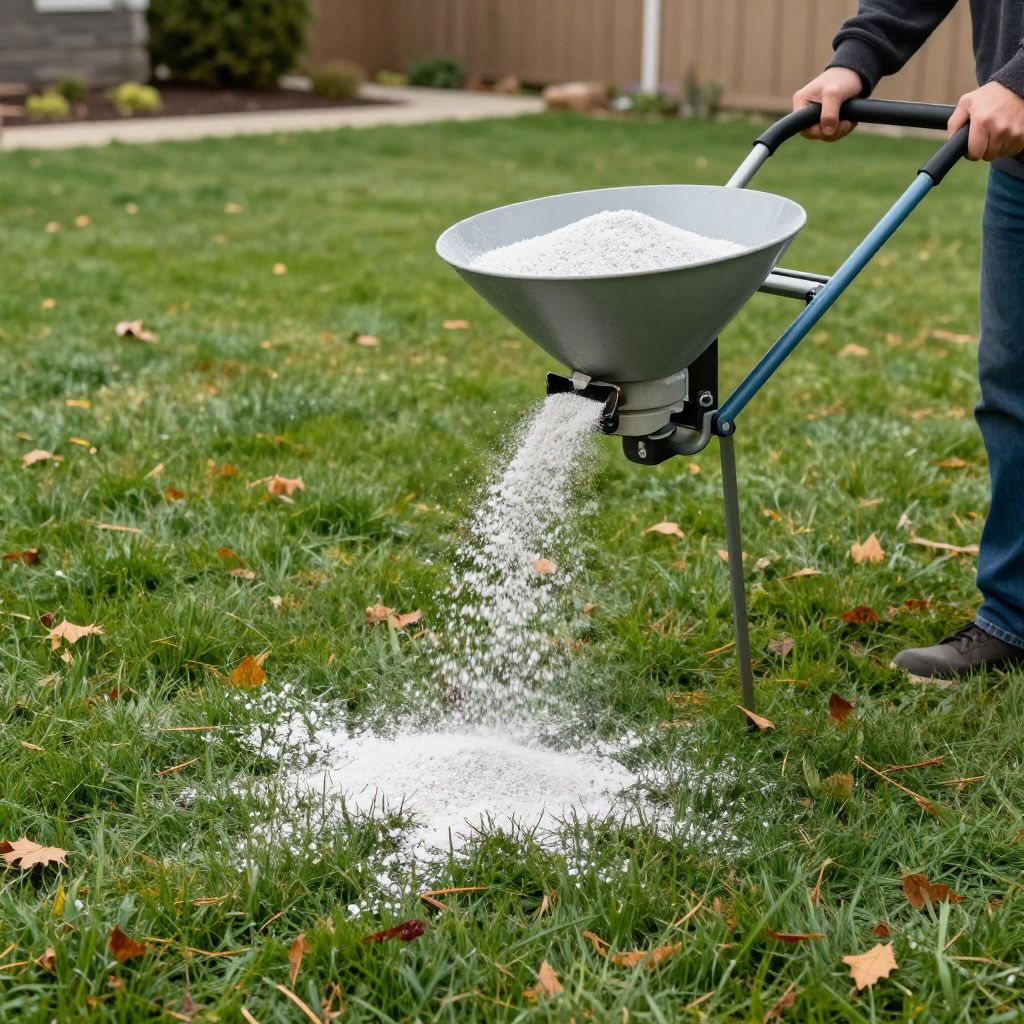
- Use a broadcast or drop spreader for even coverage.
- Apply the recommended amount in one or two passes, depending on the rate.
- Water lightly afterward if rain is not expected soon.
If the soil test recommends a large correction, do not apply all of it at once unless the instructions say it is safe. Heavy lime applications are often split over time to reduce stress and improve distribution.
Can you apply lime and seed at the same time?
Yes, in many cases you can lime and seed within the same general renovation window. Lime can be applied before seeding or after seeding if the soil test calls for it, but follow the rate and timing on the soil report so you do not interfere with germination or young roots.
How long lime takes to work
Lime does not change soil overnight. It usually works gradually over weeks to months, depending on particle size, rainfall, soil texture, and how deeply it is incorporated into the root zone.
Fine-textured clay soils often take longer to change than sandy soils, but they may also hold the adjustment longer once corrected. If your lawn is badly acidic, expect improvement to be gradual rather than immediate.
Common mistakes to avoid
- Applying lime without a soil test
- Using lime to fix problems caused by compaction, shade, drought, or poor drainage
- Spreading lime before a heavy storm that can wash it off the lawn
- Applying too much at once and pushing the soil pH too high
- Expecting lime to replace fertilizer, aeration, or watering care
- Ignoring the lawn’s grass type and local soil conditions
One of the biggest mistakes is assuming every yellow or thin lawn needs lime. Often the real issue is compacted soil, shallow roots, too much shade, mowing too low, or a nutrient deficiency unrelated to pH.
How lime fits into overall lawn care
Lime works best as part of a broader maintenance plan. Healthy lawns need the right mowing height, proper watering, occasional aeration, and fertilizer matched to soil needs.
Supportive lawn care habits
- Mow at the recommended height for your grass type
- Water deeply but not constantly, unless your climate or soil requires otherwise
- Aerate compacted soil if roots are struggling
- Topdress or improve soil structure where needed
- Test soil every few years to track pH changes
If your lawn has drainage problems, lime will not fix standing water or soggy areas. In those spots, improving grading, soil structure, or drainage is usually more effective.
Troubleshooting after liming
If the lawn does not improve
Recheck the soil test history. The issue may not have been acidity, or the lime may not have had enough time to work. In some cases, the lawn needs better fertility, more sunlight, or relief from compaction.
If moss keeps returning
Moss often signals shade, wet soil, or low pH, but it can also return if the lawn is thin and weak. Correcting pH helps, but you may also need to thin tree canopy, improve drainage, and overseed bare areas.
If you accidentally overapplied lime
Do not add more lime. Water normally, avoid additional pH-altering products, and retest the soil before making any further changes. A high pH can lock up nutrients and cause its own set of lawn problems.
Quick seasonal guide
- Fall: best overall time in many regions
- Early spring: good backup window before peak growth
- Summer: only if necessary and weather is mild
- Winter: only in mild climates with workable soil
As a rule, the best time is whenever your soil test says the lawn needs lime and the weather is mild enough for safe, even application. That combination matters more than the calendar alone.
If you want to keep improving your lawn, a good next step is to review soil testing, overseeding, and mowing height together so your pH correction supports the rest of your lawn care plan.