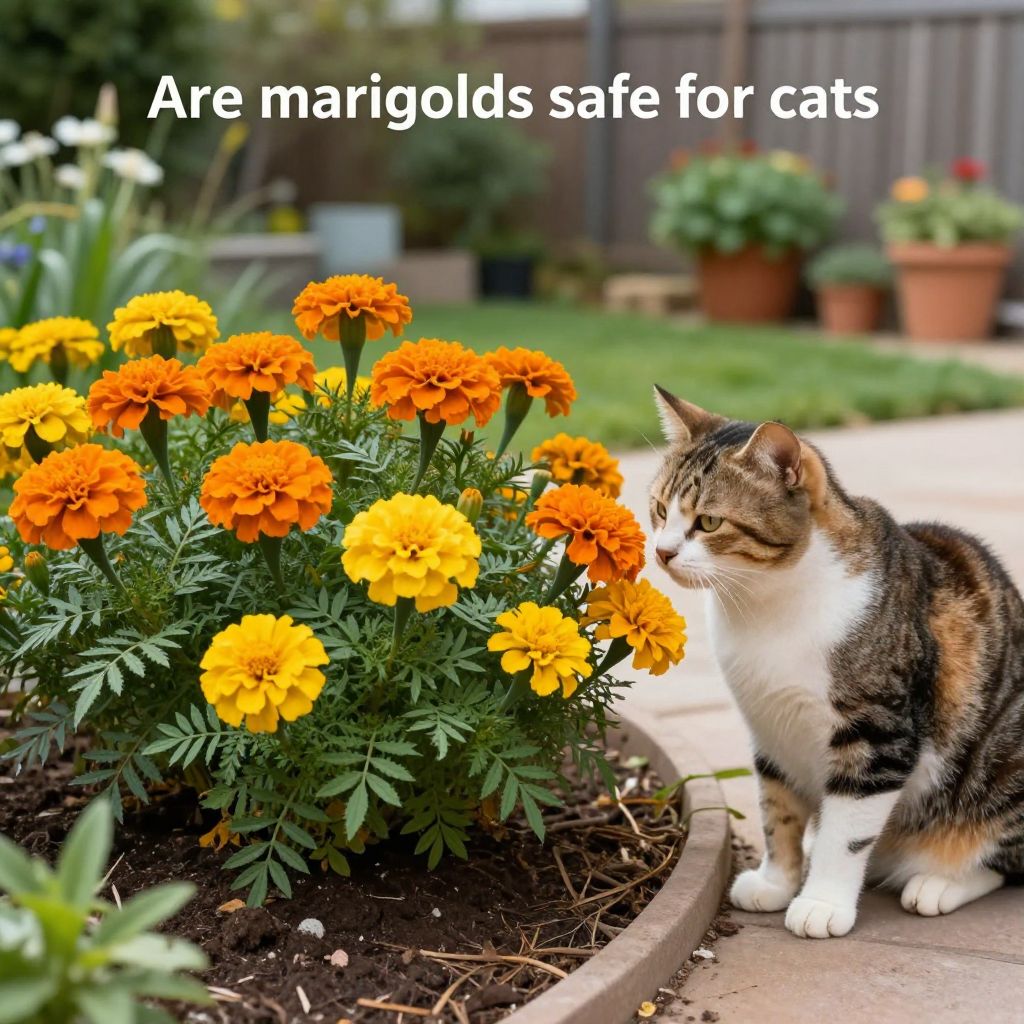
Are marigolds safe for cats? If your cat likes to nibble plants, that’s a smart question to ask before you add marigolds to beds, borders, or patio pots. The short answer is that marigolds are generally considered mildly toxic to cats, so they are not a truly cat-safe choice for a garden where pets may chew foliage or flowers.
That doesn’t mean you must avoid them entirely, but it does mean you should plant them thoughtfully, keep them out of reach when possible, and know what to do if your cat samples them. Good placement, sensible garden design, and a little plant knowledge can help you enjoy marigolds without creating unnecessary risk.
Are marigolds safe for cats?
Marigolds are not considered safe for cats to eat. The plant can cause mild digestive upset, and the sap may also irritate skin or paws in sensitive pets. If your cat only brushes against a marigold, that is usually less concerning than chewing or swallowing it, but repeated contact is still best avoided.
What happens if a cat eats marigolds?
Most cases involve mild signs rather than a life-threatening emergency, but any plant ingestion deserves attention. Common symptoms can include drooling, vomiting, diarrhea, lip or mouth irritation, and temporary loss of appetite. If your cat eats a large amount or seems unwell, contact your veterinarian promptly.
Signs to watch for
- Drooling or foaming at the mouth
- Vomiting or loose stool
- Pawing at the mouth
- Redness or irritation around lips or skin
- Reduced appetite or unusual lethargy
When to call the vet
Call your vet if your cat has eaten marigold flowers, leaves, or stems and is showing symptoms, or if you are unsure how much was consumed. If your cat has trouble breathing, collapses, or has severe vomiting, treat it as urgent and seek immediate veterinary help.
Why marigolds can be a problem around cats
Marigolds are popular bedding plants because they are colorful, easy to grow, and useful in mixed borders. But “easy to grow” does not mean “safe to nibble.” Cats are curious, and some chew plants out of boredom, stress, or simple curiosity. The safest garden is one designed to reduce temptation.
Plant parts that may cause trouble
Leaves, stems, petals, and even fallen plant debris can be a problem if your cat mouths them. The risk is higher with indoor potted marigolds, balcony containers, and low garden beds where cats can reach the foliage easily.
How to grow marigolds more safely in a cat-friendly garden
If you want marigolds in a garden shared with cats, focus on placement and access. You can reduce risk by keeping plants where cats are less likely to chew them and by offering better alternatives for digging, lounging, and nibbling.
Practical placement tips
- Plant marigolds in areas your cat does not routinely visit.
- Use raised beds, hanging baskets, or tall containers where feasible.
- Avoid placing pots beside favorite windowsills or cat perches.
- Keep deadheaded blooms and fallen petals cleaned up.
- Consider fencing off new plantings until your cat loses interest.
Better alternatives for curious cats
Many gardeners have more success redirecting cats than trying to stop every approach. A pot of cat grass or another pet-appropriate plant can help reduce interest in ornamental flowers. Place it where your cat is allowed to investigate, and it may be more appealing than your marigolds.
Growing marigolds well: the basics
Healthy marigolds are easier to maintain and less likely to shed messy debris that attracts pets. They do best in full sun, with well-drained soil and moderate watering. Whether you grow French marigolds, African marigolds, or signet types, the same basic care applies.
Sunlight
Marigolds bloom best with full sun, usually at least 6 hours a day. In very hot climates, a little afternoon shade can help plants stay tidy and flower longer. In deep shade, they become leggy and less attractive.
Soil and drainage
Use soil that drains well. Marigolds dislike soggy roots, so heavy clay should be loosened with compost or grown in raised beds or containers with drainage holes. Avoid over-amending with rich compost, which can lead to lush foliage and fewer flowers.
Watering
Water deeply when the top layer of soil begins to dry, then let the soil dry slightly again before watering. Container marigolds usually need more frequent checks than in-ground plants, especially in wind, heat, or bright sun. Wet, constantly damp soil can encourage root problems.
Feeding
Marigolds usually do not need heavy fertilizer. Too much nitrogen can produce lots of leaves and fewer blooms. If your soil is poor, a light application of balanced fertilizer or a thin layer of compost at planting time is usually enough.
Planting marigolds in containers near pets
Containers can be a good option if you want more control over where marigolds grow. They are also useful when you need to move plants away from a cat’s favorite route or outdoor resting spot.
Container checklist
- Choose a pot with drainage holes.
- Use a quality potting mix, not garden soil.
- Set pots on stable stands or shelves if cats like to dig.
- Keep saucers from holding standing water for long periods.
- Place containers where your cat cannot easily knock them over.
Indoor marigolds and cats
Indoor marigolds are usually a poor match for homes with curious cats because the plants are within easy reach. If you grow them indoors temporarily, place them behind barriers or in rooms your cat does not enter. Remove fallen petals quickly, since even dropped plant parts can be tempting.
Pruning, deadheading, and maintenance
Regular deadheading keeps marigolds blooming and helps prevent messy decline. It also reduces the amount of plant material on the soil surface, which can matter in a pet-friendly garden. Snipping spent flowers is simple and worth doing often.
How to deadhead marigolds
- Wait until a flower fades and begins to dry.
- Follow the stem down to the first set of healthy leaves.
- Snip or pinch just above that point.
- Collect all removed flowers and stems right away.
Use clean, sharp snips for thicker stems, especially on larger marigold types. If you leave clippings on the ground, your cat may investigate them, so tidy up after each pruning session.
Common pests and diseases that affect marigolds
Marigolds are fairly tough, but they can still run into trouble. Good care matters because stressed plants are more likely to drop leaves and flowers that end up within reach of pets.
Common garden problems
- Aphids on tender growth
- Spider mites in hot, dry conditions
- Powdery mildew in crowded, poorly ventilated plantings
- Root rot in wet soil
- Slugs and snails in damp gardens
Simple fixes
Space plants well, water at the base rather than overhead, and remove damaged foliage promptly. If pests appear, use the least disruptive control that fits your garden, and keep any treatment away from pets until it is fully dry and label directions are followed.
How to keep cats away from marigolds
If your cat is especially interested in your flower beds, design changes work better than scolding. Cats repeat behaviors that are easy and rewarding, so make the marigold area less inviting and the allowed areas more appealing.
Helpful deterrents
- Use low fencing or decorative edging around beds.
- Mulch with materials your cat dislikes walking on, where appropriate for your garden.
- Give your cat a separate digging spot or litter-style outdoor area.
- Place marigolds among denser plants that reduce access.
- Keep fallen petals and pruned material cleaned up.
Avoid using harsh repellents or anything that could harm pets, soil life, or beneficial insects. The goal is to guide behavior, not create a hostile garden.
Should you plant marigolds if you have cats?
That depends on your cat’s habits and how much control you have over the planting area. If your cat ignores plants and stays out of beds, marigolds may be manageable with normal caution. If your cat regularly chews foliage, choose safer landscaping plants instead.
Best decision guide
- Choose marigolds if you can place them out of reach and supervise access.
- Use containers or raised beds if you want extra control.
- Avoid marigolds if your cat habitually eats garden plants.
- Seek pet-safe alternatives if you want a low-risk planting plan.
Final takeaway
Marigolds are beautiful, useful garden flowers, but they are not truly safe for cats to eat. If you grow them, place them carefully, keep the area tidy, and watch for any chewing or vomiting. For a more cat-conscious garden, start by checking your layout and choosing plant placements that reduce temptation.
If you want to keep building a safer, healthier garden for pets, look for more guidance on pet-friendly garden design and container flower care.