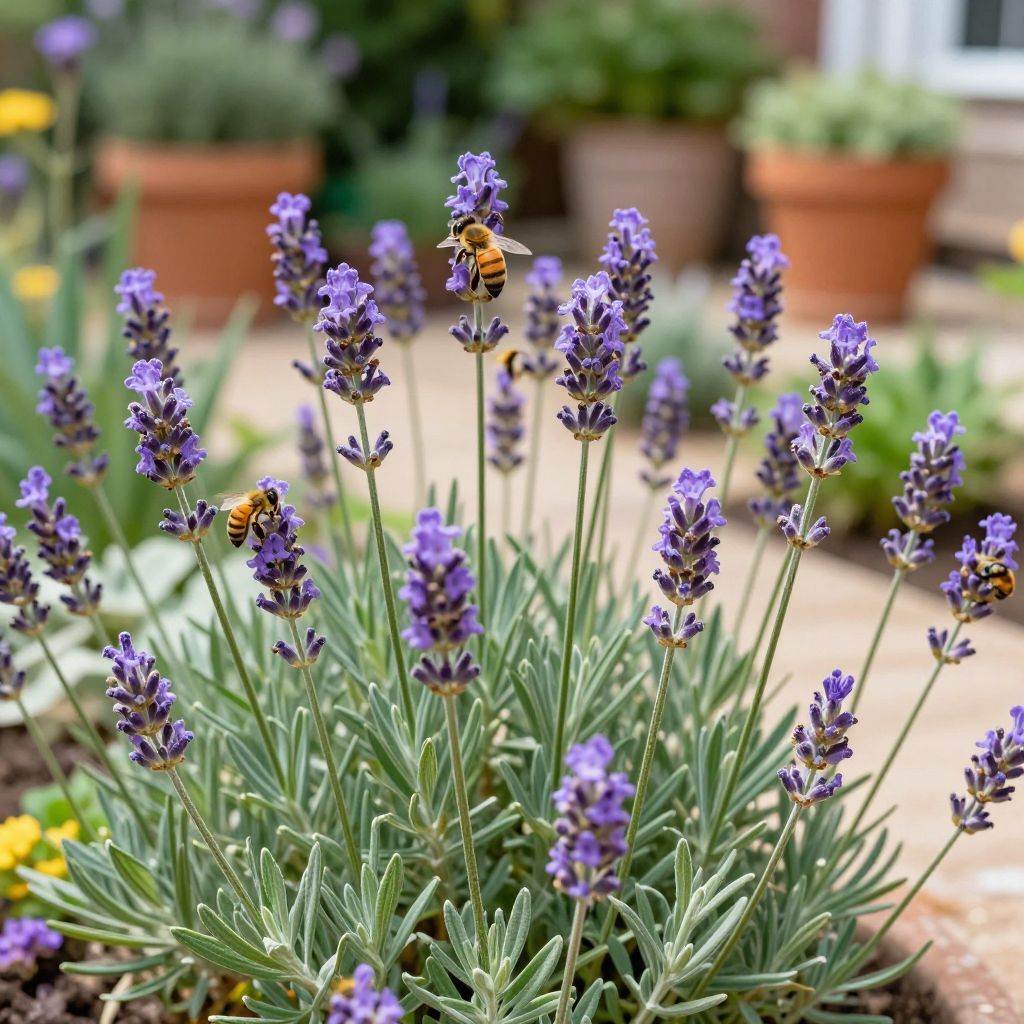
Do bees like lavender? Yes—very much, when the plant is healthy and blooming well. Lavender is one of the best garden plants for attracting bees because its flowers offer abundant nectar and are easy for pollinators to work, especially in sunny, dry conditions.
If you want more bees in your garden, lavender can be a smart choice. The key is growing it in the right place with sharp drainage, plenty of sun, and light care so it flowers heavily instead of producing soft, leafy growth.
Do bees like lavender?
Bees are strongly attracted to lavender flowers because they provide nectar and pollen over a long bloom period. The best bee activity happens when lavender is planted in full sun, grown in well-drained soil, and allowed to flower freely without overwatering or heavy feeding.
Why lavender is so attractive to bees
Lavender flowers are rich in nectar, and the blooms are packed into spikes that are easy for bees to land on and forage from. The plant’s fragrance also helps bees locate it, especially in warm weather when flowers are open and active.
Not every lavender plant will draw the same level of bee traffic. A vigorous plant with many blooms will usually attract more pollinators than a stressed plant with sparse flowers.
What bees prefer about lavender
- Long flowering spikes that offer many small florets in one place
- Sunny exposure, which helps flowers produce better nectar flow
- Dry, open growing conditions that suit both the plant and foraging bees
- Repeated bloom on well-maintained plants in the right climate
Best growing conditions for bee-friendly lavender
To attract bees, lavender needs to be healthy first. The plant performs best in full sun, lean soil, and excellent drainage. If the roots stay wet, lavender often becomes weak, blooms poorly, and attracts fewer pollinators.
Sunlight
Give lavender at least 6 to 8 hours of direct sun daily. More sun usually means sturdier growth, better flowering, and more bee activity.
Soil and drainage
Lavender dislikes heavy, soggy soil. It does best in light, gritty, or sandy soil that drains quickly after rain or watering. If your soil is clay-heavy, improve drainage with raised beds, mounds, or generous amounts of coarse material and composted organic matter worked in carefully.
Be cautious with rich soil. Too much fertility can cause lots of leaves and fewer flowers, which means fewer bees.
Watering
Water lavender deeply when young, then reduce watering as it establishes. Mature plants are drought-tolerant and usually prefer the soil to dry between waterings. Overwatering is one of the most common reasons lavender fails.
Climate considerations
Lavender grows best in climates with warm, sunny summers and relatively dry air. In humid regions, choose the sunniest, breeziest site you have and avoid crowding the plants. Good airflow helps reduce disease and supports flowering.
How to plant lavender for more bees
Planting lavender correctly makes a big difference in bloom quality. A well-sited plant will flower more heavily and stay attractive to bees for longer.
- Choose a sunny location with at least 6 hours of direct light.
- Check drainage by watering the area and seeing how quickly it drains. Avoid spots where water sits after rain.
- Prepare the soil so it is loose and not overly rich. If needed, plant on a slight mound or in a raised bed.
- Space plants well so air can move around them. Crowding encourages disease and reduces flowering.
- Water after planting, then keep the soil lightly moist until roots establish.
If you are planting in a container, use a pot with large drainage holes and a fast-draining potting mix. Containers dry faster than garden beds, so they need closer monitoring, especially in hot weather.
Which lavender types are most useful for bees?
Many lavender species and garden hybrids can attract bees, but the best choice is the one that grows reliably in your climate. A plant that thrives where you live will usually flower more and feed more bees than a stressed variety that struggles.
Look for lavender types suited to your local weather, soil, and winter conditions. In general, the most bee-friendly planting is the one that produces abundant, open blooms over a long period.
What to look for when choosing a plant
- Strong, compact growth
- Plenty of flower buds
- No signs of yellowing, root stress, or wilting
- A label that matches your climate and available sun
How to keep lavender blooming for bees
Lavender attracts the most bees when it flowers heavily and repeatedly. Good pruning, careful watering, and avoiding excess fertilizer all help the plant stay productive.
Pruning
Prune lavender lightly after flowering to keep it compact and encourage fresh growth. Remove spent flower stems and trim back green growth, but avoid cutting into old woody stems that may not resprout well.
Regular pruning helps prevent the plant from becoming leggy and sparse. A compact plant usually produces more flower spikes, which means more forage for bees.
Fertilizer
Lavender usually needs very little fertilizer. In fact, too much nitrogen can reduce flowering and make the plant floppy. If your soil is poor, a small amount of compost at planting time may be enough.
Deadheading
Removing spent blooms can encourage a tidier plant and sometimes a second flush of flowers, depending on variety and climate. If you want to feed bees for as long as possible, leave some blooms to mature while trimming others for shape.
Common problems that reduce bee visits
If bees are not showing up, the issue may be with plant health rather than the bees themselves. Lavender that is stressed, overwatered, shaded, or overcrowded often produces fewer flowers and less nectar.
Too much water
Wet soil can cause root problems and weak growth. If your lavender looks pale, droopy, or slow to flower, check drainage first.
Not enough sun
Lavender grown in partial shade often becomes lanky and blooms poorly. Move containers to a brighter spot or transplant garden plants to a sunnier area if possible.
Rich soil
Overly fertile soil can produce leafy growth at the expense of flowers. If your lavender is lush but not blooming, reduce feeding and make sure it is not sitting in compost-heavy, moisture-retentive soil.
Pests and diseases
Lavender is generally low-maintenance, but it can still suffer from root rot, fungal issues, or occasional sap-feeding insects. Most problems are linked to poor drainage or weak airflow rather than serious pest pressure.
- Root rot: caused by soggy soil; prevent with drainage and careful watering
- Mildew or fungal spotting: more likely in crowded, humid conditions; improve spacing and airflow
- Aphids or other soft-bodied insects: usually minor; rinse off or prune lightly if needed
How to make a lavender planting more bee-friendly
A single lavender plant can attract bees, but a small cluster is often better. Bees are more likely to visit when they can move easily from flower to flower in one area.
Plant in groups
Try planting three or more lavender plants together if space allows. Grouping creates a stronger visual and scent signal for pollinators.
Mix with other pollinator plants
Combine lavender with other sun-loving, bee-friendly plants that have staggered bloom times. This keeps your garden useful to pollinators across the season instead of only during one short bloom window.
Keep the area pesticide-free
Avoid spraying insecticides on or near flowering lavender whenever possible. Even products that seem mild can harm bees if they land on open blooms or residue remains on petals.
Harvesting lavender without hurting bees
If you grow lavender for bouquets, sachets, or dried stems, harvest thoughtfully so you do not remove all the bee forage at once. Leave some flowers on the plant, especially during peak pollinator activity.
The best time to cut stems is usually when some florets on the spike have opened but the entire flower head is not yet finished. This timing often gives you good fragrance and still leaves plenty for bees.
Indoor vs. outdoor lavender for bees
Outdoor lavender is far better for bees because pollinators can access the flowers freely. Indoor lavender in a bright window may grow, but it will not help local bees unless it is moved outside during bloom and the climate allows it.
If you keep lavender in a pot indoors for part of the year, harden it off gradually before placing it outside. Sudden changes in sun and wind can stress the plant and reduce flowering.
Quick care checklist for bee-attracting lavender
- Full sun for most of the day
- Fast-draining soil or a raised bed
- Water only as needed, especially once established
- Minimal fertilizer
- Light pruning after flowering
- Good spacing and airflow
- No routine pesticide use on blooms
Conclusion
So, do bees like lavender? Absolutely—when lavender is grown in bright sun, in well-drained soil, and kept lightly pruned and not overfed, it becomes a reliable pollinator plant. If you want more bee activity in your garden, start by improving one lavender planting site and watch how quickly the flowers draw visitors.
If you want to build a stronger pollinator garden, consider reading more about how to grow pollinator-friendly herbs and pruning flowering shrubs for better blooms.