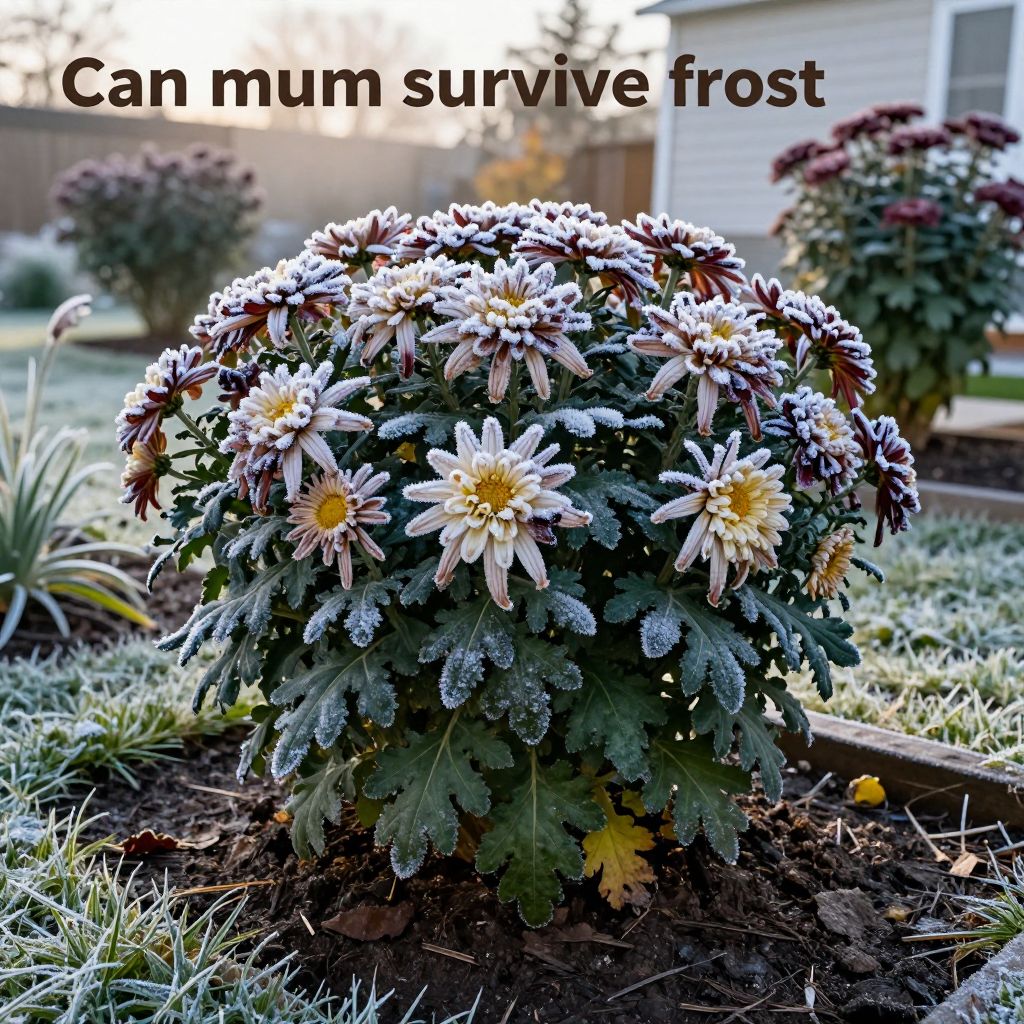
Can mums survive frost? Yes—many garden mums can handle a light frost, and some survive several frosts if they’re established and properly hardened off. The key is knowing whether your plant is a hardy garden mum or a tender florist mum, because their cold tolerance is not the same.
Frost may damage flowers and outer leaves, but it does not always kill the plant. With a little protection and the right fall care, you can often keep chrysanthemums looking good longer and help them return strong next season.
Can mums survive frost?
Yes, many garden mums (chrysanthemums) can survive light frost, especially when planted in the ground and well established. A hard freeze can damage blooms and foliage, but the roots may still live if the plant is hardy for your climate and the soil drains well. Potted mums are more vulnerable than in-ground plants.
What kind of mum do you have?
Before you decide how much protection to give, identify the type of mum you’re growing. That matters more than the flower color or size.
Garden mums vs. florist mums
- Garden mums are bred for outdoor planting and are more likely to survive cool fall weather and light frost.
- Florist mums are often sold as indoor or short-term display plants and may be less cold-tolerant outdoors.
- Potted mums dry out and freeze faster than mums planted in the ground.
If you’re unsure, treat the plant as more tender until you see how it responds to chilly nights.
How frost affects mums
Frost forms when plant tissue freezes, usually on clear, calm nights. For mums, the most obvious damage is often on petals and leaves first, while stems and roots may remain viable. Repeated frost, wet soil, and hard freezes are more likely to cause serious injury.
Common frost damage signs
- Brown, limp, or translucent petals
- Blackened leaf edges
- Wilted stems after a cold morning
- Flowers that collapse after thawing
A frost-damaged bloom does not always mean the whole plant is dead. Check the stems and crown before removing everything.
How to protect mums from frost
If a frost is forecast, a few simple steps can help your mums make it through the night. The goal is to reduce freezing on the leaves and flowers, and to keep the root zone from swinging too sharply in temperature.
- Water earlier in the day if the soil is dry. Moist soil holds heat better than dry soil, but avoid soggy conditions.
- Cover plants before sunset with a breathable frost cloth, old sheet, or lightweight blanket.
- Secure the cover so it reaches the ground and traps warmer air around the plant.
- Remove the cover in the morning once temperatures rise so the plant can get light and air.
Do not use plastic directly on the foliage unless it is supported so it does not touch the plant. Plastic can trap moisture and increase damage where it touches frozen leaves.
Extra protection for potted mums
- Move containers against a wall, under an overhang, or into an unheated garage for the night.
- Group pots together to reduce exposure.
- Wrap the pot with burlap, bubble wrap, or a towel to insulate the roots.
- Set containers on wood, cardboard, or pot feet instead of cold concrete.
Container roots are exposed on all sides, so potted mums usually need more protection than landscape plants.
How cold is too cold for mums?
There is no single temperature that fits every mum, because hardiness depends on the cultivar, plant health, and whether it is in a pot or the ground. In general, a light frost may only damage blooms, while a hard freeze can kill top growth. Established garden mums are more likely to survive than newly planted or stressed plants.
Factors that improve frost survival
- Healthy roots and firm stems
- Well-drained soil
- Plants in the ground rather than containers
- Some shelter from wind
- Gradual exposure to cooler fall nights
If your area gets repeated freezes, assume the flowers will fade quickly and focus on protecting the plant’s crown and roots.
Should you plant mums in the ground before frost?
Yes, but timing matters. Mums planted too late in the season may not establish enough roots before cold weather arrives. If you want mums to come back, plant them when they still have time to settle in, and choose a site with full sun and good drainage.
Best planting conditions for stronger winter survival
- Sunlight: at least 6 hours of direct sun is ideal
- Soil: loose, fertile, and well drained
- Drainage: avoid low spots where water collects
- Spacing: allow airflow to reduce disease and drying issues
Wet, compacted soil is one of the biggest reasons mums fail after cold weather. Roots that sit in water are much more likely to rot than roots in a slightly dry, airy bed.
What to do after a frost
After the frost passes, wait until the plant thaws before judging the damage. Frozen stems can look worse than they are in the morning, and handling them while brittle can cause extra breakage.
Post-frost care checklist
- Remove covers in the morning once temperatures rise.
- Inspect stems and leaves for blackened or mushy tissue.
- Trim only clearly dead flowers or leaves.
- Keep watering light and even if the soil is dry.
- Do not fertilize stressed plants right after a freeze.
If the crown is still firm and you see healthy green tissue lower on the stems, the plant may recover even if the top growth looks rough.
How to tell if your mum is dead or just frost-damaged
Frost damage can be dramatic, but it is not always fatal. The easiest way to check is to look for living tissue below the damaged top growth.
Simple recovery test
- Wait until the plant has thawed.
- Gently scratch a small section of stem with your fingernail.
- If the tissue underneath is green, the stem is still alive.
- If stems are brown and dry all the way down, prune a little lower and check again.
Also check the crown near the soil line. A firm crown is a good sign; a soft, mushy crown often means rot or severe freeze injury.
Pruning mums after frost
After the flowering season ends, you can tidy mums by removing dead blooms and damaged stems. In colder climates, many gardeners wait until late winter or early spring to cut back hardy garden mums, because some top growth can help protect the crown.
When to cut back
- Light frost damage: remove only the worst blooms and leaves
- After repeated freezes: trim dead stems back to healthy tissue
- Late fall in cold regions: leave some top growth until spring if the plant is hardy and healthy
If you prune too early in a cold area, you may expose the crown to extra winter stress. In milder regions, a light cleanup is usually fine.
How to help mums survive winter after frost
If you want your mums to come back next year, frost care is only part of the job. Winter survival depends on root health, drainage, and how much stress the plant experienced in fall.
Winterizing tips for garden mums
- Leave a layer of mulch around the base after the ground starts to cool.
- Use straw, shredded leaves, or loose compost as insulation.
- Avoid heavy, wet mulch that can hold too much moisture against the crown.
- Do not keep the soil soggy through winter.
In very cold climates, even hardy mums may benefit from extra mulch. In mild climates, too much insulation can cause rot, so adjust to your local conditions.
Common mistakes to avoid
Many frost problems with mums come from simple care errors rather than the cold alone. Avoid these common mistakes if you want better results.
- Leaving potted mums exposed on open patios during freezing nights
- Using plastic directly on foliage
- Overwatering cold soil
- Fertilizing late in the season and pushing tender new growth
- Planting in poor drainage where roots stay wet
Strong, well-rooted plants in the right site usually handle frost much better than stressed plants in containers or heavy soil.
Can you still enjoy mums after frost?
Yes. Even if blooms are damaged, the plant may still add structure and seasonal color to the garden. You can also pair mums with other cool-season plants that tolerate chilly weather better, such as ornamental kale, pansies, or asters, depending on your climate.
If your mums are in containers, move them into a sheltered spot and keep enjoying them as long as the flowers last. If they’re in the ground, frost may shorten the bloom display, but it does not necessarily end the plant’s life.
Conclusion
Can mums survive frost? Often, yes—especially hardy garden mums planted in the ground and protected from hard freezes. Your best move is to cover plants before cold nights, avoid soggy soil, and check stems and crowns after frost for signs of life. If you want more seasonal care help, look for guides on autumn container planting and winter mulching for perennials.