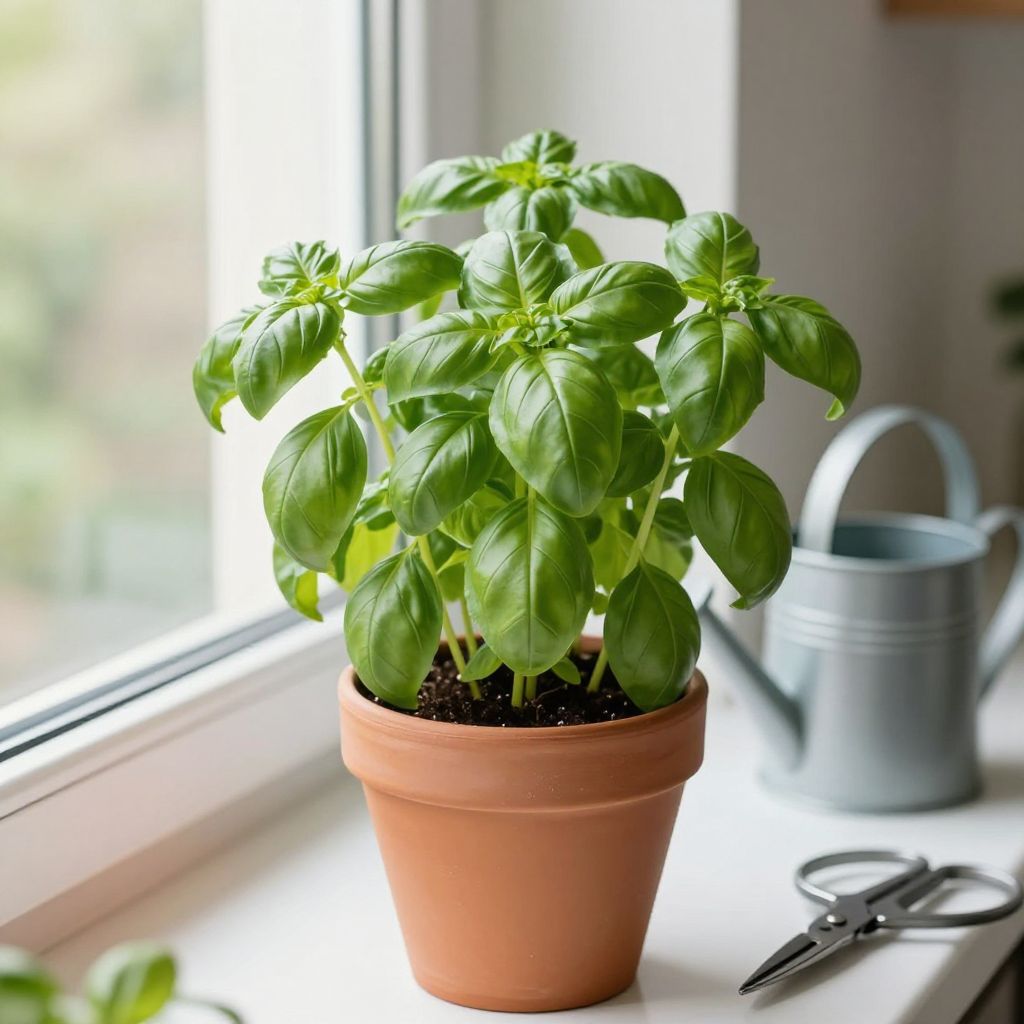
Can you grow basil indoors? Yes—you can, and basil often does very well on a bright windowsill or under grow lights if you give it warmth, steady moisture, and enough light. The key is to treat it as a tender, fast-growing herb that needs active care rather than a plant you can forget about.
Indoor basil is especially useful because you can harvest fresh leaves for months when conditions are right. The main challenges are leggy growth, low light, and overwatering, but with a few simple habits you can keep a basil plant compact, productive, and healthy.
Can you grow basil indoors?
Yes. Basil (Ocimum basilicum) is one of the easiest herbs to grow indoors if you provide at least 6 hours of strong light, warm temperatures, and a pot with excellent drainage. It grows quickly, responds well to pruning, and can be grown from seed, nursery starts, or cuttings.
What basil needs indoors
Indoor basil does best when you match its native preference for warmth, sun, and evenly moist soil. It is not a true houseplant, so the more closely you can mimic bright outdoor conditions, the better it will grow.
Light
Light is the most important factor for indoor basil. A south-facing window is usually best, though an east- or west-facing window may work if it gets several hours of direct sun.
If natural light is weak, use a grow light. Place it close enough to prevent stretching, but not so close that leaves overheat. Basil grown in dim light becomes thin, pale, and less flavorful.
Temperature
Basil prefers warm indoor conditions, generally between about 65°F and 85°F. It dislikes cold drafts, chilly windows, and sudden temperature swings.
Keep it away from frosty glass in winter and from heating vents that dry the plant too quickly. Cold stress often shows up as blackened leaves, slow growth, or leaf drop.
Humidity and air movement
Normal household humidity is usually fine, but very dry air can make basil wilt faster. Good air circulation helps prevent fungal problems and keeps the stems sturdy.
If your home is especially dry, group plants together or use a small tray of water nearby. Avoid crowding basil so tightly that air cannot move around the leaves.
Best pot, soil, and drainage for indoor basil
Basil needs a container with drainage holes and a light, well-draining potting mix. Heavy soil stays wet too long indoors, which can lead to root rot and weak growth.
Choosing a container
- Use a pot with drainage holes.
- A 6- to 8-inch pot is a good starting size for one plant.
- Move up to a larger pot if the roots fill the container or the plant dries out too quickly.
Terracotta can help excess moisture evaporate, while plastic holds water longer. Either can work if you adjust watering to match the pot material and your home’s conditions.
Soil mix
Use a quality indoor potting mix rather than garden soil. Basil roots need air as much as water, and a loose mix helps prevent soggy conditions.
If the mix feels dense, blend in a small amount of perlite or fine bark to improve drainage. A little compost can also help, but do not make the soil too rich or heavy.
How to plant basil indoors
You can start basil indoors from seed, buy a young plant, or root cuttings from an existing basil plant. Each method works well, but the best choice depends on how quickly you want harvestable leaves.
Starting basil from seed
- Fill a small pot or seed tray with moist seed-starting mix.
- Sow seeds lightly and cover them with a thin layer of mix, about 1/8 inch deep.
- Keep the soil evenly moist, not soaked.
- Place the container in warmth and bright light.
- Thin seedlings so the strongest plants have room to grow.
Basil seeds usually germinate quickly in warm conditions. Once seedlings have several true leaves, transplant them carefully into their own pots.
Starting with nursery basil
A store-bought basil plant is the fastest way to get started. Many grocery-store herbs are crowded into one pot, so divide them gently into smaller clumps if the roots allow it.
After repotting, give the plant a few days to adjust before heavy harvesting. This helps reduce transplant shock and leaf drop.
Growing basil from cuttings
Basil roots readily in water or moist potting mix. Take a healthy stem cutting just below a leaf node, remove the lower leaves, and place the stem in water or a lightly moist medium.
Once roots are a couple of inches long, move the cutting into a pot. This is a useful way to keep a favorite plant going or replace a basil plant that has become woody or tired.
Indoor basil care tips that really matter
Good basil care indoors is mostly about balance. You want the soil moist but not wet, the plant leafy but not crowded, and the light strong enough to keep growth compact.
Watering
Water basil when the top inch of soil feels dry. The exact timing depends on pot size, light, temperature, and airflow, so check the soil rather than following a fixed schedule.
Water thoroughly until excess drains out, then empty the saucer. Never let basil sit in standing water, as that is one of the fastest ways to damage the roots.
Feeding
Basil does not need heavy feeding indoors. Too much fertilizer can produce lush but weak growth with less flavor.
If your potting mix is fresh and your plant is growing well, you may only need light feeding now and then. If growth slows and the plant has been in the same pot for a while, a mild, balanced houseplant fertilizer used sparingly can help.
Pruning and pinching
Pruning is essential if you want a bushy indoor basil plant. Pinch the top growing tips just above a pair of leaves to encourage side shoots.
Do this early and often. If you let basil grow tall without pinching, it becomes leggy and may flower sooner, which reduces leaf production.
- Pinch stems when the plant is 6 to 8 inches tall.
- Always cut above a leaf node.
- Remove flower buds as soon as you see them.
Rotating the plant
Turn the pot every few days so the plant grows evenly toward the light. Without rotation, basil often leans hard to one side and becomes uneven and weak.
Common problems when growing basil indoors
Most indoor basil problems come from too little light, too much water, or poor airflow. The good news is that these issues are usually fixable if you catch them early.
Leggy, floppy growth
If stems are long and thin with wide spaces between leaves, the plant needs more light. Move it to a brighter spot or add a grow light, then pinch it back to encourage branching.
Leggy basil can recover, but it may take a couple of weeks of better light and pruning before new growth looks compact again.
Yellow leaves
Yellowing leaves often point to overwatering, poor drainage, or low light. Check the soil first; if it feels wet for long periods, let it dry slightly and make sure the pot drains freely.
Older lower leaves may yellow naturally, but widespread yellowing usually means the plant is unhappy with its growing conditions.
Wilting
Wilting can mean the soil is too dry, but it can also happen when roots are stressed from staying too wet. Feel the soil before watering again.
If the plant wilts even when the soil is moist, inspect the roots for rot and consider repotting into fresh, airy mix.
Pests
Indoor basil can attract aphids, whiteflies, spider mites, and fungus gnats. These pests are more common when air is still and plants are crowded.
- Check the undersides of leaves regularly.
- Rinse small pests off with a gentle spray of water.
- Remove badly infested leaves.
- Improve airflow and avoid overwatering.
Healthy, well-lit basil is less likely to suffer serious pest problems than weak, stretched plants.
Disease
Fungal issues are usually linked to wet leaves, poor drainage, or stagnant air. Water the soil rather than the foliage and avoid letting the plant stay damp overnight.
If you see mold on the soil surface, scrape off the top layer and allow the mix to dry a bit more between waterings.
Harvesting basil indoors
Harvest often to keep basil productive. Regular picking encourages branching and gives you a fuller plant over time.
Snip stems just above a pair of leaves rather than removing single leaves at random. This helps the plant regrow from the nodes below the cut.
- Start harvesting once the plant has several sets of true leaves.
- Take no more than about one-third of the plant at a time.
- Remove flower buds immediately to extend leaf production.
If you need only a few leaves, harvest from the top and outer stems first. That keeps the plant balanced and encourages new growth in the center.
Can basil grow indoors year-round?
Yes, basil can grow indoors year-round if it gets enough light and warmth. In winter, shorter days and weaker sun often mean you need a grow light to keep the plant vigorous.
Even with good care, indoor basil may slow down during darker months. That is normal. You can still harvest leaves, but growth may be slower than in bright spring and summer conditions.
When indoor basil struggles
Sometimes basil simply does not thrive indoors because the light is too weak or the plant has become old and woody. If the stems are thick, woody, and less productive, starting fresh from seed or cuttings is often the best option.
For many gardeners, the easiest way to keep basil going is to grow a succession of plants rather than rely on one plant forever. That gives you a steady supply of young, leafy growth.
Final tips for success
If you want to grow basil indoors successfully, focus on the basics: strong light, warmth, drainage, and regular pinching. Those four things solve most problems before they start.
Start with one healthy plant, monitor the soil closely, and harvest often. If you want to compare basil with another indoor crop, you may also enjoy reading about growing strawberries indoors for more container-growing ideas.