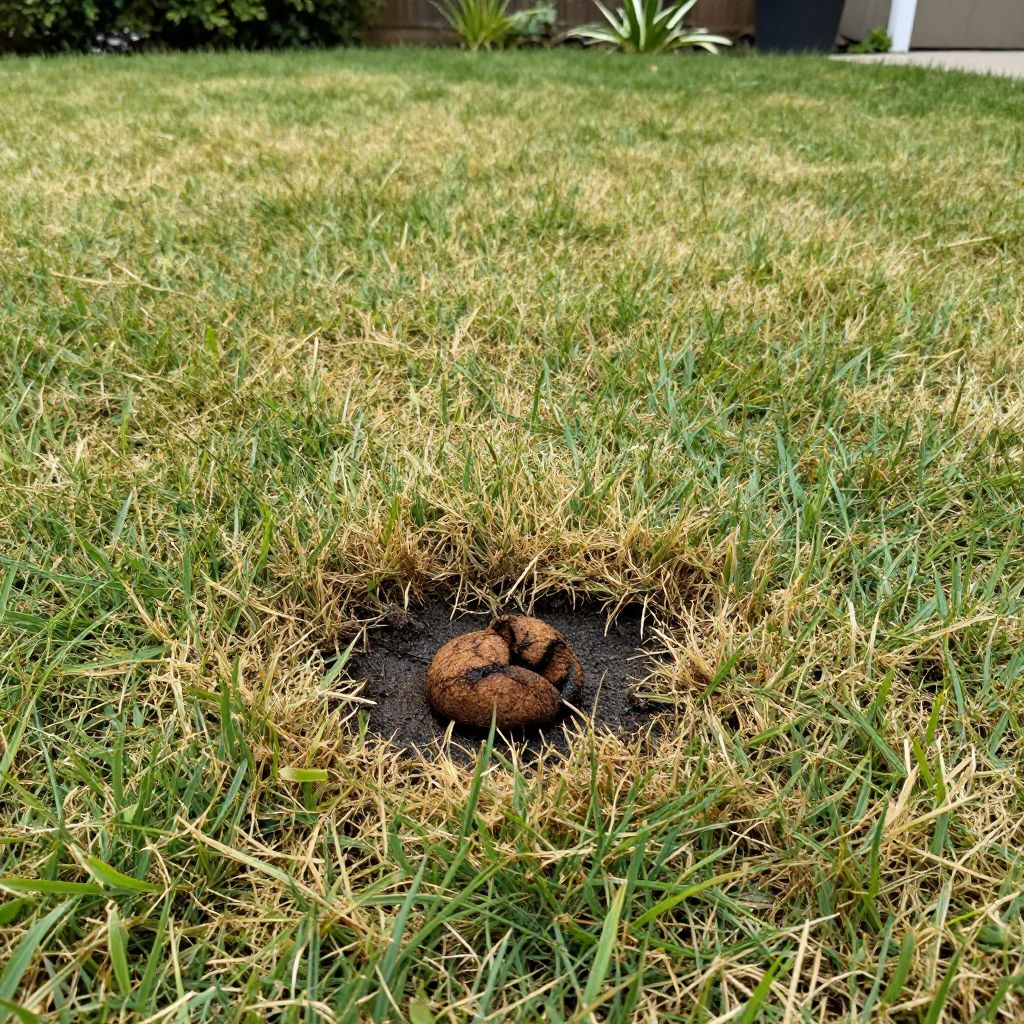
If you’ve noticed brown spots where your dog likes to go, you may be asking: does dog poop kill grass? The short answer is yes, it can damage or kill turf if it sits on the lawn or is left in one spot repeatedly. The harm comes from high nitrogen, salts, and the way waste smothers grass blades and soil.
The good news is that most lawns can recover if you act quickly, improve cleanup habits, and repair the affected area correctly. The key is to protect the grass, rinse the spot when needed, and reseed or patch the soil once the area is clean and no longer contaminated.
Does dog poop kill grass?
Yes, dog poop can kill grass, especially when it is left on the lawn for more than a short time or concentrated in the same place. Fresh waste can burn turf, block sunlight and airflow, and create a patch of dead grass. Repeated droppings in one area can also compact soil and encourage disease.
Why dog poop damages turf
Dog waste is not a fertilizer you want on your lawn. Unlike properly composted organic matter, it is too concentrated and often carries pathogens that make it unsuitable for direct use in garden beds or on turf.
How it harms grass
- Smothering: A pile of poop covers the grass, blocking light and air.
- Burning: Waste contains nitrogen and salts that can scorch blades and roots.
- Soil stress: Repeated deposits can alter soil conditions and damage the root zone.
- Disease risk: Leftover waste can attract flies and spread harmful organisms.
One small accident may only leave a temporary blemish. Frequent use of the same potty spot, however, can create a larger dead patch that needs repair.
Dog poop vs. dog urine
Dog urine is usually the bigger cause of classic “burn spots,” but poop can still be a serious problem. Poop tends to cause more localized smothering and contamination, while urine often creates yellow or straw-colored rings from excess nitrogen and salts.
What to do right away when dog poop lands on grass
Fast cleanup gives your lawn the best chance to recover. The longer waste sits, the more likely it is to stain, burn, or kill the grass underneath.
- Remove the waste promptly. Use a bag, scoop, or pooper-scooper.
- Check the turf underneath. If the blades are flattened but still green, the grass may bounce back.
- Rinse the spot lightly. A gentle watering can help dilute residue after cleanup.
- Blot or lift any remaining material. Avoid rubbing it deeper into the thatch.
- Watch the area for a few days. If it turns brown, the grass may need repair.
If the lawn is wet or soft, be careful not to compact the soil while cleaning. Heavy foot traffic can make the damage worse.
How to tell if the grass can recover
Not every affected patch is dead. In many cases, the grass is only stressed and may regrow once the source of damage is removed.
Signs of temporary stress
- Blades are bent or flattened but still green.
- The patch is small and only recently affected.
- Nearby grass looks healthy and is spreading into the area.
Signs the grass has died
- The patch turns tan, brown, or gray and stays that way.
- Blades pull up easily with little resistance.
- The soil beneath looks crusted, bare, or compacted.
If you are unsure, wait a week or two after cleanup and watering. Grass that is still alive often shows new green growth at the edges or from the crown.
How to fix dog poop damage in the lawn
Once the area is clean, you can repair the spot based on how badly it was damaged. Small patches may recover on their own, while larger dead areas usually need reseeding or patching.
For minor damage
- Rake lightly to lift matted blades and remove residue.
- Water deeply but not excessively to help the lawn recover.
- Avoid mowing the spot until it starts growing again.
For dead patches
- Remove dead grass and debris.
- Loosen the top 1 to 2 inches of soil.
- Add a thin layer of topsoil or compost if the soil is poor.
- Seed with a grass type suited to your lawn and climate.
- Keep the area evenly moist until seedlings establish.
For larger damaged areas, sod can be a faster fix than seed, especially if you need an immediate visual repair. Match the sod to the rest of the lawn as closely as possible.
When to reseed
Seed when temperatures and moisture favor germination for your grass type. Cool-season lawns and warm-season lawns have different best windows, so choose a time that fits your local climate rather than following a fixed calendar date.
How to prevent dog poop from killing grass
Prevention is the easiest way to keep your lawn healthy. A few simple habits can protect turf and reduce the amount of repair work you need later.
- Scoop daily or as often as needed.
- Train your dog to use a designated potty area.
- Rotate where your dog goes if you have a large yard.
- Rinse small accident spots after cleanup when practical.
- Keep the lawn healthy with proper mowing, watering, and aeration.
Create a dog-friendly potty zone
If your dog repeatedly uses the same corner of the yard, consider giving that spot a purpose instead of fighting it. A designated area with mulch, gravel, or tough groundcover can protect the rest of the lawn.
Choose a surface that drains well and is easy to clean. Many gardeners use pea gravel, decomposed granite, or mulch in a contained area, but make sure the material is safe and comfortable for your dog.
Can you compost dog poop?
In most home gardens, dog poop should not go into a regular compost pile. It can contain parasites and bacteria that are not reliably destroyed in small backyard systems. This is especially important if you plan to use the compost around edible plants, seedlings, or turf.
If your local area allows pet-waste composting, it usually requires a specialized system and strict handling. For most home gardeners, bagging and disposing of it according to local rules is the safer choice.
Lawn care habits that help damaged grass recover
A healthy lawn rebounds better from pet damage than a stressed one. Good turf care strengthens roots and helps grass fill in small bare spots faster.
Watering
Water deeply when the lawn needs it, rather than giving frequent shallow sprinklings. Deep watering encourages stronger roots, but avoid overwatering, which can weaken turf and invite disease.
Mowing
Mow at the proper height for your grass type and avoid cutting too short. Scalping the lawn makes it more vulnerable to burn, drought stress, and slow recovery.
Soil and drainage
Poor drainage can make pet damage worse because wet, compacted soil is slower to recover. If water puddles in the same spot, consider aeration, topdressing, or improving grading where appropriate.
Fertilizing
Use fertilizer only when your lawn actually needs it and according to your grass type and local conditions. Too much nitrogen can stress turf and make burn damage more noticeable, especially in hot weather.
Common mistakes to avoid
- Leaving poop on the lawn for days.
- Pouring strong cleaners or bleach on the damaged spot.
- Overwatering the area in an attempt to “wash away” the problem.
- Reseeding without removing dead material first.
- Using composted pet waste in vegetable beds or on edible crops.
Strong cleaners can harm grass, soil life, and nearby plants. If you need to sanitize a hard surface, keep it away from the lawn and follow product directions carefully.
When to call in extra help
If the same area keeps dying even after cleanup, the issue may be more than dog waste. Look for compacted soil, poor drainage, shade stress, or a lawn disease that is making recovery difficult.
You may also want help if the damaged area is large, the soil is badly compacted, or you are trying to restore a high-traffic lawn. A local garden center, extension service, or lawn professional can help you match the fix to your grass type and climate.
Bottom line
Does dog poop kill grass? Yes, it can, but quick cleanup and proper lawn care usually prevent serious damage. Remove waste promptly, rinse the spot lightly if needed, and reseed or patch dead areas once the soil is clean. If you want a healthier lawn, start by making a consistent cleanup routine today.
For more lawn repair help, you may also want to read about basic lawn care and turf recovery and safe composting practices for the home garden.