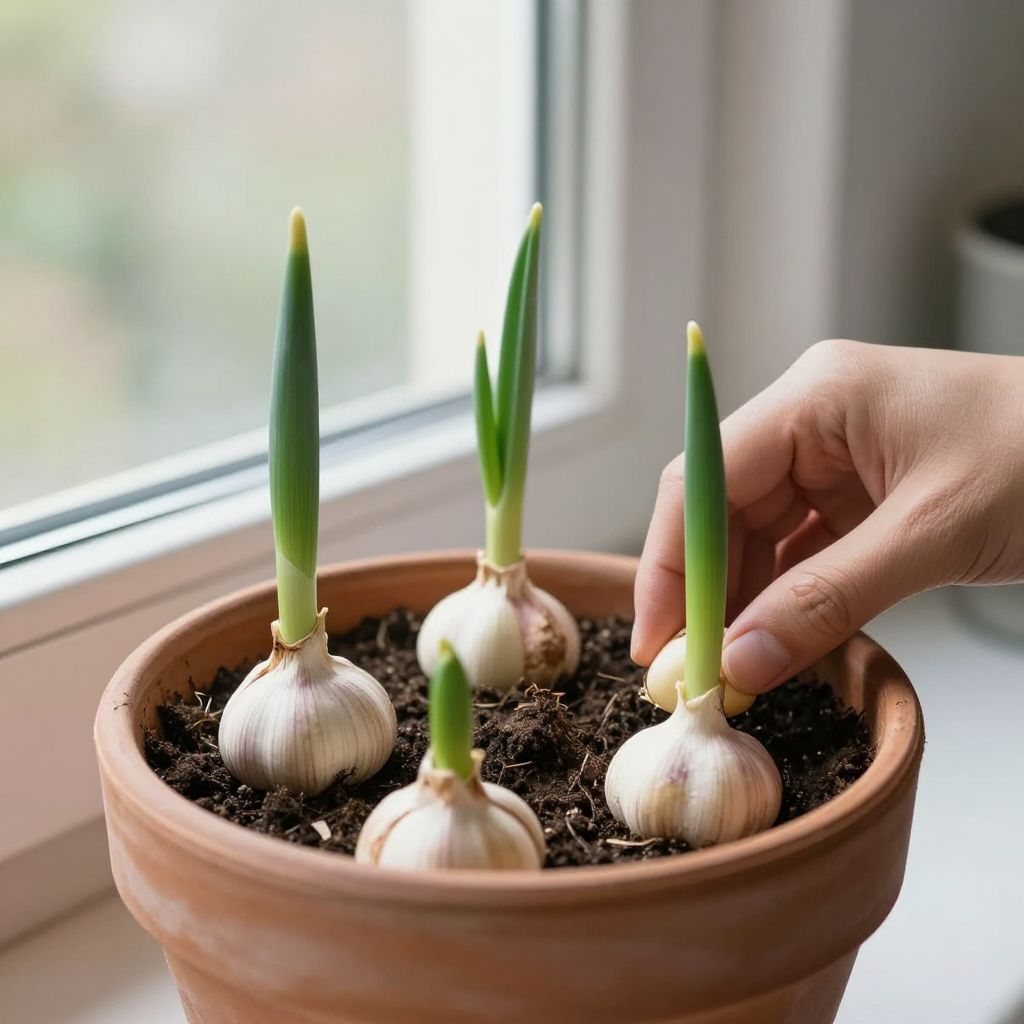
Can you grow garlic indoors? Yes, you can grow garlic indoors for fresh greens, and with enough light and patience you can also grow small bulbs or use clove starts for a short-term container crop. The key is understanding that garlic is a cool-season, full-sun plant that performs best outdoors, so indoor success depends on bright light, good drainage, and realistic expectations.
If you want a steady supply of garlic shoots for cooking, an indoor pot is a simple project. If you want full-sized bulbs, you’ll need stronger light, more space, and a longer growing period than most windowsills can provide.
Can you grow garlic indoors?
Yes, garlic can be grown indoors, but it is usually best for garlic greens rather than large bulbs. Indoors, garlic needs a very bright location, loose well-draining soil, and cool-to-mild temperatures. Without enough light, it will produce thin, weak growth and may never form a proper bulb.
What garlic needs indoors
Garlic is Allium sativum, a crop that naturally prefers strong sunlight, cool weather, and a long growing season. Indoors, you are trying to mimic those conditions as closely as possible.
Light
Light is the biggest factor in indoor garlic success. A south-facing window may work for greens, but most homes need a grow light for stronger growth.
- Give garlic as much direct light as possible.
- If using grow lights, keep them close enough to prevent stretching, but not so close that they scorch the leaves.
- Rotate the pot every few days if the plant leans toward the light.
Temperature
Garlic grows best in cool conditions. Indoor rooms that are too warm can encourage weak, floppy growth and reduce bulb formation.
- Cooler rooms are better than hot, stuffy ones.
- Avoid placing pots near heating vents or radiators.
- Moderate temperatures help garlic greens stay tender and upright.
Soil and drainage
Use a loose, fertile potting mix that drains well. Garlic cloves rot easily in soggy soil, so drainage matters more than feeding heavily.
- Choose a quality potting mix, not heavy garden soil.
- Mix in a little compost if the potting mix is lean, but keep it airy.
- Always use a container with drainage holes.
How to plant garlic indoors
Start with healthy, firm cloves from a reliable bulb. Grocery-store garlic may sprout, but some bulbs are treated to reduce sprouting, and the results can be inconsistent. If possible, use seed garlic or a fresh, plump bulb with no mold or soft spots.
- Separate the bulb into individual cloves, keeping the papery skins intact.
- Choose the largest, healthiest cloves for planting.
- Fill a pot with well-draining potting mix.
- Plant cloves pointy end up, about 1 to 2 inches deep.
- Space cloves a few inches apart so the shoots have room.
- Water lightly to settle the soil, but do not soak it.
A shallow tray can work for greens, but a deeper pot is better if you want to keep garlic growing longer. A container around 6 to 8 inches deep is a practical minimum, and larger pots are easier to manage if you plant several cloves.
Best indoor care for garlic
Watering
Keep the soil evenly moist, not wet. Garlic does not like sitting in water, and overwatering is one of the fastest ways to lose cloves indoors.
- Water when the top inch of soil feels dry.
- Let excess water drain away completely.
- Reduce watering if growth slows in cooler weather or lower light.
Feeding
Garlic grown for greens usually needs only modest feeding. Too much fertilizer can create soft, weak growth and may make the soil stay too wet.
- Use a light application of compost in the potting mix at planting time if desired.
- If growth is pale and slow, a mild balanced houseplant fertilizer can help, but use it sparingly.
- Avoid heavy feeding late in the season if you are trying to form bulbs.
Pruning and harvesting greens
You can snip garlic greens once they are several inches tall. Harvest the outer leaves or trim the tops with clean scissors, leaving enough growth for the plant to keep producing.
- Cut only what you need.
- Leave at least a few inches of foliage on the plant.
- Frequent light harvesting is better than cutting everything at once.
Can you grow garlic bulbs indoors?
Sometimes, but it is more difficult than growing greens. Garlic bulbs need a long growing period, strong light, and a seasonal signal that encourages bulb formation. Indoors, many plants stay at the leafy stage unless conditions are excellent.
If your goal is a full bulb, treat indoor garlic as a long project rather than a quick windowsill crop. You will have better odds if you provide very bright light, cool conditions, and a large enough container for root development.
What helps bulb formation
- Strong, consistent light from a grow light or the brightest window you have.
- Cooler temperatures rather than warm room air.
- Enough root space in a deeper container.
- Healthy cloves planted at the right depth.
Even with good care, indoor garlic may still stay small. That is normal. If you mainly want fresh garlic flavor for cooking, the greens are often the most reliable indoor harvest.
Common problems when growing garlic indoors
Yellowing leaves
Yellow leaves can mean too much water, too little light, or aging foliage. Check the soil first. If it is wet and heavy, let it dry more between waterings. If the plant is stretched and pale, move it to stronger light.
Soft or rotting cloves
This usually points to poor drainage or overwatering. Garlic cloves need moisture to sprout, but they cannot sit in soggy soil. Use a pot with drainage holes and a lighter potting mix.
Leggy, floppy growth
Long, weak leaves are a sign of insufficient light. Move the pot closer to a bright window or use a grow light. Indoor garlic should look compact and upright, not thin and stretched.
Slow growth
Garlic grows slowly indoors, especially in winter. Cool temperatures and lower light can slow it further. Be patient, but if growth nearly stops, reassess light, drainage, and temperature.
Pests and diseases indoors
Indoor garlic usually has fewer pest problems than outdoor plants, but it is not trouble-free. Keep an eye out for fungus gnats, which are often linked to overly wet potting mix, and inspect leaves for aphids if plants are near other houseplants.
- Fungus gnats: Allow the top layer of soil to dry more between waterings and improve drainage.
- Aphids: Rinse them off gently or isolate the plant from others.
- Mold or mildew: Improve air circulation and reduce excess moisture.
Clean pots and fresh potting mix help prevent many indoor disease issues. If a clove turns mushy or develops mold, remove it quickly so it does not affect nearby plants.
How to keep garlic growing longer indoors
If you want a longer harvest, plant cloves in succession rather than all at once. That gives you a steady supply of greens instead of one short flush of growth.
- Start a small batch every few weeks if you use garlic greens often.
- Harvest lightly so the plant can continue growing.
- Replace tired potting mix if it becomes compacted or stays wet too long.
You can also move indoor garlic outdoors later if your climate and season allow it. Harden it off gradually so the leaves adjust to stronger sun and wind.
Best mistakes to avoid
- Planting cloves in heavy, waterlogged soil.
- Using a pot without drainage holes.
- Expecting large bulbs from a dim windowsill.
- Overwatering after planting.
- Letting the plant sit too close to heat sources.
- Harvesting all the foliage too early.
These mistakes are easy to make, especially indoors where soil dries more slowly and light is weaker than outside. A simple, airy potting mix and careful watering solve most problems.
When to harvest indoor garlic
Harvest garlic greens whenever they reach a useful size. Snip the leaves with clean scissors and use them fresh. If you are trying to grow bulbs, wait until the foliage begins to yellow and the plant has had a long enough growing period to size up, though indoor bulbs may remain modest.
For clove-grown plants, you can also lift the entire plant if you want to check bulb development. If the bulb is still tiny, replant and continue growing if the clove remains healthy.
Should you grow garlic indoors?
If you want easy, fresh greens and a simple container project, garlic is worth growing indoors. If you want large, store-worthy bulbs, outdoor growing is usually the better option. Indoors, success comes from bright light, careful watering, and realistic expectations.
Start with one pot, a few healthy cloves, and a bright spot, then adjust your setup based on how the plant responds. If you enjoy indoor edible gardening, you may also like reading about growing strawberries indoors for another compact windowsill crop.