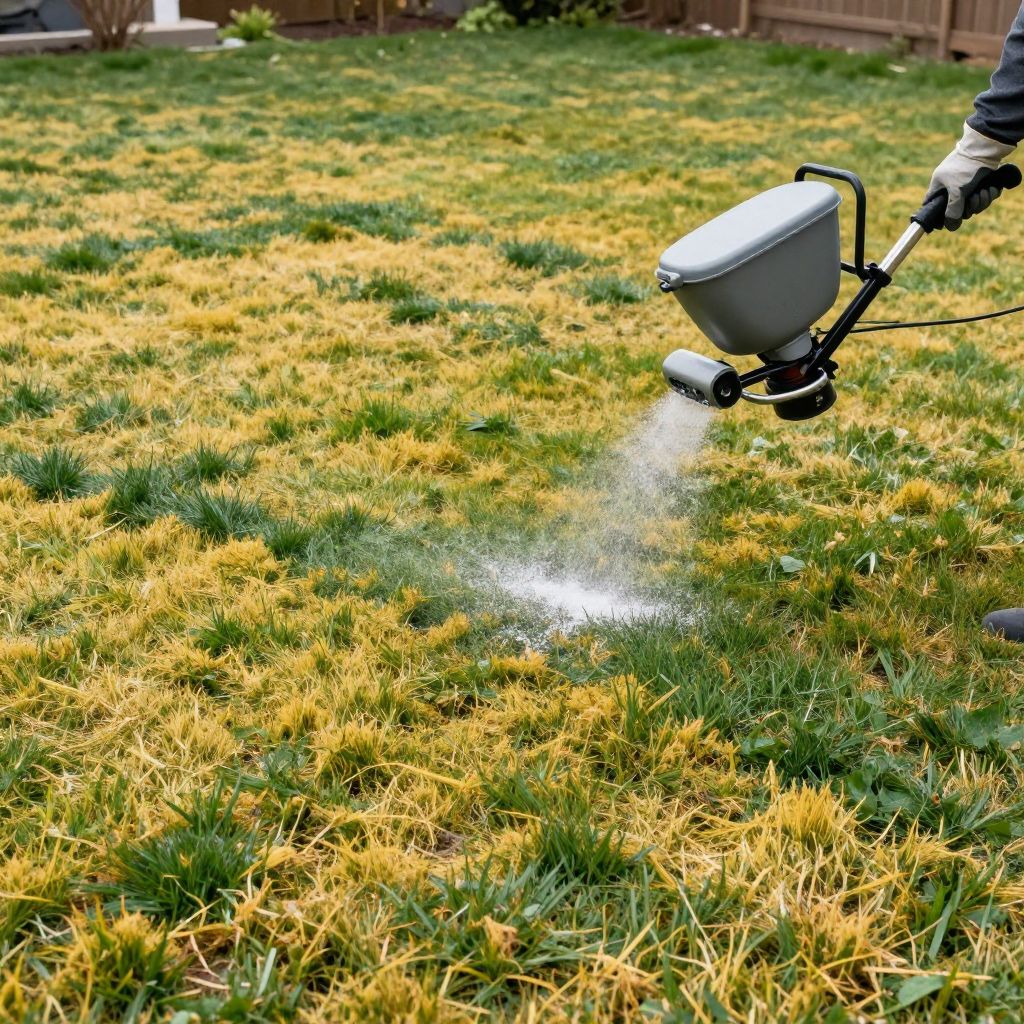
Can you over fertilize your lawn? Yes—you absolutely can, and the damage can show up fast. Too much fertilizer can burn grass blades, stress roots, encourage disease, and even create runoff problems in your yard and nearby waterways.
The good news is that most lawns can recover if you catch the problem early and adjust your feeding habits. The key is knowing how to spot fertilizer burn, what to do right away, and how to fertilize more safely next time.
Can you over fertilize your lawn?
Yes. Overfertilizing a lawn can injure grass by drawing moisture out of roots and leaves, causing yellowing, browning, or patchy dead areas. It can also force weak, fast growth that needs more mowing and water, while increasing the risk of disease, pests, and nutrient runoff.
Signs your lawn has been over fertilized
Fertilizer damage often appears within hours to a few days after application, especially in warm, dry weather or if the lawn was already stressed.
Common visual symptoms
- Leaf tip burn or a scorched look on grass blades
- Yellowing that turns to brown, crispy patches
- Dark green growth at first, followed by weak, floppy blades
- Striping or patchy damage where fertilizer was applied unevenly
- White fertilizer granules still visible on the soil or grass
What fertilizer burn looks like in different situations
- Granular fertilizer: Often causes streaks or spots where granules concentrated.
- Liquid fertilizer: Can burn quickly if mixed too strong or sprayed in hot sun.
- Slow-release fertilizer: Usually safer, but overuse can still cause stress over time.
What to do right away if you over fertilized
If you suspect fertilizer burn, act quickly. The goal is to dilute excess salts, protect roots, and reduce further stress.
- Water deeply right away to help move excess fertilizer through the root zone. Aim for a thorough soaking, not a light sprinkle.
- If granules are still visible, gently rake or sweep them off hard surfaces and off dense leaf blades where possible.
- Do not apply more fertilizer, weed control, or other lawn treatments until the grass begins to recover.
- Avoid mowing until the lawn is less stressed. If you must mow, use a higher setting and a sharp blade.
- Watch for recovery over the next 1–3 weeks, depending on weather, grass type, and damage severity.
If the lawn was fertilized heavily and the soil drains slowly, repeated deep watering may help more than one heavy soaking. Just avoid creating standing water for long periods, which can worsen root stress.
Why over fertilizing happens
Most lawn fertilizer mistakes come from applying too much product, applying too often, or feeding under the wrong conditions. Even a good fertilizer can cause problems if the lawn is already stressed.
Common causes
- Spreading fertilizer unevenly with a broadcast spreader
- Doubling up at lawn edges or turning points
- Using a product with a higher nitrogen analysis than intended
- Applying fertilizer to dry grass in hot weather
- Feeding before heavy rain, which can wash nutrients into low spots
- Not calibrating the spreader or following the label carefully
The label matters. Fertilizer products are formulated differently, and “more” is not safer or better for grass.
How to fertilize a lawn more safely
The safest lawn care routine starts with the soil, not the bag. A soil test can tell you whether your lawn actually needs nitrogen, phosphorus, potassium, or lime, and it helps prevent unnecessary feeding.
Step-by-step safer fertilizing
- Test your soil if possible, especially if the lawn struggles every year or has repeated burn issues.
- Choose a fertilizer suited to your grass type and local conditions.
- Read the label and apply only the recommended amount.
- Calibrate your spreader so it distributes product evenly.
- Apply when the lawn is dry enough to spread product, but the soil has adequate moisture.
- Water lightly afterward if the label recommends it, especially for granular products.
Best conditions for fertilizing
- Cooler parts of the day, not during intense midday heat
- When grass is actively growing, not dormant or drought-stressed
- When rain is not expected immediately unless the product label says otherwise
- When the soil is not saturated or compacted
How much fertilizer is too much?
There is no single safe amount for every lawn because grass species, soil fertility, climate, and product strength all matter. That is why the label and soil test are so important. A lawn can be overfertilized even with a “normal-looking” application if the product is concentrated or repeated too often.
As a general rule, avoid the temptation to “fix” a pale lawn with extra fertilizer. Yellow grass can also come from compacted soil, poor drainage, drought, shade, or mowing too low.
Can over fertilizing kill grass?
Yes, severe overfertilization can kill turfgrass, especially young lawns, newly seeded areas, and grass already under heat or drought stress. In milder cases, the lawn may look damaged but recover as new growth emerges from healthy crowns and roots.
Factors that affect recovery
- Grass species: Some turf types tolerate stress better than others.
- Weather: Cool, moist weather often supports recovery better than hot, dry conditions.
- Soil drainage: Poor drainage can slow recovery and increase disease risk.
- Damage level: Light tip burn is easier to reverse than large dead patches.
How to help the lawn recover
Once the immediate burn is addressed, shift into recovery care. The goal is to reduce stress and encourage steady regrowth without pushing the grass too hard.
Recovery care checklist
- Water only as needed to keep the root zone from drying out completely.
- Keep foot traffic off damaged areas when possible.
- Mow high enough to leave more leaf surface for photosynthesis.
- Hold off on additional fertilizer until the lawn shows clear recovery.
- Overseed thin areas only after the grass is stable and conditions are suitable for seed germination.
If patches stay brown and brittle after a couple of weeks, gently tug a few blades. If they pull up easily or the crowns are brown and dry, that section may need reseeding or patch repair rather than simple watering.
How to prevent fertilizer burn next season
Prevention is mostly about consistency. A lawn that gets the right amount at the right time usually needs less rescue care and develops stronger roots.
Practical prevention tips
- Use a spreader, not hand scattering, for larger lawns.
- Overlap passes carefully to avoid stripes and hot spots.
- Keep fertilizer off sidewalks, driveways, and patios.
- Store fertilizer in a dry place so it does not clump and apply unevenly.
- Do not fertilize drought-stressed or newly seeded grass unless the product and timing are appropriate.
- Base your feeding plan on soil test results and grass performance, not habit.
One of the biggest mistakes is applying fertilizer to solve every lawn problem. Sometimes the real issue is compaction, shade, thatch buildup, poor irrigation, or a mowing height that is too low.
When to call a lawn care professional
Most fertilizer mistakes can be handled at home, but professional help may be useful if the damage is severe or if you are unsure whether fertilizer is the only problem.
Consider expert help if:
- Large sections of turf are completely dead
- Drainage problems or soil compaction are also present
- You suspect chemical spill damage, not just fertilizer burn
- The lawn keeps declining despite proper watering and mowing
Conclusion
Yes, you can over fertilize your lawn, but the damage is often manageable if you respond quickly. Water the area, pause all extra feeding, and let the grass recover before resuming a careful, label-based fertilizing plan. If you want to improve your lawn long term, start with a soil test and a more measured feeding routine.
For more practical lawn care guidance, you may also want to read about how to fix yellow grass and the best time to fertilize a lawn.