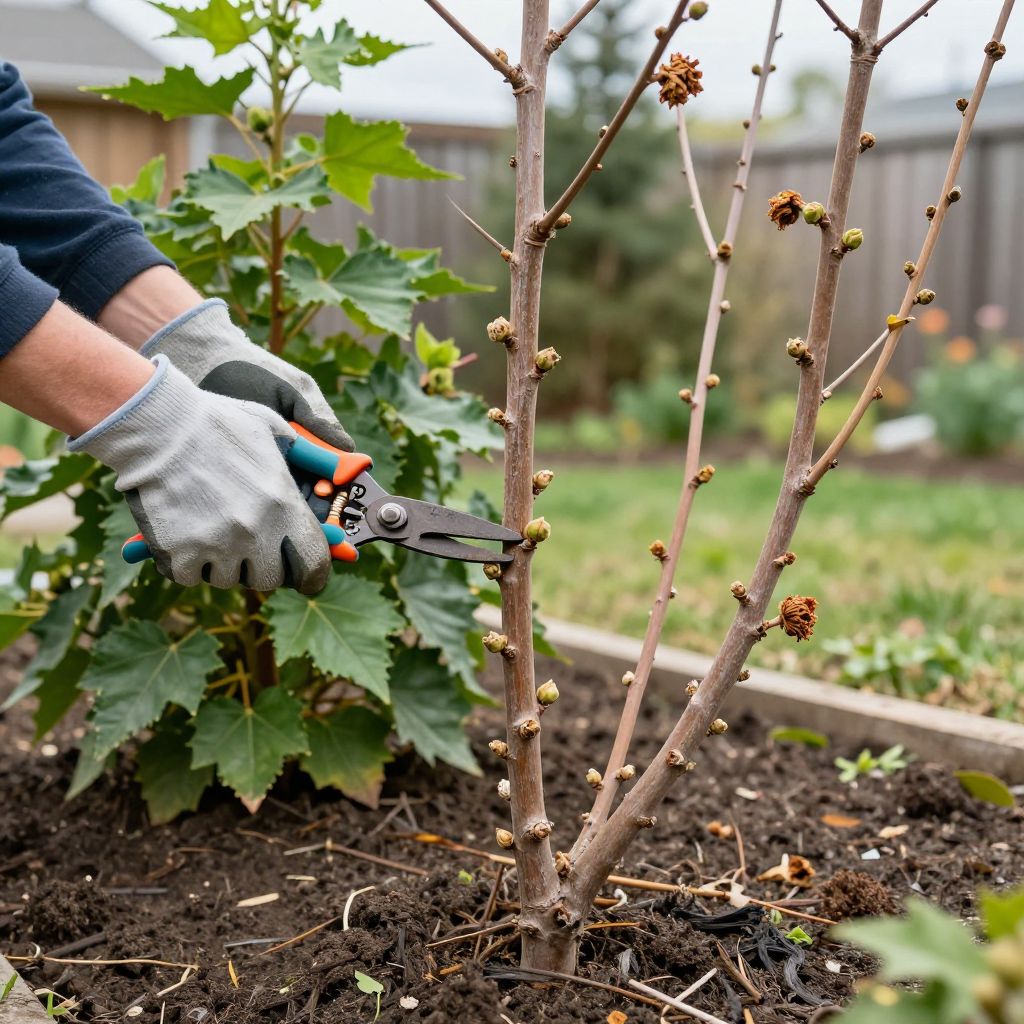
When should you cut back hibiscus? The best time depends on the type of hibiscus you grow and your local climate. In general, prune tropical hibiscus lightly during the growing season, and cut back hardy hibiscus in late winter or early spring before new growth starts.
Done at the right time, pruning helps hibiscus stay compact, bloom better, and recover from winter damage. Done at the wrong time, it can remove flower buds or leave tender new growth exposed to frost.
When To Cut Back Hibiscus?
For hardy hibiscus (such as Hibiscus moscheutos and related perennial types), cut stems back in late winter or early spring after the plant has died back and before fresh shoots emerge. For tropical hibiscus (Hibiscus rosa-sinensis), prune lightly in spring or early summer, and avoid heavy pruning in late fall.
Know which hibiscus you have first
Timing matters because not all hibiscus behave the same way. Some are frost-tender evergreen shrubs, while others die back to the ground each winter and return from the roots.
Hardy hibiscus
Hardy hibiscus are perennial in many climates and usually die back in cold weather. Their stems can be cut to near ground level once winter is over and you can see where new growth is beginning.
Tropical hibiscus
Tropical hibiscus are evergreen in warm climates and container plants in cooler regions. They bloom on new growth, so light shaping after a flush of growth is usually better than a hard cutback.
The best season for pruning hibiscus
Seasonal timing is the key to successful pruning. The goal is to remove dead or crowded growth without sacrificing buds or exposing the plant to stress.
Late winter to early spring for hardy hibiscus
Wait until the coldest weather has passed, then cut back old stems to about 4 to 6 inches above the soil line. This gives the plant a clean start and makes room for vigorous new shoots.
Spring to early summer for tropical hibiscus
Prune tropical hibiscus after the plant begins active growth. A light trim encourages branching and more flowers later in the season. If you cut too hard in autumn, you may stimulate tender growth that frost can damage.
After flowering for shaping, if needed
If your hibiscus is overgrown or lopsided, you can do a modest shape-up after a bloom cycle. Remove only a little at a time so you do not reduce flowering more than necessary.
How to cut back hibiscus the right way
Use clean, sharp pruners or loppers. Clean cuts heal faster and reduce the chance of disease entering the plant.
- Check the plant first for dead wood, winter damage, and crossing stems.
- Remove any obviously dead, broken, or diseased branches.
- For hardy hibiscus, cut old stems down to 4 to 6 inches above the soil.
- For tropical hibiscus, shorten long shoots by up to one-third if shaping is needed.
- Cut just above a healthy node or leaf joint when possible.
- Step back often and keep the plant balanced rather than over-trimmed.
Tip: If you are unsure how much to remove, start conservatively. You can always prune more later, but you cannot replace buds you cut off.
Signs your hibiscus is ready for pruning
Look at the plant, not just the calendar. Local weather, plant age, and winter damage all affect the best timing.
- Hardy hibiscus: stems are brown and dry, and new shoots have not yet fully stretched out.
- Tropical hibiscus: the plant is actively growing and producing fresh leaves.
- Any hibiscus: you see dead tips, weak stems, or branches rubbing against each other.
What to avoid when cutting back hibiscus
Some pruning mistakes can delay bloom, weaken the plant, or leave it vulnerable to weather damage.
- Do not hard-prune tropical hibiscus in late fall unless you live in a frost-free climate.
- Do not cut hardy hibiscus too early if you still expect hard freezes.
- Do not remove too much green growth at once from a stressed plant.
- Do not leave ragged cuts made with dull tools.
- Do not prune during extreme heat or drought unless you are removing damaged wood.
Growing conditions that affect pruning success
Healthy hibiscus recovers from pruning faster when it grows in the right conditions. Pruning is only one part of good care.
Sunlight
Most hibiscus bloom best in full sun to bright light. In very hot climates, some afternoon shade can reduce stress, especially for tropical hibiscus in containers.
Soil and drainage
Hibiscus prefer soil that holds moisture but drains well. Heavy, soggy soil can weaken roots and make pruning recovery slower. Adding compost to garden beds can improve structure and water retention.
Watering
Keep the soil evenly moist, especially after pruning and during active growth. Avoid letting the root zone dry out completely, but do not leave the plant sitting in water.
Feeding and aftercare after pruning
After you cut back hibiscus, help the plant rebuild growth with steady care rather than pushing it too hard.
- Water deeply when the top layer of soil begins to dry.
- Mulch around outdoor plants, keeping mulch a few inches away from the stems.
- Wait until you see active new growth before feeding heavily.
- Use a balanced fertilizer only if the plant is healthy and actively growing.
If your plant was recently moved, frost-damaged, or drought-stressed, give it time to recover before making additional cuts.
Common hibiscus problems that pruning can help
Pruning is useful for more than size control. It can improve airflow, remove damaged wood, and encourage a fuller shape.
Leggy growth
If stems are long and sparse, a light cutback can encourage branching. Make cuts above leaf nodes so new shoots form lower on the plant.
Winter dieback
Cold can kill tender top growth, especially on tropical types grown outdoors in marginal climates. Remove only the dead portion and wait to see where healthy tissue begins before cutting farther.
Weak flowering
Too much shade, poor drainage, or pruning at the wrong time can reduce blooms. Improve growing conditions first, then adjust pruning timing the following season.
Pests and disease to watch for while pruning
Pruning is a good time to inspect the plant closely. Catching problems early can prevent them from spreading.
- Aphids on soft new growth
- Spider mites in hot, dry conditions
- Whiteflies on container-grown tropical hibiscus
- Leaf spot or cankers on weakened stems
Remove badly affected stems and clean your tools between cuts if you notice disease. If the plant has a serious infestation, address that issue before heavy pruning so the new growth does not become reinfested immediately.
Can you propagate hibiscus from pruned stems?
Sometimes, yes. Healthy softwood cuttings from tropical hibiscus can often be rooted, especially from stems removed during spring pruning. Choose a healthy, non-flowering shoot and use clean tools.
Hardy hibiscus is usually grown from seed, division, or nursery plants rather than routine stem cuttings. If you want to try propagation, make sure the cutting material is healthy and free of pests.
Quick seasonal guide
- Late winter to early spring: cut back hardy hibiscus to near the ground.
- Spring to early summer: lightly shape tropical hibiscus.
- Summer: pinch or trim lightly if needed to keep a compact form.
- Fall: avoid major pruning unless you are removing dead or damaged wood.
Final thoughts
The safest answer to when to cut back hibiscus is this: prune hardy hibiscus in late winter or early spring, and prune tropical hibiscus lightly during active growth. Match the timing to your plant type and climate, then make clean, careful cuts.
If you want to keep learning about healthy flowering shrubs and seasonal care, look for related guides on pruning shrubs and improving garden soil before the next growing season.