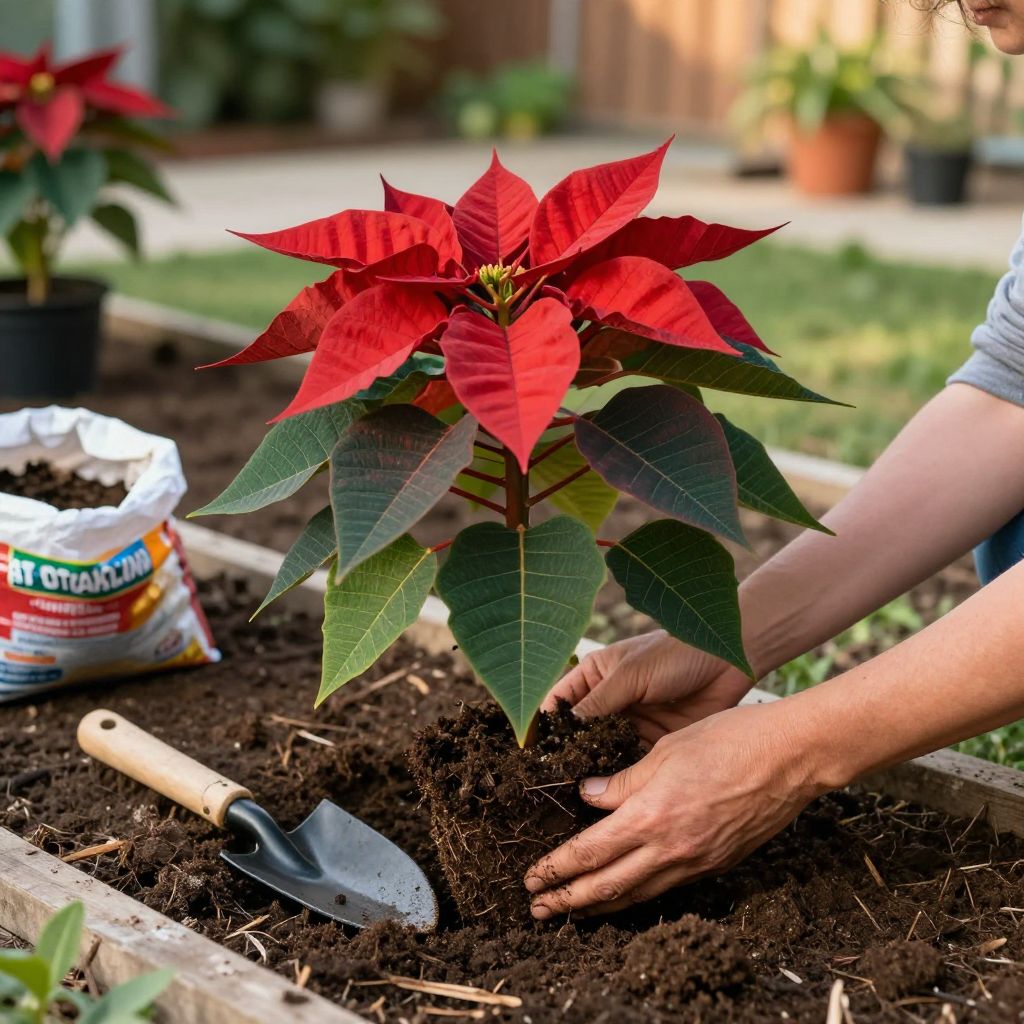
Can you plant poinsettias outside? Yes, but only if your climate and site conditions suit this tropical plant. Poinsettias (Euphorbia pulcherrima) can grow outdoors year-round in frost-free regions, while in colder areas they’re usually treated as seasonal container plants or moved outside only after all danger of frost has passed.
The key is matching the plant to the weather, soil, and light you can actually provide. If you do that, a poinsettia can become a colorful landscape shrub or patio plant instead of a short-lived holiday decoration.
Can you plant poinsettias outside?
Yes, you can plant poinsettias outside if your area stays warm enough for them to survive without frost. They grow best in mild, frost-free climates with well-drained soil, bright light, and protection from cold winds. In colder regions, plant them outdoors only in summer or keep them in containers you can move inside.
When poinsettias can live outdoors
Poinsettias are native to warm regions and are sensitive to cold. A light frost can damage leaves and stems, and a hard freeze can kill the plant.
Best climate conditions
- Frost-free or nearly frost-free winters: Best for planting in the ground.
- Warm days and mild nights: Growth is strongest when temperatures stay comfortably warm.
- Protection from cold snaps: Even in warm regions, occasional frost can be a problem.
If you live where winter temperatures regularly drop near freezing, treat poinsettias as tender ornamentals rather than permanent landscape shrubs. In those areas, they are better grown in pots, greenhouse spaces, or as temporary patio plants.
Signs your climate is too cold
- Regular frost in fall, winter, or early spring
- Long periods of temperatures below about 50°F at night
- Hard freezes that damage other tender tropical plants
How to plant poinsettias outdoors
Plant poinsettias outside only when the soil is warm and the weather has settled. Choose a site with bright light, good drainage, and some shelter from strong wind. A healthy transplant placed in the right spot has a much better chance of establishing well.
- Choose the location: Pick a spot with morning sun and afternoon shade, or bright filtered light in very hot climates.
- Check drainage: Avoid low spots where water collects after rain.
- Prepare the soil: Work in compost if the soil is poor or compacted, but do not create a heavy, soggy planting hole.
- Dig the hole: Make it as deep as the root ball and a little wider.
- Set the plant: Keep the top of the root ball level with the surrounding soil.
- Water in well: Soak the root zone after planting to settle the soil.
- Mulch lightly: Add a thin layer of mulch, keeping it away from the stem.
Do not bury the stem deeper than it was growing in the pot. Poinsettias can rot if planted too deeply or kept too wet.
Soil, drainage, and sunlight needs
Poinsettias do best in loose, fertile soil that drains quickly. They dislike heavy clay and soggy beds, which can lead to root problems and weak growth.
Soil preferences
- Drainage first: Water should move through the soil instead of pooling around roots.
- Moderate fertility: Rich soil helps, but overly rich or constantly wet soil can cause soft growth.
- Organic matter: Compost improves structure in sandy or poor soil.
Light requirements
Outdoors, poinsettias usually prefer bright light with some protection from intense afternoon sun, especially in hot climates. In cooler mild climates, they can tolerate more sun if the soil stays evenly moist and roots are not stressed.
If leaves scorch, curl, or look bleached, the plant may be getting too much direct sun. If stems stretch and leaves are sparse, it may need more light.
Watering poinsettias outdoors
Outdoor poinsettias need consistent moisture while they establish, but they should never sit in water. The best approach is to water deeply, then let the top layer of soil dry slightly before watering again.
How to tell when to water
- Check the soil with your finger about 1 inch deep.
- Water when the top inch feels dry, especially in warm weather.
- Reduce watering during cool, cloudy periods when evaporation slows.
Container-grown poinsettias dry out faster than those in the ground, so pots may need more frequent checks. Still, the goal is even moisture, not constant wetness.
Common watering mistakes
- Letting the root ball dry out completely
- Keeping the soil wet for long periods
- Using a pot without drainage holes
- Watering on a fixed schedule instead of checking the soil
Can poinsettias survive winter outside?
Only in warm climates where frost is rare or absent. In the ground, poinsettias may survive and grow into large shrubs in suitable regions, but they are not winter-hardy in most places. If frost is expected, protect them or move potted plants indoors.
Cold protection options
- Bring containers indoors before nighttime temperatures drop too low.
- Cover in the garden with frost cloth during brief cold snaps.
- Mulch the root zone to help buffer mild temperature swings.
Do not rely on plastic sheeting touching the leaves during a freeze, since that can worsen damage. If you use a cover, keep it off the foliage and remove it in the morning.
Pruning and shaping outdoor poinsettias
Poinsettias can become leggy outdoors, especially after flowering or after a period of rapid growth. Pruning helps keep them bushier and more manageable.
When to prune
Prune after the colorful bracts fade or after the plant finishes its main display. In warm climates, light shaping can also be done during the growing season to encourage branching.
How to prune safely
- Use clean, sharp pruners.
- Cut back long stems to encourage side shoots.
- Remove weak, damaged, or crossing growth.
- Wear gloves if you have sensitive skin, since the milky sap can irritate some people.
Do not remove too much at once from a stressed plant. A light, gradual pruning is safer than a severe cutback if the plant is still adjusting to outdoor conditions.
Feeding and general maintenance
Outdoor poinsettias usually benefit from light feeding during active growth, especially if the soil is lean. Compost and a balanced garden fertilizer can support healthy foliage, but avoid overfeeding, which can create weak, leafy growth with fewer flowers.
Maintenance checklist
- Remove fallen leaves and debris around the plant
- Watch for pests on new growth and leaf undersides
- Keep mulch a few inches away from the stem
- Check for wind damage after storms
If you are growing poinsettias in pots outdoors, rotate the container occasionally so the plant grows evenly and does not lean toward the light.
Common pests and diseases outdoors
Outdoor poinsettias can attract the same pests that bother many tender ornamentals. Early detection makes control much easier.
Common pests
- Whiteflies: Often found on the undersides of leaves; they can cause yellowing and sticky residue.
- Aphids: Cluster on tender shoots and distort new growth.
- Spider mites: More common in hot, dry conditions; look for fine stippling and webbing.
- Mealybugs: Cottony insects that hide in leaf joints and stems.
Common disease issues
- Root rot: Usually caused by poor drainage or overwatering.
- Leaf drop: Can result from cold stress, drought stress, or sudden environmental changes.
- Stem dieback: Often follows frost or prolonged wet conditions.
For pest control, start with a strong spray of water to dislodge insects, then inspect again a few days later. If the problem persists, use a control method suited to the pest and follow label directions carefully.
Can you propagate poinsettias outdoors?
Yes, poinsettias can be propagated from stem cuttings, especially in warm weather when the plant is actively growing. This is a useful way to replace a damaged plant or expand your collection.
Basic cutting method
- Take a healthy stem cutting with several leaves.
- Remove lower leaves so the stem can be inserted into a moist rooting medium.
- Keep the cutting warm and out of harsh direct sun.
- Maintain even moisture without waterlogging the medium.
Rooting success depends on stable warmth, humidity, and clean tools. If temperatures swing too much or the cutting dries out, it may fail before roots form.
Using poinsettias in the landscape
In warm climates, poinsettias can be used as seasonal shrubs, accent plants, or colorful backdrops near patios and entryways. Their bold bracts make them useful where you want a bright splash of color without complicated care.
Good landscape uses
- Mixed borders in frost-free gardens
- Foundation plantings in mild climates
- Large containers on patios or porches
- Seasonal color near walkways
Give them room to grow. A cramped planting spot with poor airflow can increase pest and disease pressure, especially in humid weather.
What to do if your poinsettia struggles outside
If your poinsettia looks unhappy outdoors, the cause is usually one of a few common stress factors: cold, too much sun, poor drainage, or inconsistent watering. Correcting the environment is more effective than trying to force growth with extra fertilizer.
Quick troubleshooting guide
- Yellow leaves: Check for overwatering, poor drainage, or low light.
- Drooping plant: Look for dry soil, root stress, or sudden temperature changes.
- Leaf scorch: Move the plant to gentler light.
- Leaf drop after moving outdoors: Expect some adjustment, but protect the plant from wind and cold nights.
If the plant is in a pot, you have more flexibility. Move it to a better microclimate before problems become severe.
Final tips for success
So, can you plant poinsettias outside? Absolutely, if your climate is warm enough and you give them the right site, drainage, and protection from cold. In colder regions, they are best handled as container plants or temporary outdoor accents during warm months.
Before planting, check your local frost risk, choose a sheltered bright spot, and make sure the soil drains well. For more practical seasonal advice, you may also want to read about how to care for potted tropical plants outdoors and choosing the best container soil for flowering plants.