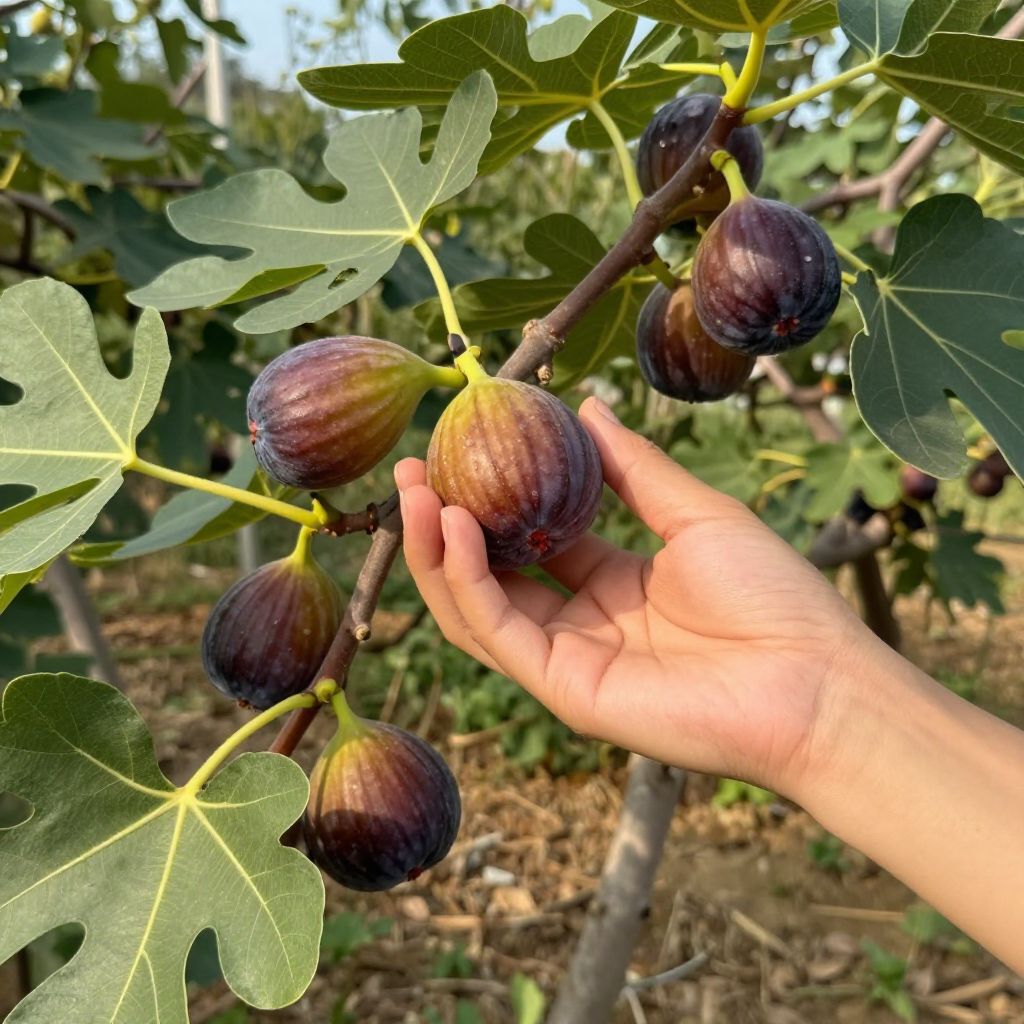
Wondering when to pick figs so they’re sweet, soft, and fully ripe? Timing matters more with figs than with many fruits, because they do not continue ripening much after harvest. Pick too early and they taste bland; wait too long and they can split, ferment, or be taken by birds and insects.
The good news is that ripe figs give clear signs. With a little practice, you can harvest at the right moment and enjoy better flavor, texture, and shelf life from your tree.
When to pick figs?
Pick figs when the fruit hangs soft, feels slightly tender, droops from the stem, and shows rich color for its variety. A ripe fig often develops a sweet aroma, a neck that bends easily, and a small drop of nectar or split at the eye. Harvest gently and check daily during peak season.
How to tell a fig is ripe
Figs are one of the easiest fruits to over- or under-harvest if you rely only on color. Different varieties ripen to green, purple, brown, yellow-green, or nearly black, so use touch and shape as well as color.
Key ripeness signs
- Soft to the touch: The fruit gives slightly when pressed, but should not feel mushy.
- Drooping neck: The fig often hangs downward more than unripe fruit.
- Full color: The skin deepens to the mature color of that variety.
- Sweet scent: Ripe figs often smell fragrant at close range.
- Small cracks or nectar: Some ripe figs show a little splitting or a drop of sugary liquid near the eye.
- Easy stem release: A ripe fig should come away with a gentle lift or twist.
If the fig stays firm, the neck is stiff, and the fruit points upward, it usually needs more time. If it is very soft, leaking, or has begun to ferment, it is past peak harvest.
What not to rely on
- Do not pick by size alone. Some figs are naturally small when ripe.
- Do not assume a dark fig is ripe. Some varieties darken before they sweeten fully.
- Do not wait for all figs on the tree to ripen at once. They usually mature in waves.
Seasonal timing for fig harvest
Fig harvest season depends on your climate, variety, and whether the tree is young or established. In warm regions, figs may ripen over a long stretch from summer into fall. In cooler climates, the season may be shorter, and late fruit may not mature before cold weather.
Typical ripening pattern
- Early season: The first ripe figs often appear on established trees once weather stays warm.
- Peak season: Fruit ripens more quickly, sometimes every day or two.
- Late season: Ripening slows as nights cool and daylight shortens.
Newly planted figs usually need time to establish before they produce heavily. A young tree may set fruit but drop it before maturity if it is stressed by drought, poor rooting, or cold weather.
Climate matters
In hot, dry weather, figs can ripen quickly and may split if rain follows a dry spell. In cooler or coastal areas, fruit may take longer to soften and color up. If you garden in a short-season climate, choose a site with maximum sun and warmth so fruit has the best chance to finish ripening.
How to harvest figs correctly
Harvesting figs is simple, but the fruit is delicate. Handle them gently and pick frequently during ripening, because figs can go from perfect to overripe very quickly.
- Check the tree every day or two once fruit begins to soften.
- Hold the fig lightly and lift it upward or twist it gently.
- If it resists, leave it for another day or two.
- Place harvested figs in a shallow container in a single layer if possible.
- Keep them cool and use them soon after picking.
Ripe figs are highly perishable. Even when picked at the right stage, they bruise easily and are best eaten or stored promptly.
Best time of day to pick
Morning is often best, especially in hot weather, because the fruit is cooler and firmer. Avoid picking after heavy rain if possible, since very wet figs are more likely to split and spoil quickly.
Common mistakes when picking figs
Many fig problems are really harvest-timing problems. If your figs are disappointing, the issue may be that they were picked too soon, left too long, or stressed before ripening.
Picking too early
Unripe figs may soften a little after harvest, but they do not become truly sweet like climacteric fruits such as bananas. If the fig is hard and bland, it was likely picked before it was ready.
Waiting too long
Overripe figs can split, attract ants, or ferment on the tree. Birds and wasps may also discover them quickly. Harvest often once the first fruit begins to soften.
Ignoring weather changes
Sudden rain after a dry period can cause ripe figs to crack. If stormy weather is forecast and the fruit is already soft, pick it a little early rather than losing it to splitting.
Letting fruit hide in the canopy
Figs tucked deep in the foliage can be missed until they are overripe. Prune lightly to keep the tree open enough to inspect fruit easily and improve airflow.
Growing conditions that help figs ripen well
Good harvest timing starts with good growing conditions. A healthy fig tree is more likely to ripen fruit evenly and on schedule.
Sunlight
Figs need full sun for the best fruiting. Aim for at least 6 to 8 hours of direct sun where possible. More sun usually means better ripening and sweeter fruit.
Soil and drainage
Figs prefer well-drained soil. Heavy, waterlogged ground can weaken roots and reduce fruit quality. If your soil stays wet, improve drainage with organic matter and consider planting on a raised bed or mound.
Watering
Consistent moisture helps fruit size and reduces stress, but overwatering can lead to weak growth and poor ripening. Water deeply when the soil begins to dry, especially during fruit development, then reduce excess watering as fruit approaches maturity.
Mulch and compost
A layer of organic mulch helps hold even moisture and moderates soil temperature. Compost can improve soil structure, but avoid piling it against the trunk. Keep mulch a few inches away from the base to reduce rot and pest issues.
Pruning and maintenance for better harvests
Pruning affects how easily you can spot ripe figs and how much energy the tree puts into fruiting. A well-shaped tree is easier to manage and harvest.
Light pruning goals
- Remove dead, damaged, or crossing branches.
- Open the center enough to let in light.
- Keep fruiting branches reachable for inspection and picking.
- Control height so you can harvest without stretching or climbing.
Do major pruning at the appropriate dormant season for your climate and tree type. Avoid heavy pruning right before harvest, since it can reduce fruiting or expose fruit to sunscald in very hot regions.
Pests and diseases that affect harvest timing
Several common problems can ruin figs just as they are nearing ripeness. Watching for them helps you decide whether to pick early or wait.
Birds and insects
Birds often peck ripe fruit, and ants or wasps may find split figs quickly. Netting can help if used carefully, and frequent harvest is one of the simplest defenses.
Fruit splitting
Splitting often happens after irregular watering or sudden rain. If the fig is already soft, pick it promptly. If fruit splits repeatedly, aim for steadier soil moisture and better drainage.
Rot and souring
Very ripe figs can sour or mold, especially in humid weather. Remove damaged fruit promptly and avoid letting fallen figs sit under the tree, where they can attract pests.
Can figs ripen after picking?
Figs do not ripen much after harvest. They may soften slightly, but they will not become significantly sweeter if picked too early. That is why the best strategy is to wait for clear signs of ripeness on the tree, then harvest at once.
If you must pick slightly early because of weather or pests, choose fruit that is already softening and nearly ripe. Hard, green figs rarely improve off the tree.
Quick harvest checklist
- Fruit is soft but not mushy.
- Skin color matches the ripe stage of the variety.
- Neck droops or bends easily.
- Fig smells sweet.
- Fruit releases with a gentle twist or lift.
- No major splitting, mold, or insect damage is present.
Conclusion
The best answer to when to pick figs is simple: harvest them when they are fully colored, soft, fragrant, and easy to detach. Check your tree often during the ripening season, because figs can go from perfect to overripe fast. If you want to improve next year’s crop, focus on full sun, even watering, and light pruning for easier harvests.
For more practical fruit-tree guidance, you may also enjoy reading about how to prune fruit trees for better harvests and choosing the best sunny spot for edible plants.