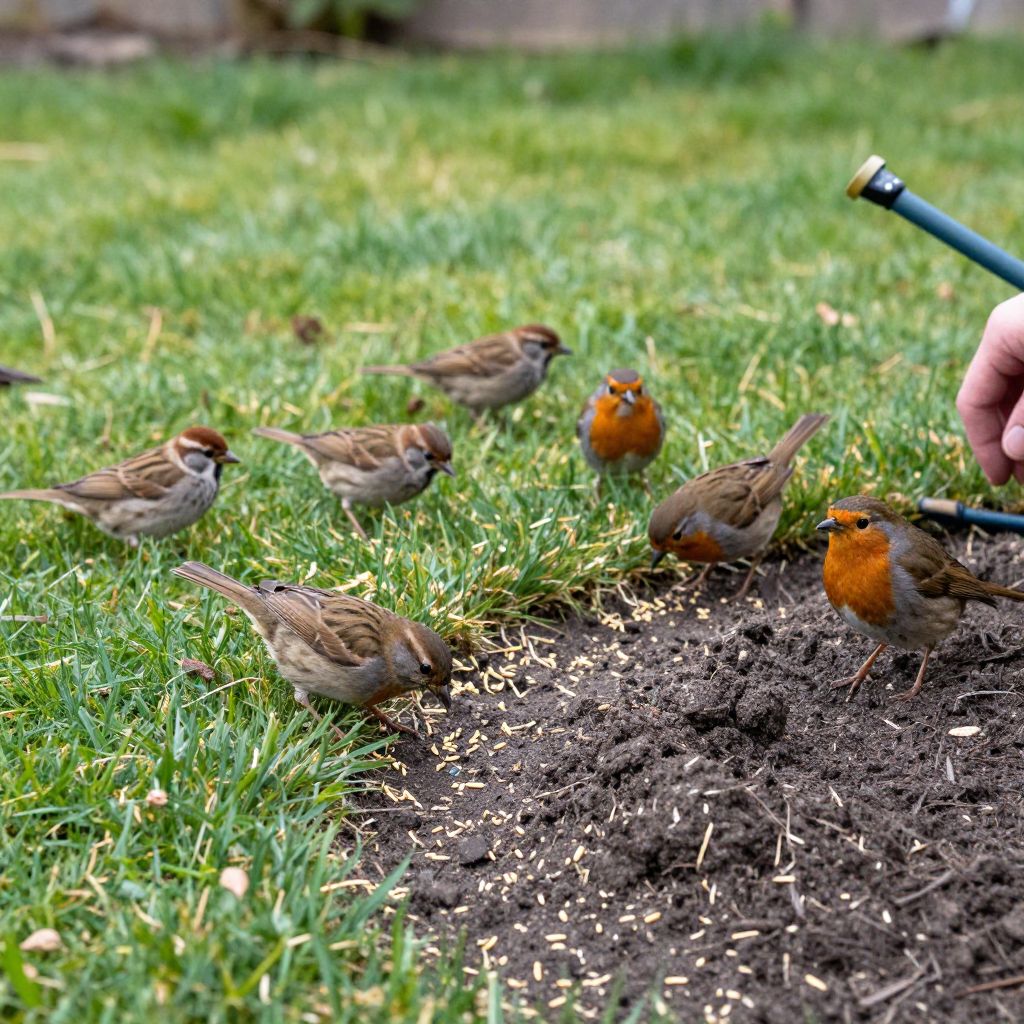
Do birds eat grass seed? Yes—many birds will happily scratch up and eat freshly sown grass seed, especially when it’s left exposed on bare soil. That can thin out a new lawn fast, so the goal is to make seed less visible, less accessible, and better anchored in the soil.
The good news is that you do not need to choose between a healthy lawn and feeding the birds. With the right sowing method, light cover, and a little patience, you can protect seed long enough for germination while still supporting a strong stand of grass.
Do birds eat grass seed?
Yes. Sparrows, finches, pigeons, doves, and other seed-eating birds often target grass seed after sowing, especially in open areas with little cover. They are most likely to remove seed from the surface before it germinates, so the best protection is to sow correctly, cover the seed lightly, and keep the area moist so it settles in quickly.
Why birds go after newly sown grass seed
Fresh grass seed is easy food. It sits on the soil surface, is small enough to peck up quickly, and is often planted in exposed areas where birds can see it clearly.
Bird pressure is usually highest when:
- The lawn area is newly prepared and bare.
- Seed is broadcast too thickly on the surface.
- The weather is dry, so seed remains visible for longer.
- Birds are already feeding nearby on patios, feeders, or open ground.
Birds usually do the most damage in the first few days after sowing. Once the seed has germinated and the seedlings are established, they are much less likely to be eaten.
How to stop birds eating grass seed
The most effective approach is to combine several simple methods. No single trick is perfect, but together they make the seed much harder for birds to find and remove.
1. Rake the seed in lightly
After broadcasting, gently rake the area so some seed is tucked just under the surface. Grass seed should not be buried deeply, but it should not sit fully exposed either.
A light covering of soil helps because birds can only peck at what they can see. Pressing the seed into the soil with the back of a rake or a lawn roller also improves seed-to-soil contact.
2. Add a thin topdressing
A very thin layer of fine compost, screened topsoil, or lawn topdressing can hide seed from birds and help retain moisture. Keep it light—just enough to obscure the seed, not smother it.
Avoid heavy covering. Grass seed needs light contact with soil and good moisture, but it still needs air and room to sprout.
3. Use straw or clean mulch sparingly
On larger bare areas, a loose scattering of clean straw can help hide seed and reduce drying. Use it lightly so sunlight can still reach the soil and seedlings can emerge.
Do not use thick layers of leaves, bark, or coarse mulch over grass seed. Those materials can block germination and create patchy results.
4. Keep the seed moist
Moist soil helps seed settle in and germinate faster, which shortens the window when birds can steal it. Water gently so you do not wash seed into piles or bare spots.
Use a fine spray or sprinkler setting that dampens the top layer without creating runoff. If the surface dries out repeatedly, birds stay interested longer and germination becomes uneven.
5. Deter birds temporarily
Short-term deterrents can help during the first week or two after sowing. These work best when combined with covering methods.
- Use lightweight netting raised slightly above the soil so birds cannot reach the seed.
- Hang reflective tape, old CDs, or fluttering garden deterrents near the area.
- Place temporary stakes or string lines across the lawn to make landing less comfortable.
Move deterrents occasionally. Birds adapt quickly if the setup never changes.
6. Sow at the right time of day
Bird activity often increases early in the morning and late afternoon. If possible, sow when you can water and cover the area soon after. That reduces the time seed sits exposed.
In windy or very dry weather, it is even more important to rake in the seed promptly and keep the surface from drying out.
Best sowing conditions for grass seed
Bird protection matters more when germination is slow. The faster your seed gets into favorable conditions, the less time birds have to eat it.
Soil and drainage
Grass seed performs best in a fine, level seedbed with good drainage. Heavy, waterlogged soil can delay sprouting and encourage patchy growth, while very sandy soil may dry out too quickly.
If your soil is compacted, loosen the top layer before sowing. If it is heavy clay, improve the surface with a light topdressing and avoid working the soil when it is wet and sticky.
Sunlight
Most lawn grasses need good light to establish well. Shadier areas may germinate more slowly and stay thin, which leaves more exposed seed for birds to find.
If the area is under trees or beside a fence, choose a grass mix suited to your light conditions and be prepared for slower establishment.
Temperature and season
Grass seed germinates best when soil temperatures suit the grass type you are growing. Cool-season lawns and warm-season lawns have different ideal conditions, so check the seed label and follow local guidance.
In general, sowing when the soil is naturally warm enough for germination helps the lawn establish more quickly and reduces the time birds can feed on the seed.
Step-by-step: how to sow grass seed with bird protection
Use this simple process to give your seed the best chance of staying put and sprouting evenly.
- Clear weeds, stones, and debris from the area.
- Loosen the top layer of soil and level it with a rake.
- Spread grass seed evenly at the rate recommended on the packet.
- Rake lightly so some seed is mixed into the top surface.
- Apply a thin topdressing or a very light layer of straw if needed.
- Water gently to settle the seed without washing it away.
- Use temporary bird deterrents for the first 7 to 14 days, or until the seedlings are visible.
Do not overwater. Saturated soil can move seed around and create puddles where birds can easily pick it out.
Common mistakes that attract birds
Most bird damage comes from a few avoidable errors. Fixing these can make a big difference even without special products.
- Leaving seed exposed on top of bare soil.
- Sowing too thinly, which leaves large gaps birds can target.
- Using thick mulch that blocks germination.
- Letting the area dry out for long periods after sowing.
- Ignoring local bird activity near feeders, hedges, or nesting areas.
If birds keep returning, check whether the seed is simply too visible. In many cases, a light rake-in and topdressing solve more than any scare device.
What to do if birds have already eaten some seed
Uneven germination does not always mean you need to start over. First, wait long enough to see what actually sprouts, since some seed may still be below the surface.
If you have obvious bare patches after the expected germination window, overseed those spots lightly, press the seed in, and protect the area more carefully the second time.
For larger losses, reseed the whole area only if the stand is too patchy to fill in naturally. Otherwise, spot repair is usually easier and less wasteful.
Are bird deterrent products worth it?
Some commercial deterrents can help, but they work best as part of a broader plan. Birds often ignore a single visual scare if the seed remains easy to reach.
For home lawns, the most reliable methods are still practical ones: good seed-to-soil contact, light covering, regular moisture, and temporary exclusion with netting or barriers.
If you do use a product, make sure it is suitable for outdoor use around lawns and follow the label carefully. Avoid anything that could harm birds, pets, or beneficial wildlife.
How long do you need to protect grass seed from birds?
Usually, the highest-risk period is the first one to two weeks after sowing, or until the seed has germinated and the seedlings are clearly established. In cooler weather, that window may be longer because germination takes more time.
Once the lawn is up and growing, birds are much less interested. At that stage, your focus shifts from seed protection to regular mowing, watering, and gentle feeding if needed.
Keeping a new lawn healthy after germination
After the seedlings emerge, continue watering carefully so the soil stays evenly moist but not soggy. Young grass has shallow roots and can dry out quickly, especially in sun and wind.
Delay mowing until the new grass is tall enough to handle it. When you do mow, use a sharp blade and avoid cutting too short, since stressed seedlings are more vulnerable to thinning and bird pecking at weak spots.
If patches remain sparse, overseed them rather than waiting for birds or weeds to take over. A dense lawn is less attractive to birds because there is less exposed seed and bare soil.
Conclusion
So, do birds eat grass seed? Yes, but you can greatly reduce the problem by sowing carefully, covering the seed lightly, and keeping the area moist until it germinates. If you are reseeding a lawn, start with good soil contact and a simple bird barrier, then check the area daily for the first week.
For more practical lawn care help, you may also find related guidance on how to overseed a lawn and how to prepare soil for new grass seed useful for getting thicker, more even growth.