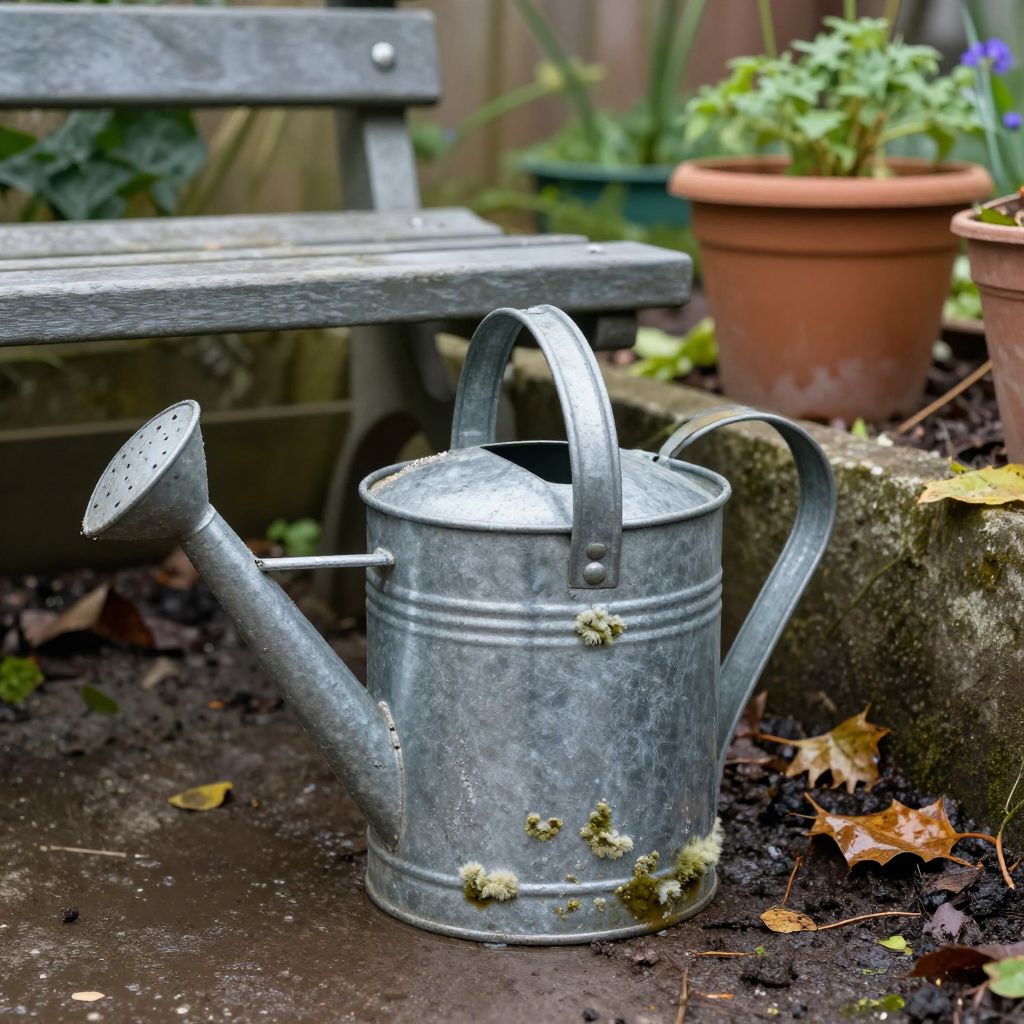
Can mold grow on metal in your garden shed, greenhouse, or on tools and pots? Yes, it can. Mold does not “eat” metal the way it breaks down wood, but it can grow on the dust, sap, soil, algae, or organic residue sitting on metal surfaces.
That means metal itself is usually not the food source. The real issue is moisture, grime, and poor airflow, which let mold spread across benches, watering cans, pruners, plant labels, and other garden equipment.
Can mold grow on metal?
Yes, mold can grow on metal surfaces when there is enough moisture and organic material present. Clean, dry metal is not an ideal place for mold to live, but damp soil residue, mulch dust, plant sap, and condensation can create a film where mold develops. In gardening spaces, this is most common on tools, pots, shelves, and greenhouse hardware.
Why mold appears on metal in gardening spaces
Mold spores are everywhere outdoors and indoors. They settle on surfaces and wait for the right conditions, especially moisture and a food source.
Metal often becomes a landing spot rather than a food source. In a shed, greenhouse, or potting area, mold may form on metal because of:
- Condensation on cool metal surfaces
- Soil stuck to tools, trays, or pots
- Organic debris such as leaves, sap, algae, or compost dust
- Poor ventilation in enclosed spaces
- Repeated wetting without drying time
Rust and mold are not the same thing. Rust is corrosion of metal, while mold is a fungal growth on surface residue. They can occur together because rusted, rough metal holds dirt and moisture more easily.
Where gardeners most often see mold on metal
- Hand tools such as pruners, trowels, and cultivators
- Metal plant stands, shelving, and greenhouse frames
- Watering cans and hose fittings
- Metal nursery pots or decorative containers
- Seed-starting trays with metal inserts or supports
Is mold on metal harmful to plants?
Mold on metal is usually a maintenance problem rather than a direct plant disease. However, it can signal damp conditions that also encourage fungal problems on seedlings, potting mix, mulch, and nearby plant surfaces.
If mold is showing up on tools or containers, check the whole growing area. The same conditions that support mold on metal often support mildew, algae, fungus gnats, and rot in potting media.
When to worry more
- Mold keeps returning after cleaning
- There is a musty smell in the shed or greenhouse
- Tools are stored wet or dirty
- Seedlings or potted plants are staying too wet
- You see fuzzy growth on soil, mulch, or plant stems as well as metal
How to clean mold off metal garden tools and surfaces
Cleaning is usually straightforward if you act early. The goal is to remove the mold, dry the surface, and reduce the moisture that let it form.
- Brush off loose dirt first. Use a stiff brush or old cloth to remove soil and debris.
- Wash with soap and water. Scrub the metal with warm water and a small amount of dish soap.
- Disinfect if needed. For tools that touch plant tissue, wipe with rubbing alcohol or a diluted disinfectant suitable for garden tools. Rinse if the product label requires it.
- Dry completely. Use a towel, then air-dry in a ventilated spot.
- Protect the surface. Lightly oil clean, dry hand tools if appropriate for the tool type and manufacturer guidance.
If the mold is on a large metal bench, shelf, or greenhouse frame, scrub the area with soap and water first. If needed, follow with a garden-safe disinfecting step, then let the area dry fully before putting plants back.
Safety tips for cleaning
- Wear gloves if the surface is dirty, rusty, or has sharp edges
- Work in fresh air when possible
- Do not mix cleaning products
- Keep chemicals away from seedlings, potting mix, and open compost
- Test any cleaner on a small area first if the metal is painted or coated
How to prevent mold from growing on metal
Prevention is mostly about keeping metal dry, clean, and well aired. In gardening, that usually matters more than any special treatment.
For tools
- Wipe off soil and sap after each use
- Dry tools before storing them
- Hang tools instead of leaving them in a damp pile
- Sharpen and oil tools as needed to keep surfaces smoother and easier to clean
- Store tools in a dry shed, cabinet, or bin with airflow
For pots, benches, and shelves
- Remove old potting mix and plant debris regularly
- Do not let saucers stay full of water
- Raise containers slightly so water can drain and air can circulate
- Open greenhouse vents or doors when weather allows
- Clean condensation-prone surfaces during cool, damp weather
For greenhouse and indoor growing areas
Indoor plant spaces and greenhouses are especially prone to mold because humidity can rise quickly. Good airflow is often the simplest fix.
- Use fans to keep air moving gently
- Space plants so leaves and containers are not crowded together
- Water early in the day so surfaces dry sooner
- Avoid overwatering seedlings and houseplants
- Keep the floor and staging areas free of wet leaves and spilled mix
How watering and drainage affect mold on metal
Overwatering does not just affect plants. It also increases condensation, runoff, and splashing, which can leave metal damp long enough for mold to develop.
Good drainage helps in two ways: it protects roots and reduces standing moisture around containers, trays, and stands. If you use metal pots or metal-framed benches, make sure water can move away quickly.
Practical drainage habits
- Use pots with drainage holes
- Empty drip trays after watering when appropriate for the plant
- Set containers on pot feet, slats, or gravel-free raised supports
- Check that benches and shelves do not trap puddles
- Adjust watering to plant size, weather, and potting mix, not a fixed schedule
Does mold on metal mean the metal is ruined?
Not usually. Most of the time, mold on metal can be cleaned off and the item can still be used. The bigger concern is whether the surface has started to rust, pit, or hold grime in scratches and seams.
If the metal is badly corroded, it may be harder to keep clean. In that case, replacement or refinishing may be the most practical option, especially for tools that need to stay sanitary around plants.
Signs a metal item needs extra attention
- Repeated mold growth after cleaning
- Visible rust flakes or pitting
- Sticky residue that keeps collecting dirt
- Paint peeling or coating failure
- Sharp edges or weakened joints on tools or frames
Common mistakes gardeners make
A few simple habits can make mold on metal much worse. The good news is that these are easy to change once you notice them.
- Storing tools wet. This is one of the fastest ways to encourage mold and rust.
- Leaving soil on surfaces. Even a thin film of potting mix can feed mold.
- Ignoring poor airflow. Still, humid corners are ideal for fungal growth.
- Overwatering nearby plants. Excess moisture often spreads to benches and frames.
- Using dirty tools repeatedly. This can move spores and plant pathogens around the garden.
How to tell mold from mildew, algae, or rust
Gardeners sometimes call every fuzzy or discolored patch “mold,” but a closer look helps you choose the right fix.
- Mold: often fuzzy, powdery, or patchy; may be white, gray, green, or black
- Mildew: usually a surface fungal growth, often seen as a pale film on damp material
- Algae: slimy or greenish, often where water sits and light reaches the surface
- Rust: orange, red-brown, or flaky corrosion on metal
If the patch wipes away with cleaning and the metal underneath is sound, you are usually dealing with surface growth or residue rather than serious damage.
When mold on metal is a sign to inspect the whole garden area
Sometimes mold on a tool or shelf is just a local cleaning issue. Other times it is a clue that your growing area is too damp overall.
Take a closer look if you notice mold on multiple surfaces, especially in a greenhouse, potting bench, or indoor plant room. Check for leaky hoses, blocked drainage, poor ventilation, wet potting mix, and plant debris collecting in corners.
Quick inspection checklist
- Are pots sitting in water?
- Is there condensation on metal frames or windows?
- Do tools get put away without drying?
- Is old soil building up under benches?
- Is air movement limited in the space?
Simple routine to keep metal garden items clean
A short maintenance routine can prevent most mold problems before they start. You do not need anything fancy, just consistency.
- After gardening, knock off soil and plant debris.
- Rinse or wipe metal surfaces if they are visibly dirty.
- Dry tools and containers before storing them.
- Once in a while, deep-clean shelves, benches, and storage areas.
- Improve ventilation or drainage anywhere moisture keeps returning.
The key is not just cleaning the mold away once. You want to remove the moisture and organic residue that let it grow in the first place.
Conclusion: what to do next
Can mold grow on metal? Yes, but usually only because the metal is damp and dirty enough to support it. Clean the surface, dry it well, and improve airflow and drainage around your tools, pots, and growing spaces.
If you want to keep your garden equipment in good shape, start by checking one storage area today for wet tools, standing water, and plant debris. For more practical garden maintenance advice, you may also want to read about tool cleaning and storage and preventing fungal problems in damp growing spaces.