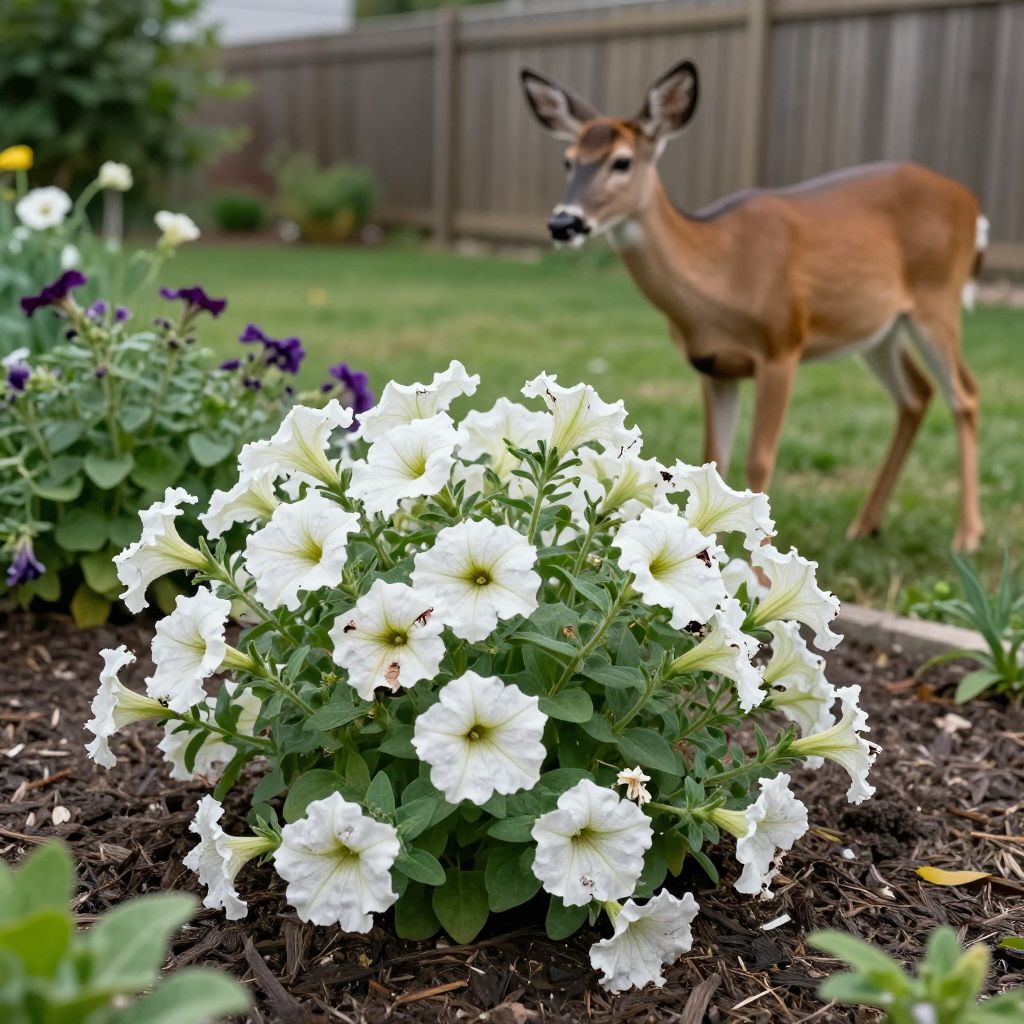
Do deer like petunias? If you’ve planted a bed or hanging basket and found the blooms nibbled overnight, you’re asking the right question. Petunias are often treated as “deer-resistant,” but that does not mean deer will always leave them alone.
The good news is that petunias are not usually a deer’s first choice. The bad news is that hungry deer, especially in areas with heavy pressure, may still browse them when other food is scarce. With the right planting and care, you can reduce damage and keep petunias blooming well.
Do deer like petunias?
Deer usually do not prefer petunias, but they may eat them if they are hungry, young, or planted near other tempting plants. Petunias have a strong scent and somewhat fuzzy foliage, which often discourages browsing, yet no plant is completely deer-proof. In high-deer areas, expect occasional damage.
Why deer may still nibble petunias
Deer feeding habits change with season, weather, and food availability. A plant that is ignored in one yard may be eaten in another, even if both gardens contain petunias.
Common reasons petunias get browsed
- Food scarcity: In dry periods, winter, or early spring, deer sample more plants.
- Young growth: Tender new shoots are more appealing than older foliage.
- High deer pressure: Where deer are abundant, even less-preferred plants get damaged.
- Mixed plantings: Deer may trample or nip petunias while reaching nearby favorites.
If you see repeated damage, don’t assume petunias are the problem alone. Deer often browse a whole planting area, especially when beds are close to woods, hedges, or natural travel routes.
How to grow petunias so they recover from browsing
Healthy petunias bounce back better from light deer damage. Good site selection, steady watering, and regular trimming help the plants branch and flower again after nipping.
Best growing conditions
- Sunlight: Full sun is best for strong flowering.
- Soil: Loose, well-drained soil works best.
- Drainage: Petunias dislike soggy roots, which can weaken plants.
- Airflow: Good circulation helps reduce disease problems.
Before planting, work in a modest amount of compost if your soil is poor. That improves texture and water-holding without making the soil overly rich or heavy. Avoid planting petunias in spots that stay wet after rain.
Watering and feeding basics
Water petunias deeply when the top inch or so of soil feels dry, adjusting for heat, container size, and rainfall. Container-grown petunias usually dry out faster than those in the ground.
Use a balanced, light feeding approach if needed, especially in containers. Too much nitrogen can create lush leaves with fewer flowers, and overly soft growth may be more attractive to deer and more prone to pests.
How to protect petunias from deer
Because deer resistance is never guaranteed, the best strategy is to combine several deterrents. One method alone often helps only for a short time.
Practical deer-deterrent steps
- Plant petunias near the house or walkway. Deer are less likely to enter high-traffic areas.
- Surround them with stronger-scented plants. This can sometimes make the bed less appealing overall.
- Use physical barriers. Low fencing, mesh, or netting is more reliable than scent alone.
- Apply repellents as directed. Reapply after rain and rotate products if deer become used to one scent.
- Remove nearby attractants. Overripe fruit, fallen seed, or very tender ornamental plants can draw deer in.
Fencing is the most dependable solution if deer visit regularly. Even a modest barrier can help in small gardens, while taller fencing may be needed in areas with heavy browsing pressure.
Container and hanging basket protection
Petunias in pots are not automatically safer. Deer can still reach containers on decks, patios, and low walls.
- Place containers where deer cannot easily step up or lean in.
- Use hanging baskets out of reach, but check that baskets are secure in wind.
- Group containers near doors, railings, or other human activity.
What to do if deer have already eaten your petunias
Petunias can often recover from light to moderate browsing if the stems are still healthy. The key is to encourage new branching and prevent stress while the plant regrows.
Recovery steps
- Trim damaged stems back to healthy growth if the tips are torn or ragged.
- Water consistently so the plant can push out new shoots.
- Remove spent blooms to redirect energy into fresh flowering.
- Check for disease or rot where damage and moisture may have created weak spots.
- Protect regrowth with fencing or repellents before deer return.
If the plant has been eaten down to bare stems, give it time. Petunias are often resilient, but recovery depends on root health, weather, and how much foliage remains.
Common petunia problems that can look like deer damage
Not every missing flower or chewed leaf is caused by deer. Other pests and garden issues can leave similar-looking damage, so it helps to inspect the plant closely.
Look for these clues
- Deer damage: Ragged ends, missing stems, and browsing at a reachable height.
- Slugs or caterpillars: Holes in leaves rather than whole stems removed.
- Heat stress: Wilting and fewer blooms during hot spells.
- Root problems: Yellowing, collapse, or poor growth in soggy soil.
Petunias growing in containers may also decline quickly if they dry out too much or stay waterlogged. Stress makes them less able to recover from any kind of chewing or browsing.
How to make petunias less tempting to deer
You cannot make petunias truly deer-proof, but you can make them less appealing. The goal is to reduce stress, encourage steady growth, and avoid creating a highly attractive target.
Helpful planting choices
- Choose a sunny, well-drained site rather than a shady, lush corner.
- Avoid overfertilizing with high-nitrogen products.
- Deadhead or trim plants regularly to keep growth compact and healthy.
- Mix petunias with other deer-resistant plants instead of planting a large, exposed block.
Dense, lush beds can sometimes invite browsing because they offer cover and easy access. A well-maintained planting with good airflow is usually easier to protect and easier for you to monitor.
Petunia care tips that support strong blooms
Good care won’t stop deer by itself, but it does help petunias outgrow minor damage and stay attractive longer through the season.
Simple maintenance habits
- Deadhead or trim lightly to keep flowers coming.
- Pinch back leggy growth if plants become stretched.
- Watch for pests such as aphids, which can weaken new growth.
- Keep mulch light and away from stems to reduce rot risk.
If you grow petunias in a hot climate, they may need more frequent watering and more regular grooming than in cooler areas. In cooler regions, they may bloom longer but still need protection from sudden browsing.
When petunias are a good choice for deer-prone gardens
Petunias can still be a smart choice if you want colorful annuals and are willing to add protection. They work well in areas where deer pressure is moderate rather than extreme, especially when planted close to the house or behind a barrier.
If deer are a constant problem, pair petunias with more reliable protection methods instead of relying on plant choice alone. That gives you the best chance of enjoying flowers without repeated losses.
For more help managing browsing in your yard, you may also want to read about what to feed deer if you’re trying to understand their habits and reduce the chances they’ll target your beds.
In short, deer usually do not love petunias, but they will eat them when conditions push them to browse. Plant them in full sun, keep them healthy, and use fencing or repellents if deer visit often. If you notice damage, act quickly so the plants can recover and keep blooming.