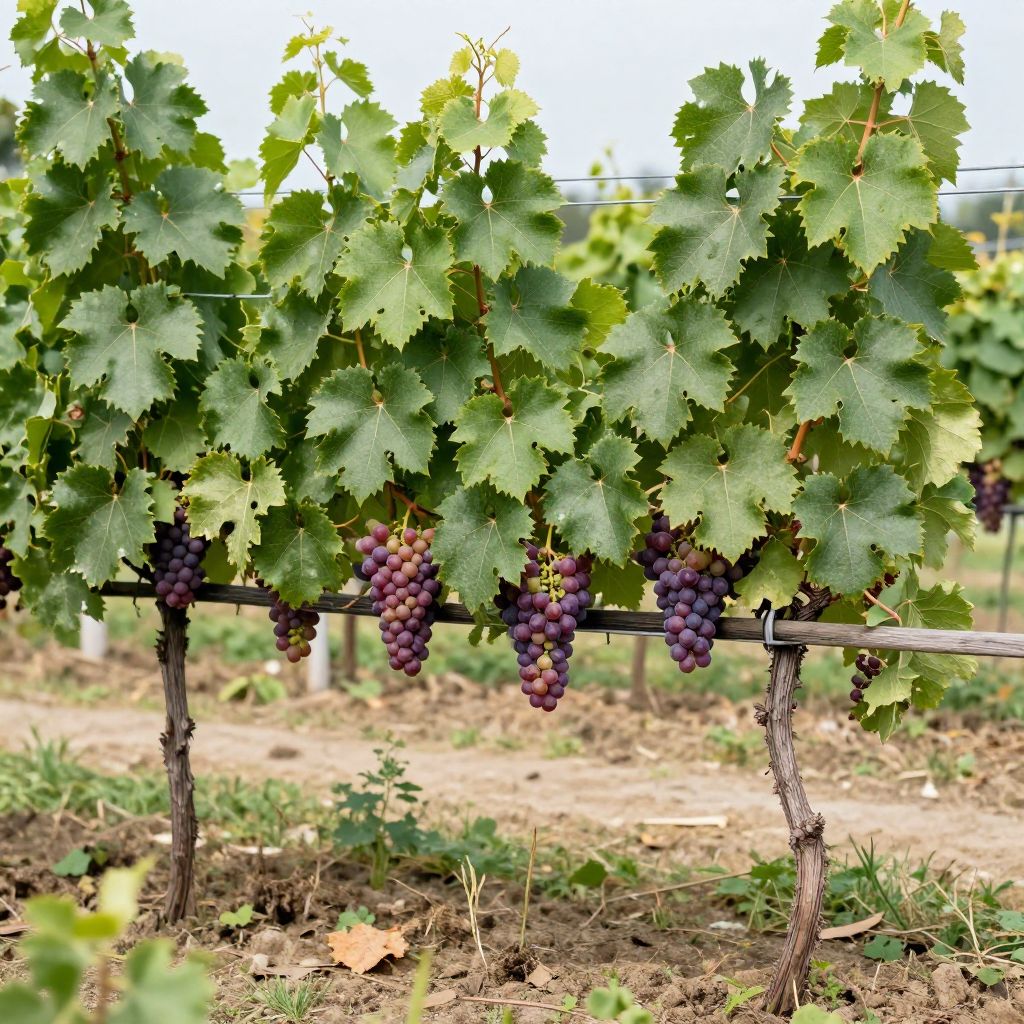
Do grapes grow on trees? It’s a common question, especially if you’ve only seen grape clusters hanging in grocery stores or on trellises. The short answer is no: grapes do not grow on trees. They grow on woody, climbing vines that need support, sunlight, and regular pruning to stay productive.
If you want healthy grape plants at home, the key is understanding how vines grow and what they need to fruit well. With the right site, soil, and training system, grapes can be long-lived, attractive, and rewarding in the garden.
Do grapes grow on trees?
No. Grapes grow on woody perennial vines, usually from the genus Vitis, not on trees. The vines climb by twining around supports or by being trained to wires, arbors, fences, or pergolas. They need pruning and structural support to produce good fruit, because untrained vines become tangled and less productive.
What grape vines need to grow well
Grapes are sun-loving plants that do best in a site with strong light, good air circulation, and well-drained soil. They are adaptable, but they perform best when you match the variety and growing method to your climate and garden space.
Sunlight and exposure
- Choose a location with full sun, ideally 6 to 8 or more hours a day.
- Morning sun is especially helpful because it dries dew from leaves and reduces disease pressure.
- Avoid low, shaded, or stagnant spots where cold air and moisture collect.
Soil and drainage
Grapes prefer soil that drains well rather than heavy, waterlogged ground. They can tolerate a range of soil types, but roots struggle in compacted clay that stays wet for long periods.
- Work in compost before planting if your soil is poor or low in organic matter.
- If drainage is slow, consider planting on a slight mound or raised bed.
- Soil pH matters, but the best approach is to start with a soil test if you can.
Support structure
Because grapes are vines, they need a trellis, arbor, fence, or wire system. A strong support keeps fruit off the ground, improves airflow, and makes pruning and harvesting much easier.
- Use sturdy posts and wire for a vineyard-style row.
- Use an arbor or pergola if you want shade and ornamental value.
- Keep in mind that decorative structures must still be strong enough to hold a mature vine.
How to plant grapes the right way
Plant grapes in a spot where you can train and prune them for years. They are long-term plants, so it pays to prepare the site well before planting.
- Pick a sunny, well-drained location.
- Clear perennial weeds and loosen the soil in a wide area.
- Mix in compost if needed, but avoid overloading the planting hole with rich amendments.
- Set the vine at the same depth it grew in the nursery container or slightly deeper if bare-root.
- Water deeply after planting and mulch lightly, keeping mulch away from the stem.
- Install support early so you can train the vine from the start.
Spacing depends on the variety, rootstock, and training system, so follow plant tag guidance when available. In general, give each vine enough room for airflow and easy access for pruning and picking.
Container growing
You can grow grapes in a large container if you have limited space, but the pot must be substantial and the vine still needs support. Container-grown grapes dry out faster than in-ground plants, so monitor moisture closely and choose a compact training system.
- Use a large pot with drainage holes.
- Use a free-draining potting mix, not garden soil.
- Expect more frequent watering and more attention to pruning.
Watering, feeding, and mulching
Young grape vines need regular moisture while they establish roots. Mature vines are more drought-tolerant, but they still perform better with steady watering during dry spells, especially when fruit is developing.
Watering tips
- Water deeply rather than giving frequent shallow sprinkles.
- Let the top layer of soil dry slightly between waterings.
- Avoid wetting the foliage if possible, especially in humid weather.
Too much water can lead to weak growth and disease problems. Too little water can reduce berry size and stress the vine, especially in hot weather or sandy soil.
Compost and fertilizer
Grapes usually do not need heavy feeding if the soil is healthy. Too much nitrogen can produce lush leaves at the expense of flowers and fruit.
- Top-dress with compost in spring if your soil is low in organic matter.
- Use fertilizer only if a soil test or poor growth suggests a need.
- Avoid pushing soft, overly vigorous growth.
Mulching
A light mulch helps conserve moisture and suppress weeds, but keep it a few inches away from the trunk. Deep mulch piled against the base can hold too much moisture and invite rot or rodent damage.
Why pruning matters so much
Pruning is one of the most important parts of grape care. Grapes fruit on new growth that comes from one-year-old wood, so if you let the vine grow wild, you may get lots of leaves and very little fruit.
Basic pruning goals
- Keep the vine trained to a clear structure.
- Remove crowded, weak, or dead growth.
- Encourage strong fruiting canes or spurs, depending on the training system.
Pruning timing depends on your climate and the vine’s growth stage, but dormant-season pruning is common in many gardens. If you are unsure how to prune your grape variety, start by removing obvious dead wood and excess tangled growth, then learn the training system best suited to your vine.
Common pruning mistakes
- Leaving too much old wood, which leads to congestion and poor fruiting.
- Overpruning or underpruning, both of which can reduce yield or vigor balance.
- Failing to train the vine early, which makes later correction harder.
Common pests and diseases
Grapes can be affected by insects and fungal diseases, especially when airflow is poor or the canopy is too dense. Good garden hygiene and pruning go a long way toward prevention.
Pests to watch for
- Birds, which often target ripening fruit.
- Japanese beetles or other leaf-chewing insects in some regions.
- Grape berry moth or similar fruit pests, depending on location.
Disease problems
- Powdery mildew, which shows as a white coating on leaves or fruit.
- Downy mildew in wet, humid conditions.
- Black rot and other fruit rots where sanitation is poor.
To reduce problems, prune for airflow, remove fallen leaves and damaged fruit, and avoid overcrowding. If disease pressure is high in your area, choose varieties known to perform better locally and seek region-specific guidance from your extension service or nursery.
How to propagate grapes
Home gardeners often propagate grapes from dormant cuttings or by layering, though the easiest route for most beginners is buying a healthy nursery plant. Propagation methods vary by variety and season, so success is not always immediate.
- Hardwood cuttings are commonly taken during dormancy.
- Layering can work when a flexible cane is bent to the soil and encouraged to root.
- Seed-grown grapes are not reliable for true-to-type fruit.
If you want predictable fruit quality, use a named cultivar from a reputable nursery rather than starting from seed.
When and how to harvest grapes
Grapes do not continue to ripen much after picking, so harvest timing matters. Fruit should taste sweet, fully colored for the variety, and easy to detach from the cluster.
Signs grapes are ready
- Flavor is sweet and balanced, not sharply sour.
- Seeds are brown rather than green in many varieties.
- Berries have the expected color and a slight bloom on the skin.
Use clean pruners or scissors to cut clusters from the vine. Handle them gently to avoid bruising, and harvest in dry weather when possible for better storage.
Landscaping with grapes
Grapes can be both productive and ornamental. A vine on a pergola, fence, or arbor can provide summer shade, seasonal interest, and edible fruit, but only if the structure is strong enough and the vine is maintained regularly.
- Use grapes where you want a living canopy or screening effect.
- Keep them away from trees and shrubs that compete for light and water.
- Plan for annual pruning so the vine does not become overgrown.
Quick troubleshooting guide
If your grape vine looks healthy but isn’t producing well, the issue is often site, pruning, or balance rather than the plant itself.
- Lots of leaves, few grapes: too much shade, too much nitrogen, or improper pruning.
- Yellowing or spotted leaves: possible nutrient imbalance, watering issues, or disease.
- Small or poor-quality fruit: inconsistent watering, overcrowding, or heavy crop load.
- Weak growth: poor drainage, compacted soil, root stress, or lack of sun.
Conclusion
So, do grapes grow on trees? No, they grow on climbing vines that need sun, support, pruning, and well-drained soil. If you want better fruit, start by choosing a sunny site, setting up a strong trellis, and learning the basics of annual pruning. Those three steps make the biggest difference.
For more practical vine care, you may also want to read about pruning fruit trees and vines and building a simple garden trellis if your grape plant needs support.