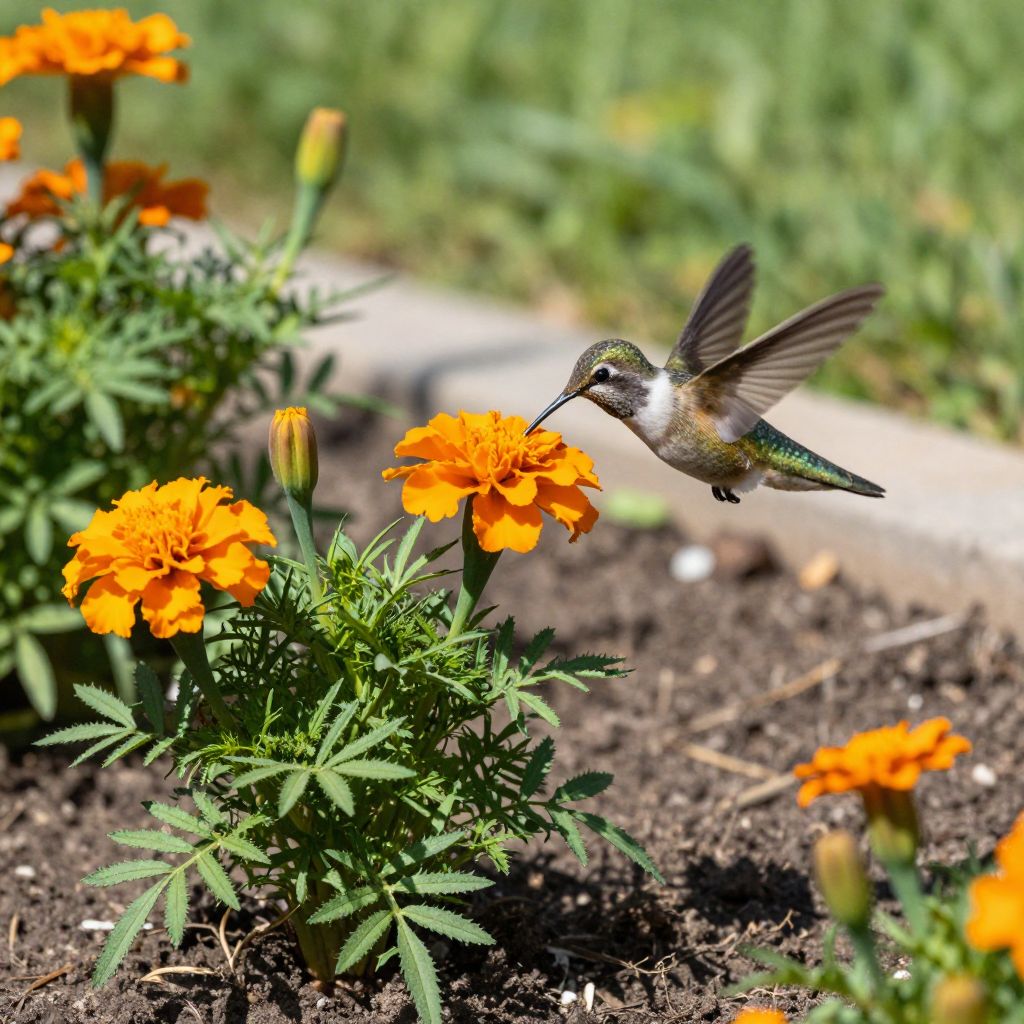
Do hummingbirds like marigolds? If you’re hoping to turn a sunny bed into a hummingbird stopover, marigolds can help—but they are not the strongest nectar plant for these birds. Hummingbirds usually prefer tubular, high-nectar flowers, while marigolds are better known for color, easy care, and pest-repelling value in mixed plantings.
That said, marigolds can still support a hummingbird-friendly garden when you pair them with the right plants and growing conditions. Here’s how marigolds fit into a pollinator garden, how to grow them well, and what to plant alongside them for better hummingbird visits.
Do hummingbirds like marigolds?
Hummingbirds may occasionally visit marigolds, especially bright orange or red-orange blooms, but they usually do not rely on them for much nectar. Marigolds are best treated as a colorful companion plant that helps fill beds and borders, while you add more nectar-rich flowers nearby to truly attract hummingbirds.
Why marigolds are not a top hummingbird flower
Marigolds (Tagetes spp.) produce flowers that are attractive to people and many insects, but their blooms are generally not shaped for hummingbird feeding. Hummingbirds are drawn to flowers with a narrow, tubular form and abundant nectar, which makes marigolds a weaker choice than salvias, penstemons, bee balm, or trumpet-shaped annuals.
What hummingbirds usually look for
- Flower shape: Tubes or funnels that fit a hummingbird’s bill.
- Nectar supply: Reliable, easy-to-reach nectar.
- Color: Red, orange, and bright pink are often especially noticeable.
- Garden layout: Open spaces with nearby perches and repeated blooms.
Marigolds check the color box, but not always the nectar or flower-shape box. That is why you may see a hummingbird investigate a marigold bed without staying long.
How to use marigolds in a hummingbird garden
Think of marigolds as a supporting plant, not the main attraction. Their job is to add bright color, edge beds, fill gaps, and complement better nectar plants so your garden looks full and blooms for a longer season.
Best ways to place marigolds
- Plant them along borders where hummingbirds can easily spot the bed.
- Use them between taller nectar plants to create a layered display.
- Mix them into vegetable gardens to add color and help with general pest management.
- Choose sunny spots where flowers stay open and abundant.
If you want more hummingbird activity, plant marigolds near flowers that bloom in tubes or clusters. The birds are more likely to visit the whole area when they find a richer food source nearby.
Best growing conditions for marigolds
Healthy marigolds produce more flowers, and more flowers mean more visual appeal for pollinators. They are easy annuals in most gardens, but they perform best when you give them full sun, decent drainage, and moderate fertility.
Sunlight
Marigolds grow best in full sun, which usually means at least 6 hours of direct light daily. In very hot climates, a little afternoon shade can help flowers last longer, but too much shade reduces blooming.
Soil
They prefer soil that drains well and is not overly rich. Heavy, soggy soil can lead to weak growth and root problems. If your soil is dense clay, work in compost to improve structure, but avoid making the bed overly wet or overly fertile.
Watering
Water marigolds deeply after planting, then keep the soil evenly moist until they are established. After that, let the top layer of soil dry slightly between waterings. Overwatering is a common mistake and can reduce flowering.
Compost and fertilizer
A light layer of compost at planting time is usually enough for many gardens. Too much nitrogen can produce lush leaves and fewer blooms, which is not ideal if your goal is a flower-rich hummingbird border.
How to plant marigolds for the longest bloom period
Whether you start marigolds from seed or buy transplants, the goal is the same: steady flowering over a long stretch of the warm season. The more consistently they bloom, the more useful they become in a hummingbird-friendly design.
Step-by-step planting guide
- Choose a sunny site with well-drained soil.
- Loosen the top few inches of soil and mix in a small amount of compost if needed.
- Space plants according to their mature size so air can move between them.
- Water after planting to settle the soil around the roots.
- Mulch lightly if your climate is hot and dry, but keep mulch away from stems.
Good spacing matters because crowded marigolds are more likely to get mildew and bloom less freely. Better airflow also helps flowers stay cleaner and more attractive to visiting insects and birds.
Care tips that keep marigolds blooming
Marigolds are low-maintenance, but a few simple tasks keep them flowering longer. Since hummingbirds are more likely to visit active, colorful beds, regular care makes a real difference.
Deadheading
Remove spent flowers regularly to encourage new buds. This is one of the easiest ways to extend bloom time. If you let flowers fade and set seed, the plant may slow down production.
Pruning and shaping
If plants become leggy, pinch back the tips lightly to encourage branching. More branches usually mean more blooms. Avoid cutting too hard into old woody stems on mature plants, especially if they are already stressed by heat.
Mulching
A thin mulch layer can help conserve moisture and reduce weeds. Keep mulch a few inches away from stems to prevent rot and discourage pests from hiding right at the base.
Feeding
If your soil is poor, a modest feeding with a balanced, slow-release fertilizer may help. Use caution, though: too much fertilizer, especially nitrogen-heavy products, can reduce flowers and make the plant leafy rather than blooming.
Common marigold problems and how to fix them
Even easy annuals run into trouble. If marigolds are struggling, they will produce fewer blooms, which means less value in a hummingbird bed and less color overall.
Few flowers
- Likely cause: Too much shade, too much nitrogen, or overcrowding.
- Fix: Move plants to a sunnier spot, reduce feeding, and thin crowded beds.
Yellowing leaves
- Likely cause: Poor drainage, overwatering, or nutrient imbalance.
- Fix: Let soil dry slightly between waterings and improve drainage with compost or raised beds.
Powdery mildew
- Likely cause: Humid conditions, poor airflow, or overhead watering.
- Fix: Space plants better, water at the soil line, and remove heavily affected foliage.
Aphids and spider mites
- Likely cause: Tender new growth and hot, dry weather.
- Fix: Rinse pests off with water, encourage beneficial insects, and avoid excessive fertilizer.
Healthy marigolds are usually resilient, so if problems keep returning, look first at light, spacing, and watering habits before reaching for stronger interventions.
Which flowers attract hummingbirds better than marigolds?
If your main goal is hummingbird activity, pair marigolds with plants that offer better nectar rewards. You do not need to remove marigolds entirely; just surround them with stronger hummingbird plants so the whole bed works harder.
Good companion plants for hummingbirds
- Salvia
- Bee balm (Monarda)
- Penstemon
- Columbine (Aquilegia)
- Trumpet vine, where appropriate and manageable
- Fuchsia in suitable climates or containers
- Annuals with tubular blooms, depending on your region
For the best results, combine different bloom shapes and flowering times. That way, hummingbirds have a reason to return throughout the season, not just during one short flush of flowers.
Can marigolds help a pollinator garden anyway?
Yes. While marigolds are not a top hummingbird nectar source, they still earn their place in a mixed garden. They add bright color, help fill gaps, and can support a tidy, productive planting scheme that makes nectar plants easier for birds to find.
They are especially useful in vegetable beds, cottage-style borders, and container gardens where you want long bloom time and simple care. If you garden in a hot summer climate, marigolds can also keep the display looking cheerful when some other annuals slow down.
Container growing tips
Marigolds do well in pots, which is helpful if you want to place flowering color near a porch, patio, or window where hummingbirds may pass through. Containers also let you control drainage and move plants to the sunniest spot.
Container basics
- Use a pot with drainage holes.
- Choose a well-draining potting mix, not garden soil.
- Water more often than in-ground plants, especially in warm weather.
- Deadhead regularly to keep blooms coming.
Container marigolds dry out faster than bed-grown plants, so check moisture often. Letting pots stay soggy is just as harmful as letting them go bone-dry.
Final take on do hummingbirds like marigolds
Hummingbirds may visit marigolds, but they usually do not prefer them as a main nectar source. Use marigolds for color, structure, and easy maintenance, then add tubular, nectar-rich flowers nearby if you want more consistent hummingbird traffic.
If you are planning a hummingbird border, start by planting marigolds in sunny spots and pairing them with stronger nectar plants. For more ideas on building a productive flower bed, you may also want to explore related gardening guides on pollinator-friendly planting and seasonal flower care.