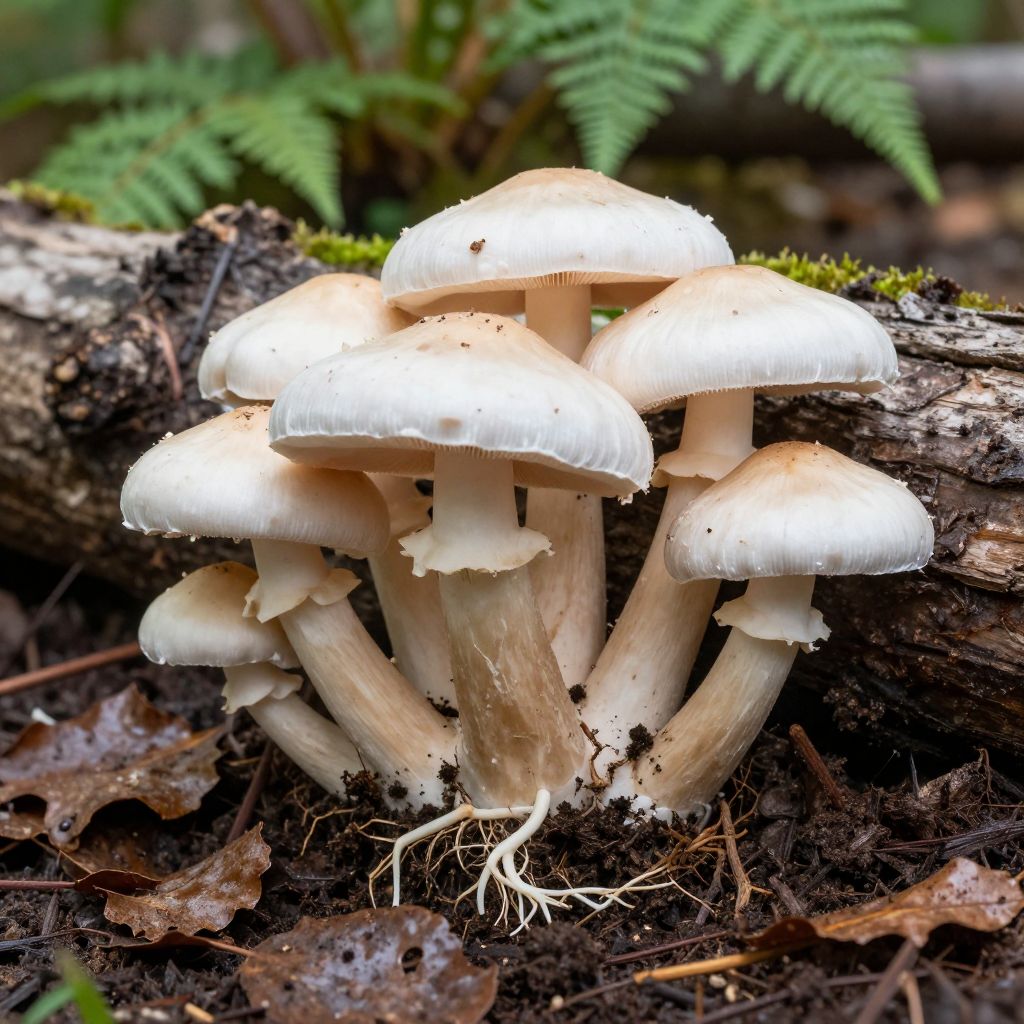
Do mushrooms have roots? If you’re seeing mushrooms in your garden beds, lawn, or compost, it’s a fair question. They look plant-like at first glance, but mushrooms grow very differently from flowers, shrubs, and vegetables.
The short answer is no: mushrooms do not have roots. They are the fruiting bodies of fungi, and the main organism lives as threadlike mycelium in soil, mulch, wood, or other organic matter. Understanding that difference helps you manage mushrooms correctly without damaging healthy soil life.
Do mushrooms have roots?
No, mushrooms do not have roots. The visible mushroom is only the reproductive structure of a fungus, while the real growing body is a network of fine filaments called mycelium. Mycelium absorbs water and nutrients, so it functions a bit like a plant’s root system, but it is not a root.
What mushrooms actually are
Mushrooms are fungi, not plants. They do not make food from sunlight the way plants do, and they do not have leaves, stems, flowers, or roots.
Fruiting body vs. mycelium
The mushroom you see above ground is the fruiting body. Its job is to release spores, which can start new fungal growth when conditions are right.
Below the surface, mycelium spreads through decaying organic material, dead roots, wood chips, leaf litter, or compost. That hidden network is where most of the fungus lives and feeds.
Why people think mushrooms have roots
Because mycelium spreads underground and helps the fungus take up moisture and nutrients, it can resemble roots in function. But roots belong to plants; mycelium belongs to fungi.
- Plants use roots to anchor themselves and absorb water and minerals.
- Fungi use mycelium to break down organic matter and absorb nutrients.
- Mushrooms are the temporary fruiting structures that appear when the fungus reproduces.
What mushrooms need to grow
If you want to grow edible mushrooms or understand why wild mushrooms appear in your yard, focus on the conditions the fungus needs rather than “root care.” Mushrooms thrive in damp, shaded, organic-rich environments.
Typical growing conditions
- Moisture: Consistent humidity or dampness without waterlogging
- Organic matter: Wood, straw, compost, or decaying plant material
- Shade or low light: Most mushrooms prefer indirect light, not full sun
- Air movement: Enough to prevent stagnant, moldy conditions
- Temperature: Varies by species, so follow the needs of the mushroom you’re growing
Unlike garden plants, mushrooms do not need fertilizer in the usual sense. They feed on organic material already present in their growing medium.
How to care for mushrooms in the garden
If mushrooms appear in your landscape, the best care depends on whether you want them to stay, remove them, or grow edible varieties on purpose. In many gardens, mushrooms are a sign that organic matter is breaking down well.
If mushrooms are appearing naturally
In lawns, beds, or mulch, mushrooms often show up after rain or irrigation. They usually mean the soil is moist and rich in decomposing material.
- Leave them alone if they are not bothering anyone and you do not have pets or children at risk from unknown species.
- Rake away excess wet mulch if mushrooms keep returning in the same spot.
- Improve drainage if the area stays soggy for long periods.
- Reduce overwatering, especially in shaded beds and around trees.
- Remove old stumps, buried wood, or rotting roots if you want fewer repeated flushes.
Important: Do not rely on appearance alone to identify wild mushrooms. Some are toxic, and many look similar to harmless species.
If you want to grow edible mushrooms
Edible mushroom growing is a different task from growing vegetables. You supply the right substrate, moisture, and temperature, then wait for the fungus to colonize before fruiting begins.
- Choose a species suited to your setup, such as oyster mushrooms or shiitake, based on the growing kit or spawn instructions.
- Use the recommended substrate, which may be straw, hardwood logs, sawdust blocks, or compost.
- Keep the substrate evenly moist, not dripping wet.
- Place the growing area in shade or indirect light.
- Maintain clean conditions to reduce contamination from mold or bacteria.
Follow the species-specific instructions that come with spawn or a kit, because mushroom cultivation is much more exact than general garden care.
Soil, mulch, and compost: where mushrooms fit in
Mushrooms often appear where organic matter is actively decomposing. That is usually not a problem; in fact, it can be part of a healthy garden ecosystem.
Mulch beds
Wood chip mulch is a common place to see mushrooms. The fungus is breaking down the wood, which helps return nutrients to the soil over time.
If mushrooms are frequent and the mulch stays soggy, check whether the mulch layer is too thick. A layer around 2 to 4 inches is usually enough for most garden beds, depending on the material and local conditions.
Compost piles
Compost often attracts fungi because it contains decomposing organic material. Small mushrooms in compost are usually a sign that the pile is maturing, especially if it remains damp and shaded.
Turn the pile if it becomes compacted or overly wet, and balance green and brown materials so it does not become slimy or anaerobic.
Lawns
Mushrooms in lawns commonly appear after wet weather, especially where buried wood, old roots, or thatch are present. They are usually a symptom of moisture and decaying material, not a disease in the grass.
If you want to reduce them, improve drainage, aerate compacted soil, and avoid frequent shallow watering.
Common problems and how to fix them
Most mushroom issues are really moisture or decay issues. The fix is usually to adjust the environment, not to “treat” the mushroom itself.
Too much water
Overwatering encourages fungal growth. If the area stays wet for days, cut back irrigation and check for low spots, compacted soil, or poor drainage.
Too much shade and poor airflow
Deep shade and still air help mushrooms appear after rain. Thin dense groundcover, prune nearby plants if appropriate, and avoid piling mulch against stems or trunks.
Buried wood or roots
Old stumps, buried lumber, and decaying roots are prime food sources for fungi. If mushrooms keep returning in one spot, hidden wood is often the reason.
Contamination in mushroom growing setups
If you are cultivating edible mushrooms, green, black, or foul-smelling growth can signal contamination. Remove affected material promptly and follow cleaner handling practices for the next attempt.
- Use clean tools and containers.
- Keep the substrate at the moisture level recommended for the species.
- Avoid exposing the grow to dusty, dirty, or overly warm conditions.
- Do not over-handle colonizing blocks or logs.
Should you remove mushrooms?
That depends on the setting. In ornamental beds or lawns, mushrooms are often harmless and temporary. In areas used by pets or small children, removal is usually wise if you cannot identify the species.
When to leave them
- They are in a mulch bed or compost pile and not causing a problem.
- You are trying to improve soil health and decomposition.
- You are growing edible mushrooms intentionally.
When to remove them
- You suspect a toxic wild mushroom is present.
- The area is frequently used by pets or children.
- You want to reduce repeated fruiting in a lawn or bed.
Removing the visible mushroom helps temporarily, but it will not eliminate the fungus if the mycelium remains in the soil or mulch. Long-term control comes from changing moisture and organic debris conditions.
Practical mistakes to avoid
Gardeners often try to “fix” mushrooms the way they would a pest problem. That approach usually misses the real cause.
- Do not assume mushrooms mean your soil is unhealthy. Many are normal decomposers.
- Do not use harsh chemicals unless you have a specific, identified problem and a label-approved reason.
- Do not keep mulch constantly wet if you want fewer mushrooms.
- Do not eat wild mushrooms unless they have been identified with certainty by a qualified expert.
- Do not expect one removal to solve recurring mushrooms if buried wood or excess moisture remains.
Bottom line for gardeners
So, do mushrooms have roots? No, but they do have mycelium, which acts as the fungus’s hidden feeding network. Once you understand that, mushroom care becomes much simpler: manage moisture, organic matter, shade, and drainage based on whether you want to encourage mushrooms or reduce them.
If you’d like to keep learning about healthy soil and moisture management, a good next step is reading more about composting and mulch care so you can support your garden without creating conditions that invite unwanted mushrooms.