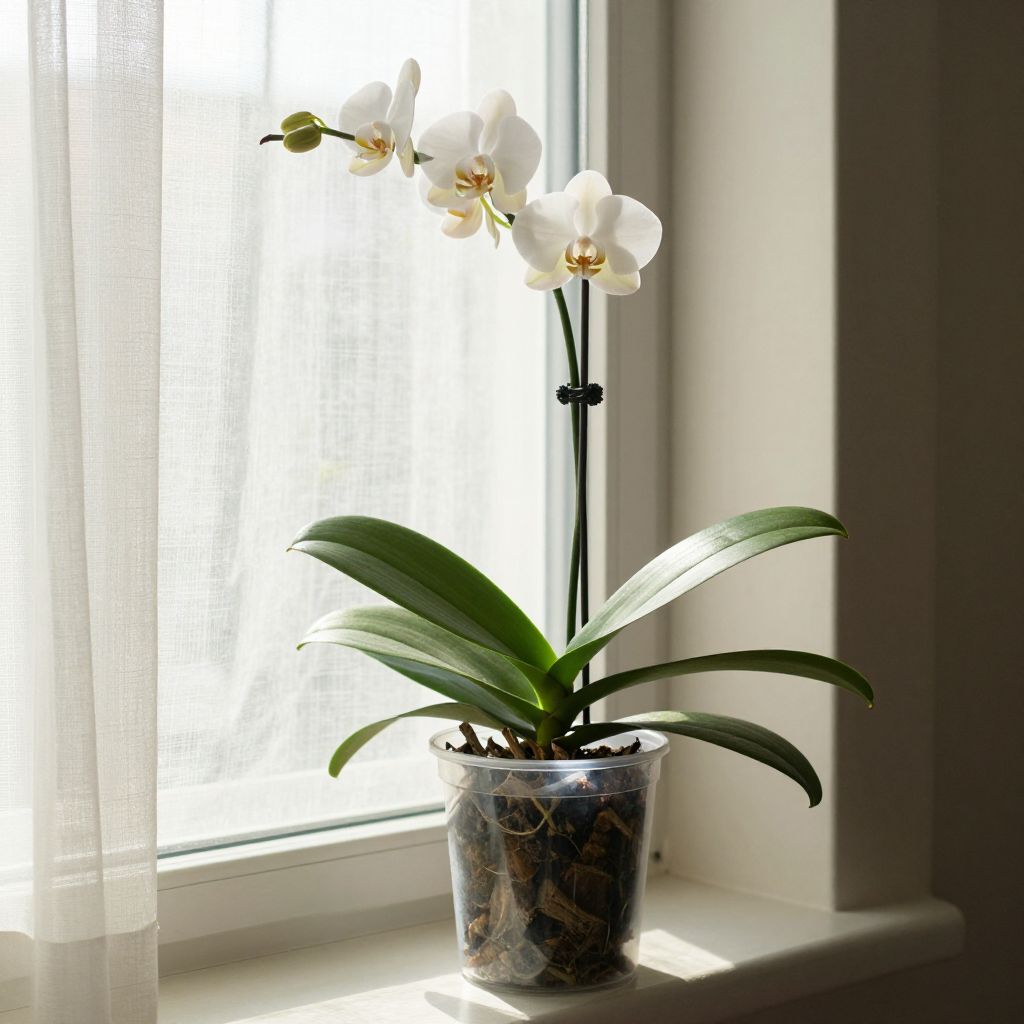
Do orchids like direct sunlight? In most cases, no—at least not the hot, full-strength sun many other garden plants enjoy. Orchids usually prefer bright, filtered light that mimics the dappled conditions they grow in naturally.
The right amount of light depends on the orchid type and whether it’s growing indoors or outdoors. With a few simple adjustments, you can give your orchid enough light to bloom without scorching the leaves.
Do orchids like direct sunlight?
Most orchids do not like prolonged direct sunlight. Many common orchids, especially Phalaenopsis, grow best in bright indirect light or gentle morning sun, while harsh afternoon sun can burn leaves and stress the plant. A few types tolerate more sun, but all orchids need protection from intense heat.
What kind of light do orchids need?
Orchids are a diverse group, so light needs vary by genus. The safest rule for home gardeners is to aim for bright, filtered light rather than strong direct rays.
Common orchid light preferences
- Phalaenopsis (moth orchids): bright indirect light, very little direct sun
- Paphiopedilum (slipper orchids): low to medium light, avoid strong sun
- Oncidium and many Dendrobium: brighter light, but still protected from harsh midday sun
- Cattleya: bright light and some gentle direct sun, usually morning light is best
If you are unsure which orchid you have, start with indirect light and observe the plant. It is easier to increase light gradually than to repair sun damage.
How much direct sun is too much?
Direct sun becomes a problem when it is strong enough to heat the leaves or cause bleaching and brown patches. Indoors, a south- or west-facing window can be too intense unless the light is filtered by a sheer curtain or the plant is set back from the glass.
Outdoors, orchids usually do best under shade cloth, tree canopy, or on a sheltered patio. Morning sun is often acceptable, but hot afternoon sun can quickly damage foliage and dry out roots.
Signs your orchid is getting too much sun
- Yellowing or bleached leaves
- Brown, dry, or papery patches
- Leaves that feel hot to the touch during the day
- Wrinkled or dehydrated-looking foliage despite regular watering
- Sudden leaf drop or stalled growth
Sunburned orchid leaves do not recover. The damaged tissue stays damaged, so the goal is to prevent further exposure and let new growth develop under better conditions.
How to tell if your orchid has enough light
Orchids that receive too little light may survive, but they often grow slowly and fail to bloom. Finding the balance matters just as much as avoiding sunburn.
Signs of good light
- Leaves are firm and medium green, not dark green and limp
- New roots and leaves appear regularly during the growing season
- Flower spikes form when the plant is mature enough to bloom
- The plant looks healthy but not stretched or weak
Very dark green leaves can mean the plant wants more light, especially with Phalaenopsis orchids. Pale leaves can mean too much light or too much heat, so check both exposure and temperature.
Best indoor light conditions for orchids
Indoors, orchids usually thrive in bright rooms with filtered light. An east-facing window is often ideal for many popular orchids because it gives gentle morning sun and brighter light for the rest of the day.
Indoor placement tips
- Place orchids near an east window or several feet back from a south or west window
- Use a sheer curtain to soften strong sun
- Rotate the pot every couple of weeks so growth stays even
- Keep leaves away from hot glass, radiators, and cold drafts
If natural light is limited, a grow light can help. Keep it bright but not scorching, and follow the light manufacturer’s guidance for distance and duration. The leaves should never feel hot under the lamp.
Best outdoor light conditions for orchids
Outdoor orchids need more protection than most garden plants. Even sun-tolerant orchids can scorch quickly if moved from shade to full sun too fast.
Outdoor growing basics
- Use dappled shade under trees or a pergola
- Provide morning sun and afternoon shade where possible
- Use shade cloth if your climate has intense summer sun
- Protect plants from wind, which dries roots and leaves
In hot climates, orchids often do best where they receive bright light but never the full force of midday and afternoon sun. In cooler climates, they may tolerate slightly more direct sun, especially in spring and autumn.
How to adjust an orchid to more light safely
If your orchid has been in low light, do not move it straight into direct sun. A gradual transition helps prevent leaf burn.
- Move the plant a little closer to brighter light over 1 to 2 weeks.
- Start with morning sun only, not afternoon sun.
- Watch the leaves for bleaching or overheating.
- Stop increasing light if the plant shows stress.
This gradual approach is especially important after winter or after bringing an orchid home from a store, where it may have been grown under controlled conditions.
Watering and light go together
More light usually means faster drying, so orchids in brighter spots may need closer attention to watering. But do not water on a fixed calendar alone.
Check moisture before watering
- For bark mixes, water when the medium is nearly dry but not bone dry
- For moss, water less often and avoid keeping it soggy
- Lift the pot to judge weight; a dry pot feels much lighter
- Look at roots: silvery roots often need water, while green roots are hydrated
Good drainage is essential. Orchids should never sit in standing water, whether indoors on a saucer or outdoors in a decorative cachepot.
Potting mix, drainage, and airflow
Sunlight alone does not determine orchid health. The right potting setup helps the plant handle light and heat without root stress.
What orchids usually need
- A pot with drainage holes
- A loose, airy orchid mix rather than regular garden soil
- Good air movement around the plant
- Fresh mix when bark breaks down or stays wet too long
Regular potting soil holds too much water for most orchids and can suffocate roots. A chunky bark-based mix or other orchid-specific medium is usually a better choice, depending on the orchid type and your watering habits.
Common mistakes to avoid
Most orchid light problems come from a few predictable errors. Avoiding these can make a big difference in flowering and leaf health.
- Placing orchids in hot direct sun without acclimation
- Assuming all orchids want the same light
- Using dark corners of the house for long periods
- Letting leaves touch hot windows in summer
- Ignoring temperature, which can intensify sun stress
- Overwatering because the plant is in brighter light
What to do if your orchid is already sunburned
If leaves are scorched, move the orchid out of direct sun immediately. Then focus on steady care rather than trying to “fix” the damaged tissue.
Recovery steps
- Relocate the plant to bright, indirect light.
- Trim only fully dead tissue if needed; leave partially damaged leaves in place.
- Check the roots and potting mix for dryness or rot.
- Water appropriately and improve airflow.
- Wait for new growth to show the plant is recovering.
Do not fertilize heavily to force recovery. Healthy light, proper watering, and stable conditions are more useful than extra feeding.
Do orchids ever benefit from direct sunlight?
Yes, but only for certain orchids and usually only in gentle doses. Some types, such as Cattleya and certain Dendrobium orchids, can enjoy a bit of direct morning sun if they are acclimated and protected from harsh afternoon heat.
The key is to think in terms of bright light with moderation, not full-day sun. If you can comfortably sit in the light without feeling it is intense, it is often closer to what many orchids prefer.
Simple light checklist for healthy orchids
Use this quick checklist when deciding where to place your orchid.
- Bright room, but not scorching sun
- Morning sun is better than afternoon sun
- Leaves stay cool, not hot
- Plant shows steady growth and healthy color
- Potting mix dries at a manageable pace
If you are still unsure, start with indirect light and adjust slowly. Orchids are more likely to forgive slightly less light than too much direct sun.
For more practical orchid care, you may also want to read about how to repot orchids and orchid watering and root care to keep your plant healthy once you have the light right.