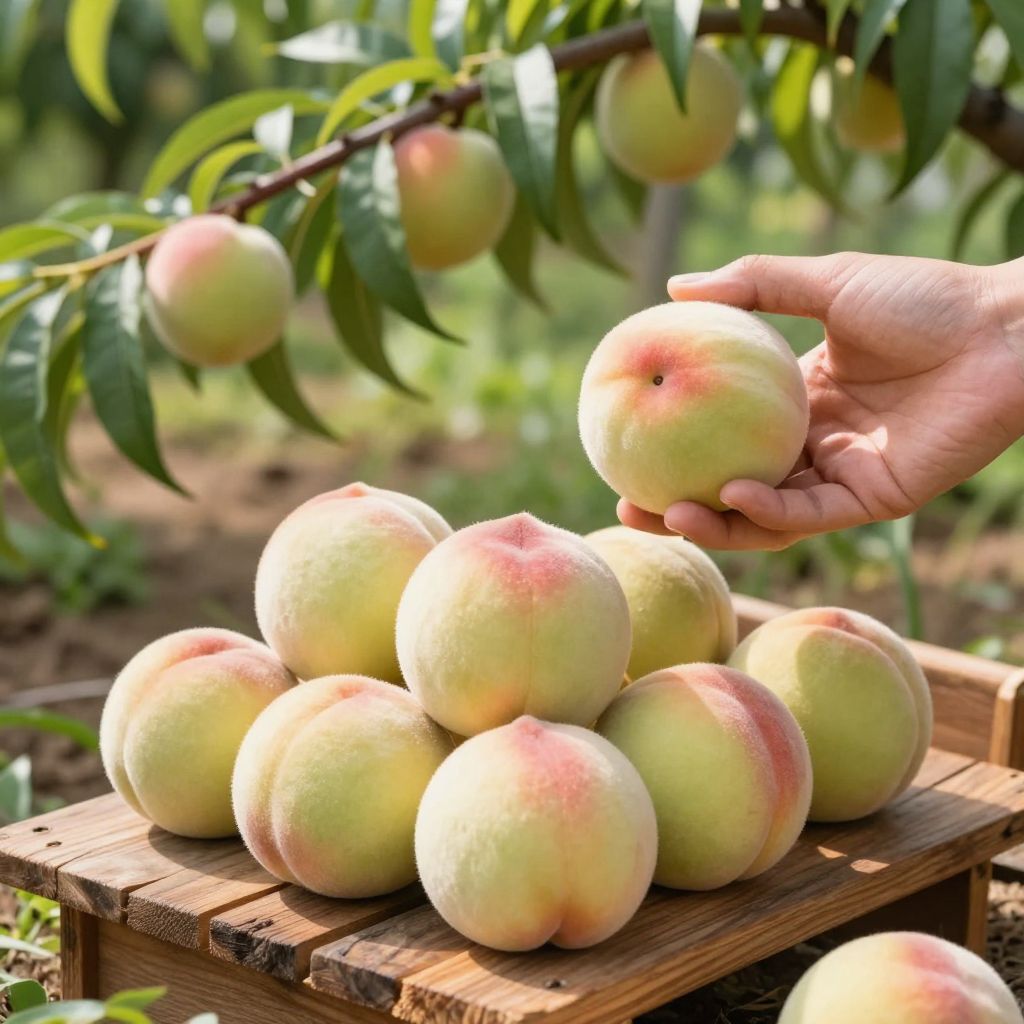
Do peaches ripen after picking? Yes—if they were harvested at the right stage, peaches can soften and become juicier off the tree. But they do not gain much more sugar after harvest, so a peach picked too early may soften a little without ever developing full flavor.
That means the best results come from harvesting at the right moment and handling the fruit carefully afterward. If you grow peaches at home, understanding when to pick, how to finish ripening, and how tree care affects fruit quality will help you get sweeter, better-textured peaches.
Do peaches ripen after picking?
Peaches are climacteric fruit, which means they continue ripening after harvest. They can soften, develop aroma, and improve in eating quality off the tree, but they usually do not become significantly sweeter if picked too early. For the best flavor, harvest when the background color changes and the fruit gives slightly to gentle pressure.
How to tell when peaches are ready to pick
Because peaches do ripen after picking, many gardeners are tempted to harvest early. The problem is that peaches picked too soon often stay bland, even if they soften on the counter.
Signs of harvest maturity
- Background color shifts from green to yellow, cream, or golden, depending on the variety.
- The fruit smells fragrant near the stem end.
- The peach feels full and slightly soft, not rock hard.
- The skin color between the red blush is no longer green.
- The fruit separates from the branch with a gentle lift and twist.
Color can be tricky because red blush is not the same as ripeness. Many peaches look colorful long before they are fully mature.
What not to use as your only test
- Size alone: large fruit may still be immature.
- Red skin color: some varieties blush heavily even when unripe.
- Softness everywhere: overripe peaches can bruise easily and spoil fast.
How to ripen peaches after picking
If your peaches are mature but still firm, let them finish ripening at room temperature. Keep them out of direct sun and check them daily. A peach that was picked at the right stage should soften and become more aromatic within a few days, depending on temperature and variety.
Best ripening method
- Place peaches in a single layer on the counter or in a shallow bowl.
- Keep them at room temperature, away from direct heat and sunlight.
- Check daily for fragrance and slight give near the stem end.
- Refrigerate once they reach the texture you like.
If you want to speed ripening a little, place peaches in a paper bag with a ripe banana or apple. These fruits release ethylene gas, which can help ripening. Do not seal the bag tightly, and check often so the peaches do not over-soften.
What happens if peaches were picked too early?
Very immature peaches may soften somewhat, but they often stay starchy, dry, or tart. They may never develop the rich flavor you expect from tree-ripened fruit. In that case, the best fix is prevention: improve harvest timing next season rather than trying to rescue underdeveloped fruit.
How to harvest peaches for the best flavor
Good harvest timing starts in the orchard, not on the kitchen counter. If you want peaches that ripen well after picking, the tree needs enough sun, balanced growth, and healthy fruit load so the peaches can mature properly.
Picking technique
- Hold the fruit gently and lift upward with a slight twist.
- If it resists strongly, leave it for another day or two.
- Handle peaches carefully to avoid bruising.
- Use shallow containers so fruit on the bottom is not crushed.
Bruised peaches often ripen unevenly and spoil faster. Even a small pressure mark can shorten storage life.
Harvest timing and weather
Warm, sunny weather usually speeds ripening, while cool conditions slow it down. In cooler climates or during cloudy periods, peaches may need more time on the tree before they are ready to pick. In hot weather, they can go from firm to overripe quickly, so check frequently.
Growing conditions that affect peach ripening
Fruit quality is strongly influenced by how the tree is grown. A peach tree in poor light, heavy soil, or chronic drought may produce fruit that looks mature but lacks sweetness and texture.
Sunlight and site selection
Peach trees need full sun for the best fruit development. Aim for at least 6 to 8 hours of direct sun daily, with good air movement around the canopy. Shaded trees often produce smaller, less flavorful peaches that ripen unevenly.
Soil and drainage
Peaches grow best in well-drained soil. Heavy, waterlogged ground can stress roots and reduce fruit quality. If your soil stays wet after rain, consider planting on a raised mound or improving drainage before planting.
- Work in compost to improve soil structure.
- Avoid planting in low spots where cold air and water collect.
- Keep mulch a few inches away from the trunk.
Watering for better fruit
Consistent moisture helps peaches size up and ripen well, especially during fruit development. Irregular watering can cause fruit drop, poor flavor, or split pits in some conditions. Water deeply during dry spells, but do not keep the soil soggy.
For established trees, water needs vary with soil type, rainfall, heat, and tree size. Sandy soil dries faster than clay, and young trees need closer attention than mature ones.
Pruning and thinning for better ripening
One of the best ways to improve peach ripening is to reduce overcrowding. When too many fruits remain on the tree, peaches may stay small and fail to sweeten evenly.
Why thinning matters
Thinning helps the tree direct more energy into fewer fruits. This often improves size, color, and flavor, and it can reduce limb breakage from heavy crops.
- Thin fruit when peaches are still small enough to remove easily.
- Leave enough space between fruits so they do not touch.
- Remove damaged, misshapen, or crowded fruit first.
Pruning basics
Regular pruning improves sunlight penetration and air circulation. That helps the canopy dry faster after rain and allows more light to reach the fruit, which supports better ripening and color development.
Remove dead, crossing, or inward-growing branches, and keep the tree open enough that sunlight reaches the center. The exact pruning approach depends on tree age, climate, and training style.
Common problems that affect peach ripening
If peaches ripen poorly after picking, the issue may be in the tree rather than the fruit bowl. Several common garden problems can reduce flavor or delay maturity.
Too much shade
Peaches from shaded branches often stay hard longer and may taste bland. Prune to open the canopy and remove competing shade if possible.
Crop overload
When a tree carries too many peaches, the fruit may stay small and ripen unevenly. Thin early next season to improve quality.
Water stress
Drought can cause fruit to stop sizing up properly. On the other hand, excessive watering or poor drainage can weaken roots and reduce fruit quality.
Pests and diseases
Insects and diseases can damage fruit before harvest. Common issues include peach leaf curl, brown rot, aphids, and plum curculio in some regions. Damaged fruit may soften unevenly or rot quickly after picking.
- Remove mummified or rotting fruit from the tree and ground.
- Keep the area under the tree clean to reduce disease carryover.
- Monitor leaves and fruit regularly so problems are caught early.
How to store ripened peaches
Once peaches are ripe, refrigerate them if you are not eating them right away. Cold storage slows further softening and helps preserve texture for a short time.
Storage tips
- Store ripe peaches in the refrigerator for a few days.
- Keep them dry and unwashed until just before use.
- Let chilled peaches warm slightly before eating for better flavor.
Do not refrigerate peaches too early if you want them to finish ripening. Cold temperatures can slow or interrupt the process, especially if the fruit is still immature.
Can you propagate or grow more peach trees from fruit?
If you are inspired by a good harvest, remember that peaches grown from seed do not usually come true to type. For reliable fruit quality, home gardeners typically propagate peaches by grafting or buy named varieties from a nursery.
That matters because ripening quality, flavor, and harvest timing vary widely among peach varieties. If your current tree produces fruit that never ripens well, the variety may simply be poorly suited to your climate or site.
Quick troubleshooting guide
- Peaches are hard and flavorless after picking: they were likely harvested too early.
- Peaches soften but stay bland: the fruit may have lacked enough sun, water consistency, or thinning on the tree.
- Peaches rot before fully softening: bruising, disease, or warm storage may be the cause.
- Peaches ripen unevenly: check for crowding in the canopy or fruit left too close together in storage.
Conclusion
So, do peaches ripen after picking? Yes, but only if they were harvested at the right stage. For the best flavor, pick peaches when they are mature, let them finish at room temperature, and refrigerate them only after they soften.
If you want better peaches next season, focus on full sun, good drainage, careful thinning, and timely harvests. For more practical fruit-growing advice, you may also want to read how to grow peach trees successfully and how to tell when peaches are ready to harvest.