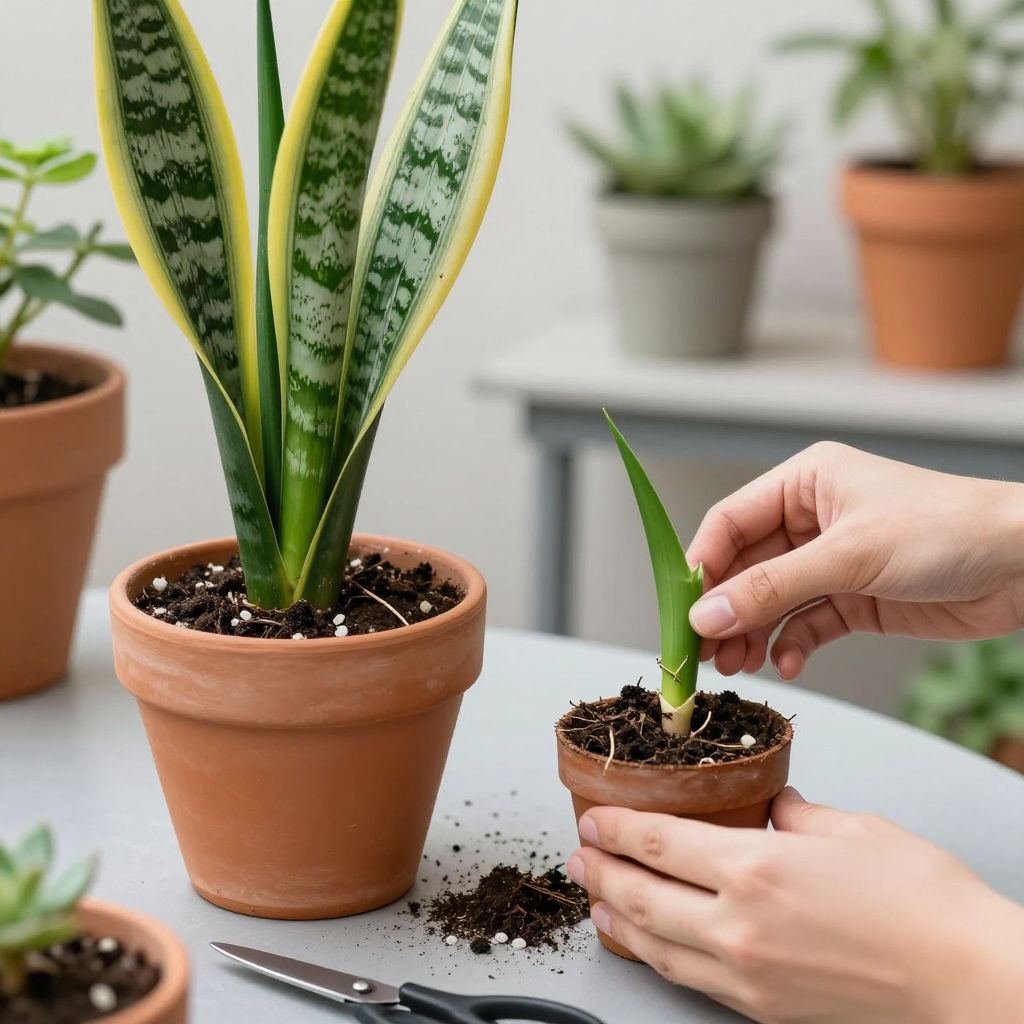
Can you propagate a snake plant? Yes, and it’s one of the easiest houseplants to multiply once you know which method fits your goal. Snake plants, now commonly placed in the genus Dracaena, root reliably from leaf cuttings, division, and offsets, though each method gives different results.
If you want a fast, true-to-type new plant, division is usually the best choice. If you only have one leaf, propagation from cuttings can still work, but it takes longer and may not keep the same variegation on some cultivars.
Can you propagate a snake plant?
Yes. Snake plants can be propagated from leaf cuttings, by dividing clumps, or by separating pups that grow from the base. Division is the quickest and most reliable method, while leaf cuttings are useful when you want to make several new plants from one leaf. Success depends mostly on warmth, bright indirect light, and very well-drained soil.
Which propagation method works best?
1. Division: fastest and most dependable
If your snake plant has multiple crowns or a crowded root system, division is the easiest way to get a strong new plant. Each section should have roots attached and at least one healthy fan of leaves.
This method is best when you want a plant that looks like the parent right away and establishes quickly after repotting.
2. Leaf cuttings: simple, but slower
Leaf cuttings are a good option if the plant is tall and healthy but not ready to be divided. You can root pieces in water or directly in soil, but it takes longer to form a full plant, and the new growth may not match the parent exactly if the plant is variegated.
3. Offsets or pups: ideal when the plant produces them
Some snake plants send up small offshoots from the base. These pups can often be separated once they have their own roots or a visible connection to the mother plant that can be safely cut.
How to propagate a snake plant step by step
Before you start
Use a clean, sharp knife or pruning tool, a pot with drainage holes, and a gritty potting mix made for succulents or cacti. Snake plants hate soggy soil, so drainage matters more than almost anything else.
- Clean cutting tool
- Small pots with drainage holes
- Well-draining potting mix
- Optional rooting hormone
- Labels if you are propagating several sections
Division method
- Remove the plant from its pot and gently shake away loose soil.
- Look for natural separations in the root mass or separate pups with their own roots.
- Cut through thick rhizomes only where needed, making sure each division has roots and leaves.
- Let any fresh cuts dry for a few hours before potting, especially if the roots were damaged.
- Plant each section in a small pot with a fast-draining mix.
- Water lightly once, then wait until the mix dries before watering again.
Leaf cutting method in soil
- Choose a healthy leaf and cut it near the base.
- Let the cutting dry and callus for one to two days.
- Cut the leaf into sections about 2 to 4 inches long.
- Keep track of which end was closest to the base of the plant; that end must go into the soil.
- Insert the cuttings upright or slightly buried in moist, not wet, propagation mix.
- Place in bright, indirect light and keep the mix barely moist until roots form.
Leaf cutting method in water
Water propagation is popular because you can watch roots develop, but it is not always the best long-term method for snake plants. Some cuttings root well in water and then need a careful transition to soil.
- Cut a healthy leaf into sections if desired.
- Place the base end in a jar with just enough water to cover the bottom portion.
- Change the water regularly to reduce rot and algae.
- Move the cutting to soil once roots are several inches long and new growth begins.
What soil and potting mix do snake plant cuttings need?
Use a light, airy mix that drains quickly. A cactus or succulent blend is usually suitable, or you can improve regular potting soil with perlite, pumice, or coarse sand to reduce water retention. Heavy soil is one of the main reasons snake plant cuttings fail.
Choose a pot only slightly larger than the cutting or division. A pot that is too large holds excess moisture around the roots and increases the risk of rot.
Light, temperature, and moisture for rooting
Light
Place cuttings in bright, indirect light. A little gentle morning sun can help, but strong direct sun can dry or scorch fresh cuttings before they root.
Temperature
Warm indoor conditions usually help rooting, especially during spring and summer. Cool rooms slow the process, and cold soil can encourage rot instead of root growth.
Watering
For newly potted divisions, water once after planting, then let the mix dry almost completely before watering again. For leaf cuttings in soil, keep the medium barely moist, never soggy. Snake plants store water in their leaves, so they need far less moisture than many houseplants.
Overwatering is the most common mistake. If the leaf turns soft, yellow, or mushy at the base, the cutting is probably rotting rather than rooting.
How long does snake plant propagation take?
Timing depends on the method, warmth, and season. Divisions often settle in within a few weeks, while leaf cuttings may take several weeks to several months before you see new roots or pups. Growth is usually faster during the active growing season and slower in winter.
Be patient and avoid digging up cuttings repeatedly to check for roots. Disturbing them too often can damage new growth and slow the process.
Common problems and how to fix them
Rotting cuttings
Rot usually means the mix stayed too wet, the pot drained poorly, or the cutting was planted before the cut surface had time to dry. Remove any mushy tissue, let healthy parts callus, and restart in drier, better-draining medium.
No roots forming
If a cutting sits unchanged for a long time, it may not be getting enough warmth or light. Move it to a brighter spot and keep conditions stable. Very old leaves can also root slowly or inconsistently.
Variegation changes
Leaf cuttings from variegated snake plants may produce plain green offsets or lose some striping. If keeping the exact look matters to you, division is the safer method.
Wrinkled or limp leaves
This can happen if the cutting is drying out too much before rooting, or if the parent leaf was too thin to begin with. Use a healthier, firmer leaf and keep the environment warm and stable.
Should you fertilize newly propagated snake plants?
Wait until the new plant is clearly established before fertilizing. Fresh divisions and cuttings need root development first. Once new growth appears and the plant is actively growing, you can feed lightly during the growing season with a balanced houseplant fertilizer used at a reduced strength, if appropriate for your mix and conditions.
Too much fertilizer can stress young roots and cause salt buildup in the potting mix, especially in containers that dry slowly.
When to transplant or repot new plants
Repot only when the new plant has filled the container or is clearly stable and growing. Snake plants prefer snug pots, so there is no need to move them up quickly. A slightly crowded root system is usually better than a pot that stays wet for too long.
If roots are circling the pot or the plant is top-heavy, move it into a container just one size larger with drainage holes and fresh, well-draining mix.
Indoor care after propagation
New snake plants do best with steady conditions indoors. Keep them away from cold drafts, heating vents, and heavy foot traffic where leaves can be bent or broken. Rotate the pot occasionally if the plant leans toward the light.
- Bright, indirect light is ideal
- Let soil dry between waterings
- Use a pot with drainage holes
- Remove damaged or rotting leaves promptly
- Keep the plant slightly root-bound rather than overpotted
Outdoor growing considerations
In warm climates, snake plants can be grown outdoors in containers or sheltered beds if drainage is excellent and temperatures stay suitable for the plant. Outdoors, rain can waterlog the soil quickly, so use raised beds, gritty soil, or pots that drain freely.
If you move propagated plants outside, harden them off gradually so the leaves do not scorch in stronger sun. Keep them out of standing water and protect them from cold snaps.
Conclusion: the easiest way to make more snake plants
Yes, you can propagate a snake plant, and the most reliable method is usually division or separating pups. If you only have a leaf, cuttings can still work with patience and the right conditions. Start with a healthy plant, use a fast-draining mix, and keep water on the dry side while roots develop.
If you want to keep learning about low-maintenance houseplants and container care, look for related guides on indoor plant watering and repotting techniques.