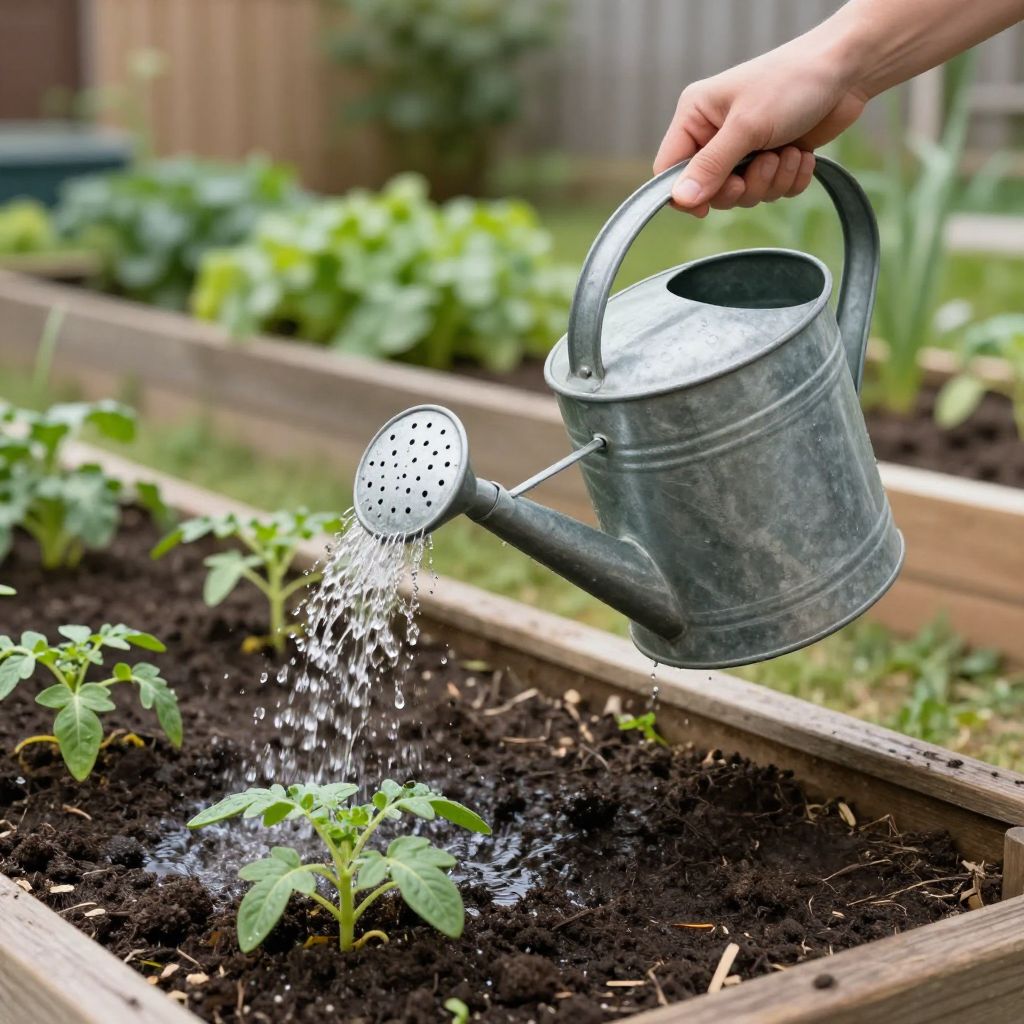
Using a garden watering can well can make the difference between stressed plants and steady, healthy growth. It is one of the simplest tools in the garden, but the way you fill it, carry it, and pour from it affects seedlings, containers, houseplants, and newly planted beds.
If you want more even moisture, less runoff, and fewer damaged stems, the right watering technique matters as much as the tool itself. A good watering can helps you target the soil, avoid splashing foliage, and give plants the kind of deep, careful watering they actually need.
What is a garden watering can used for?
A garden watering can is a hand-held container with a spout and rose that lets you water plants gently and precisely. It is best for seedlings, pots, hanging baskets, indoor plants, and small garden areas where a hose would be too forceful or awkward. Use it to water the soil, not the leaves, whenever possible.
Choosing the right garden watering can
The best garden watering can is the one you can comfortably lift when full and pour accurately without straining your wrist or shoulder. Size, shape, and the style of rose all matter, especially if you water often or tend many containers.
Size and weight
- Small cans are easier to carry and suit indoor plants, seedlings, and balconies.
- Medium cans are practical for mixed container gardens and small beds.
- Large cans reduce refills but can become heavy fast when full.
A full watering can may feel much heavier than expected, especially if you are watering overhead planters or carrying it across a garden. If you have limited strength or mobility, choose a smaller can and refill more often.
Spout and rose design
The rose is the perforated attachment at the spout. A fine rose gives a soft shower for seedlings and delicate foliage, while a coarser flow works better for established pots and thirsty border plants.
- Use a fine spray for seed trays and newly germinated plants.
- Use a gentle shower for small pots and bedding plants.
- Remove the rose only when you need a stronger stream for larger containers or a quick soak at the base.
Material and durability
Plastic cans are usually lighter and less expensive. Metal cans often last longer and look attractive, but they may rust if left wet or stored outdoors.
Whatever material you choose, make sure the handle feels balanced and the spout pours cleanly without dribbling. A poorly balanced can is tiring to use and encourages sloppy watering.
How do you water plants properly with a garden watering can?
Water slowly at the base of the plant until the root zone is evenly moist, not muddy. Aim for the soil, not the leaves, and stop when water begins to soak through the pot or settle into the bed. For containers, water until a little drains from the bottom; for beds, water deeply enough to moisten the root area.
Step-by-step watering method
- Fill the can and check the weight before walking to the plants.
- Attach the rose if you need a gentler flow.
- Hold the can low and pour slowly near the soil surface.
- Water around the plant, not just in one spot, so moisture spreads evenly.
- Pause if water starts to run off the surface, then return after it has soaked in.
This slow approach is especially useful in dry or compacted soil, where water can bead up or run away instead of soaking in. If that happens, give the plant two lighter rounds of watering rather than one heavy pour.
How much water is enough?
There is no universal amount that suits every garden. A small pot dries faster than a deep border, and sandy soil drains faster than clay. The best test is to check the soil with your finger:
- If the top 2 to 5 cm feels dry, many container plants need water.
- If the soil below the surface is still cool and moist, wait.
- If water pools on top, the soil may be compacted or already saturated.
When should you use a watering can instead of a hose?
A garden watering can is ideal when precision matters. It is better than a hose for seedlings, indoor plants, patio containers, newly planted transplants, and any situation where you want to control the exact amount of water going to each plant.
Best uses in the garden
- Seedlings and young transplants that can be displaced by a strong jet.
- Containers and hanging baskets that dry out quickly and need targeted watering.
- Houseplants where oversplashing can stain floors or overwater the crown.
- Small raised beds or tight spaces where a hose is awkward.
For larger vegetable beds or thirsty shrubs, a hose or irrigation system may be more efficient. Still, a watering can is useful for spot-watering newly planted areas, checking moisture by hand, and giving extra water where plants need it most.
How to avoid common watering mistakes
Most watering problems come from either too much water at once or not enough water reaching the roots. A watering can gives you control, but only if you use it carefully.
Overwatering
Overwatering is common in pots and trays with poor drainage. Symptoms can include yellowing leaves, soft stems, fungus gnats, and soil that stays wet for days.
- Make sure pots have drainage holes.
- Empty saucers after watering if water collects underneath.
- Use a lighter hand in cool, cloudy weather when evaporation is slower.
Underwatering
Plants that are watered too lightly may look fine on top but remain dry deeper down. This encourages shallow roots and stress during warm spells.
- Water long enough for moisture to reach the root zone.
- Check pots more often in hot, windy, or sunny conditions.
- Mulch beds to slow evaporation and reduce how often you need to water.
Watering the leaves instead of the soil
Wet foliage can encourage disease in some plants, especially if leaves stay damp overnight. Try to direct the spout close to the soil or compost surface.
If you must water overhead, do it early in the day so leaves can dry before evening.
Garden watering can tips for different plant types
Seedlings and newly sown seeds
Use a fine rose and a gentle pour so you do not wash away seed or bruise tiny stems. The goal is to keep the surface evenly moist, not saturated.
- Water lightly but more often if the tray dries quickly.
- Cover seed trays only if your sowing method requires it.
- Watch for crusting on the surface, which can make emergence difficult.
Vegetables and herbs in containers
Container-grown edibles often need more frequent watering than plants in the ground because pots dry out faster. A watering can lets you target each container individually, which is useful when different crops have different needs.
Check moisture daily in warm weather, especially for tomatoes, peppers, basil, lettuce, and herbs in small pots.
Indoor plants
Indoors, a watering can with a narrow spout gives you better control and helps prevent spills. Water until a little drains out, then empty the saucer after a few minutes if needed.
Be careful with plants in decorative cachepots or baskets, since hidden water can collect and damage roots.
Seasonal and weather considerations
How often you use a garden watering can depends on the season, temperature, rainfall, wind, light levels, and soil type. A cool, cloudy week may require very little watering, while a hot, windy spell can dry pots in a single day.
- Spring: Newly planted beds may need regular watering while roots establish.
- Summer: Check containers and exposed beds more often because evaporation is faster.
- Autumn: Water less frequently, but do not let newly planted shrubs or evergreens dry out.
- Winter: Water only when needed, especially for sheltered pots and indoor plants.
In very dry climates, mulch and wind protection can reduce how often you need to water. In heavy clay soil, water slowly and allow time for absorption so you do not create runoff.
How to keep your watering can in good condition
A clean, well-maintained watering can pours more evenly and lasts longer. Dirt, algae, and mineral deposits can clog the rose and make watering uneven.
Simple maintenance routine
- Rinse the can after use, especially if you have watered with hard water.
- Remove debris from the rose holes so the spray stays even.
- Store it upside down or in a dry place to prevent standing water.
- Check for cracks, leaks, or loose handles before the busy season.
If the rose clogs, soak it in warm water and gently clear the holes with a soft brush or pin. Avoid forcing sharp tools through the holes, which can damage the spray pattern.
Practical troubleshooting
Water runs off the soil instead of soaking in
This often means the soil is dry, compacted, or hydrophobic. Apply water in two or three light rounds rather than one heavy pour, and loosen the surface gently if appropriate.
Plants wilt even though you watered them
The root ball may still be dry while the top layer looks wet. Water more slowly and make sure the moisture reaches deeper into the pot or bed.
The can feels awkward or too heavy
Choose a smaller capacity, fill it only partway, or use two can sizes for different jobs. Comfort matters because awkward watering leads to rushed, uneven results.
Leaves develop spots after watering
Try watering at the base instead of overhead. If you must water from above, do it early enough for foliage to dry before nightfall.
Conclusion: use your watering can with purpose
A garden watering can is most effective when you use it slowly, aim at the soil, and adapt to the plant, pot, weather, and season. Once you get into the habit of checking moisture before you water, you will waste less water and help plants grow stronger roots.
For more practical garden care, you may also find it helpful to read about how to mulch garden beds and watering container plants.