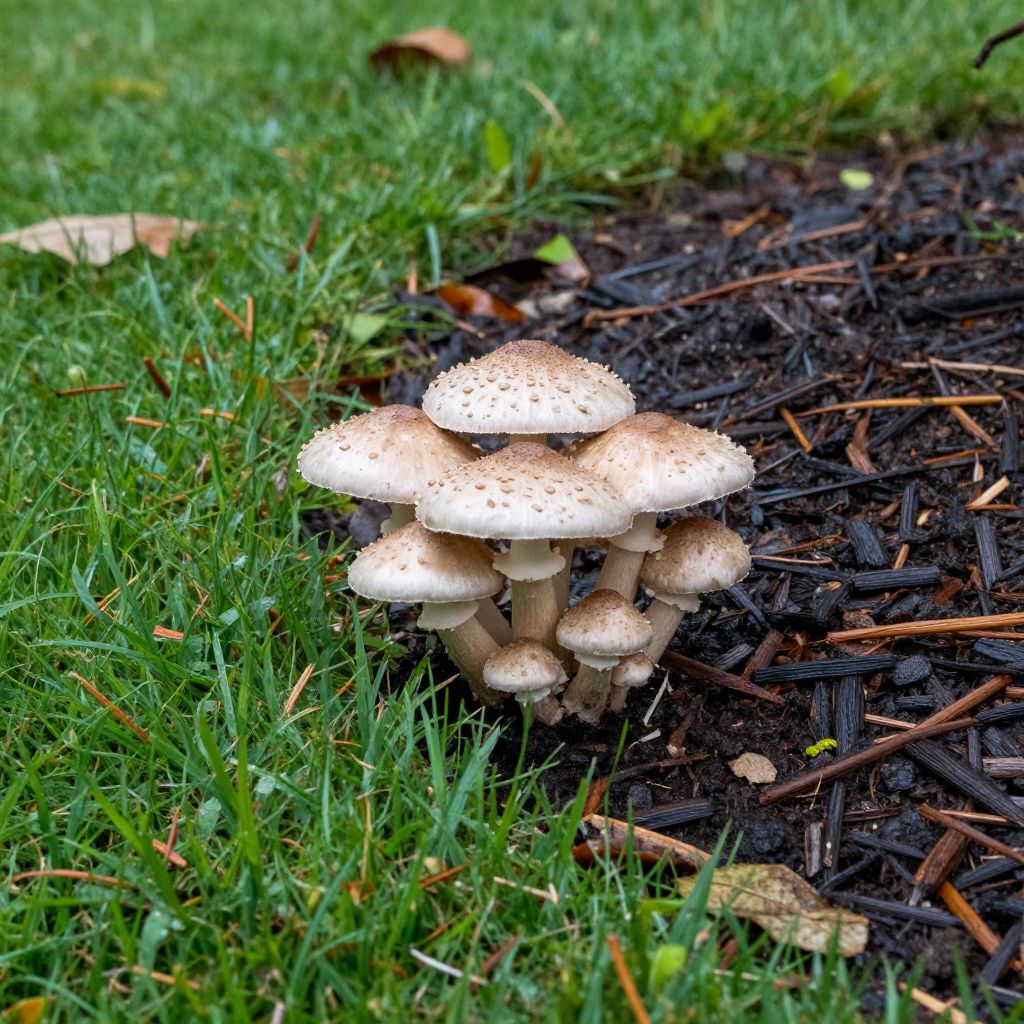
Seeing mushrooms pop up in your yard can be surprising, but it usually means your soil is doing something right. Fungi are breaking down organic matter, and the fruiting bodies you see are often just a sign of moisture, shade, and decaying material underground.
In most cases, mushrooms are not harmful to turf or landscape plants. The real question is what conditions are encouraging them, and whether you need to change anything to make your yard safer, drier, or easier to maintain.
What causes mushrooms to grow in your yard?
Mushrooms grow in your yard when fungi have enough moisture, organic material, and shade to fruit. They often appear after rain, irrigation, or in compacted, mulched, or heavily shaded areas where dead roots, wood, leaves, or thatch are decomposing underground.
Why mushrooms appear: the main conditions
1. Moisture is staying in the soil
Fungi need damp conditions to produce mushrooms. If your lawn stays wet for long periods after rain or watering, mushrooms are more likely to appear.
Poor drainage, low spots, heavy clay soil, and overwatering all create the kind of environment fungi prefer. That does not always mean a plant problem, but it does mean the area may stay soggy longer than it should.
2. There is decaying organic matter underground
Mushrooms feed on dead material such as buried roots, old stumps, wood chips, leaf litter, and thick thatch. The mushrooms you see are only the visible part of a much larger fungal network in the soil.
If a tree was removed years ago, or if mulch has been piled deeply against beds and trunks, mushrooms may keep returning until the material finishes decomposing.
3. Shade and low airflow help fungi thrive
Shady areas dry out more slowly than sunny ones, so mushrooms often show up under trees, along fences, beside buildings, or in dense shrub beds. Limited airflow can make the problem more noticeable after wet weather.
This is especially common where turf is thin and the ground stays cool and moist for long periods.
4. Compacted soil slows drying
Compacted soil holds water near the surface and can reduce oxygen in the root zone. That combination favors fungi and can make mushrooms appear repeatedly in the same spots.
Compaction is common in high-traffic areas, around play spaces, and where heavy equipment has compressed the ground.
Are yard mushrooms a problem?
Most mushrooms in lawns and garden beds are not directly harmful to healthy plants. In fact, they often indicate active decomposition and living soil biology. The main concerns are safety, appearance, and whether the underlying conditions are too wet or poorly drained.
- For plants: mushrooms usually do not damage grass, shrubs, or perennials.
- For people and pets: some wild mushrooms are toxic, so do not eat them and keep children and pets from handling unknown types.
- For the yard: repeated mushrooms may signal excess moisture, buried wood, or drainage issues worth correcting.
Common places mushrooms show up
Lawns
Mushrooms in lawns often appear after rain, especially where thatch is thick, soil is compacted, or buried organic matter is present. They may come and go quickly, sometimes disappearing as the surface dries.
Mulched beds
Mulch beds are a frequent mushroom site because wood-based mulch is food for fungi. This is especially true when mulch is applied too deeply or kept constantly wet.
Under trees and shrubs
Tree roots, fallen leaves, dead fine roots, and shade all create ideal conditions. Mushrooms under trees are often tied to natural decomposition rather than disease.
Near stumps, buried wood, or old construction debris
If mushrooms keep returning in one spot, there may be buried roots, old lumber, or other wood underground. Fungi can keep producing mushrooms as long as the material remains available and moist.
What to do when mushrooms appear
Step 1: Remove the mushrooms safely
You can simply pick or mow off mushrooms if you want the yard to look tidier. Wear gloves, and place them in the trash or compost only if you are sure they are not toxic and your compost system gets hot enough to break them down.
Do not rely on removing the visible mushrooms alone. That will not eliminate the fungus underground, so they may return after the next wet spell.
Step 2: Reduce excess moisture
Check whether the area is being watered too often or too heavily. Lawns and beds usually do better with deep, less frequent watering than with daily light watering, but the right schedule depends on your soil, weather, and plant needs.
- Water early in the day so the surface dries faster.
- Avoid watering shaded areas if they are already staying wet.
- Fix leaky irrigation heads or overspray.
- Improve drainage in low spots if water pools after rain.
Step 3: Rake out thick thatch or excess debris
If mushrooms are appearing in turf, inspect the lawn for a thick thatch layer or buried leaf litter. Light dethatching or raking can help the surface dry more evenly and reduce food for fungi.
Do not scalp the lawn. A stressed lawn can become thinner, which may make the area even more favorable for mushrooms and other weeds.
Step 4: Check mulch depth
In beds, keep mulch at a practical depth rather than piling it on. A layer that is too thick can stay wet and encourage fungal growth.
- Pull mulch back from trunks and crowns.
- Break up matted, soggy mulch so it can dry.
- Replace decomposed mulch only as needed, not all at once.
Step 5: Improve airflow and light where possible
If the area is heavily shaded, consider pruning nearby branches to let in more light and air. Even a modest improvement can help the soil surface dry faster after rain.
Be careful not to over-prune mature trees. Remove only dead, crossing, or excess growth when appropriate, or consult a certified arborist for larger work.
When mushrooms mean there may be a deeper issue
Repeated mushrooms in the same spot
If mushrooms keep returning in one area, look for buried wood, an old stump, or a persistent drainage problem. This is especially likely if the mushrooms appear in a ring or cluster year after year.
Soft, sinking, or spongy ground
Ground that feels soft underfoot may indicate decaying roots or buried organic debris. In some cases, the fungus is simply recycling old material. In others, you may need to investigate drainage or underground obstructions.
Plant decline nearby
If nearby plants are yellowing, wilting, or declining, the mushrooms may not be the cause, but the same wet conditions could be stressing roots. Check for root rot, poor drainage, or compacted soil.
How to prevent mushrooms from coming back
Adjust watering habits
Water only when the soil and plants need it. Let the top layer dry somewhat between waterings when appropriate for the plant type, and avoid keeping turf or beds constantly damp.
Improve drainage
For chronic wet spots, consider simple fixes first: redirect downspouts, level shallow depressions, aerate compacted lawn areas, or add organic matter to improve soil structure over time. In severe cases, you may need a drainage project.
Manage organic debris
Remove fallen branches, buried wood, and excessive leaf buildup. In mulched beds, keep mulch fresh but not excessive, and avoid burying crowns or stems.
Reduce compaction
Limit foot traffic in soggy areas and avoid driving equipment over wet soil. Aeration can help lawns with compaction, but timing and method should suit your grass type and season.
Maintain healthy turf and plant cover
A dense, healthy lawn or planting bed dries more evenly and is less likely to develop repeated fungal fruiting. Thin turf, bare soil, and neglected beds are more likely to show mushrooms after rain.
What not to do
- Do not spray fungicides expecting a permanent fix. Mushrooms are usually a symptom of conditions, not the root problem.
- Do not assume all mushrooms are harmless. Never eat wild mushrooms unless identified by a qualified expert.
- Do not overwater to “flush” them away. Extra moisture usually makes the problem worse.
- Do not pile fresh mulch thickly over existing wet mulch and expect it to dry out.
Quick troubleshooting guide
If mushrooms appear after rain and disappear quickly
This is usually normal. The fungi are responding to temporary moisture, and the mushrooms may vanish as the surface dries.
If they keep returning in one bed
Check mulch depth, buried wood, and irrigation coverage. Persistent moisture and decomposing material are the most common causes.
If they appear in a lawn with poor drainage
Focus on drainage, compaction, and watering habits. The mushrooms are often a sign that the lawn is staying wet too long.
If you have pets or children
Remove unknown mushrooms promptly and supervise the area until you are confident they are not being picked or eaten. Identification matters because many wild mushrooms look similar.
Conclusion
What causes mushrooms to grow in your yard is usually a mix of moisture, shade, and decaying organic matter. Start by removing the mushrooms, then look for the real cause: soggy soil, thick mulch, buried wood, compaction, or poor drainage. If you want to dig deeper into healthy soil and lawn care, related reading on lawn drainage and mulch management can help you prevent repeat outbreaks.