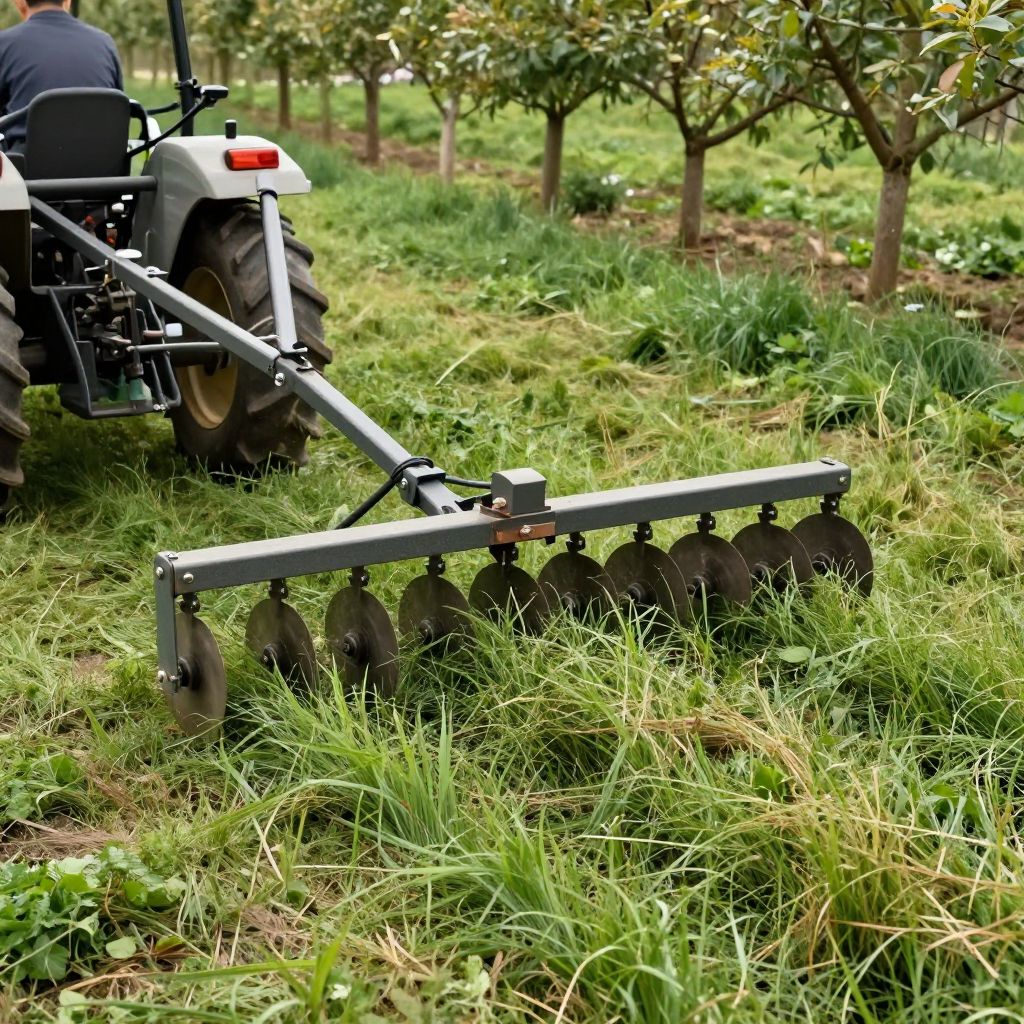
If you’re asking, “What is a flail mower?” you’re probably trying to understand whether this machine is the right tool for rough grass, weeds, brambles, or uneven ground. A flail mower is a cutting machine that uses many small swinging blades, called flails, mounted on a rotating drum to shred vegetation into fine clippings.
It is especially useful where a regular rotary mower struggles: overgrown fields, orchards, roadside banks, ditches, rough pasture, and areas with sticks or light debris. For gardeners and landowners, the main advantages are safer cutting, better mulching, and a cleaner finish on tough growth.
What Is A Flail Mower?
A flail mower is a mower with a horizontal rotor fitted with rows of hinged blades or “flails” that swing outward as the drum spins. Instead of one large blade making a single cut, the flails repeatedly strike and chop vegetation, making the machine well suited to dense, uneven, or coarse growth.
How A Flail Mower Works
The rotor spins inside a strong housing, and the flails cut vegetation by impact and repeated chopping. The cut material is usually left as fine mulch on the ground, which can help return organic matter to the soil when the growth is not too woody or excessive.
Main parts to recognize
- Rotor or drum: The spinning shaft that carries the flails.
- Flails: Small knives or hammer-shaped pieces that do the cutting.
- Housing: The protective body that contains debris and directs clippings.
- Roller or skids: Help control cutting height and follow the ground.
- Drive system: Usually powered by a tractor PTO or, on smaller machines, a dedicated engine.
Where A Flail Mower Is Most Useful
Flail mowers are best for land that is too rough, too tall, or too variable for a standard lawn mower. They are commonly used on orchards, meadows, paddocks, field edges, roadsides, and neglected garden areas that need reclaiming.
Good jobs for a flail mower
- Cutting tall grass and weeds in rough areas
- Managing brushy growth and light woody stems
- Mowing around trees in orchards or shelterbelts
- Maintaining banks, ditches, and uneven ground
- Mulching cut material back into the soil surface
When another mower may be better
- For a short, striped lawn finish, a rotary or cylinder mower is usually better.
- For very thick saplings or heavy scrub, a brush cutter or forestry mulcher may be needed.
- For small, flat home lawns, a flail mower is often overkill.
Flail Mower vs Rotary Mower
Many gardeners confuse flail mowers with rotary mowers because both cut grass, but they work differently and suit different conditions. A rotary mower uses one or two fast-spinning blades, while a flail mower uses many small swinging blades that are better at handling rougher material.
- Flail mower: Better for rough, uneven, or debris-prone ground; usually leaves a finer mulch.
- Rotary mower: Better for open lawns and simpler cutting jobs; often faster on clean turf.
- Safety: Flail mowers generally contain thrown debris better than open-blade rotary mowers.
- Finish: Rotary mowers often give a neater lawn look; flails give a practical, rough-ground finish.
How To Identify A Flail Mower
If you are looking at a machine and wondering whether it is a flail mower, check the cutting deck from the side or underneath. You will usually see a long drum with many small hanging blades rather than a single large blade or a set of exposed discs.
Identification clues
- Look for a heavy enclosed housing rather than an open deck.
- Check for a rear roller that helps regulate cutting height.
- Inspect the underside for rows of small flails attached by shackles or links.
- Notice whether the cut material is chopped very finely and dropped behind the machine.
- On tractor-mounted units, look for PTO drive and a robust frame built for rough work.
Choosing The Right Flail Mower For Your Ground
If you are buying or hiring a flail mower, match the machine to the type of vegetation and the size of the area. The wrong size or style can leave poor results, strain the machine, or make maintenance frustrating.
What to consider
- Vegetation type: Grass only, mixed weeds, brambles, or light woody growth.
- Ground conditions: Flat lawn, rough pasture, slopes, or wet ground.
- Width: Wider mowers cover more ground but need more power and space.
- Power source: Tractor-mounted, walk-behind, or self-propelled models.
- Cutting height range: Important if you need to avoid scalping uneven land.
Practical rule of thumb
For home-scale land management, choose the smallest machine that can comfortably handle the roughest patch you need to cut. Oversizing the mower can make turning, storage, and maintenance harder than necessary.
How To Use A Flail Mower Safely
Because flail mowers are designed for rough vegetation, they can throw stones, sticks, and hidden debris if the area is not prepared. Good setup and careful operation matter more than speed.
Before mowing
- Walk the area first and remove large stones, wire, branches, toys, and metal debris.
- Check for holes, stumps, irrigation parts, and buried obstacles.
- Inspect the flails, fasteners, guards, and roller for wear or damage.
- Make sure the cutting height suits the ground so the mower does not scalp high spots.
- Wear sturdy footwear, eye protection, and hearing protection where appropriate.
While mowing
- Start with a higher cutting setting if the area is very overgrown.
- Move slowly through dense patches so the machine can process material evenly.
- Avoid forcing the mower into thick bramble or wet tangles all at once.
- Keep bystanders, pets, and children well away from the working area.
Best Conditions For A Clean Cut
Flail mowers work best when vegetation is dry enough to slice and shred cleanly, but not so brittle that it becomes a cloud of dust or brittle debris. Slightly moist grass is often manageable, while very wet growth can clog or smear.
Seasonal considerations
- Spring: Fast growth may require repeated passes as weeds and grass surge.
- Summer: Dry conditions can make cutting easier, but dust and debris increase.
- Autumn: Fallen leaves and mixed growth can be mulched if the area is not too wet.
- Winter: Avoid very wet, frozen, or waterlogged ground that can rut easily.
Maintenance Tips For Better Performance
Like all mowing equipment, a flail mower performs best when kept sharp, balanced, and clean. Dull or damaged flails tear vegetation instead of cutting it, which leaves a ragged finish and can overload the machine.
Routine maintenance checklist
- Clean out wrapped grass and debris after use.
- Check flails for wear, cracks, or missing pieces.
- Inspect belts, bearings, and fasteners according to the manufacturer’s guidance.
- Grease moving parts if the model requires it.
- Replace worn flails in matched sets when needed to keep the rotor balanced.
Common maintenance mistakes
- Ignoring vibration, which can signal imbalance or bearing wear.
- Running the mower with missing flails.
- Letting wet clippings build up inside the housing.
- Using the machine on material thicker than it is designed to handle.
Common Problems And How To Fix Them
Most flail mower problems are caused by incorrect cutting height, worn parts, or trying to mow material that is too dense for the machine. A few simple checks usually solve the issue before it becomes a bigger repair.
Poor cutting or ragged finish
- Raise the cutting height and make a second pass if needed.
- Check whether the flails are dull, bent, or worn unevenly.
- Slow down in thicker patches so the rotor can process the growth.
Clogging
- Wait for the vegetation to dry a little if conditions are very wet.
- Do not try to cut overly tall growth in one pass.
- Clear built-up material from the housing before continuing.
Excess vibration
- Stop and inspect for missing or damaged flails.
- Check for loose bolts or worn bearings.
- Do not keep running the mower if vibration suddenly increases.
Is A Flail Mower Right For Your Garden Or Land?
A flail mower is a smart choice when your priority is control, safety, and the ability to handle rough growth rather than a polished lawn finish. It is especially helpful for larger properties, orchards, rough edges, and neglected spaces that need regular reclaiming.
If you are deciding between mower types, think about your ground, your vegetation, and the finish you want. For more equipment care, you may also find this guide useful: what kind of oil a lawn mower takes.