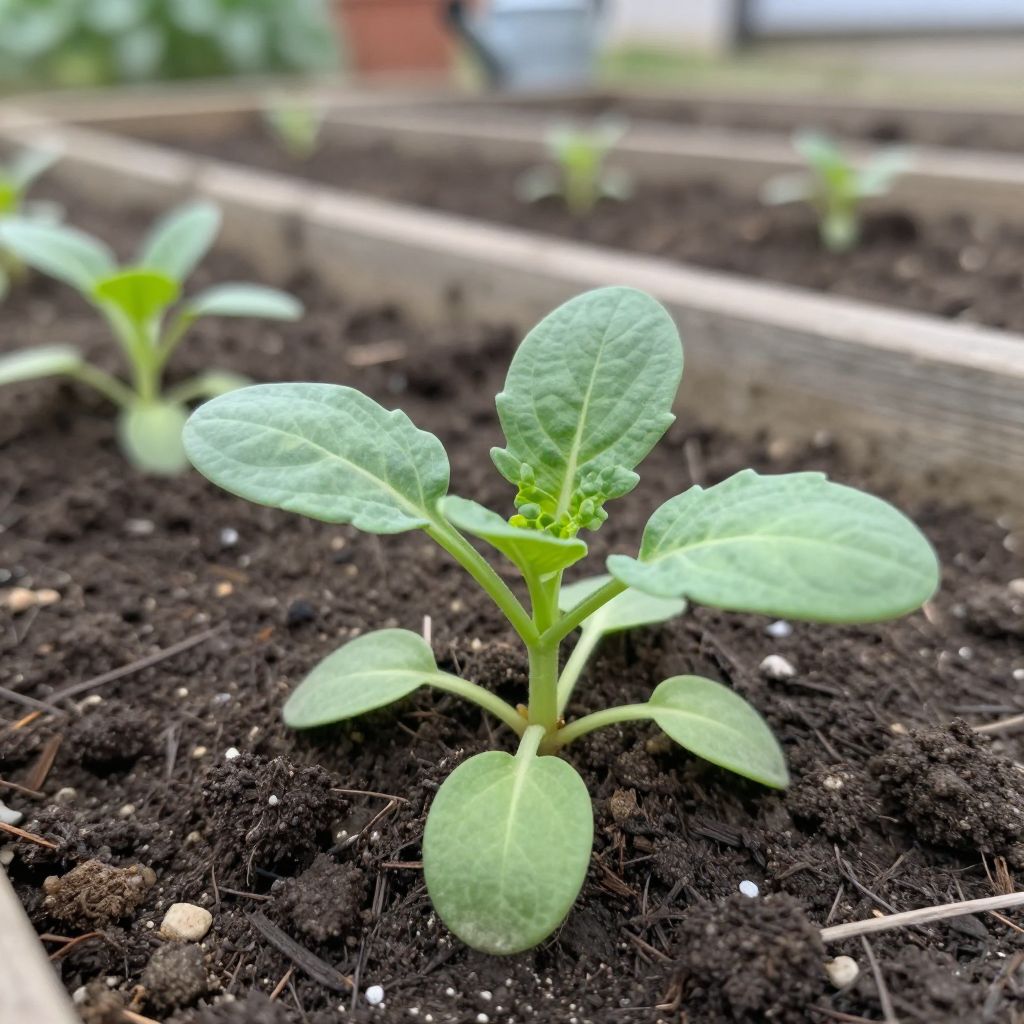
What does a mustard seed grow into? In the garden, it grows into a mustard plant: a fast-growing leafy annual in the Brassica family, usually grown for its edible leaves, flowers, and seed pods. Depending on the type you plant, you may harvest baby greens, mature leaves, or let the plant flower and set seed.
If you are trying to identify a sprouting mustard seed, the seedling starts with two rounded cotyledons, then quickly produces the familiar toothed or lobed true leaves. With the right conditions, mustard is one of the easiest cool-season crops to grow, and it can be harvested young for the best flavor.
What does a mustard seed grow into?
A mustard seed grows into a mustard plant, usually an annual leafy brassica such as Brassica juncea, Brassica nigra, or Sinapis alba. It begins as a small seedling, develops edible leaves, then sends up flower stalks with yellow flowers and seed pods if allowed to mature.
How to identify a mustard seedling
Mustard seedlings are easy to miss at first because they look delicate, but they grow quickly. The earliest leaves are smooth and rounded, followed by true leaves that become more textured, lobed, or slightly serrated depending on the variety.
Key seedling traits
- Cotyledons: two smooth, oval seed leaves that appear first.
- True leaves: larger leaves that may be crinkled, toothed, or lightly lobed.
- Fast growth: seedlings can size up noticeably within days in mild weather.
- Brassica family look: the plant often resembles turnip greens, kale, or other mustard relatives.
If you are unsure whether a seedling is mustard, gently rub a leaf. Mustard greens often have a sharp, peppery scent, especially as the plant matures.
What the mustard plant looks like as it grows
Mustard is usually grown as a leafy annual, though the exact shape depends on the species and variety. Some types form loose rosettes, while others grow upright with broad leaves on branching stems.
Growth stages
- Germination: seeds sprout in cool, moist soil.
- Seedling stage: small leaves appear and roots establish quickly.
- Leaf production: the plant grows rapidly and can be harvested young.
- Bolting: in warm weather, stems elongate and flower buds form.
- Flowering and seeding: yellow flowers appear, then slender seed pods develop.
Once mustard bolts, the leaves often become more pungent and sometimes tougher. That is normal, and it is one reason gardeners harvest it early.
Best growing conditions for mustard
Mustard grows best in cool weather, fertile soil, and consistent moisture. It is a forgiving crop for beginners, but it performs best when you match its growth cycle to your local season.
Sunlight
Give mustard full sun to partial shade. In cooler weather, full sun helps it grow quickly. In warmer climates or late spring, a little afternoon shade can slow bolting and keep leaves tender longer.
Soil
Use loose, well-drained soil enriched with compost. Mustard prefers soil that holds moisture without staying soggy, because waterlogged conditions can stunt seedlings and invite disease.
Water
Keep the soil evenly moist, especially during germination and early leaf growth. Irregular watering can make leaves more bitter and can encourage premature bolting when temperatures rise.
Temperature
Mustard is a cool-season crop. It grows best in mild weather and often struggles in prolonged heat, when it may flower quickly instead of producing lots of leaves.
How to plant mustard seeds
Mustard is straightforward to sow directly in the garden or in containers. Because it grows quickly, direct sowing is often the easiest method.
Direct sowing outdoors
- Prepare a bed with fine, loose soil and a little compost.
- Sow seeds about 1/4 to 1/2 inch deep.
- Space rows or planting bands so you can thin seedlings easily.
- Cover lightly and water gently to avoid washing seeds away.
- Keep the surface moist until germination.
Thin seedlings once they are large enough to handle, leaving enough room for the plants you want to grow to maturity. Thinnings can often be eaten as baby greens.
Growing mustard in containers
Mustard also does well in pots, window boxes, and raised beds. Choose a container with drainage holes and use a quality potting mix blended with compost if needed.
- Use a container deep enough for root growth.
- Do not let pots dry out completely.
- Place containers where they receive good light and cooler temperatures if possible.
How to care for mustard plants
Once established, mustard needs only basic care, but small adjustments can improve leaf quality and extend the harvest.
Feeding
If your soil is already rich in compost, mustard may not need much additional feeding. Too much nitrogen can produce overly lush growth that is more attractive to pests, so keep fertilizing modest unless your soil is poor.
Mulching
A light mulch can help conserve moisture and keep the soil cooler. Use fine organic mulch around the plants, but keep it from touching the stems directly.
Pruning and harvest management
You usually do not prune mustard in the traditional sense. Instead, you harvest outer leaves regularly or cut the whole plant when it reaches the size you want.
- Pick young leaves for milder flavor.
- Harvest outer leaves first to encourage continued growth.
- Cut the whole plant if you want a one-time harvest of baby greens.
Common problems when growing mustard
Mustard is easy to grow, but a few issues come up often. Most problems are related to weather, moisture, or pests common to brassicas.
Bolting
Bolting happens when the plant sends up a flower stalk too early, usually in heat or stress. To reduce bolting, sow in cooler weather, keep the soil evenly moist, and harvest promptly.
Bitter leaves
Mustard naturally has a peppery flavor, but leaves can become more bitter if the plant is stressed by heat, drought, or age. Harvesting young is the best fix.
Pests
Watch for flea beetles, aphids, cabbage worms, and slugs. These pests can chew holes in leaves or weaken seedlings.
- Flea beetles: tiny holes in leaves; use row cover early if needed.
- Aphids: clusters on new growth; rinse off with water or remove affected tips.
- Cabbage worms: green caterpillars that chew foliage; inspect leaves regularly.
- Slugs: ragged holes and slime trails; reduce hiding places and water in the morning.
Diseases
Because mustard is a brassica, it can be affected by fungal and bacterial problems in damp, crowded conditions. Good spacing, crop rotation, and avoiding overhead watering late in the day all help reduce risk.
Harvesting mustard leaves, flowers, and seed
What you harvest depends on what you want from the plant. Most gardeners grow mustard for leaves, but the plant can also be allowed to flower and set seed.
For leaves
Harvest when leaves are young and tender for the best texture and flavor. You can snip individual leaves or cut the entire plant above the crown if you want a quick harvest.
For flowers and seed
If you let the plant mature, it will produce yellow flowers followed by seed pods. Allow the pods to dry on the plant if you want to save seed, but protect them from birds and shattering pods.
How to use mustard in the garden
Mustard is useful beyond the kitchen. It can be grown as a quick seasonal crop, a pollinator-friendly flowering plant if left to bloom, or a short-term green manure in some garden plans.
- Edible greens: harvest young for salads, sautés, or mixed greens.
- Pollinator support: flowers attract beneficial insects when allowed to bloom.
- Succession planting: sow small amounts every few weeks in cool weather for a steady harvest.
Common mistakes to avoid
Most mustard-growing problems come from trying to treat it like a warm-season crop or letting it sit too long after maturity.
- Planting in hot weather without shade.
- Letting the soil dry out between waterings.
- Overcrowding seedlings and blocking airflow.
- Waiting too long to harvest tender leaves.
- Ignoring pests until the leaves are heavily damaged.
Conclusion
What does a mustard seed grow into? It grows into a fast, useful mustard plant that gives you edible leaves first and, if left alone, flowers and seed pods later. Start with cool weather, loose soil, and steady moisture, then harvest early for the best flavor and texture.
If you want to keep learning about easy leafy crops, you may also enjoy related gardening guides on growing brassicas in cool weather and harvesting leafy greens for repeated cut-and-come-again use.