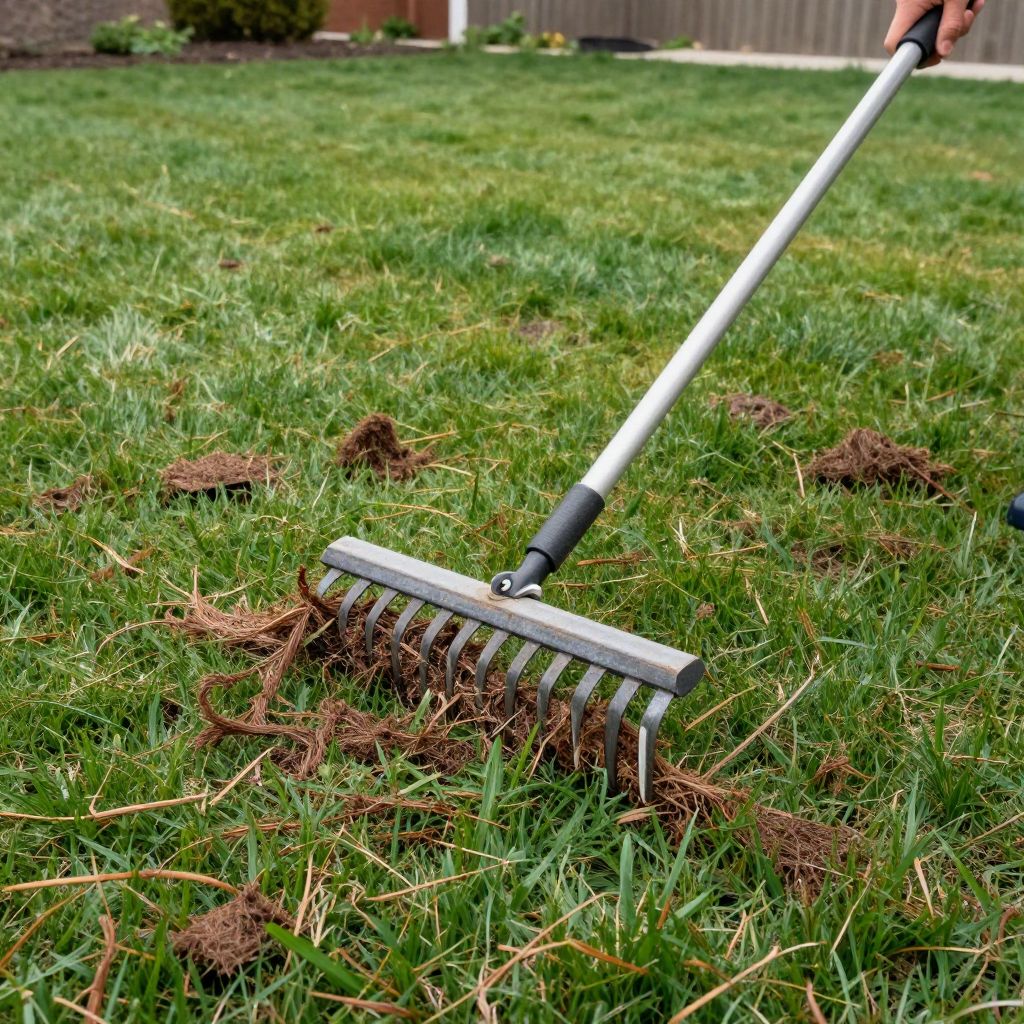
What is dethatching a lawn, and do you really need to do it? If your grass feels spongy, water seems to sit on the surface, or the lawn looks thin even after care, thatch may be the problem. Dethatching removes the built-up layer of dead stems, roots, and debris that can block air, water, and nutrients from reaching the soil.
Done at the right time and for the right lawn, dethatching can improve growth and reduce stress. Done at the wrong time, it can damage healthy grass, so it helps to know what thatch is, how to identify it, and when a lawn actually needs attention.
What is dethatching a lawn?
Dethatching a lawn means removing the dense layer of dead and living plant material that builds up between the grass blades and the soil surface. A thin thatch layer is normal, but when it becomes too thick, it can interfere with watering, rooting, and overall lawn health. Dethatching opens the surface so the turf can breathe and absorb moisture more effectively.
What is thatch, and when does it become a problem?
Thatch is made mostly of dead stems, stolons, rhizomes, and roots that have not fully broken down. A small amount is natural and can even help cushion foot traffic. The problem starts when the layer becomes thick enough to prevent water, air, and fertilizer from reaching the soil.
How much thatch is too much?
In many lawns, a thatch layer under about 1/2 inch is usually manageable. Once it gets thicker than that, especially if it feels spongy or water runs off instead of soaking in, dethatching may be worth considering. The exact threshold depends on grass type, soil conditions, and how the lawn is maintained.
Why thatch builds up
- Frequent light watering that keeps grass roots shallow
- Overfertilizing, especially with nitrogen-heavy products
- Heavy clay soil or poor drainage
- Frequent mowing with clippings left in thick layers
- Fast-growing turf grasses that spread by runners
- Compaction that slows natural decomposition
How do you know if your lawn needs dethatching?
Not every lawn needs dethatching. Before you start, check whether the grass is actually suffering from thatch or from another issue such as compaction, drought, pests, or disease. A simple inspection can save you from unnecessary stress to the turf.
Signs of excessive thatch
- The lawn feels springy or bouncy underfoot
- Water pools or runs off instead of soaking in
- Grass looks patchy despite regular care
- The lawn dries out quickly after watering
- You can see a dense brown layer at the soil surface
- A screwdriver or trowel is hard to push into the turf
Simple test to check thatch depth
- Cut out a small wedge or plug of turf with a hand trowel.
- Look at the layer between the green grass and the soil.
- Measure the brown, fibrous material at the surface.
- If it is thick and matted, thatch is likely contributing to the problem.
When is the best time to dethatch a lawn?
The best time depends on your grass type and local climate. Dethatching is easiest when the lawn is actively growing and can recover quickly. Avoid doing it during heat stress, drought, or when the grass is already struggling.
Cool-season grasses
For cool-season lawns such as Kentucky bluegrass, perennial ryegrass, and tall fescue, dethatching is often best in early fall or sometimes early spring, when temperatures are moderate and growth is active. Fall is often preferred because weeds are less aggressive and the lawn has time to recover.
Warm-season grasses
For warm-season lawns such as bermudagrass, zoysiagrass, and St. Augustinegrass, dethatching is usually best in late spring to early summer, after the grass has fully greened up and is growing strongly. Do not dethatch too early in the season, when recovery is slow.
How to dethatch a lawn step by step
You can dethatch by hand on a small area or with a mechanical dethatching rake or power dethatcher for larger lawns. The goal is to lift and remove the thick surface layer without tearing up the turf more than necessary.
Before you start
- Mow the lawn slightly lower than usual, but not scalped.
- Water lightly a day or two before if the soil is very dry.
- Choose a time when the grass is actively growing.
- Rake up leaves, sticks, and other debris first.
Tools you may use
- Thatching rake or spring-tine rake for small areas
- Power dethatcher or vertical mower for larger lawns
- Leaf rake for cleanup
- Wheelbarrow or tarp for collecting debris
Step-by-step dethatching process
- Work in one section at a time.
- Use firm, even strokes to pull up the thatch layer.
- Rake in one direction first, then cross over the area if needed.
- Remove loosened debris so it does not settle back into the grass.
- Inspect the lawn after a pass and stop if the turf is being torn badly.
Aftercare
After dethatching, the lawn may look rough for a short time. Water deeply enough to help recovery, but avoid keeping the surface constantly wet. If bare or thin areas remain, overseeding may help, but only if your grass type and season support it.
- Water to keep the root zone from drying out
- Hold off on heavy foot traffic for a bit
- Apply fertilizer only if your lawn actually needs it and the timing is right for your grass type
- Watch for weeds, since open soil can invite germination
Dethatching vs aerating: what is the difference?
Dethatching removes the surface mat of dead plant material. Aerating removes small plugs of soil to relieve compaction and improve air and water movement deeper in the root zone. Many lawns need one, the other, or both, but they solve different problems.
Which one should you choose?
- Choose dethatching if the problem is a thick spongy layer at the surface.
- Choose aeration if the soil is hard, compacted, or puddles easily.
- Consider both if your lawn has thatch and compacted soil, but do not overwork the turf in one session.
Common mistakes to avoid
Dethatching is helpful only when done carefully. A lawn can recover from a light, well-timed treatment, but aggressive or poorly timed work can leave it thinner than before.
- Dethatching during heat or drought, when grass is already stressed
- Removing too much at once, which can expose crowns and roots
- Using the wrong tool for the size of the lawn
- Confusing compaction with thatch and treating the wrong issue
- Skipping cleanup, which leaves debris smothering the turf
- Overwatering afterward, which can encourage disease
How to reduce thatch from coming back
The best long-term fix is not repeated dethatching, but better lawn care habits that slow thatch buildup and help natural decomposition. A healthy, balanced lawn usually needs less intervention over time.
Helpful maintenance habits
- Mow at the correct height for your grass type
- Leave clippings only when they are light and evenly distributed
- Water deeply and less often, rather than shallowly every day
- Avoid excessive nitrogen fertilizer
- Improve drainage where water stands
- Aerate compacted soil when needed
When to call in a professional
If the lawn is large, severely matted, or mixed with compaction and weed issues, a lawn care professional can help determine whether dethatching, aeration, overseeding, or renovation is the better route. This can be especially useful if the turf has been declining for more than one season.
Conclusion: should you dethatch your lawn?
Now that you know what is dethatching a lawn, the key is to check whether thatch is actually the issue before you start. If the layer is thick, spongy, and interfering with water or growth, dethatching at the right season can help your grass recover. For the best results, combine it with good mowing, watering, and soil care.
If you want to improve your lawn further, it can also help to read about lawn aeration basics and how to overseed a thin lawn for the next steps after dethatching.