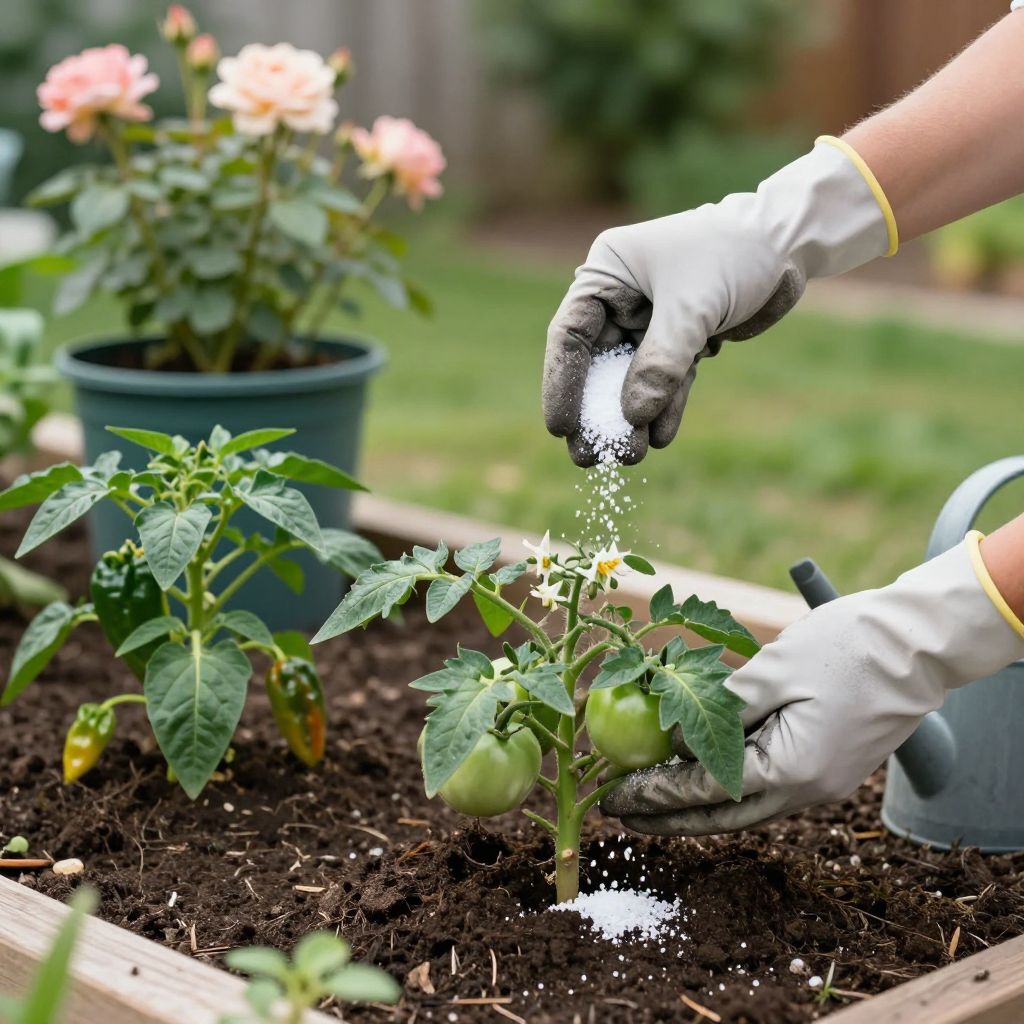
What plants like Epsom salts, and is it actually worth using in the garden? The short answer is that a few plants may respond well in specific situations, but Epsom salts are not a universal fertilizer. They supply magnesium and sulfur, so they only help when your soil is truly low in those nutrients.
Used correctly, Epsom salts can support certain vegetables, flowers, and container plants. Used routinely without a soil need, they can waste time, upset nutrient balance, and do little for plant health. The key is knowing when magnesium deficiency is real and when better soil care is the real fix.
What plants like Epsom salts?
Plants that may benefit from Epsom salts include tomatoes, peppers, roses, potatoes, citrus, and some magnesium-hungry container plants, but only if the soil is low in magnesium or the plant shows a deficiency. Many gardens already have enough magnesium, so a soil test is the best guide before you apply anything.
How Epsom salts work in the garden
Epsom salts are magnesium sulfate. Magnesium helps plants make chlorophyll, and sulfur supports protein formation and overall growth. That sounds useful, but it does not replace balanced fertilizing, compost, or healthy soil structure.
If your soil already contains enough magnesium, adding more will not make plants greener or more productive. In some cases, too much can interfere with calcium and potassium uptake, especially in pots or in soils that are already heavily fertilized.
Signs a plant may actually need magnesium
- Older leaves yellow between the veins while veins stay greener
- Lower leaves decline first, not the newest growth
- Reduced vigor despite adequate watering and sunlight
- Fruit or flower production seems weak on otherwise healthy plants
These symptoms can also come from nitrogen shortage, root stress, poor drainage, or pH problems. That is why it helps to look at the whole plant and, when possible, test the soil.
Best plants to consider for Epsom salts
Tomatoes
Tomatoes are the plant most often associated with Epsom salts. They can show magnesium deficiency, especially in sandy soil, raised beds with frequent watering, or containers where nutrients wash out quickly.
Before reaching for Epsom salts, make sure tomatoes have full sun, even moisture, and a balanced fertilizer. Blossom-end rot is usually a calcium and watering issue, not a magnesium issue, so Epsom salts will not fix it.
Peppers
Peppers may benefit in the same way as tomatoes if the soil is low in magnesium. If leaves yellow between veins and growth slows, a magnesium shortage is possible, but check drainage and feeding first.
Peppers prefer warm soil, steady moisture, and a fertile bed with good organic matter. Overusing Epsom salts will not improve fruit set if temperatures are too cool or the plant is stressed by inconsistent watering.
Roses
Roses are often mentioned as Epsom-salt lovers, especially when gardeners want more canes, greener foliage, or bigger blooms. They may respond if the soil lacks magnesium, but they also need regular pruning, airflow, and a balanced feeding program.
If roses are pale or weak, first check for compacted soil, low organic matter, and insect pressure such as aphids or spider mites. Epsom salts are a supplement, not a cure-all.
Potatoes
Potatoes can use magnesium during tuber development, particularly in lighter soils. If foliage shows interveinal yellowing and the plants are otherwise cared for well, a magnesium boost may help.
Still, potatoes need loose soil, consistent moisture, and enough potassium. Too much magnesium without enough potassium can create imbalance, so avoid routine heavy applications.
Citrus
Citrus trees in the ground or in containers may show magnesium deficiency, often as yellowing on older leaves with green veins. This is more common in pots, where nutrients can leach out quickly.
For citrus, make sure the pot drains well and the tree is fed with a citrus-specific fertilizer if needed. Epsom salts may help when deficiency is confirmed, but they should not replace a proper citrus feeding plan.
Houseplants and container plants
Some potted plants can become magnesium-deficient more easily than garden plants because frequent watering flushes nutrients out of the potting mix. This is especially true in older containers with depleted soil.
Even so, indoor plants usually need better light, fresh potting mix, and correct watering before they need Epsom salts. If you are growing indoors, fix those basics first.
When Epsom salts help and when they do not
Good times to use them
- A soil test shows low magnesium
- Leaves show classic magnesium deficiency symptoms
- Plants are growing in containers that leach nutrients quickly
- You are correcting a specific, diagnosed problem rather than feeding on habit
Times to skip them
- Your soil is already fertile and plants look healthy
- The problem is poor drainage or root rot
- Leaves are yellowing from nitrogen shortage
- Blossom-end rot is the issue
- You have not checked soil pH or nutrient balance
Important: Epsom salts are not a substitute for compost, mulch, or a complete fertilizer. If your soil is poor, those basics matter more than any single amendment.
How to apply Epsom salts safely
Use Epsom salts only when you have a reason. The safest approach is to start small, observe the plant, and avoid repeated applications unless you know the soil needs magnesium.
- Confirm the need. Look for symptoms or use a soil test.
- Water the plant first. Never apply to dry, stressed roots.
- Choose the method. Soil drench is usually more useful than foliar spraying for home gardeners.
- Apply lightly. Follow the product label if one is provided, or use a conservative amount.
- Watch for response. Healthy new growth is a better sign than a quick color change on old leaves.
For garden beds
Work the salts into the top layer of soil or dissolve them in water and apply as a drench near the root zone. Water afterward if the soil is dry so the minerals move down to the roots.
For containers
Use extra caution in pots because salts build up more easily. If you suspect a deficiency, use a light application and flush the pot occasionally with plain water to reduce salt accumulation.
For foliar spraying
Some gardeners spray diluted Epsom salts on leaves, but this is best used sparingly and only when you are trying to correct a suspected deficiency quickly. Spray in cool parts of the day to reduce leaf scorch.
Common mistakes to avoid
- Using Epsom salts on every plant as a routine fertilizer
- Applying them without checking soil health or pH
- Trying to fix blossom-end rot with magnesium
- Adding salts to dry, stressed, or newly transplanted plants
- Overapplying in containers and creating nutrient imbalance
If your plants are struggling, step back and check drainage, sunlight, watering habits, and overall fertility. Those issues are far more common than true magnesium deficiency.
Better soil care for healthier plants
Healthy soil usually does more for plant growth than any single amendment. Compost improves structure and nutrient availability, mulch helps hold moisture, and balanced fertilizer supports steady growth without overloading one nutrient.
If your garden soil is sandy, heavily watered, or naturally low in nutrients, a soil test can tell you whether magnesium is actually missing. In many cases, the best long-term fix is adding organic matter and choosing a fertilizer that matches the crop.
Practical troubleshooting tips
- If leaves are yellow but veins stay green, suspect magnesium deficiency
- If whole leaves are pale, think nitrogen first
- If lower leaves wilt and soil stays wet, check roots and drainage
- If fruit is misshapen or rotting, look at watering and calcium balance
- If growth is weak in pots, repot into fresh mix before adding supplements
Seasonal and growing-condition considerations
The need for Epsom salts depends on climate, rainfall, soil type, and how often you water. Heavy rain and frequent irrigation can leach nutrients from sandy soil and containers faster than from rich loam.
In cool spring weather, roots may absorb nutrients slowly even when the soil is adequate. In hot weather, stressed roots may struggle for entirely different reasons. Always consider the plant’s growing conditions before treating symptoms.
Final advice for home gardeners
So, what plants like Epsom salts? Mainly tomatoes, peppers, roses, potatoes, citrus, and some container plants when magnesium is truly lacking. If your plants are healthy, you usually do not need it. Start with good soil, consistent watering, and balanced feeding, then use Epsom salts only as a targeted correction.
If you want to keep improving your garden, read more about soil testing and nutrient balance and how to build healthier garden soil with compost so you can solve plant problems at the root.