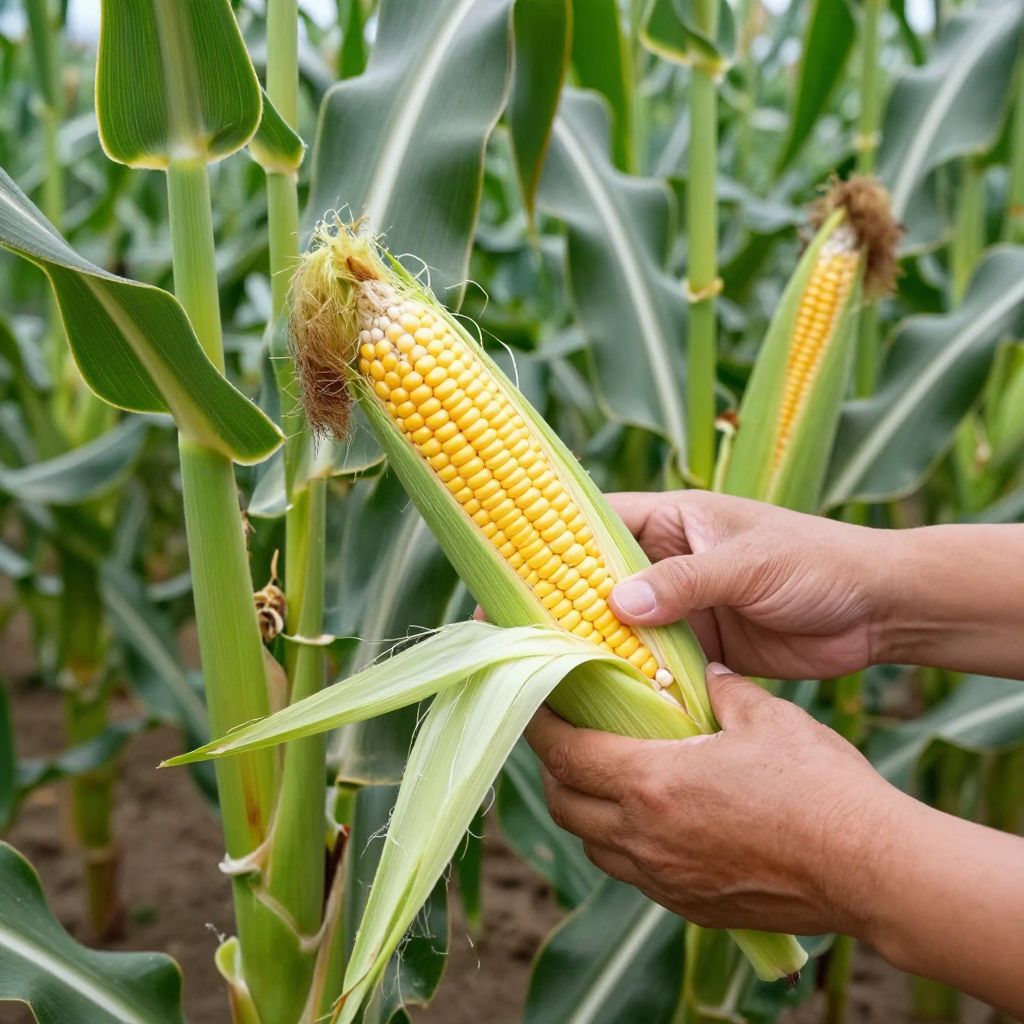
Wondering when to pick sweet corn so it tastes tender, juicy, and truly sweet? The timing matters more than almost anything else. Pick too early and the kernels may be underfilled; wait too long and the sugars begin turning starchy, especially in hot weather.
The good news is that sweet corn gives clear signs when it’s ready. With a little observation, you can harvest at the right stage, handle the ears correctly, and avoid the most common mistakes that lead to tough or bland corn.
When to pick sweet corn?
Pick sweet corn when the ears are fully filled out, the silks have turned brown and dry, and the kernels release a milky juice when punctured with a fingernail. Most varieties are ready about 18 to 24 days after silks first appear, but weather, variety, and planting time can shift that window.
How to tell sweet corn is ready to harvest
Sweet corn does not ripen much after harvest, so you want to catch it at the right eating stage. Look for several signs together rather than relying on just one.
1. Check the silks
The silks at the tip of the ear should be brown, dry, and starting to shrivel. Fresh green silks usually mean the ear is still developing.
2. Feel the ear through the husk
A ready ear feels plump and firm from tip to base. If the tip feels narrow or underfilled, give it a few more days.
3. Look at the husk
The husk often stays green even when the ear is ready, so don’t wait for it to dry out completely. A slightly loosened husk can be normal near harvest time.
4. Test a kernel
Gently peel back a small section of husk and press a kernel with your fingernail. Milky liquid means the corn is at the sweet stage. If the juice is watery, it’s too early. If it is doughy or paste-like, it’s too late for peak sweetness.
Typical sweet corn harvest timing by season
Sweet corn maturity depends on temperature and variety, so local conditions matter. Warm weather speeds growth, while cool weather slows it down. Use the seed packet’s days-to-maturity as a guide, then watch the ears closely as the expected harvest window approaches.
Early-season plantings
In cooler spring conditions, ears may take longer to fill. Check plants every day or two once silks appear, because a sudden warm spell can move harvest time quickly.
Mid- to late-summer plantings
In hot weather, sweet corn can move from perfect to starchy very fast. During heat waves, you may need to harvest within a narrower window, sometimes only a day or two at peak ripeness.
Why timing changes so much
- Temperature: Warm nights and hot days speed sugar loss.
- Variety: Some types hold sweetness longer than others.
- Planting date: Earlier or later sowings mature under different conditions.
- Water stress: Drought can reduce ear fill and sweetness.
What sweet corn should look and feel like at harvest
Once you know what to check, the harvest decision becomes much easier. A ripe ear should look full, feel firm, and show dry silks at the tip. The kernels should be swollen all the way to the end of the ear, not sparse or flat.
If you’re growing more than one ear per stalk, the upper ears often mature first. Keep checking the whole planting, because different stalks and ears can be ready on slightly different days.
How to harvest sweet corn without damaging the plant
Harvesting sweet corn is simple, but it helps to do it carefully so you don’t break stalks or bruise the ears.
- Hold the ear firmly with one hand.
- Use the other hand to support the stalk if needed.
- Twist the ear downward and pull sharply.
- Remove the ear cleanly from the stalk.
If the ear resists, it may not be ready yet. A ripe ear usually snaps loose with a firm twist. You can also use clean garden scissors or pruners in tight spaces, but twisting by hand is often easiest.
Harvest in the cool part of the day
Pick sweet corn in the morning if possible. Cooler temperatures help preserve sweetness, and the ears are less likely to wilt before you bring them inside.
What happens if you pick sweet corn too early or too late?
Sweet corn is best at a narrow stage of ripeness, and both early and late harvests affect flavor and texture.
If you pick too early
- Kernels may be small or underfilled.
- The ear can taste watery or underdeveloped.
- Texture may be thin instead of juicy.
If you pick too late
- Sugars convert to starch, reducing sweetness.
- Kernels become chewy or tough.
- The ear may develop a doughy texture.
Sweet corn does not improve much after harvest. Unlike some fruits, it should be eaten, cooked, or preserved as soon as possible for the best flavor.
Growing conditions that help sweet corn ripen well
Good harvest timing starts with healthy plants. Strong growth produces fuller ears and makes it easier to judge ripeness accurately.
Sunlight
Sweet corn needs full sun, meaning at least 6 to 8 hours of direct light daily. Shaded plants often make smaller ears and may mature unevenly.
Soil
Use fertile, well-drained soil rich in organic matter. Compost helps improve soil structure and moisture retention, especially in sandy or fast-draining beds.
Water
Consistent moisture matters most from tasseling through ear fill. If the soil dries out during this stage, ears may be short, poorly filled, or less sweet. Water deeply when needed so moisture reaches the root zone.
Spacing and pollination
Sweet corn is wind-pollinated, so plant it in blocks rather than a single long row when possible. Good pollination helps ears fill evenly, which makes harvest timing more reliable.
Common sweet corn harvest problems and how to fix them
Sometimes the ears don’t look as expected, even when the plants seem healthy. These problems often point to timing, pollination, or growing stress.
Tip of the ear is missing kernels
This usually means pollination was incomplete. Planting in a block and keeping plants adequately watered during silking can help next time.
Ear feels full but tastes starchy
You likely harvested too late, especially during hot weather. Check ears more often as they approach maturity, and harvest as soon as the milky stage appears.
Silks are brown but kernels are still watery
Silk color alone is not enough. Wait a little longer and test a kernel for the milky stage before picking.
Ears are small or poorly filled
Stress from drought, poor soil fertility, crowding, or shade can reduce ear quality. Improve growing conditions next season and make sure plants have enough moisture during ear development.
Can you store sweet corn after picking?
Yes, but the sooner you use it, the better the flavor. After harvest, sweet corn begins losing sugar quickly, especially in warm conditions. If you can’t cook it right away, keep the ears cool and shaded.
- Leave the husks on until you’re ready to use the corn.
- Store ears in the refrigerator as soon as possible.
- Use within a day or two for the best sweetness.
If you need to hold harvested corn briefly, avoid leaving it in the sun or in a hot car. Heat speeds quality loss fast.
Quick checklist before you pick
- Silks are brown, dry, and shriveled.
- Ear feels full and firm.
- Kernels are plump all the way to the tip.
- A punctured kernel releases milky juice.
- You are ready to harvest in the cool part of the day.
Final tip for perfect sweet corn
Start checking ears a few days before the seed packet’s estimated maturity date, then inspect them daily once silks dry down. That simple habit is the best way to learn when to pick sweet corn in your own garden and catch it at peak sweetness.
If you’re planning next season’s crop, it also helps to review sweet corn growing basics and compare varieties before planting so you can better match maturity time to your local climate.