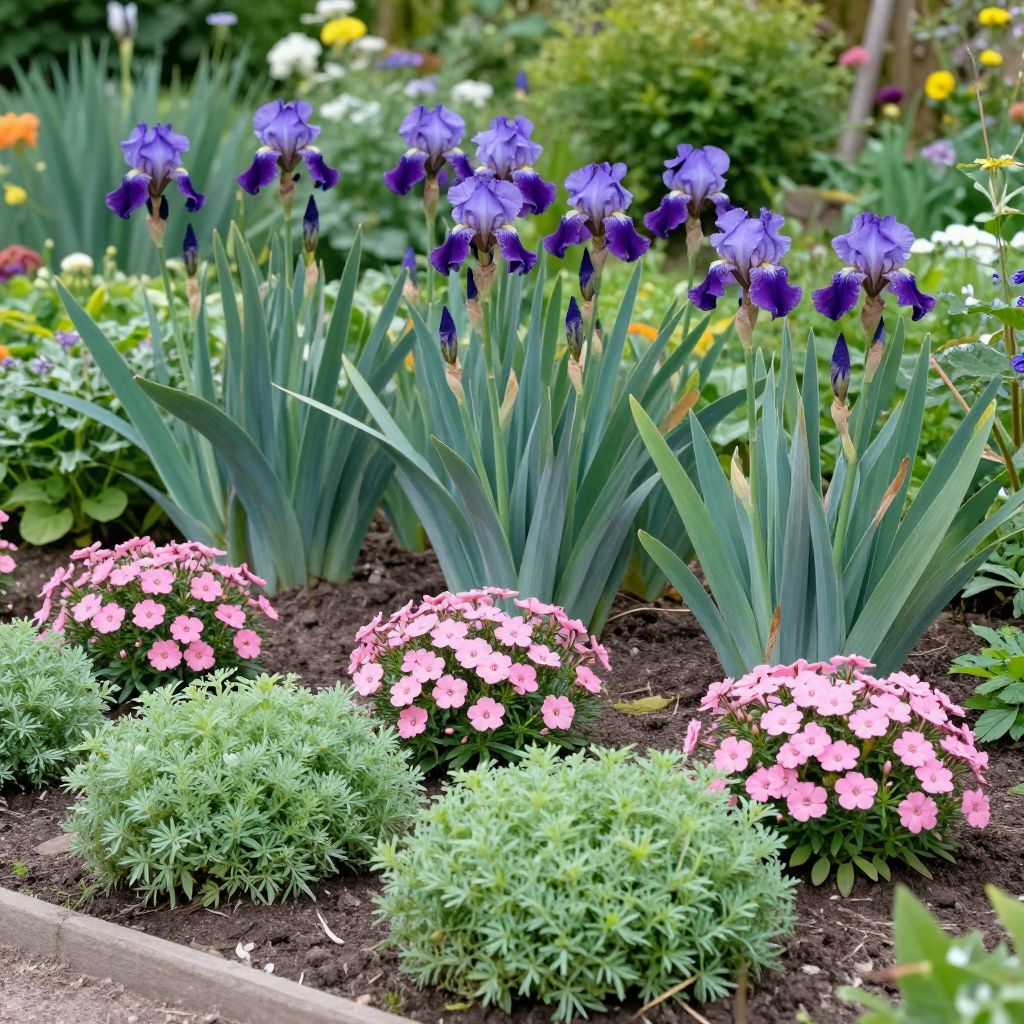
If you’re wondering what to plant in front of irises, the best choices are low-growing plants that won’t crowd the rhizomes, steal too much light, or trap moisture around them. Think of edging plants, shallow-rooted perennials, and tidy annuals that stay below the iris foliage line.
The goal is to frame the iris bed, not smother it. Good companions soften the front edge, hide fading leaves after bloom, and still leave the irises plenty of sun, airflow, and room to breathe.
What to plant in front of irises?
Plant low, sun-tolerant companions in front of irises, such as catmint, dianthus, creeping thyme, sedum, dwarf daylilies, or compact ornamental grasses. Choose plants that stay under about 12 to 18 inches tall, prefer well-drained soil, and won’t shade the iris rhizomes or hold excess moisture against them.
Why the right front planting matters
Irises, especially bearded irises, do best when their rhizomes sit near the soil surface in full sun and dry quickly after rain. Plants in front should complement those needs, not compete with them.
The wrong companion can cause problems fast. Tall, dense, or thirsty plants may shade the iris clump, reduce flowering, and create damp conditions that encourage rot.
What irises need from nearby plants
- Sun: At least 6 hours of direct light is ideal for most irises.
- Airflow: Open space helps leaves dry and reduces disease.
- Drainage: Soil should not stay soggy around the rhizomes.
- Room to expand: Irises multiply, so don’t pack plants too tightly.
Best plants to grow in front of irises
Choose plants that are low, tidy, and compatible with sunny, well-drained sites. The best options are usually those with similar water needs and a light footprint.
1. Catmint (Nepeta)
Catmint makes a soft, airy front edge with gray-green foliage and long bloom time. Many varieties stay compact enough to sit in front of irises without crowding them.
It works especially well in dry, sunny borders. Trim it lightly after flowering if it starts to sprawl.
2. Dianthus
Dianthus, including pinks, stays low and neat, with grassy foliage and fragrant flowers. It’s a good choice if you want a tidy border that won’t overwhelm iris fans or leaves.
Use it in well-drained soil and avoid heavy mulch piled against the crown.
3. Creeping thyme (Thymus serpyllum or related species)
Creeping thyme is excellent in front of irises where you want a living edge. It stays low, handles sun well, and can spill gently over a path or bed edge.
It prefers dry, lean soil, so it pairs best with irises in raised beds or other free-draining spots.
4. Sedum
Low-growing sedums are useful if your garden is hot and dry. Their fleshy leaves store water, so they tolerate lean soil and don’t need frequent irrigation.
Choose compact types rather than tall autumn sedums, which can become too large for the front of an iris planting.
5. Lamb’s ear (Stachys byzantina)
Lamb’s ear can make a soft, silvery foreground in dry gardens. It spreads gently and gives the iris bed a contrasting texture.
It needs good drainage and may rot in humid, poorly drained sites, so use it only where the soil dries reasonably well.
6. Dwarf daylilies (Hemerocallis)
Dwarf daylilies can work if you give each plant enough space and choose compact varieties. Their arching foliage can hide older iris leaves after bloom.
Keep them from crowding the rhizomes and avoid placing them so close that they shade the iris fan.
7. Heuchera in partial sun
If your iris bed gets morning sun and light afternoon shade, heuchera can work at the front edge. Its colorful foliage adds long-lasting interest.
It is not the best choice for very hot, dry, full-sun sites, but it can be useful where irises grow in a mixed light situation.
8. Compact ornamental grasses
Small ornamental grasses can add motion and structure without blocking the iris display. Look for clumping, restrained types rather than anything that spreads aggressively.
Keep them far enough away that the iris fans still get strong light and air circulation.
Plants to avoid in front of irises
Some plants are poor neighbors because they grow too tall, too dense, or too wet for an iris bed. Avoiding them is often easier than fixing the problems later.
- Tall perennials that shade the iris leaves.
- Thirsty plants that need frequent watering right at the rhizome zone.
- Heavy spreaders that quickly crowd the clump.
- Dense groundcovers that trap moisture and block airflow.
- Plants with aggressive roots that compete for space and nutrients.
Also avoid piling bark mulch directly over iris rhizomes. Irises prefer the top of the rhizome exposed or only lightly covered at the soil surface, depending on your climate and soil type.
How to plant in front of irises step by step
Planting in front of irises is mostly about spacing, drainage, and keeping the iris crown clear. Take your time and set the border up well from the start.
- Assess the light. Make sure the front planting will not block direct sun from the iris clump.
- Check drainage. If water lingers after rain, improve the bed before planting.
- Choose low companions. Pick plants that mature at a height below the iris bloom stalks, usually under 12 to 18 inches for front-edge use.
- Leave space. Give each plant enough room to reach mature width without touching the iris rhizomes.
- Keep the rhizome zone open. Leave a small gap of bare soil or very light planting in front of the iris fan.
- Water in carefully. Water new plants at the root zone, but do not keep the iris crown constantly wet.
- Mulch lightly, if at all. Use a thin layer only where it won’t cover the rhizomes.
Good spacing rule of thumb
As a practical starting point, keep front plantings far enough away that the iris fans still have room to expand and air can move between plants. If you are unsure, give more space rather than less.
Soil, watering, and sun for mixed iris borders
Most front-of-iris plantings succeed when the whole bed shares similar growing conditions. Sun-loving, drought-tolerant companions are usually the safest match.
Soil preparation
Irises and their companions both benefit from soil that drains well. If your soil is heavy clay, work in compost to improve structure, but avoid making the bed overly rich or water-retentive.
Raised beds or slightly mounded borders are often better than flat, soggy sites. This is especially helpful in rainy climates.
Watering balance
New companion plants need regular watering while they establish, but established irises do not want constant moisture around the rhizomes. Water at the base of the companion plants and let the iris zone dry out between waterings.
If you use drip irrigation, position emitters so they support nearby plants without soaking the rhizomes directly.
Sunlight
Full sun is usually best for bearded irises and many of their best front companions. If your border gets less than full sun, choose plants that tolerate partial shade and expect fewer iris flowers.
Seasonal care and maintenance
A well-designed iris border needs only light maintenance, but timing matters. Small tasks done at the right time help keep the planting open and healthy.
After iris bloom
Cut spent flower stalks back to the base after flowering. Leave healthy foliage in place so the plant can store energy for next year.
If front plants start to spill over the rhizomes, trim them back before they smother the iris fan.
Late summer and fall
Remove dead or crowded iris leaves and divide congested clumps if flowering has declined. This is also a good time to thin out companion plants that have grown too large.
Keeping the bed open before wet weather arrives can reduce rot and leaf spotting.
Winter and early spring
In colder climates, leave some protective top growth in place if it helps catch snow, but do not bury rhizomes under heavy mulch. In spring, clear away debris so new iris shoots can emerge cleanly.
Common problems and how to fix them
Most issues in front-of-iris plantings come from crowding, too much moisture, or the wrong plant choice. Catching these early keeps the border attractive and productive.
Irises stop blooming well
If the front planting has grown too dense, it may be shading the iris fans. Thin or move nearby plants so the iris gets more direct light.
Rhizomes rot or feel soft
This usually means the area is staying too wet or mulch is too deep. Lift excess mulch, improve drainage, and reduce watering near the rhizomes.
Leaves flop or tangle together
Companion plants may be too tall for the front position. Replace them with shorter, neater choices that stay below the iris foliage line.
Few flowers, lots of leaves
Too much shade, too much nitrogen, or crowded conditions can all push irises toward foliage instead of blooms. Open the bed, reduce competition, and avoid overfeeding.
Pests and diseases to watch for
Healthy spacing is one of the best defenses against trouble. Good airflow and dry rhizomes reduce many common iris problems.
- Iris borer can damage leaves and rhizomes in some regions.
- Soft rot is more likely in wet, crowded soil.
- Leaf spot can increase when foliage stays damp too long.
- Aphids may gather on tender new growth.
Remove damaged foliage promptly, keep the bed tidy, and avoid overhead watering in the evening. If a plant in front of the irises repeatedly stays wet or diseased, replace it with a better-suited companion.
Design ideas for a beautiful iris front edge
You do not need many plants to make the iris bed look finished. A simple, repeated edging plant often looks better than a crowded mix.
- Soft border: Catmint or dianthus in a repeating line.
- Dry-garden look: Creeping thyme and sedum for a low, textured edge.
- Mixed perennial border: A few dwarf daylilies with lower mounding plants between iris clumps.
- Modern look: A restrained ornamental grass at intervals for clean structure.
For the neatest result, repeat one or two plants rather than using many different kinds. That keeps the iris flowers visually dominant.
Conclusion
The best answer to what to plant in front of irises is simple: choose low, sun-loving, well-drained companions that leave the rhizomes open and the foliage airy. Start with one or two reliable plants, give them room, and adjust based on how your soil and climate behave.
If you want to refine your border further, you may also find it helpful to read about iris planting and care basics and growing dianthus as a low border plant.