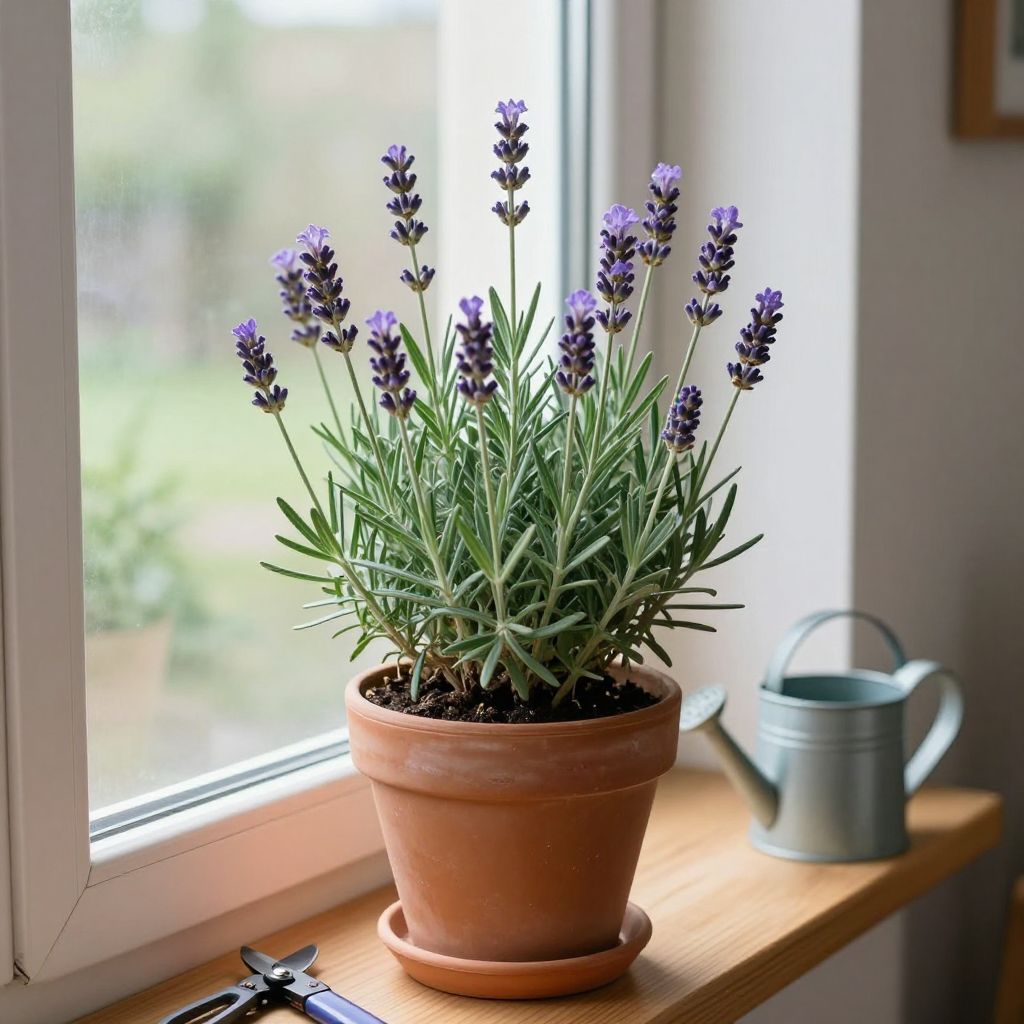
Can I grow lavender indoors? Yes, but it is much easier if you can give it very bright light, excellent drainage, and cool, dry air. Lavender is a sun-loving Mediterranean herb, so indoor growing works best when you treat it more like a patio plant than a typical houseplant.
If you match its needs closely, you can keep lavender alive and even fragrant indoors for a long time. The biggest challenge is usually not the plant itself, but low light, overwatering, and stale indoor air.
Can I grow lavender indoors?
Yes, you can grow lavender indoors, but success depends on strong direct light, a fast-draining potting mix, and careful watering. Lavender does not like soggy roots or dim rooms. If your home is bright and you can place the plant in a sunny window or under a grow light, indoor lavender can do well.
What lavender needs indoors
Light is the most important factor
Lavender needs as much light as you can provide. A south-facing window is usually best, and a west-facing window can work if it gets several hours of direct sun.
If natural light is limited, use a full-spectrum grow light placed close enough to keep the plant compact and healthy. Without enough light, lavender often becomes leggy, weak, and less fragrant.
Warm days, cooler nights
Lavender prefers moderate indoor temperatures and often performs better when nights are a little cooler than days. Avoid placing it near heat vents, radiators, or appliances that create hot, dry blasts.
Good air movement helps too. Lavender is less likely to struggle when the air is not stagnant and overly humid.
Dry roots, not wet soil
This herb is adapted to lean, well-drained soils. Indoors, the main rule is simple: never let the pot sit in water, and do not keep the mix constantly damp.
Lavender roots need air as much as moisture. A pot with drainage holes is essential.
Best pot and soil for indoor lavender
Choose the right container
Use a pot with at least one drainage hole, and choose a size that fits the root ball without giving the plant too much extra wet soil. A pot that is too large can stay moist for too long and increase the risk of root rot.
Terracotta is often a good choice because it helps excess moisture evaporate. Plastic pots can work too, but they require even more careful watering.
Use a gritty, free-draining mix
Standard houseplant potting soil is often too moisture-retentive for lavender. Instead, use a mix designed to drain quickly.
A practical indoor mix is one that includes potting soil plus coarse material such as perlite, pumice, or horticultural grit. The goal is a loose texture that does not pack tightly around the roots.
- Use a pot with drainage holes.
- Choose a fast-draining mix, not heavy garden soil.
- Avoid rich, moisture-holding compost blends made for thirsty tropical plants.
- Top-dress with gravel only if it does not trap moisture against the stem.
How to plant lavender indoors
- Select a healthy plant or rooted cutting with firm stems and no yellowing leaves.
- Fill the pot partway with a gritty, well-draining mix.
- Set the plant at the same depth it was growing before.
- Backfill gently and firm lightly, without compacting the soil.
- Water once to settle the mix, then let excess water drain away completely.
- Place the plant in the brightest available spot right away.
If you are starting from seed, be patient. Lavender seed can be slow and uneven to germinate, and seedlings need very bright light to avoid becoming weak and stretched indoors.
How to water indoor lavender correctly
Check the soil before watering
Do not water on a fixed schedule just because it is “time.” Instead, feel the soil first. Water only when the top layer has dried and the pot feels noticeably lighter.
How quickly this happens depends on pot size, light, temperature, humidity, and the plant’s growth rate. In bright, warm conditions, a small pot may dry faster than you expect; in cool, dim rooms, it may stay wet for much longer.
Water deeply, then let it drain
When you do water, soak the mix thoroughly until water runs out of the drainage holes. Then empty the saucer so the roots are never sitting in runoff.
Shallow, frequent watering is a common mistake. It encourages weak roots and keeps the lower soil too wet.
Signs of overwatering and underwatering
- Overwatering: yellowing leaves, limp growth, soft stems, a musty smell, or dropping foliage.
- Underwatering: dry, crispy leaves, wilting, and a pot that dries out very quickly.
If the plant looks stressed, check the roots and soil before changing anything else. Many indoor lavender problems begin below the surface.
Feeding lavender indoors
Lavender is not a heavy feeder. In fact, too much fertilizer can produce soft, floppy growth with less fragrance and fewer flowers.
If your plant is growing well, a light feeding during active growth may be enough, using a balanced fertilizer at a diluted rate or a product meant for herbs. If the plant is already struggling, fix light and watering first before adding fertilizer.
Rich compost is usually more useful outdoors than indoors. In a pot, too much organic matter can hold excess moisture and make the mix stay wet too long.
Pruning and shaping indoor lavender
Why pruning matters
Indoor lavender can become woody and sparse if left alone. Light pruning helps keep the plant compact and encourages fresh growth.
Trim after flowering or when the plant starts to look leggy, but avoid cutting into old, leafless wood. Lavender often resprouts poorly from very old stems.
How to prune safely
- Remove spent flower stems after blooming.
- Shorten soft green growth by a small amount to keep the plant tidy.
- Do not shear the plant into bare, woody stems.
- Use clean, sharp pruners to avoid tearing tissue.
Regular light trimming is better than one hard cutback. That approach keeps the plant healthier and more attractive indoors.
Common problems with indoor lavender
Leggy growth
Long, weak stems usually mean the plant is not getting enough light. Move it to a brighter window or add a grow light, and rotate the pot every week or so for even growth.
Root rot
Root rot is one of the most serious indoor lavender problems. It is usually caused by poor drainage, oversized pots, or watering too often.
If the plant declines despite moist soil, remove it from the pot and inspect the roots. Healthy roots are firm; rotten roots are dark, mushy, and may smell bad. Repot into fresh, dry, well-draining mix if there is still healthy tissue left.
Pests
Indoors, lavender can occasionally attract aphids, spider mites, or whiteflies, especially if air is dry and the plant is stressed.
- Inspect leaf undersides regularly.
- Isolate affected plants from other houseplants.
- Rinse pests off with a gentle spray of water when possible.
- Remove badly infested stems if needed.
Healthy, well-lit lavender is less likely to be bothered by pests than a weak, stretched plant.
Fungal issues
Powdery mildew and other fungal problems are more likely when air circulation is poor and leaves stay damp. Water the soil, not the foliage, and avoid crowding the plant among other pots.
Can lavender bloom indoors?
It can, but flowering indoors is less reliable than outdoors. Lavender usually needs strong light, a mature plant, and the right seasonal conditions to set buds well.
If your plant flowers, remove spent blooms promptly and keep conditions steady. A healthy plant may bloom more than once, but do not expect the same display you would get in full outdoor sun.
How to propagate lavender for indoor growing
If you want more plants, propagation from stem cuttings is often easier than starting from seed. Take soft, healthy non-flowering shoots and root them in a very light, well-draining medium.
Keep cuttings bright but not sun-scorched, and avoid excess moisture while they root. Too much water is the fastest way to lose new lavender cuttings.
Can you move indoor lavender outside?
Yes, and many gardeners find that lavender grows better outdoors during warm, sunny months. If your plant has been indoors, harden it off gradually before moving it outside so the leaves do not scorch.
In cooler seasons, bring it back inside before frost if your climate is too cold for the type you are growing. Always check the plant for pests before moving it indoors again.
Best practices for long-term success
- Give lavender the brightest light you have.
- Use a pot with drainage holes every time.
- Choose a gritty, fast-draining mix.
- Water only when the soil has dried enough.
- Prune lightly to keep the plant compact.
- Watch for pests and root rot early.
Conclusion
So, can I grow lavender indoors? Yes, if you can meet its three biggest needs: strong light, sharp drainage, and restrained watering. Start with a healthy plant, place it in the brightest spot you have, and adjust care based on how quickly the soil dries.
If you want to keep improving your indoor herb setup, it also helps to read more about container drainage, pruning, and light placement for sun-loving herbs.