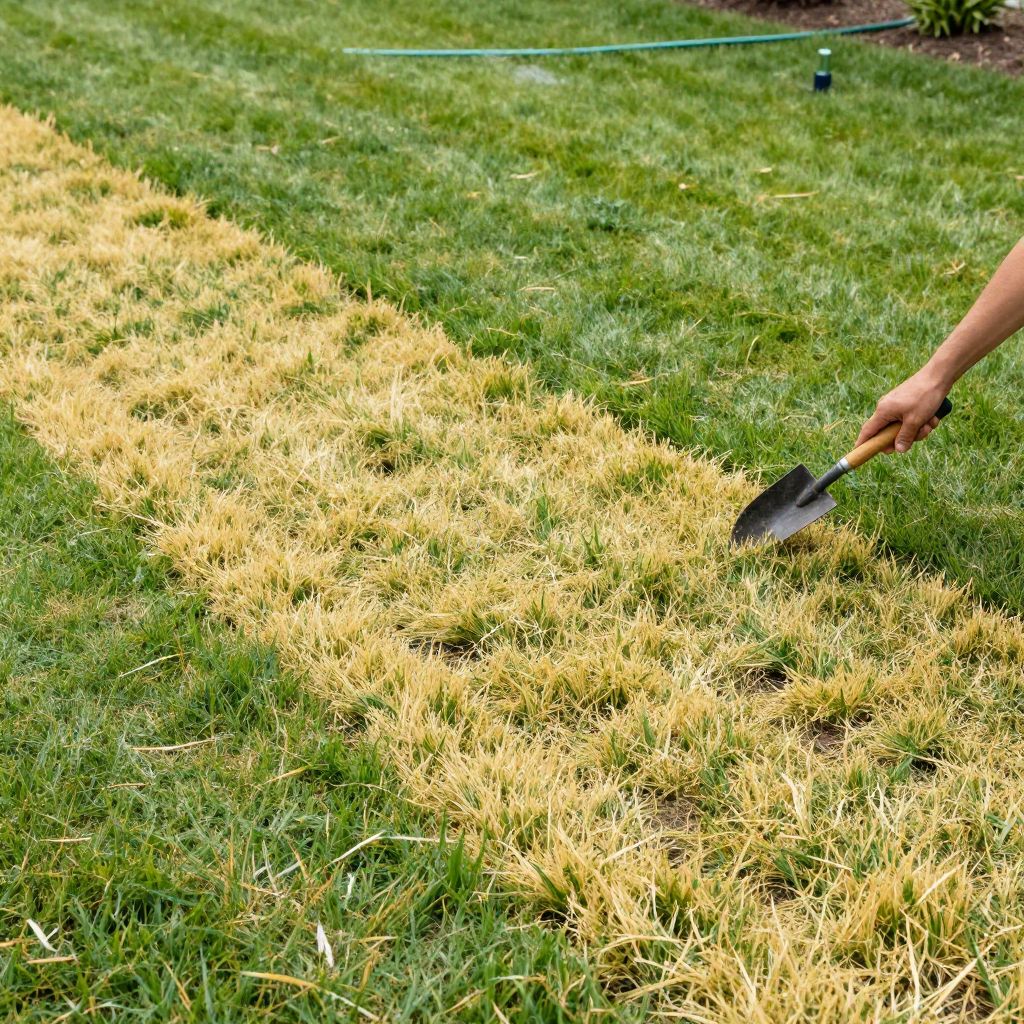
Why is my grass turning yellow? In most lawns, yellowing is a stress signal rather than a single disease. The cause is usually one of a few common issues: too little water, poor drainage, low nitrogen, compacted soil, mowing mistakes, pet urine, pests, or disease.
The good news is that yellow grass is often fixable once you identify the pattern. A careful check of watering, soil, mowing height, and root health will usually point you toward the right solution.
Why Is My Grass Turning Yellow?
Yellow grass usually means the lawn is not getting what it needs, or it is getting too much of something. The most common causes are inconsistent watering, nutrient deficiency, compacted or waterlogged soil, mowing too short, pet urine, insect damage, or fungal disease. Look closely at the pattern of yellowing to narrow it down.
Start by Diagnosing the Pattern
Before you treat anything, observe where the yellowing appears and how quickly it developed. That pattern often tells you more than the color itself.
What the yellowing looks like matters
- Uniform yellow lawn: often low nitrogen, poor soil, or general stress.
- Yellow patches or rings: more likely disease, pests, or localized damage.
- Yellowing near sidewalks, driveways, or hot slopes: heat, reflected light, or dry soil.
- Yellow spots where pets go: usually urine burn.
- Yellowing after heavy rain or irrigation: drainage problems or root stress.
Also check whether the grass blades are yellow but the roots are still white and firm, or whether the turf pulls up easily. Healthy roots suggest a recoverable stress issue; brown, mushy, or sparse roots point to deeper problems.
Watering Problems: Too Little or Too Much
Improper watering is one of the biggest reasons for yellow grass. Grass can yellow from drought stress, but it can also yellow when roots stay too wet and lose access to oxygen.
Underwatering symptoms
- Grass looks dull, then pale yellow or straw-colored.
- Footprints stay visible after walking across the lawn.
- Soil feels dry several inches down.
- Edges and sunny spots yellow first.
Overwatering symptoms
- Yellowing starts in low spots or shaded areas.
- Soil stays wet for long periods.
- Moss, algae, or fungus may appear.
- Roots may be shallow, weak, or brown.
To check moisture, push a screwdriver or soil probe into the ground. If it is hard to insert because the soil is dry and compacted, the lawn likely needs deeper watering. If the soil is soggy, reduce watering and improve drainage.
How to correct watering issues
- Water deeply and less often rather than giving light daily sprinklings.
- Water early in the day so blades dry before evening.
- Adjust based on weather, soil type, and season.
- In hot, dry periods, watch for wilt and color change more closely.
- If the lawn stays wet, check for clogged drainage, low areas, or irrigation problems.
Avoid frequent shallow watering. It encourages weak roots and makes yellowing more likely during heat or dry spells.
Low Nitrogen and Other Nutrient Deficiencies
If your entire lawn is fading to a light yellow-green, the soil may be short on nitrogen. Nitrogen supports leafy growth and rich green color, so turf often shows the first signs of deficiency there.
How nutrient problems usually look
- Nitrogen deficiency: older leaves yellow first, lawn looks pale overall.
- Iron deficiency: yellowing between leaf veins, often in alkaline soil.
- General poor soil: thin turf, slow growth, weak color.
The safest way to confirm a nutrient issue is with a soil test. A test can show whether your lawn needs nitrogen, whether the pH is off, and whether phosphorus or potassium are lacking. That is better than guessing with repeated fertilizer applications.
What to do
- Apply a lawn fertilizer suited to your grass type and season.
- Use compost as a topdressing to improve soil structure over time.
- Follow label directions carefully to avoid burning the lawn.
- If pH is too high or too low, correct it gradually based on soil test results.
If the lawn is yellow but growing slowly in cool weather, it may simply be underfed for the season. If it is yellow during active growth, a nutrient shortage is more likely.
Compacted Soil and Poor Drainage
Grass roots need air as well as water. When soil is compacted, roots struggle to breathe, absorb nutrients, and spread deep enough to support green growth.
Signs of compaction
- Water runs off instead of soaking in.
- Soil feels hard underfoot.
- Grass thins in high-traffic areas.
- Yellowing appears where people, pets, or equipment pass often.
How to fix it
- Aerate the lawn if compaction is widespread.
- Topdress with a thin layer of compost to improve soil texture.
- Reduce traffic on stressed areas when possible.
- Improve drainage in low spots by regrading or redirecting runoff if needed.
For small areas, a garden fork can help loosen the soil. For larger lawns, core aeration is usually more effective because it removes plugs and opens channels for air, water, and roots.
Mowing Mistakes That Turn Grass Yellow
Mowing too short is a common but overlooked cause of yellowing. When you remove too much leaf blade at once, the grass loses energy-producing surface and becomes stressed.
Common mowing problems
- Scalping: cutting too low and exposing stems or soil.
- Using dull mower blades that tear rather than cut cleanly.
- Mowing when grass is wet, which can cause uneven cuts and stress.
- Removing more than one-third of the blade at a time.
Keep your mower blade sharp and adjust the cutting height for your grass type and season. In general, taller grass shades the soil, holds moisture better, and resists stress more effectively than very short turf.
Simple mowing corrections
- Raise the cutting height a little if the lawn is yellowing after mowing.
- Leave clippings on the lawn if they are light and evenly distributed.
- Change mowing frequency so you are not removing too much at once.
Pests, Diseases, and Other Lawn Damage
Sometimes yellow grass is caused by insects or disease rather than care issues. These problems often create irregular patches, thinning, or a sudden change in color.
Insect damage
Grubs and other root-feeding pests can cause yellowing because the grass cannot take up water properly. If the turf feels loose or lifts easily like a carpet, inspect the roots and soil beneath.
Fungal disease
Lawn diseases often appear as spots, rings, or patches with distinct edges. Warm, humid weather, poor airflow, evening watering, and excess thatch can all increase risk.
What to do first
- Inspect the affected area closely for insects, larvae, or webbing.
- Check whether the pattern matches a disease-like ring or patch.
- Improve airflow, reduce excess moisture, and avoid overfertilizing.
- Remove heavily damaged turf only if recovery is unlikely.
If you suspect disease or a serious pest outbreak, identify the problem before applying any treatment. Many lawn issues look similar at first glance, and the wrong product can waste time and money.
Pet Urine, Salt, and Chemical Burn
Localized yellow or brown spots are often caused by concentrated damage rather than a lawn-wide problem. Pet urine is a classic example, but fertilizer burn, de-icing salt, and spilled chemicals can create similar symptoms.
How to recognize it
- Small, circular spots with a darker green edge and yellow center from urine.
- Damage near sidewalks, roads, or driveways from salt.
- Patchy burn where fertilizer or another product was applied unevenly.
For pet urine, flush the area with water as soon as possible if the damage is fresh. For salt or chemical injury, leach the area with clean water if drainage allows, and avoid reapplying the same product near the lawn edge.
Seasonal Stress and Sunlight Issues
Grass color changes with the season. Cool-season grasses may yellow during summer heat, while warm-season grasses may pale or go dormant in cooler weather. Shade can also make grass thinner and more yellow over time.
When yellowing is seasonal
- Heat stress during a dry summer.
- Cool weather slowdown in late fall or early spring.
- Heavy shade under trees or along buildings.
In shade, grass often needs more careful watering, less competition from tree roots, and sometimes a more shade-tolerant turf choice. If a site is too shaded for healthy turf, consider replacing struggling grass with a groundcover, mulch bed, or another landscape solution that fits the light level.
Step-by-Step Recovery Plan
Once you have a likely cause, a simple recovery plan can help the lawn green up again.
- Inspect the area for patterns, pests, moisture, and root health.
- Correct watering so the soil is moist but not saturated.
- Adjust mowing by raising the height and sharpening the blade.
- Test the soil if the yellowing is widespread or recurring.
- Aerate compacted areas and topdress with compost if needed.
- Overseed thin spots only after the underlying problem is fixed.
Be patient after making changes. Grass often needs time to recover, especially if roots were stressed. New green growth may appear first at the tips, while older yellow blades gradually improve or are replaced.
How to Prevent Grass from Turning Yellow Again
Prevention is mostly about steady lawn care and avoiding stress. Healthy turf is more resilient and less likely to yellow after weather swings or routine use.
- Water deeply based on soil moisture and weather, not by habit.
- Mow at the proper height for your grass type.
- Keep mower blades sharp.
- Feed the lawn according to soil test results and local conditions.
- Aerate compacted soil when needed.
- Watch for recurring spots that may signal drainage or pest issues.
One of the best habits is observation. A lawn that changes color in the same place every year is often telling you something about soil, shade, drainage, or traffic.
Conclusion
If you are wondering why your grass is turning yellow, start with the simplest clues: water, mowing, soil, and the shape of the damage. Most yellow lawns can recover once the underlying stress is corrected. Inspect the pattern today, make one targeted fix, and watch how the turf responds over the next couple of weeks.
If you want to keep troubleshooting lawn health, it also helps to read more about soil testing, lawn watering, and mowing height so you can match your care to your local climate and grass type.