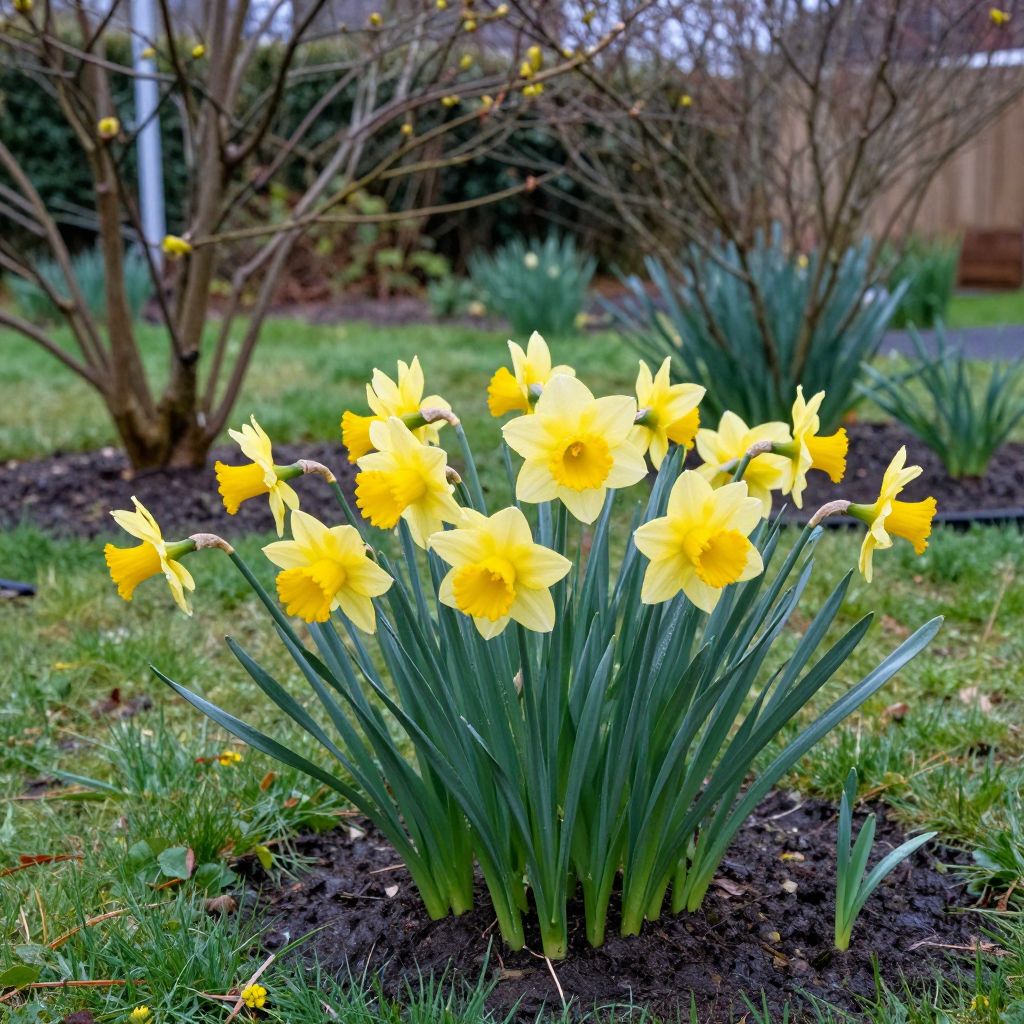
When do daffodils bloom? In most gardens, daffodils flower in early to mid-spring, but the exact timing depends on the variety, your climate, and how cold your winter was. Some bloom as soon as late winter in mild areas, while others wait until spring is well underway.
If you want a longer daffodil display, the key is to plant a mix of early, mid, and late blooming varieties. With the right site and care, daffodils can return reliably year after year and give you weeks of color.
When do daffodils bloom?
Daffodils usually bloom in spring, most often from late winter through mid-spring depending on location and cultivar. Early varieties may open first, followed by midseason types, then late bloomers. Cool weather can delay flowering, while a warm spell may bring blooms on quickly.
What affects daffodil bloom time?
Several factors influence when daffodils bloom, and understanding them helps you predict flowering more accurately. The biggest influences are climate, bulb type, planting depth, and how much cold the bulbs receive over winter.
Climate and local weather
In colder regions, daffodils often bloom later than in mild coastal or southern climates. A warm early spring can speed things up, while a prolonged cold snap may hold buds back.
Variety or cultivar
Not all daffodils bloom at the same time. Some are bred for very early flowering, while others naturally bloom later in the season. If you want a longer show, choose a combination of bloom times rather than one type only.
Planting depth and bulb health
Healthy bulbs planted at the proper depth are more likely to bloom on schedule. Bulbs planted too shallow may be stressed, while bulbs planted too deep may emerge late or weakly.
Sunlight and soil conditions
Daffodils need full sun to light shade and well-drained soil. Poor drainage or heavy shade can reduce flowering and delay bloom time.
How to tell when your daffodils are about to bloom
As bloom time approaches, you’ll see narrow green leaves followed by a flower stalk forming in the center. The bud usually swells and lifts above the foliage before opening. Once the bud shows color, blooms are often just days away, depending on temperature.
- Leaf growth first: foliage emerges before the flower stalk is obvious.
- Bud formation: a rounded bud appears on a sturdy stem.
- Color visible: the bud begins to show yellow, white, orange, or another flower color.
- Opening stage: petals start to loosen in mild weather.
How to grow daffodils for reliable spring bloom
Good planting and basic care make the biggest difference in whether daffodils bloom well each year. Daffodils are low-maintenance, but they still need the right conditions to store energy for next season’s flowers.
Plant bulbs in the right place
Choose a site with at least half a day of sun, though light shade is usually acceptable in many climates. The soil should drain well, because bulbs sitting in wet ground are prone to rot.
Improve the soil before planting
If your soil is heavy clay or tends to stay wet, work in compost to improve structure and drainage. Avoid fresh manure, which can encourage rot and other problems around bulbs.
Plant at the proper depth
As a general rule, plant daffodil bulbs about 2 to 3 times as deep as the bulb is tall. In many gardens, that works out to roughly 6 inches deep, but adjust for bulb size and soil type.
Water correctly
Water bulbs after planting to settle the soil, then rely on natural rainfall unless conditions are unusually dry. During active growth in spring, daffodils appreciate even moisture, but they should not sit in soggy soil.
What to do after daffodils bloom
Post-bloom care matters because the leaves feed next year’s flowers. If you cut the foliage too soon, the bulbs may come back with fewer or no blooms the following spring.
- Remove spent flowers once they fade to prevent seed formation.
- Leave the green leaves in place until they yellow naturally.
- Keep watering lightly if spring is dry and the soil drains well.
- Let foliage die back on its own before cutting it down.
Do not braid, tie, or bunch the leaves tightly. That reduces the leaf surface the bulb uses to recharge. It is better to let the foliage spread naturally and fade on its own.
Should you deadhead daffodils?
Yes, deadheading is helpful. Snip off the faded flower head, but keep the stem and leaves intact. This prevents the plant from wasting energy on seed production.
Why daffodils may not bloom on time
If your daffodils are late, sparse, or missing flowers altogether, the problem is often environmental rather than a disease. The most common causes are shade, overcrowding, poor drainage, or foliage removed too early the previous year.
- Too much shade: bulbs may produce leaves but few flowers.
- Wet soil: bulbs can rot or weaken over time.
- Overcrowding: clumps may need dividing after several years.
- Early leaf removal: bulbs lose the energy needed for next year’s bloom.
- Insufficient winter chill: in mild climates, some varieties bloom poorly.
How to fix poor blooming
If daffodils are underperforming, start by checking light and drainage. If the clump is crowded, lift and divide the bulbs after the foliage dies back, then replant them in a better spot with fresh compost worked into the soil.
Can you force daffodils to bloom indoors?
Yes, daffodils can be forced indoors for earlier bloom, but they still need a proper cold period first. Indoor forcing works best with bulbs prepared for forcing or with varieties known to respond well to chilling.
Basic indoor forcing steps
- Plant bulbs in a pot with drainage holes.
- Use a well-draining potting mix.
- Keep the pot cool and dark for the required chilling period.
- Move it into brighter, warmer conditions when shoots are well developed.
- Water lightly so the mix stays just moist, not wet.
Indoor bulbs often bloom faster than outdoor ones once they are brought into warmth. If you want flowers at a specific time, count backward from the date you want blooms and allow for the chilling period plus a few weeks of growth.
Common daffodil pests and diseases
Daffodils are usually trouble-free, but a few issues can affect bloom quality. Healthy bulbs in well-drained soil are much less likely to struggle.
Bulb rot
Rot is the most serious problem and is usually linked to wet soil. Prevent it by planting in draining ground and avoiding overwatering.
Narcissus bulb fly and other pests
Pests can weaken bulbs and reduce flowering. If plants emerge weakly year after year, inspect bulbs when you divide them and discard any that are soft, damaged, or hollow.
Fungal leaf problems
Spots or yellowing leaves can happen in damp, crowded plantings. Improve air circulation, remove badly affected foliage after it dies back, and avoid overhead watering when possible.
How to use daffodils in the landscape
Daffodils are excellent for borders, under deciduous trees, along paths, and in naturalized drifts through lawns or woodland edges. Planting in groups gives a stronger display than scattering bulbs one by one.
- Mix early, mid, and late bloomers for a longer season.
- Plant in clusters for a more natural look.
- Combine with later-emerging perennials that will hide fading foliage.
- Use containers if your garden soil stays too wet.
Simple seasonal checklist for daffodil care
Use this quick seasonal guide to keep bloom timing on track and avoid common mistakes.
- Fall: plant bulbs in well-drained soil before the ground freezes.
- Late winter to spring: watch for shoots, buds, and bloom.
- After flowering: deadhead spent blooms, but leave leaves standing.
- Early summer: let foliage yellow naturally before cutting it back.
Final thoughts
So, when do daffodils bloom? Usually in early to mid-spring, with exact timing shaped by your climate and the variety you grow. If you want a dependable display, plant bulbs in well-drained soil, give them enough sun, and let the foliage die back naturally after flowering.
For more spring bulb guidance, you may also want to read about how to plant bulbs for the best bloom and caring for spring-flowering perennials after bloom.