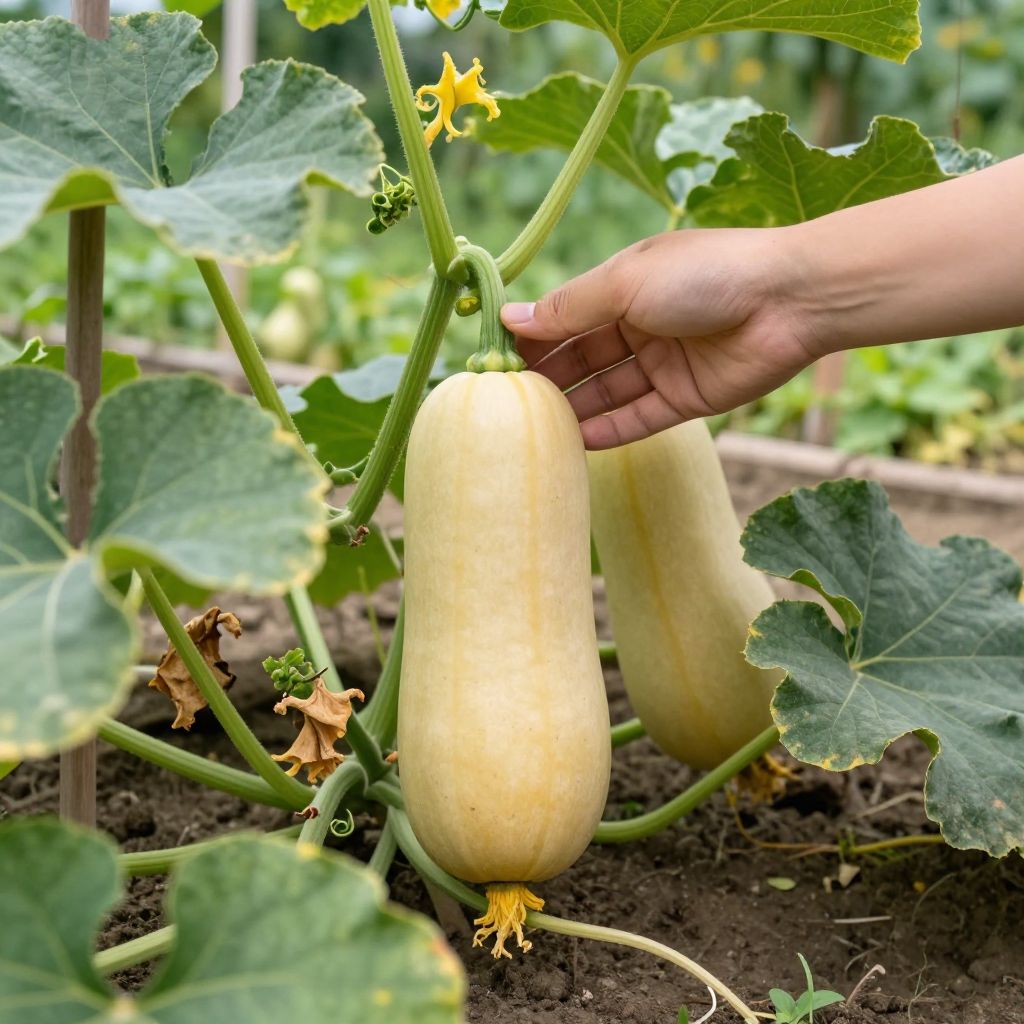
Wondering when to pick spaghetti squash so it tastes best and stores well? The right harvest window matters more than the calendar, because squash picked too early stays watery and won’t cure properly. Pick it too late, and you risk frost damage, splitting, or poor storage life.
The good news is that spaghetti squash gives clear harvest clues. With a little observation, you can pick it at the right stage, cure it correctly, and keep it for weeks or even months depending on conditions.
When to pick spaghetti squash?
Pick spaghetti squash when the rind is fully colored, hard enough that you cannot dent it with a fingernail, and the stem has started to dry and turn corky. Most fruits are ready about 80 to 100 days after planting, but the best test is maturity, not the calendar.
How to tell spaghetti squash is ready
Spaghetti squash ripens on the vine, and it changes noticeably as it matures. Use several signs together rather than relying on just one.
Key ripeness signs
- Rind color: The skin should be a deep yellow to golden yellow, depending on the variety.
- Hard shell: Press a fingernail into the rind. If it resists and does not puncture easily, it is usually ready.
- Dry stem: The stem often turns tan, woody, and corky near harvest time.
- Vine decline: The vine may begin to yellow and slow down as the fruit finishes ripening.
- Sound and feel: A mature squash feels heavy for its size and has a firm, solid shell.
If the squash still has a pale or greenish cast, a soft shell, or a fresh green stem, leave it on the vine a little longer if weather allows.
What not to use as your only clue
Size alone is not a reliable indicator. Some squash are small but fully mature, while others are large but still underdeveloped. The same is true for days to harvest, which can shift with weather, soil fertility, and plant stress.
Seasonal timing and local climate
Spaghetti squash is a warm-season crop, so harvest timing depends on your growing season length and first frost date. In many gardens, fruits begin maturing in late summer and continue into early fall. In cooler climates, the season can end quickly, so watch the fruit closely as autumn approaches.
Why frost matters
Even a light frost can injure the rind and shorten storage life. If frost is forecast and your squash is close to ready, it is usually better to harvest slightly early than to lose the crop.
For fruit that is nearly mature but not quite fully colored, you can still harvest before a hard frost and let it finish curing indoors. It will not improve much after picking, but it can still store well if the rind is firm enough.
How to harvest spaghetti squash correctly
Use clean, sharp pruners or a knife and cut the fruit from the vine, leaving a short stem attached. Handle the squash gently, because bruising can reduce storage life.
- Choose a dry day if possible.
- Inspect the rind and stem for maturity.
- Cut the stem 1 to 2 inches above the fruit.
- Lift the squash carefully instead of pulling it from the vine.
- Brush off soil, but do not wash it unless necessary.
Do not twist or yank the squash off the vine. A torn stem creates an entry point for rot and can shorten storage time dramatically.
Should you leave the stem on?
Yes. A short, intact stem is one of the best signs of a good keeper. Avoid carrying the squash by the stem, though, because it can snap off under its own weight.
Can spaghetti squash ripen after picking?
Spaghetti squash can finish curing after harvest, but it does not truly ripen in the same way a tomato does. If it was harvested close to maturity, curing can harden the skin and improve storage, but a very immature squash will usually stay bland and soft.
If you must pick early, choose the most mature fruit on the vine. Look for the darkest color, the hardest rind, and the most corky stem. Those are the fruits most likely to store well.
Curing spaghetti squash for storage
Curing helps toughen the rind and dry the stem so the squash keeps longer. This is especially useful if you plan to store it through part of the winter.
Simple curing steps
- Place squash in a warm, dry, well-ventilated spot.
- Keep them out of direct sun to avoid overheating.
- Allow them to cure for about 7 to 14 days.
- Turn them occasionally so the skin dries evenly.
After curing, move the squash to a cool, dry storage area. Ideal storage is usually around 50 to 55°F with good air circulation, though home conditions vary. Avoid damp basements, sealed plastic bags, and places with freezing temperatures.
What happens if you pick too early or too late?
Timing mistakes are common, especially for first-time growers. Knowing the consequences helps you decide whether to wait or harvest now.
If you pick too early
- The flesh may be pale, watery, or stringy in the wrong way.
- The squash may not store well.
- The flavor can be mild or underdeveloped.
- The rind may shrivel instead of curing properly.
If you pick too late
- The fruit may be damaged by frost or cold rain.
- Overripe squash can split or soften.
- Storage quality may decline if the stem or rind is compromised.
- Pests and rot have more time to affect the fruit.
If the vine is declining but the squash is still not quite ready, check the weather forecast and the fruit’s rind daily. In many gardens, a nearly mature squash is safer harvested a little early than left out for a damaging frost.
Growing conditions that affect harvest timing
Healthy plants produce mature fruit more reliably. Poor growing conditions can delay ripening, reduce flavor, and make harvest timing less predictable.
Sun, soil, and water
- Sunlight: Full sun helps the vines produce and mature fruit well.
- Soil: Rich, well-drained soil supports steady growth and fruit development.
- Water: Consistent moisture matters most while the plant is flowering and setting fruit.
- Mulch: Mulch can help keep soil moisture even and reduce fruit contact with wet soil.
Irregular watering can slow growth and lead to smaller or unevenly ripening squash. On the other hand, very rich nitrogen-heavy feeding may encourage leafy vines at the expense of fruit maturity.
Pollination problems
Poor pollination can delay or reduce fruit set, which pushes harvest later in the season. If you see flowers dropping without forming squash, or misshapen fruit, pollination may be the issue. Encourage bees with nearby flowers and avoid unnecessary insecticide use during bloom.
Common pests and diseases to watch for before harvest
Late-season problems can affect whether a squash is worth keeping. Check the fruit and vines regularly as harvest time approaches.
Typical issues
- Squash bugs: Can weaken vines and stress fruit development.
- Vine borers: May cause sudden vine collapse and premature ripening.
- Powdery mildew: Can reduce plant vigor and shorten the season.
- Rot on the ground: Fruit resting on wet soil may develop soft spots.
If a fruit has a soft area, cracks, or insect damage near the stem, harvest it promptly and use it sooner rather than storing it long-term. Damaged squash rarely keeps as well as sound fruit.
Can you grow spaghetti squash vertically?
Yes, if you have a sturdy trellis and can support developing fruit with slings or netting. Vertical growing can improve air circulation and reduce ground rot, which may help fruit mature more cleanly. Just make sure the support is strong enough for heavy squash.
When vines are trained upward, harvest is often easier because the fruit is easier to inspect. Still, the same ripeness signs apply: hard rind, mature color, and a dry stem.
Quick harvest checklist
Before you cut, run through this simple checklist to avoid picking too soon.
- The rind is deep yellow or golden, not pale.
- You cannot easily dent the skin with a fingernail.
- The stem is drying and turning corky.
- The fruit feels heavy and firm.
- No frost is expected before you can harvest safely.
Conclusion: the best time is when the squash tells you
The safest answer to when to pick spaghetti squash is: harvest when the rind is fully colored and hard, the stem is dry, and frost is not a threat. If you are unsure, wait a few more days and check again, because maturity signs are more reliable than the calendar.
For more help with seasonal vegetable care, you may also want to read about how to know when winter squash is ready to harvest and simple ways to cure and store garden squash.