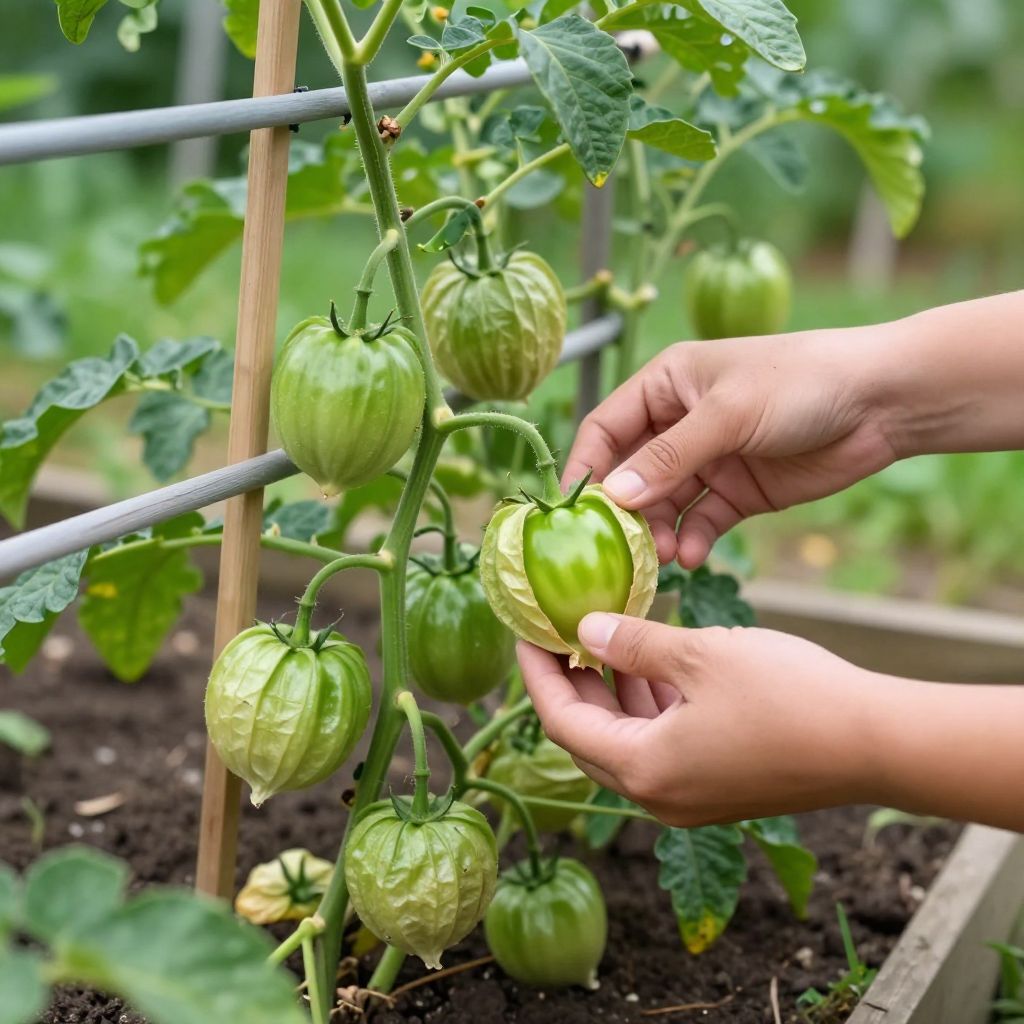
Wondering when to pick tomatillos so they’re tart, green, and ready to use? The right harvest time is easy to miss if you’re waiting for them to look like tomatoes. Tomatillos are best picked when the husk has filled out, turned papery, and the fruit inside is firm and still green.
Pick too early and they can be small and overly sharp; wait too long and they may soften, yellow, or split. The good news is that tomatillos give clear visual clues, and once you know them, harvesting becomes simple and reliable.
When To Pick Tomatillos?
Pick tomatillos when the fruit has filled the husk, the husk turns dry and papery, and the berry inside feels firm. Most are ready when they are still green and about 1 to 2 inches across, though exact size depends on the variety. Harvest before the fruit starts to yellow or the husk splits open.
How to Tell Tomatillos Are Ready
Tomatillos grow inside a papery husk, and that husk is your best harvest cue. A ripe fruit usually pushes against the husk so it looks snug and full, almost like the fruit is trying to break out.
Key ripeness signs
- Filled husk: The fruit should nearly fill the husk.
- Papery husk: The outer husk often turns dry, tan, and loose.
- Firm fruit: The tomatillo should feel solid, not soft or mushy.
- Green color: Most are harvested green for the best tart flavor.
- Natural drop: Some ripe fruits fall to the ground on their own.
If you gently squeeze the husk and the fruit feels full and firm, it is usually ready. If the fruit still seems tiny and the husk is tightly closed around it, wait a little longer.
What ripe tomatillos look like
Ripe tomatillos are usually bright to medium green, though some varieties may become yellow-green as they mature. The husk often splits or loosens at the tip when the fruit is ready.
Do not rely on color alone. Tomatillos can look green long before they are fully sized, so the husk and firmness matter more than appearance alone.
Seasonal Timing: What Month Should You Harvest?
Tomatillos are warm-season crops, so harvest timing depends on when you planted them and how quickly your climate warms in spring. In many gardens, fruits begin ripening in mid- to late summer and continue into fall until frost.
Instead of counting calendar dates, watch the plant’s progress. Tomatillos usually start producing harvestable fruit roughly 75 to 100 days after transplanting, but weather, variety, and growing conditions can shift that window.
How climate affects harvest time
- Cool summers: Fruit may mature later and more slowly.
- Hot, sunny summers: Plants often ripen fruit faster and need more frequent picking.
- Short growing seasons: Starting transplants indoors can help you get a harvest before frost.
- Long seasons: Plants may keep producing for many weeks if picked regularly.
If frost is approaching and fruits are still green but nearly full-sized, harvest them anyway. Tomatillos do not ripen well after a hard frost, so it is better to pick slightly early than lose the crop.
How to Harvest Tomatillos the Right Way
Harvesting tomatillos is simple, but a careful approach helps avoid damaging the plant. The stems can be sturdy, and the fruit may cling tightly to the husk.
- Check the fruit for a full husk and firm texture.
- Hold the stem or husk gently with one hand.
- Twist the fruit until it releases, or snip it with clean pruners.
- Place harvested fruit in a basket or shallow container.
- Keep picking every few days as more fruits mature.
Use clean scissors or pruners if the stem is tough. Pulling hard can break branches or shake off unripe fruit nearby.
Best time of day to pick
Morning is often the easiest time to harvest because plants are cool and firm. That said, you can pick tomatillos any time of day as long as the fruit is dry and not wet from rain or irrigation.
What Happens If You Pick Tomatillos Too Early?
Unripe tomatillos are smaller, sharper tasting, and sometimes more acidic than fully developed fruit. They can still be used, but the texture and flavor are usually less balanced.
If you harvest too early, the fruit may feel light, the husk may still be tight, and the berry may not have reached its full size. For the best flavor, wait until the fruit fills the husk and feels firm.
Can tomatillos ripen after picking?
Tomatillos do not ripen much after harvest the way some fruits do. They may soften slightly, but they should be picked when they are already mature and green. If you need to store them briefly, keep them cool and dry, but do not expect major ripening.
What If Tomatillos Stay in the Husk Too Long?
Leaving ripe fruit on the plant too long can lead to yellowing, splitting, or a softer texture. The husk may also become brittle and open wide, which can expose the fruit to pests and rot.
Overripe tomatillos are not always unusable, but they are usually less crisp and less tart. If the fruit has turned yellow-green or pale and feels soft, harvest it soon and inspect it for damage.
Signs you waited too long
- The husk splits open widely and dries out.
- The fruit turns yellow or pale.
- The berry feels soft instead of firm.
- Birds, insects, or rot begin to damage exposed fruit.
Growing Conditions That Help Tomatillos Ripen Well
Knowing when to pick tomatillos is easier when the plants are healthy and productive. Strong growth usually means more fruit and a more predictable harvest.
Sunlight
Tomatillos grow best in full sun, which generally means at least 6 to 8 hours of direct light daily. In partial shade, plants may still grow, but fruiting can be slower and harvests smaller.
Soil and drainage
Use well-drained soil that holds some moisture but does not stay soggy. A soil enriched with compost gives tomatillos a steady supply of organic matter and supports healthy root growth.
Heavy, wet soil can slow growth and increase disease risk. If your garden soil is dense clay, improve drainage with compost and avoid low spots where water collects.
Watering
Tomatillos prefer even moisture, especially while flowering and setting fruit. Inconsistent watering can stress plants and reduce fruit quality.
Water deeply when the top few inches of soil dry out, then let the soil drain well. Try to keep water off the leaves when possible to reduce disease pressure.
Mulch and support
A layer of mulch helps conserve moisture, suppress weeds, and keep fruit cleaner. Since tomatillo plants can grow large and sprawling, a stake or cage can also help keep branches upright and make harvesting easier.
Common Problems That Affect Harvest Timing
Sometimes tomatillos look healthy but still do not seem ready to pick. A few common issues can delay harvest or reduce fruit quality.
Not enough pollination
Tomatillos usually need more than one plant for good pollination. If you only have one plant, fruit set may be poor or delayed. Planting at least two improves the chances of a strong crop.
Too much nitrogen
Excess nitrogen can push leafy growth at the expense of flowers and fruit. If your plants are huge but not producing, the soil may be too rich or the feeding balance may be off.
Pests and diseases
Aphids, hornworms, and flea beetles can stress plants and affect fruiting. Fungal issues are more likely when plants are crowded, wet, or poorly ventilated.
- Remove badly damaged leaves if needed.
- Keep weeds down around the base of plants.
- Space plants well for airflow.
- Check undersides of leaves for pests regularly.
How Often Should You Harvest?
Tomatillos often ripen over several weeks, not all at once. Check plants every 2 to 4 days during peak season so you do not miss ripe fruit.
Frequent harvesting encourages the plant to keep producing. If mature fruit stays on the plant too long, new fruiting can slow down.
Storing Tomatillos After Harvest
After picking, remove the husks if you want to clean the fruit, then store the tomatillos dry and unwashed until you are ready to use them. Moisture encourages spoilage, so avoid sealing wet fruit in a container.
For short-term storage, keep them cool and dry. Check them regularly and discard any fruit that becomes soft, moldy, or damaged.
Quick Harvest Checklist
- The husk is full and papery.
- The fruit feels firm and solid.
- The tomatillo is still green or only slightly yellow-green.
- The fruit releases easily or is ready to snip.
- You harvest before frost or over-ripening.
Conclusion
The easiest answer to when to pick tomatillos is this: harvest them when the husk is full, papery, and the fruit is firm and green. Check plants every few days in late summer and fall, and pick promptly before the fruit yellows or the first frost arrives.
If you want to improve next season’s harvest, start by giving your plants full sun, steady moisture, and enough space to grow. For more help with crop timing and plant care, you may also want to read about how to grow tomatillos and harvesting vegetables at peak ripeness.