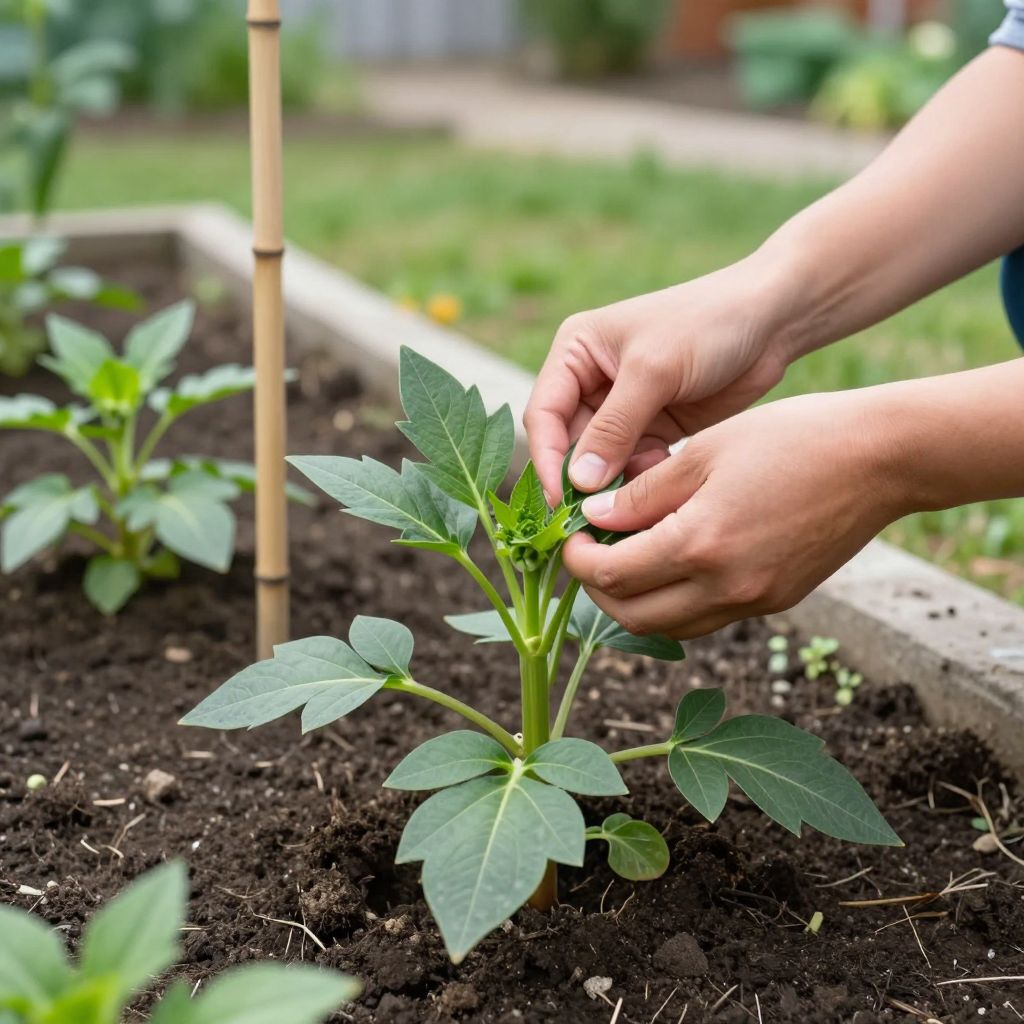
If you’re wondering when to pinch dahlias, the short answer is: pinch young plants once they have 3 to 4 sets of true leaves and are about 12 to 16 inches tall, usually in late spring or early summer after frost danger has passed. Pinching encourages bushier growth, sturdier stems, and more flowers later in the season.
The exact timing depends on your climate, planting date, and how fast your dahlias are growing. Pinch too early and you slow a weak plant; pinch too late and you lose the main benefit. The goal is to remove the growing tip at the right stage, then let the plant recover and branch naturally.
When to pinch dahlias?
Pinch dahlias when the plant is established, actively growing, and tall enough to support branching—typically at 12 to 16 inches with several leaf pairs. Use clean fingers or pruners to remove the top growing tip just above a leaf node. This usually happens 2 to 4 weeks after planting, depending on weather and variety.
Why pinching dahlias helps
Pinching removes the main growing tip, which reduces apical dominance and encourages side shoots to form. Those side shoots become flowering stems, giving you a fuller plant with more blooms and less floppy growth.
For many gardeners, pinching is especially useful if you want:
- More stems for cutting
- A bushier plant for borders or beds
- Stronger, less leggy growth
- Better airflow through the plant
Important: pinching is not the same as deadheading. Pinching shapes the young plant early in the season, while deadheading removes spent flowers later on.
How to know your dahlia is ready
Look for a plant that has settled in and is growing steadily, not one that is struggling from cold soil, transplant shock, or pest damage. A healthy dahlia is the best candidate for pinching.
Good signs it’s time
- The plant is 12 to 16 inches tall, or sometimes a bit taller for vigorous types
- It has at least 3 to 4 sets of true leaves
- Stems are firm and green, not thin and stretched
- Night temperatures are consistently mild and frost is no longer a threat
Signs to wait a little longer
- The plant was recently planted and is still drooping
- Growth is slow because soil is cold
- Leaves are yellowing from stress or poor drainage
- Slugs, aphids, or damage have weakened the tips
Seasonal timing for pinching dahlias
In most gardens, pinching happens in late spring or early summer, after the plant has been in the ground long enough to root in well. In cooler climates, that may be several weeks after planting. In warmer areas with earlier starts, it may happen sooner.
Outdoor dahlias
If you planted tubers directly outdoors, wait until shoots are established and the plant has enough height to recover quickly. Do not pinch while the soil is still cold or if a late frost is still possible.
Container dahlias
Container-grown dahlias often grow faster and may be ready to pinch a little sooner. Because pots warm up and dry out faster, keep an eye on moisture and avoid pinching a stressed plant during hot, dry weather.
Climbing or very tall varieties
Some dahlias naturally make stronger, taller stems. These may still benefit from pinching, but you may choose a slightly higher pinch point if you want to preserve more early growth. For a compact display, pinch earlier; for fewer, larger stems, pinch less aggressively.
How to pinch dahlias step by step
Pinching is simple, but doing it cleanly matters. A tidy pinch helps the plant heal quickly and reduces the chance of damage.
- Wait until the plant is 12 to 16 inches tall and actively growing.
- Find the top growing tip on the main stem.
- Locate a leaf node just below the tip.
- Remove the soft top growth above that node using clean fingers or snips.
- Leave enough stem and leaves below the cut so the plant can keep photosynthesizing.
- Water lightly if the soil is dry, and keep the plant growing steadily afterward.
If you are using pruners, disinfect them first if you have been working with diseased plants. For a soft, tender tip, fingers are often enough. Make a clean removal rather than tearing the stem.
How much to pinch off
For most dahlias, remove the top 2 to 4 inches of growth, or just the soft tip above a strong pair of leaves. The exact amount matters less than the result: you want the plant to branch from the nodes below the cut.
Tip: if the plant is still very small, pinching too much can slow it down. If it is already tall and leggy, a slightly deeper pinch may be appropriate, as long as enough healthy leaves remain.
What happens after pinching
After pinching, the plant usually pauses briefly, then sends out two or more side shoots from the upper leaf nodes. Those shoots become the main flowering stems later in the season.
Expect a short recovery period. In warm, growing weather, new shoots may appear within 1 to 2 weeks. In cooler conditions, it may take longer. Keep the plant evenly watered and avoid heavy feeding right after a stressful pinch.
When not to pinch again
One well-timed pinch is often enough. Repeated pinching can delay flowering too much, especially in short-season climates. If you want a very bushy plant, you can pinch the new side shoots once more only if your season is long enough to support the delay.
Common mistakes to avoid
- Pinching too early: small, weak plants may stall instead of branching well.
- Pinching too late: you may reduce flowering time and get less benefit.
- Pinching during stress: drought, cold, pests, or transplant shock make recovery harder.
- Using dirty tools: this can spread disease from plant to plant.
- Removing too much growth: the plant still needs enough leaves to fuel new shoots.
Growing conditions that help pinched dahlias recover
Pinching works best when dahlias are already growing in good conditions. Healthy roots and steady growth help the plant respond quickly and branch well.
Sunlight
Dahlias need full sun for strong flowering, ideally at least 6 to 8 hours of direct light a day. In hotter climates, some afternoon shade can help reduce stress, especially for container plants.
Soil and drainage
Use rich, well-drained soil. Heavy, soggy soil can weaken roots and slow recovery after pinching. If your soil stays wet, improve drainage with compost and raised beds rather than relying on watering less alone.
Watering
Water deeply when the soil begins to dry, but do not keep the ground constantly wet. After pinching, consistent moisture helps the plant push out new shoots. Avoid soaking the foliage late in the day if disease pressure is high.
Feeding
Compost at planting time usually helps, and a balanced approach to feeding supports steady growth. Too much nitrogen can produce lush leaves with fewer flowers, so avoid overfeeding a pinched plant that is already growing strongly.
Pinching versus staking and pruning
Pinching and staking often work together. A pinched dahlia may grow into a broader plant with more stems, which can still need support, especially in windy sites or with large-flowered varieties.
Stakes, cages, or netting are useful if your dahlias are tall or you want straighter stems for cutting. Pruning later in the season is usually limited to deadheading, removing weak growth, or cutting stems for bouquets.
What if you missed the best time to pinch?
If your dahlia is already well into growth or has started forming buds, you can usually skip pinching and focus on support, watering, and deadheading. Late pinching may reduce bloom time without giving enough branching benefit.
If the plant is still young but slightly beyond the ideal height, you can still pinch if it is healthy and the season is long enough. In short-season areas, it is often better to leave it alone once buds are forming.
Pests and diseases to watch for after pinching
Pinching itself does not usually cause disease, but any open stem is a small wound. Keep an eye out for problems that can slow recovery.
- Aphids: cluster on tender new growth and can distort shoots
- Slugs and snails: may chew soft stems at night
- Powdery mildew: more likely in crowded, poorly ventilated plantings
- Stem rot: can develop if soil is too wet or drainage is poor
Good spacing, airflow, and clean tools help reduce these issues. If you see damage on the fresh shoots, check early and remove pests before they spread.
Quick summary for best results
- Wait until dahlias are 12 to 16 inches tall and actively growing.
- Pinch after frost risk has passed and the plant is established.
- Remove the top growing tip just above a leaf node.
- Do it once, unless your season is long enough for extra branching.
- Support recovery with sun, drainage, and steady moisture.
If you want fuller dahlias with more flowering stems, make your pinch at the right stage and then let the plant grow on. For more seasonal dahlia care, you may also want to read about staking, deadheading, and tuber storage once the growing season ends.