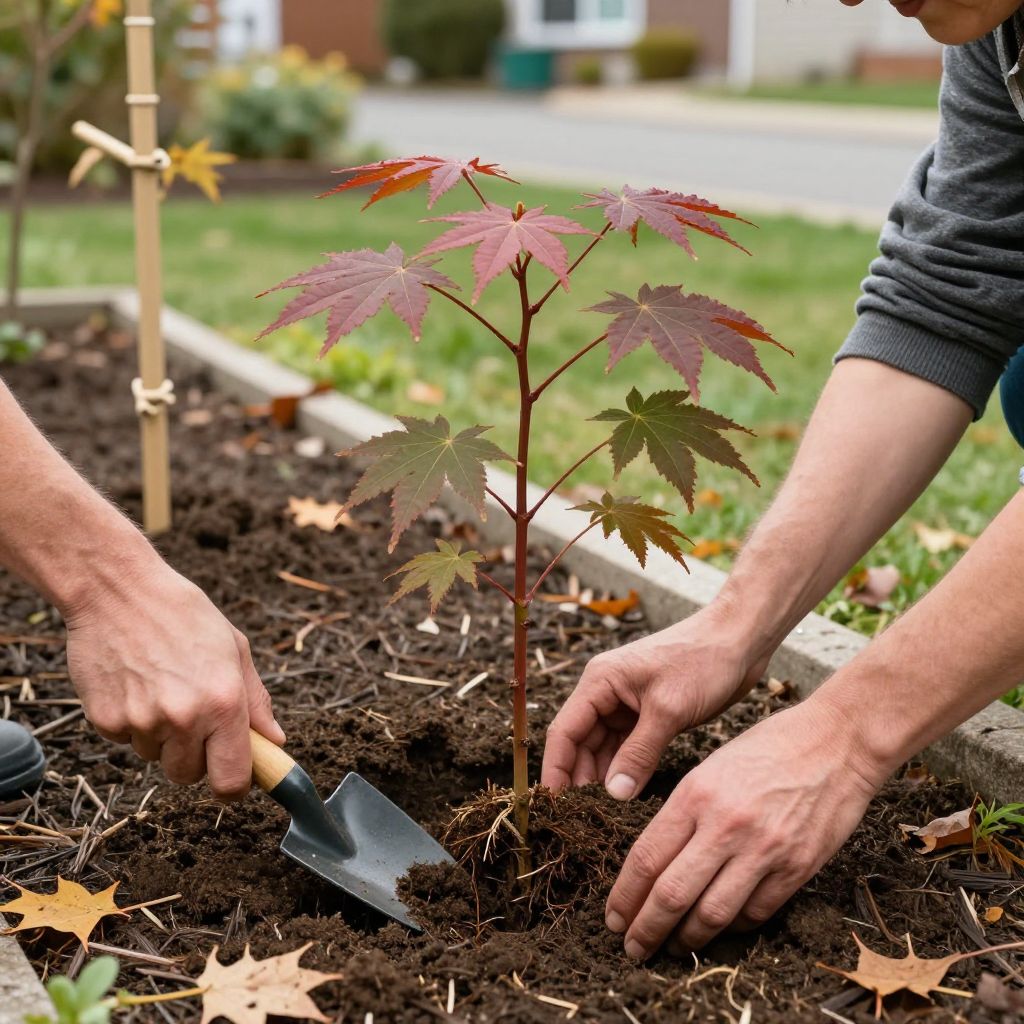
Wondering when to plant Japanese maple so it settles in well and grows into a healthy, graceful tree? Timing matters because Japanese maples can be sensitive to heat, wind, and transplant stress, especially while they are establishing roots.
The best planting time is usually during cool, mild weather: early spring after hard freezes have passed, or early fall in climates with long, gentle autumns. In many gardens, fall is ideal because the soil is still warm enough for root growth, while the air is cooler and less stressful on the tree.
When to plant Japanese maple?
Plant Japanese maple in early spring or early fall, when temperatures are moderate and the tree can focus on root growth instead of fighting heat. Avoid planting during summer heat or when the ground is frozen or waterlogged. In colder regions, spring is often safest; in milder regions, fall planting can work very well.
Why planting time matters
Japanese maple (Acer palmatum) is prized for its delicate foliage and elegant form, but it does not like sudden stress. A newly planted tree has a limited root system, so the less heat and drought it faces, the better it establishes.
Cooler planting windows help the roots spread into the surrounding soil before the tree has to support full leaf growth in hot weather.
Best seasonal windows
- Early spring: Good for most climates, especially where winters are cold or unpredictable.
- Early fall: Excellent in areas with mild autumns and enough time before hard frost.
- Late spring to summer: Usually not ideal unless you can provide careful aftercare and your climate is mild.
- Late fall or winter: Avoid planting if the soil is frozen, saturated, or the tree cannot root before severe cold.
How to choose the right planting site
A good planting date will not overcome a poor site. Japanese maples do best where they get protection from harsh afternoon sun, drying wind, and reflected heat from pavement or walls.
Light and exposure
- Morning sun with afternoon shade is often ideal.
- In cooler climates, more sun is usually fine.
- In hotter climates, too much direct afternoon sun can scorch leaves.
Soil and drainage
Japanese maples prefer moist, well-drained soil. They dislike heavy, compacted clay that stays wet for long periods, and they also suffer in very dry, sandy soil unless you water carefully.
If your soil drains slowly, plant on a slight mound or choose a raised bed area rather than setting the tree in a low spot.
How to plant Japanese maple step by step
Whether you buy a container-grown tree or a balled-and-burlapped specimen, the planting process should be gentle. The goal is to minimize root disturbance and set the tree at the correct depth.
- Choose a site with partial shade and good drainage.
- Dig a hole 2 to 3 times as wide as the root ball, but no deeper than the root ball itself.
- Loosen circling roots on container-grown trees if needed.
- Set the tree so the top of the root flare is at or slightly above soil level.
- Backfill with the native soil you removed, breaking up large clods.
- Water thoroughly to settle the soil around the roots.
- Apply 2 to 3 inches of mulch, keeping it a few inches away from the trunk.
Do not plant Japanese maple too deeply. Burying the root flare can lead to poor growth, trunk rot, and slow decline.
Should you add compost?
Lightly mixing compost into very poor soil can help, but avoid filling the planting hole with rich amendments alone. A tree grows best when its roots are encouraged to move outward into the surrounding soil, not stay trapped in a soft pocket.
If your soil is truly poor, improve a broad area around the planting site rather than just the hole.
What to do after planting
The first year is about steady moisture and protection from stress. Even a perfectly timed planting needs follow-up care to establish well.
Watering after planting
Water deeply right after planting, then keep the root zone evenly moist, not soggy. The exact schedule depends on rainfall, soil type, and temperature, but newly planted trees usually need more frequent attention than established ones.
- Check the soil a few inches down before watering.
- Water when the top layer begins to dry, especially during warm spells.
- Reduce watering in cool, rainy weather.
Mulch helps conserve moisture and moderate soil temperature, which is especially valuable for a young Japanese maple.
Staking and protection
Most small Japanese maples do not need heavy staking. If the tree is in a windy site or has a weak root ball, use light support only as long as necessary.
- Protect from strong wind during the first season.
- Use a trunk guard if deer, rabbits, or lawn equipment are a concern.
- Keep mulch away from the trunk to prevent rot and pests.
Growing conditions that help Japanese maple thrive
Once established, Japanese maple is relatively low-maintenance, but it performs best when its basic needs are met. Think filtered light, steady moisture, and soil that drains well.
Climate considerations
Japanese maples are adaptable, but young trees are more vulnerable to extremes than mature ones. In hot inland areas, afternoon shade is especially helpful. In colder regions, choose a sheltered location where winter winds will not dry out the branches.
If your area has late spring frosts, wait until the danger of hard freeze has passed before planting in spring.
Container planting vs. in-ground planting
Japanese maples can be grown in large containers, but pots dry out faster and expose roots to temperature swings. Container planting works best if you can monitor moisture closely and use a roomy pot with excellent drainage.
- Choose a container with drainage holes.
- Use a high-quality, free-draining potting mix.
- Protect the pot from extreme heat and freezing if needed.
Common mistakes to avoid
Many Japanese maple problems start at planting time. Avoiding a few common errors can make a big difference in long-term health.
- Planting in full afternoon sun in a hot climate.
- Setting the tree too deep in the soil.
- Overwatering in heavy soil with poor drainage.
- Letting the root ball dry out before and after planting.
- Adding too much fertilizer at planting time.
- Pruning heavily right after planting unless you are removing broken branches.
Japanese maples usually need only light pruning, and the best time for that is often during dormancy or after leaf drop, depending on the tree’s condition and your climate. Avoid major pruning at planting time unless there is damaged wood to remove.
Pests and diseases to watch for
Healthy, well-sited trees are less likely to suffer serious problems. Stress from heat, drought, or poor drainage can make Japanese maples more vulnerable to pests and disease.
Typical issues
- Leaf scorch: Browning edges from heat, wind, or dry soil.
- Root rot: Often linked to overly wet soil or poor drainage.
- Aphids or scale insects: Can appear on stressed trees.
- Verticillium wilt: A soilborne disease that can affect maples in some areas.
If leaves brown early in the season, check both sun exposure and soil moisture before assuming disease. Many leaf problems are environmental rather than caused by insects.
How to tell if your planting time was right
A well-timed planting usually shows steady, modest growth rather than dramatic change. The tree may take a season or two to settle in, and that is normal.
Good signs include firm stems, healthy buds, and leaves that open without severe scorch. If the tree wilts repeatedly, drops leaves early, or stays stagnant despite proper care, reassess drainage, sun exposure, and watering.
Propagation and buying tips
If you are starting with a nursery plant, choose one with a balanced shape, healthy bark, and roots that are not tightly circling the pot. A container-grown tree with a healthy root system is usually easier for beginners than a stressed, overgrown specimen.
When buying, inspect the trunk line, root flare, and foliage. Avoid plants with visible damage, severe root binding, or signs of disease.
Conclusion
The best answer to when to plant Japanese maple is simple: plant it in early spring or early fall, when weather is cool and mild and the roots have time to establish without heat stress. Choose a site with partial shade, well-drained soil, and protection from harsh afternoon sun, then water consistently through the first season.
If you want to keep planning your landscape, you may also find it helpful to read more about choosing the best shade-loving shrubs and how to improve garden soil drainage.