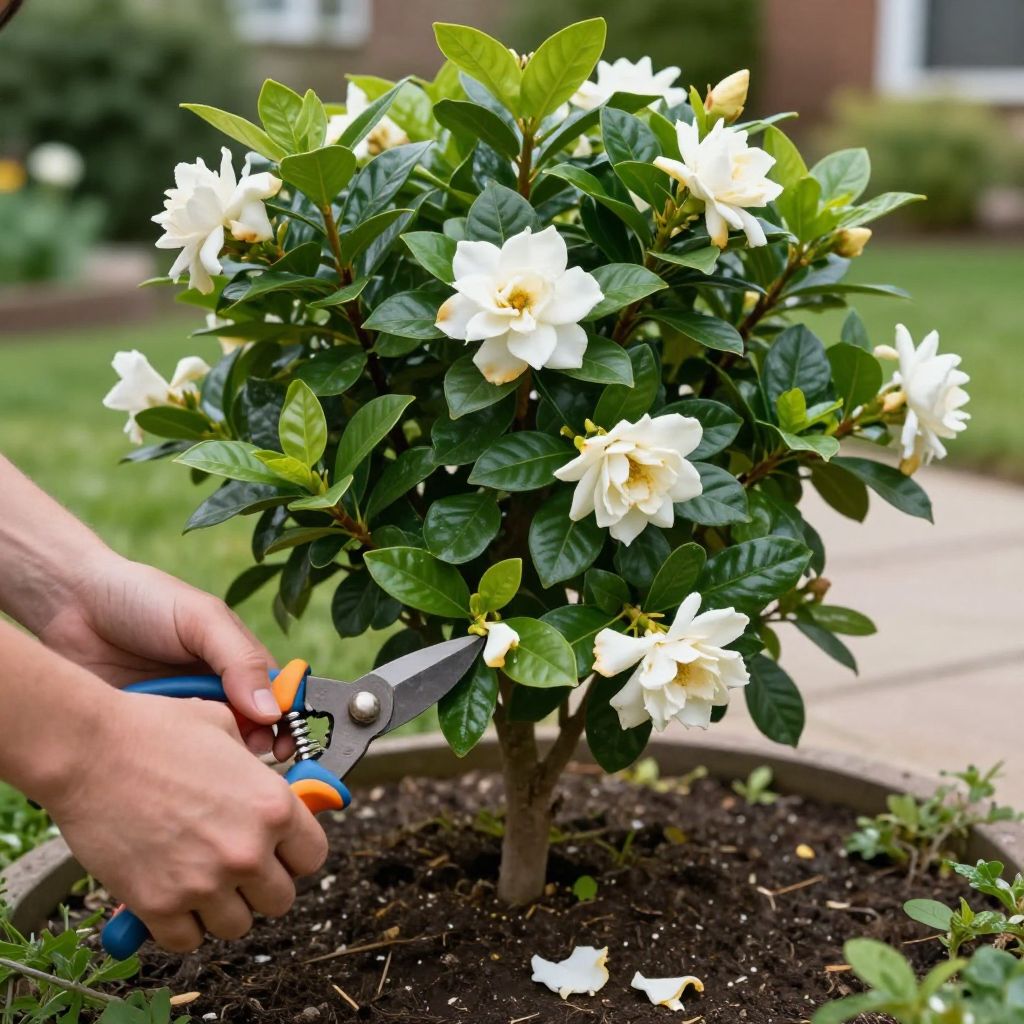
Wondering when to prune gardenias without losing next season’s flowers? The short answer is to prune gardenias right after they finish blooming, while the plant still has time to set new growth for next year’s buds. Light shaping can be done more often, but heavy pruning at the wrong time can remove flower buds and reduce bloom.
Gardenias are prized for their glossy leaves and fragrant white flowers, but they can become leggy, crowded, or damaged over time. Knowing the best timing and the right pruning method helps you keep the shrub healthy, compact, and flowering well.
When to prune gardenias?
Prune gardenias immediately after flowering, usually in late spring or early summer, depending on your climate and the variety. This timing lets the plant produce new shoots that will develop flower buds for the next bloom cycle. Avoid major pruning in late summer, fall, or winter, when you may remove next season’s buds.
Why timing matters so much
Gardenias typically form flower buds on new growth that matures after the current bloom period. If you prune too late, you can cut off the stems that would have carried flowers. That’s why the safest rule is simple: prune after flowering, not before it.
In warm climates, some gardenias bloom more than once or flower over a longer season. In those cases, wait until the main flush of blooms is finished, then prune lightly. If your plant is still producing flowers, limit yourself to removing only dead, damaged, or obviously misplaced stems.
Best pruning window by situation
- Single main bloom period: prune right after the main flush ends.
- Long-blooming gardenias: prune lightly after the heaviest flowering, not during active bloom.
- Cold climates or container plants brought indoors: prune after flowering and before strong indoor or outdoor growth begins.
- Overgrown shrubs: do a gradual renovation over 1 to 2 seasons rather than cutting hard at the wrong time.
How much should you prune?
For most gardenias, aim for light to moderate pruning. Remove just enough to shape the shrub, improve airflow, and encourage bushier growth. A good rule is to trim back only the tips of stems or reduce the plant by a small amount unless it is badly overgrown.
If your shrub needs major size control, spread the work out. Heavy pruning all at once can stress the plant and delay blooming. Gardenias usually respond better to selective pruning than to hard shearing.
What to remove first
- Dead or broken branches
- Stems crossing or rubbing against each other
- Weak growth inside the shrub
- Spent flower heads, if you want a tidier look
- Any shoots that spoil the plant’s shape or block airflow
Step-by-step: how to prune gardenias
- Wait until flowering has finished. Check that the main bloom flush is over before making any significant cuts.
- Use clean, sharp tools. Bypass pruners work well for most stems; loppers help on thicker wood.
- Start with sanitation cuts. Remove dead, diseased, or damaged stems first.
- Thin the interior if needed. Open up crowded areas to improve light and air movement.
- Shorten long stems. Cut back to a leaf node or side shoot to encourage branching.
- Step back often. Check the overall shape as you go so you do not overcut one side.
- Clean up debris. Remove clippings from beneath the shrub to reduce disease risk.
Make each cut just above a leaf node or side branch. This encourages the plant to branch from that point rather than leaving awkward stubs.
How much can you cut back?
Light shaping is usually safest. If a gardenia is healthy but overgrown, you can trim the longest stems back modestly after bloom. If the shrub is very old, woody, or neglected, reduce it gradually instead of cutting it severely in one season. Severe pruning can remove too much flowering wood and leave the plant sparse.
What kind of pruning does a gardenia need?
Gardenias usually need three kinds of pruning: maintenance pruning, shaping, and occasional renewal pruning. The right choice depends on the plant’s age, size, and condition.
1. Maintenance pruning
This is the easiest type. Remove dead wood, weak stems, and faded flower clusters, then lightly trim to keep the shrub tidy. Maintenance pruning can be done after flowering and whenever you notice damaged growth.
2. Shaping
Shaping keeps the plant compact and attractive. Trim the outer growth slightly after bloom to encourage a fuller form. Avoid clipping the shrub into a tight geometric shape, which can reduce flowering and create a dense outer shell with bare stems inside.
3. Renewal pruning
If the shrub has become leggy or woody, renewal pruning may be needed. Cut back a portion of the oldest stems after flowering, then repeat the process in the following year if necessary. This gradual approach is less stressful than cutting the whole plant back hard at once.
Tools and pruning hygiene
Good tools make cleaner cuts and reduce stress on the plant. For gardenias, sharp bypass pruners are usually enough for small stems, while loppers are useful for thicker branches. A small pruning saw may help on older wood.
- Sharpen blades for clean cuts.
- Disinfect tools if you are removing diseased material.
- Wear gloves if the shrub is dense or thorny in your area’s cultivar or companion planting.
- Make angled cuts just above a node so water does not sit on the cut surface.
Clean tools are especially important if your gardenia has leaf spots, canker, or other disease issues. Wipe blades with alcohol or another suitable disinfectant between cuts on infected branches.
Common pruning mistakes to avoid
Most pruning problems come from timing or overcutting. Gardenias can recover from a light mistake, but repeated hard pruning at the wrong time often leads to fewer flowers and a misshapen shrub.
- Pruning in late summer or fall: this can remove developing buds for the next bloom cycle.
- Shearing repeatedly: this creates dense outer growth and weak flowering inside the plant.
- Removing too much at once: severe cuts can stress the shrub and delay recovery.
- Leaving stubs: stubs can die back and invite disease.
- Ignoring dead wood: dead stems waste energy and clutter the plant.
How pruning affects flowering
Gardenias flower best when they have a balanced mix of healthy new growth and mature stems. Pruning stimulates fresh shoots, but those shoots need time to mature before they can support buds. That is why the timing of pruning is so important.
If you prune too early, the plant may grow vigorously but bloom less that season. If you prune too late, you may remove the stems that were already preparing to flower. The goal is to prune just after bloom so the plant can recover and set new growth in time.
Pruning gardenias in different growing situations
Gardenias in the ground
Landscape gardenias can usually handle light shaping after bloom. If they are planted in a sheltered spot with good soil and steady moisture, they often recover quickly from moderate pruning. In poor soil or drought-prone areas, keep cuts smaller so the plant has less stress to manage.
Container-grown gardenias
Potted gardenias often need more frequent light shaping because they can become root-bound or top-heavy. Prune after flowering, then check whether the container still provides enough room and drainage. A pot that stays soggy or cramped can weaken the shrub and make pruning recovery slower.
Indoor or overwintered gardenias
If you grow gardenias indoors part of the year, prune after the main bloom period and before the plant enters a strong new growth phase. Keep the cuts light, since indoor light is usually lower than outdoor light and the plant may recover more slowly.
Support recovery after pruning
Pruning is only one part of keeping gardenias healthy. After cutting, help the plant recover with steady care that matches its growing conditions.
- Water evenly so the soil stays consistently moist but not waterlogged.
- Mulch lightly to help conserve moisture and protect roots.
- Keep soil acidic and well-drained if your gardenia prefers those conditions.
- Avoid heavy feeding immediately after hard pruning unless your plant is actively growing and your soil needs it.
- Watch for stress such as yellowing leaves, wilting, or poor regrowth.
Gardenias generally do best in bright light with some protection from harsh afternoon sun in hot climates. If your shrub is stressed by heat, drought, or poor drainage, prune less aggressively and focus first on improving growing conditions.
What if your gardenia is overgrown or neglected?
If a gardenia has become large, sparse, or woody, do not try to fix everything in one weekend. A gradual approach is usually safer and more successful. After flowering, remove dead wood first, then shorten a portion of the oldest stems. Repeat the process next year if needed.
This staged method helps preserve some flowering wood while encouraging fresh growth from lower on the plant. It also reduces the shock that can follow extreme pruning.
Quick pruning checklist
- Prune after the main bloom flush.
- Use sharp, clean bypass pruners.
- Remove dead, damaged, and crowded stems first.
- Make cuts just above a node or side branch.
- Avoid heavy pruning late in the season.
- Do not shear the shrub into a tight shape.
- Support recovery with good water, drainage, and light.
Final thoughts
If you remember one thing about when to prune gardenias, make it this: prune right after flowering. That timing gives the plant the best chance to heal, branch, and set buds for the next bloom cycle. Keep cuts selective, not drastic, and your gardenia should stay healthier and more floriferous.
For more help keeping your shrub in top shape, you may also want to read about gardenia care basics and how to prune flowering shrubs.