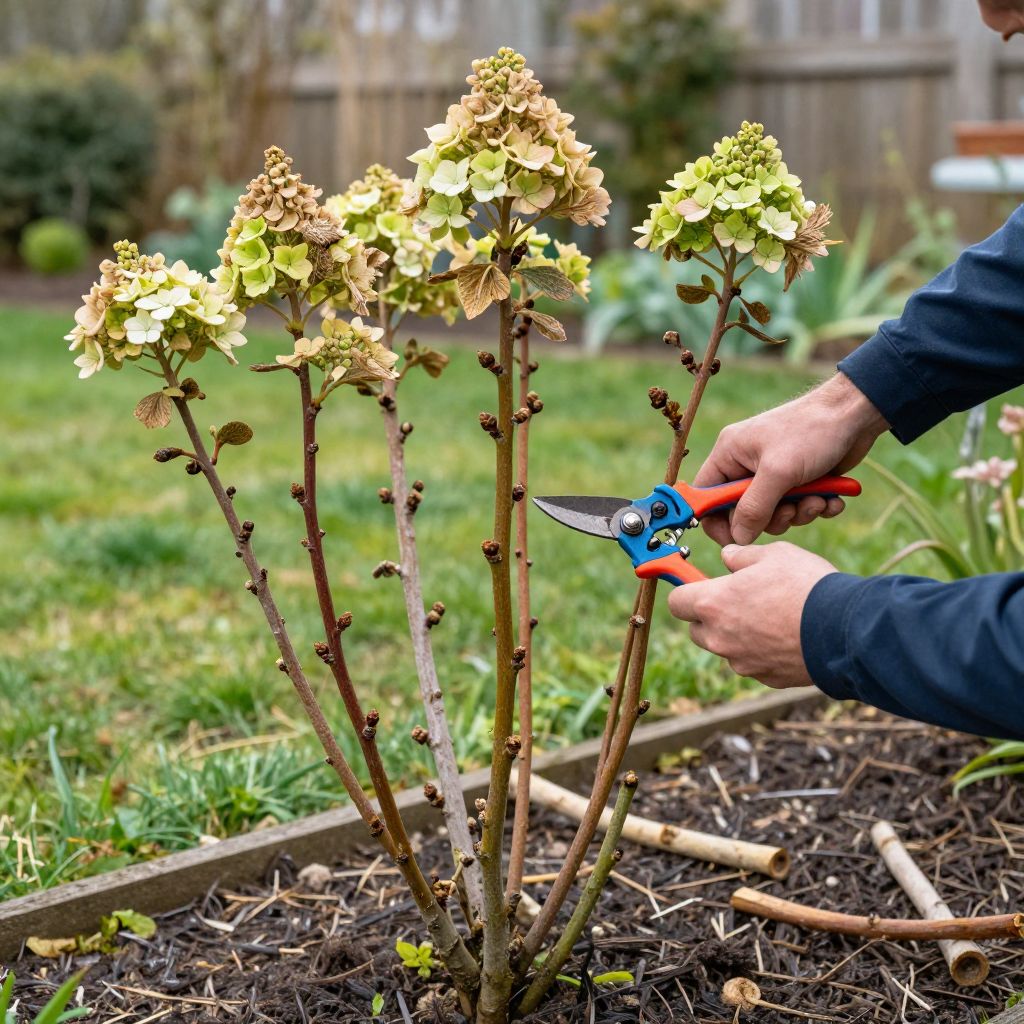
Wondering when to prune Limelight hydrangea without losing flowers? The short answer is that Limelight hydrangea (Hydrangea paniculata) is best pruned in late winter or very early spring, before new growth starts. Because it blooms on new wood, you can prune more confidently than with old-wood hydrangeas, but the exact timing still matters for plant health and flower display.
Prune too early and you may expose tender new buds to late cold snaps; prune too late and you can remove developing shoots. The goal is to shape the shrub while it is still dormant, then let spring growth carry the season’s flower buds.
When to prune Limelight hydrangea?
Prune Limelight hydrangea in late winter to early spring, after the harshest cold has passed but before active growth begins. In many climates that means February to March, but in colder regions wait until you see swelling buds and a lower risk of deep freezes. Avoid pruning in fall, which can encourage tender growth before winter.
Why timing matters for Limelight hydrangea
Limelight hydrangea flowers on new wood, meaning the stems it grows in the current season produce the blooms. That gives you more flexibility than with old-wood hydrangeas, but timing still affects how much growth you remove and how the shrub responds in spring.
What happens if you prune at the wrong time?
- Fall pruning can stimulate growth that is damaged by winter cold.
- Very early pruning in a warm spell may trigger premature bud break.
- Late spring pruning can reduce the number of shoots that would have carried flowers.
If you are unsure, it is safer to wait until late winter. Limelight hydrangea is forgiving, but the best results come from pruning before the plant fully wakes up.
How hard should you prune Limelight hydrangea?
How much you cut depends on the shrub’s age, size, and shape. Most gardeners remove about one-third to one-half of the previous season’s growth on established plants. You can prune more lightly for a natural look or more heavily if the shrub has become leggy or too large for the space.
Use the plant’s condition as your guide
- Young plants: prune lightly to encourage branching and a strong framework.
- Mature shrubs: shape and thin as needed while keeping a balanced outline.
- Overgrown shrubs: reduce size gradually over one or two seasons if you want to avoid a drastic reset.
Limelight hydrangea tolerates pruning well, but avoid cutting it into a tight ball unless that shape fits your landscape. A slightly open, airy structure usually supports sturdier stems and better flowering.
Step-by-step pruning tips
Use clean, sharp hand pruners for most stems. For thicker canes, use loppers, and disinfect tools if you’ve been cutting diseased wood. Make cuts just above a healthy bud or pair of buds, angling the cut slightly away from the bud so water sheds off easily.
- Remove dead, damaged, or weak stems first. Cut back to healthy wood or to the base if the stem is clearly dead.
- Thin crowded growth. Open the center slightly so air and light can move through the shrub.
- Shorten long stems. Reduce height and spread to the shape you want, usually by cutting back to strong buds.
- Check the overall balance. Step back often and compare both sides of the plant.
- Clean up debris. Remove prunings from the bed to keep the area tidy and reduce disease carryover.
How to choose where to cut
Look for plump, healthy buds and make your cut just above them. If a stem is crossing another, rubbing, or growing inward, it is a good candidate for removal. The best pruning cuts improve structure, not just size.
Best pruning approach by season
Late winter
This is the main pruning window for Limelight hydrangea. The shrub is dormant, the branch structure is easy to see, and you can remove winter damage before growth begins.
Early spring
If you missed late winter, prune as soon as you can before strong new growth starts. Once shoots lengthen, pruning becomes more disruptive because you are removing active growth that would support flowering.
Summer
Light touch-up pruning is fine if needed, such as removing a broken branch or a spent flower head. Avoid major cuts in summer unless you are correcting damage or a serious shape problem.
Fall
Fall is the least desirable time to prune. New cuts can stimulate soft growth that is vulnerable to winter injury, especially in colder climates.
Should you deadhead Limelight hydrangea?
Deadheading is optional. You can remove spent flower heads for a tidier look, but many gardeners leave them on through winter because the dried blooms add structure and visual interest. If you do deadhead, cut back to just above a strong pair of buds or to a healthy side shoot.
Deadheading is not the same as full pruning. You can remove faded flower clusters in summer without reshaping the whole shrub.
Common pruning mistakes to avoid
- Pruning too late in spring and cutting off active new shoots.
- Shearing the shrub uniformly without considering natural branch structure.
- Leaving stubs above buds, which can die back and look untidy.
- Removing too much at once on a stressed or newly planted shrub.
- Ignoring deadwood and keeping weak, unproductive stems in the center.
If your shrub is very old or neglected, you may be tempted to cut it hard to the ground. While Limelight hydrangea can often recover, a severe renovation cut may reduce bloom display for a season. A more gradual approach is usually safer for home gardens.
How pruning affects flowering
Because Limelight hydrangea blooms on new wood, pruning usually does not eliminate this year’s flowers the way it would on old-wood hydrangeas. In fact, moderate pruning can improve bloom quality by encouraging vigorous new stems that hold flower heads better.
That said, extreme pruning can produce very long, soft shoots that may flop under the weight of large blooms. If your plant tends to droop, combine pruning with good placement, enough sun, and proper spacing.
Growing conditions that support better pruning results
Pruning works best when the shrub is already growing in suitable conditions. Limelight hydrangea generally performs best in full sun to part shade, with morning sun and some afternoon protection in hotter climates. It prefers well-drained soil that stays evenly moist but not soggy.
Soil and moisture basics
- Improve poor soil with compost before planting.
- Mulch to help conserve moisture and moderate soil temperature.
- Avoid waterlogged sites, which can weaken roots and reduce vigor.
A healthy, well-rooted shrub responds better to pruning than a stressed one. If your hydrangea looks weak, check drainage, watering, and sun exposure before making major cuts.
What to do after pruning
After pruning, water the plant if the soil is dry, especially if you pruned during a mild spell with little rain. Add a layer of mulch, keeping it a few inches away from the stems, to help protect roots and reduce competition from weeds.
Watch for fresh growth in spring. If you see weak, crowded shoots later in the season, you can pinch or lightly thin them, but avoid repeated heavy pruning once the plant is actively growing.
Problems you may notice after pruning
Fewer flowers than expected
This is often caused by pruning too late, too hard, or during an unusual cold snap that damaged new growth. In some cases, too much shade can also reduce bloom strength.
Floppy stems
Large flower heads can bend stems, especially after a hard prune that encourages long, soft shoots. A more moderate cut and a sunnier site often help. In exposed gardens, you may also need discreet staking.
Winter dieback
If the tips die back after pruning, the issue may be cold injury rather than the pruning itself. In colder regions, wait until late winter to cut and avoid stimulating growth too early.
A simple pruning routine for most gardeners
If you want an easy rule to follow, use this: prune Limelight hydrangea in late winter or very early spring, remove dead wood first, then shorten and shape the remaining stems by about one-third to one-half. Keep the plant open, balanced, and not overly crowded.
That routine is usually enough to maintain a healthy shrub with strong stems and reliable flowers. Adjust the amount you remove based on how large you want the plant to be and how vigorous it was the previous season.
Conclusion
The best time for pruning Limelight hydrangea is late winter to early spring, before new growth starts and after the worst cold has passed. If you prune with a light hand, use clean tools, and shape the shrub thoughtfully, you’ll support healthier growth and better blooms. Before you cut, step back and decide whether the plant needs a full prune, a light tidy-up, or just deadheading this season.
If you’d like to compare pruning care with other hydrangea types, you may also find related hydrangea growing guides helpful as you plan your spring garden maintenance.